
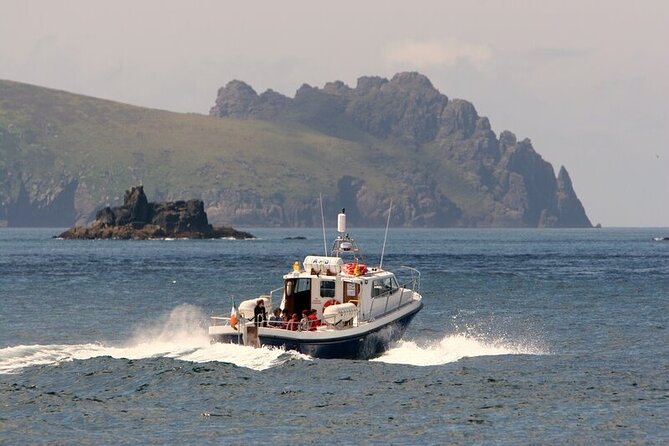
Reviewed · DINGLE TOURS
Dolphin & Whale Watching (4hrs) + Blasket Island Landing (3hrs)
The Atlantic puts on the show. This seven-hour trip from Ventry combines a small-boat wildlife search with three unhurried hours on Great Blasket Island, making it far more than a quick boat ride. I especially like the 12-person maximum, which keeps the outing personal, and the rare mix of marine wildlife, island history, and open-sea scenery. The main drawback is simple: sightings and the full outer-island route depend heavily on weather.
You should also know that this is an active day. You transfer from the boat to shore by licensed Zodiac tender, walk if you choose, and spend time in exposed Atlantic conditions. The strong 4.8 out of 5 rating and 95 percent recommendation fit the experience, with particular praise for the captain and guide and for seeing whales, dolphins, and Great Blasket in one day.
In This Review
- Key things to know before booking
- Why this Dingle boat trip is worth your day
- Leaving Ventry Pier at 10 a.m.
- Searching Dingle Bay for dolphins and whales
- Three hours on Great Blasket Island
- Seals, swimming, and the Great Blasket village
- Cathedral Rocks at Inish na Bró
- Puffins and red deer near Inishvickillane
- The Dead Man, the Sleeping Giant, and Tearaght
- Weather, comfort, and what to bring
- Who will get the most from this experience?
- Is the $155.43 price good value?
- Should you book the Blasket Islands EcoMarineTours trip?
- FAQ
- Where does the tour depart?
- What time does the boat leave?
- How long does the experience last?
- How many people can join the boat trip?
- Are whales and dolphins guaranteed?
- Is Great Blasket Island included?
Key things to know before booking
- A small boat keeps the wildlife search personal: The maximum group size is 12 people, a useful advantage when the boat changes course to look for dolphins or whales.
- Great Blasket gets three full hours: You have time for the loop walk, beach, seals, tea room, and deserted village rather than a rushed shore stop.
- Wildlife is never guaranteed: Common dolphins and Minke whales are possible, while bottlenose dolphins, Risso’s dolphins, basking sharks, and humpback whales appear less regularly or in season.
- The outer islands add the best bird watching: Inishvickillane and Inish na Bró offer chances to see puffins, seabirds, and unusual rock formations.
- Weather controls the route: Tearaght Island is visited only in fine, settled weather with light swell, which is uncommon around the Blaskets.
- You need to arrive early: Be at Ventry Pier 15 to 20 minutes before the 10 a.m. departure, since the boat will not wait.
Why this Dingle boat trip is worth your day
Dingle is an excellent base for exploring the Blasket Islands, and this outing uses the water well. Instead of treating the islands as a single photo stop, it gives you two very different experiences: a guided look at Great Blasket’s deserted village and a longer marine trip around the outer islands.
I like that the day does not depend on one attraction alone. If whales stay out of sight, you still have the island, seals, sea birds, cliffs, and old village to enjoy. If conditions are kind, the return route adds dolphins, puffins, and huge Atlantic rock formations.
At $155.43 per person, this is not a cheap half-day cruise. But the price covers about seven hours, a small group, the boat trip, the Great Blasket landing, and a cultural and historical tour led by OPW guides. You are paying for time and access, not simply for a short wildlife ride.
The most important value is the length of the stop on Great Blasket. Three hours gives you room to choose your own pace. You can walk the island loop, swim from the beach, sit near the shore, visit the tea room, or spend time watching the seals. That freedom makes the trip work for people with different energy levels.
A few more trips worth weighing up
- Exhilarating Rib experience – Dingle sea safari
★ 5.0 · 1,349 reviews - Dingle Dolphin Blasket Adventures
★ 4.5 · 1,126 reviews - The Great Blasket Island Experience – Premium Tour
★ 5.0 · 597 reviews
Leaving Ventry Pier at 10 a.m.
The boat departs from Ventry Pier in Ventry Harbour at 10 a.m. You need to arrive 15 to 20 minutes early, especially because the guidance asks you to park on the pier before departure. Do not cut this close. The boat does not wait for late arrivals.
Bring warm, windproof clothing even if Dingle looks pleasant on land. The sea can feel much colder, and the safety meeting is part of getting ready for the crossing. The experience is not suitable for children under 10, and you should have a moderate level of physical fitness.
The boat carries no more than 12 participants. That number matters. On a small vessel, you are more likely to hear the skipper explain what you are seeing, move your view as the boat turns, and avoid the crowded feeling of a large sightseeing cruise.
The first part heads out across Dingle Bay toward Great Blasket Island. Keep your eyes on the water, but do not expect a staged animal encounter. The crew searches for marine life in its natural setting, so the pace can change with conditions and sightings.
Searching Dingle Bay for dolphins and whales
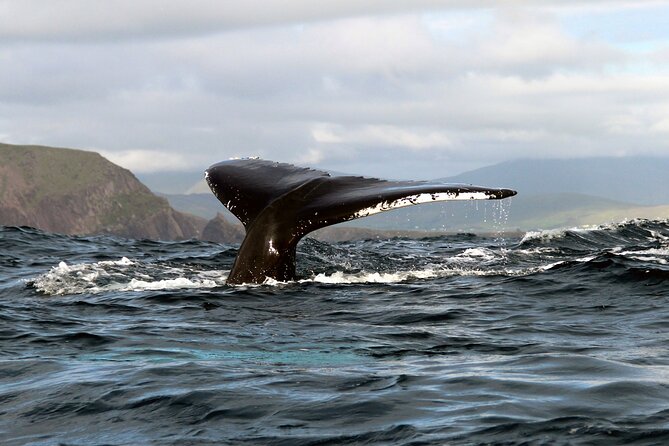
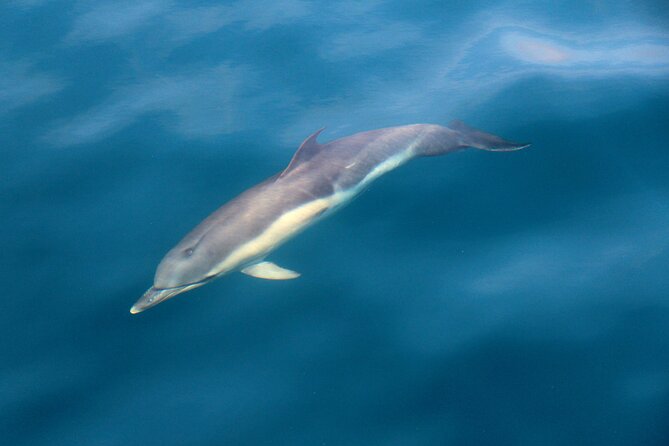
Common dolphins and Minke whales are among the wildlife you may see on the way to Great Blasket. The trip can also produce bottlenose dolphins, Risso’s dolphins, or basking sharks in season. Humpback whales may appear later, particularly as they migrate past the Irish coast.
That list is exciting, but it is not a promise. Wildlife watching always asks you to accept uncertainty. You might spend time scanning the water without a dramatic breach or close approach. The reward is that any sighting feels earned rather than arranged.
The small group helps here. Everyone has a better chance to follow the crew’s instructions and look in the right direction. Bring binoculars if you have them, especially for distant birds and puffins. The provided details specifically note that puffins are smaller than many people expect, though their bright beaks show clearly through binoculars.
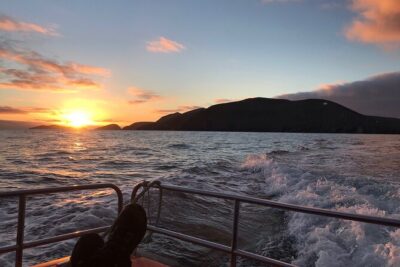
The sea itself is part of the attraction. As you travel toward the Blaskets, you get changing views of the coast, open water, islands, cliffs, and rock formations. The boat is not just transport to the next stop. It is the way you experience the scale and exposure of this Atlantic setting.
Three hours on Great Blasket Island
The boat reaches Great Blasket at about 11 a.m. and ties up off White Strand. You then go ashore by licensed Zodiac tender, which adds a practical point to the day: boarding and landing take place from a smaller boat rather than directly onto the beach from the main vessel.
Once on the island, you have about three hours. That is enough time to make choices instead of following one tight schedule. The 1.5-hour loop walk is the main active option and gives you a good way to see the island on foot.
If you prefer a slower visit, you can relax near the beach, swim in the clear water, or watch the seal colony from nearby rocks. There is also a small island tea room and access to toilets, useful comforts on an isolated island.
The deserted village is the cultural heart of the stop. An OPW guide provides the historical tour, giving the old settlement more meaning than it would have as a row of empty buildings. You can take in the remains at a human pace, then continue walking or sit near the shore.
I like the balance here. Great Blasket is not treated as a quick backdrop for photographs. You have time to connect the old village with the island’s physical setting, including the beach, rocky shore, and wide sea views.
The possible drawback is that the island stop still requires comfort with outdoor conditions. Even with a tea room and toilets, this is not a polished indoor attraction. The Zodiac transfer, walking route, exposed shore, and changeable weather all make sensible clothing and shoes important.
A completely different kind of day out from Dingle:
- Dingle Peninsula and Slea Head Drive Group Tour
★ 5.0 · 427 reviews - Dolphin and Whale Watching Tour from Dingle
★ 4.5 · 318 reviews - Dingle Peninsula Four Hour Private Tour
★ 5.0 · 238 reviews - 2-hour Guided Mini Eco Tour at Dingle, Ireland
★ 5.0 · 206 reviews
Seals, swimming, and the Great Blasket village
The seal colony is one of the most appealing quieter moments on the island. You watch from the nearby rocks, so the experience is about observing rather than approaching. Bring patience. The seals may be the highlight for you, especially if the whale search is slow.
Swimming is available off the beach in pristine water, but the supplied details do not promise warm water or sheltered conditions. Treat it as an option for confident swimmers who are prepared for Atlantic temperatures, not as the central purpose of the trip.
The village tour gives the stop its sense of place. The OPW guides focus on the island’s cultural and historical story, while the natural setting gives you a clear feeling of how remote the community was. You can pair the guided visit with the loop walk, or spend more time by the beach if that better suits you.
Three hours is generous, but it can pass quickly if you want to walk, visit the village, swim, and stop at the tea room. I would decide early which two or three activities matter most to you. Trying to do everything may leave each part feeling hurried.
Cathedral Rocks at Inish na Bró
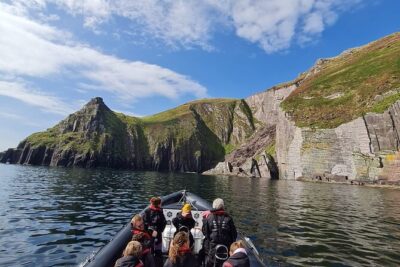
At about 2 p.m., you return to the boat and continue around the outer Blasket Islands. One of the most striking sights is Cathedral Rocks on Inish na Bró.
The formation is named for its resemblance to a Gothic cathedral, with natural windows, doors, and buttresses cut into the rock. The boat passes close underneath when conditions and the chosen route allow it, giving you a view from below that a land-based walk cannot provide.
This is a short stop of about 15 minutes, so the value comes from the unusual angle and the skipper’s description of the rocks. Have your camera ready, but do not spend the whole time looking at a screen. The scale and shape are easier to appreciate when you watch the boat move beneath the formation.
The sea carved these structures during years of winter storms. That detail helps you read the cliffs as more than scenery. You are looking at the result of powerful Atlantic weather, seen from the water that shaped it.
Puffins and red deer near Inishvickillane
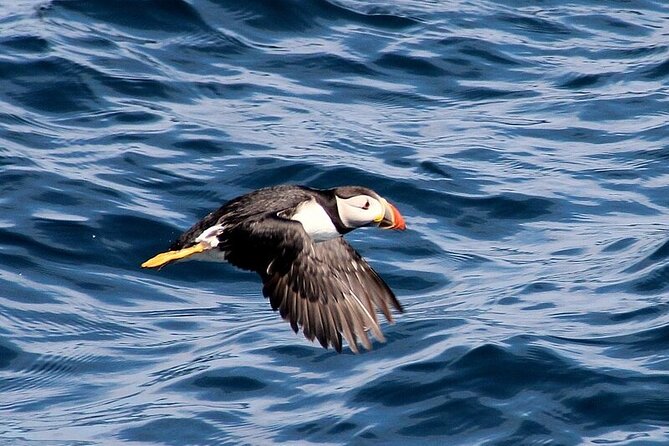
Inishvickillane is one of the best places on this route to look for puffins. The birds gather in groups called rafts on the water near the outer islands, since the main Great Blasket receives too much marine traffic for the same viewing opportunity.
Puffins can surprise you with their size. They are smaller than many people expect, and their colorful beaks may be easier to spot through binoculars than with the naked eye. This is another reason to bring binoculars if you own a pair.
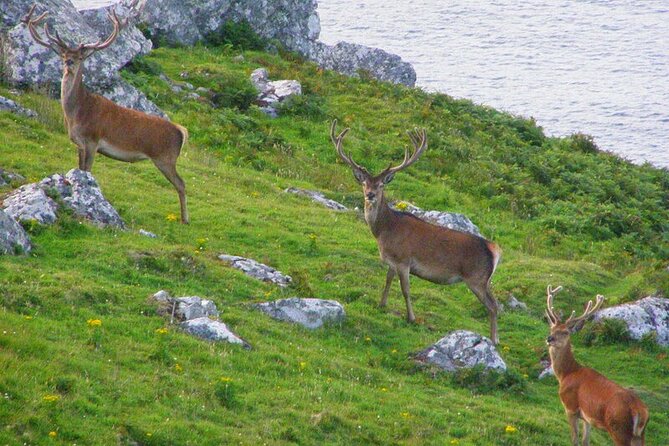
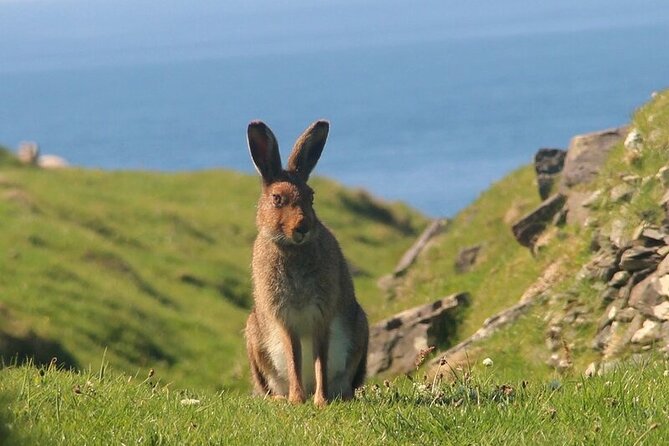
The cliffs offer another possible sight. Native red deer stags may appear near the tops, silhouetted against the sky. A sighting is not guaranteed, but the chance adds another layer to the outer-island passage.
The stop lasts about 30 minutes, though the exact route depends on the skipper and conditions. You should expect a moving wildlife search rather than a fixed viewing platform. That makes the experience more natural, but it also means you may need patience and sharp eyes.
The Dead Man, the Sleeping Giant, and Tearaght
The skipper may take the boat north toward Inish Tuaisceart, one of the seven Blasket Islands. From a point off Slea Head, it is often viewed from a distance. Its shapes have earned the island the names The Dead Man and The Sleeping Giant, and some people see a profile resembling Abraham Lincoln.
This is a good example of how the trip encourages you to look at the islands with imagination. The names are not simply labels. They give you a way to read the outline of the island as it rises from the sea.
Tearaght is the westernmost of the Blasket Islands and has a lighthouse at its western end. It is also described as the most westerly lighthouse in mainland Europe. The boat only circles Tearaght in fine, settled weather and light swell, conditions that are rare around the Blaskets.
That limitation should shape your expectations. Seeing Tearaght is a bonus, not a standard part of every departure. If the skipper leaves it out, that is a safety decision, not a failure to deliver the experience.
The information also notes that St. John’s in Newfoundland lies due west at the same north latitude as the Blaskets. It is a small geographical detail, but it makes the islands feel like a true edge of the Atlantic rather than simply another Irish coastal stop.
Weather, comfort, and what to bring
Weather is the main variable. The tour requires good conditions, and poor weather can lead to a different date or a full refund. Even on a day that goes ahead, the skipper may change the route, skip Tearaght, or adjust the outer-island section according to swell and wind.
Wear warm, windproof clothing. This advice matters on the crossing, during open-air viewing, and while waiting for the tender at Great Blasket. Practical layers will serve you better than clothing chosen only for Dingle’s town streets.
You should also be ready for moderate physical activity. The loop walk takes about 1.5 hours, and the landing involves a licensed Zodiac tender. Service animals are allowed, but the trip is not suitable for children under 10.
Food is not included, so plan around that. The island has a small tea room, but you should not treat it as a full meal stop. Bringing suitable snacks is sensible, particularly if you expect to walk or swim.
Who will get the most from this experience?
I would recommend this outing to anyone who wants wildlife and history in the same day. It suits people who enjoy small boats, open water, island walks, and the possibility of unexpected sightings more than those who need a fixed, guaranteed schedule.
It is especially good for photographers, bird watchers, and visitors with enough time in County Kerry to give the Blaskets a full day. The puffins, seals, sea birds, rock formations, and possible whales create plenty of variety.
It may be less suitable if you dislike exposed boat trips, cannot manage a tender transfer, or want a guaranteed whale sighting. The crew can search, but nature keeps control of the timetable.
The tour also works well for couples, older children aged 10 and above who are comfortable outdoors, and small groups who prefer a quieter boat. Since the group is capped at 12, booking well ahead is sensible. This experience is booked an average of 46 days in advance.
Is the $155.43 price good value?
At $155.43, you are paying for a long, full-day experience rather than a single attraction. The seven-hour duration includes the crossing, wildlife search, three-hour island stay, guided village visit, and outer-island route.
The value is strongest if you make use of the island time. Walk the loop, visit the village, watch the seals, and enjoy the beach or tea room. If you plan to remain on the boat and hope only for whales, the price feels harder to justify because sightings cannot be guaranteed.
The 12-person boat improves the value. You are not paying for a large cruise with limited personal space. You are paying for a small-group search in a complex island environment, followed by enough time ashore to explore independently.
Free cancellation up to 24 hours before departure also gives you some flexibility. If poor weather cancels the trip, you are offered another date or a full refund. Changes or cancellations made inside 24 hours are not accepted for a refund.
Should you book the Blasket Islands EcoMarineTours trip?
Book it if you want the Blasket Islands as a complete day rather than a quick viewpoint. The strongest reasons are the small group, three-hour Great Blasket landing, OPW-guided village tour, and chance to see dolphins, whales, seals, puffins, and seabirds in natural surroundings.
Go with realistic expectations. The ocean decides what appears, and the skipper may shorten the outer route in poor conditions. If you accept that uncertainty, the combination of wildlife and island culture gives this trip real value.
I would book this tour if my Dingle plans allowed one weather-flexible day and I wanted an active, memorable look at the islands. I would skip it only if I needed guaranteed wildlife, disliked small boats, or preferred a short and highly predictable excursion.
FAQ
Where does the tour depart?
The tour departs from Ventry Pier in Ventry Harbour, County Kerry, Ireland.
What time does the boat leave?
Departure is at 10 a.m. You should arrive 15 to 20 minutes early to park on the pier and prepare for departure.
How long does the experience last?
The full experience lasts approximately seven hours and ends back at Ventry Pier.
How many people can join the boat trip?
The maximum group size is 12 travelers.
Are whales and dolphins guaranteed?
No. The trip searches for common dolphins and Minke whales, with possible sightings of bottlenose dolphins, Risso’s dolphins, basking sharks in season, and occasional humpback whales. Wildlife sightings are not guaranteed.
Is Great Blasket Island included?
Yes. You have about three hours on Great Blasket Island, including access to the deserted village tour by OPW guides. You can also walk, swim, visit the tea room, use the toilets, and watch seals from nearby rocks.
Just added around Dingle
- Fishing 2 hour Private★ 5.0 · 3 reviews
- Private Tour: Dingle Peninsula from Dingle★ 4.0 · 5 reviews
- Funky Pink Self Drive Boats★ 5.0 · 6 reviews
- Dingle Boat Tours RIB Adventure Private★ 5.0 · 8 reviews
- Dingle: Slea Head Drive Tour Full Day – Personal Chauffeur Guide★ 5.0 · 8 reviews
- Dingle to Blasket Island Ferry★ 4.5 · 14 reviews
- Dingle Peninsula Guided Walking Tour★ 5.0 · 14 reviews
- Full-Day Private Historical Tour at Ring of Kerry★ 5.0 · 15 reviews
Dingle Tours, compared.
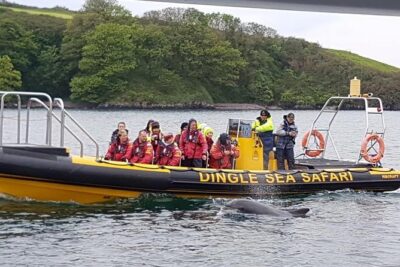
Exhilarating Rib experience – Dingle sea safari
Read our review →
The Great Blasket Island Experience – Premium Tour
Read our review →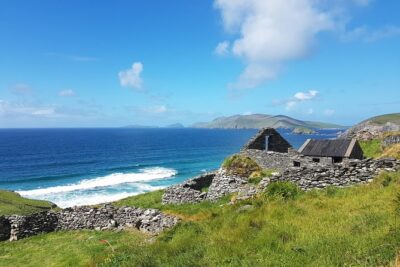
Dingle Peninsula and Slea Head Drive Group Tour
Read our review →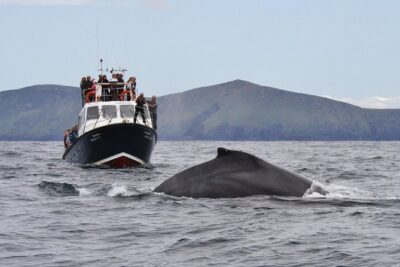
Browse the lists this tour appears in