
Reviewed · CYCLING TOURS
Electric Bike Donegal: Must-Do Half-Day Adventure!
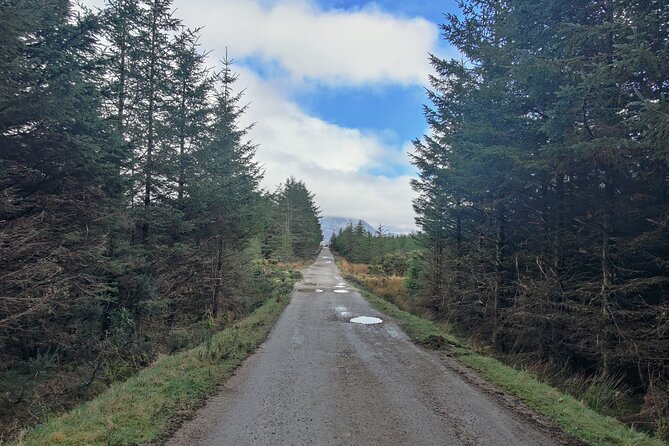
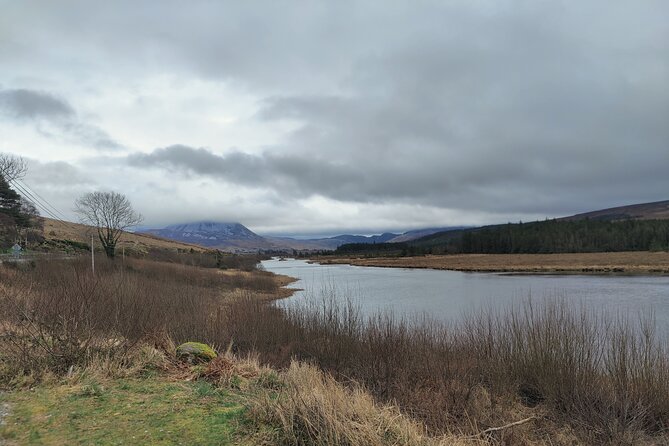
Big views, little pedaling drama. This self-guided e-bike route gives you a lively way to see northwest Donegal, linking Bunbeg Harbour with famine-era cottages, Poison Glen, an abandoned church, mountain lakes, and the wreck of Bád Eddie. I especially like the freedom of riding at your own pace and the fact that the motor takes the sting out of steep ground. The app-guided route also lets you stop for photos instead of trying to keep up with a guide.
The main catch is the location. This is in Bunbeg, County Donegal, not in the town of Donegal. That distinction matters: County Donegal is large, and the starting point may be about an hour and a half from Donegal town. Check your transport plan before booking, since an unexpected taxi ride could cost more than the tour itself.
In This Review
- Key Points to Know Before You Book
- Bunbeg Harbour Gives You a Clear Starting Point
- The E-Bike Changes the Effort Level
- Famine Cottages Bring a Sobering Pause
- Poison Glen Offers the Big Scenic Stop
- An Abandoned Church Adds Another Layer
- Lakes, a Dam, and Changing Views
- Bád Eddie Is the Route’s Quirkiest Landmark
- Why the Self-Guided Format Works
- The Location Matters More Than the Price
- Who Will Enjoy This Donegal Ride Most
- Should You Book Electric Bike Donegal?
- FAQ
- Where does the e-bike tour start?
- Where does the tour finish?
- How long does the experience take?
- Is the tour guided?
- What is included in the price?
- What happens if the weather is poor?
Key Points to Know Before You Book
- Start at Bunbeg Harbour: The ride begins beside Teac Campbell Guesthouse, close to the pier in Magheraclogher.
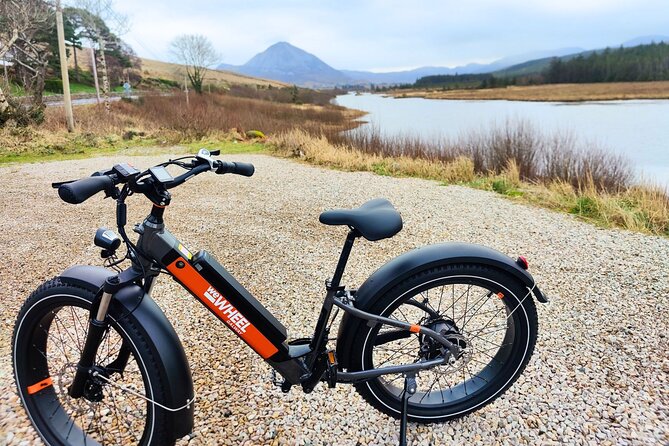
- The e-bike does the hard work: Fat tyres and motor assistance help on tricky hills and uneven ground.
- A self-guided route keeps you independent: An app provides directions and commentary as you ride.
- The route packs in unusual sights: You pass an abandoned famine village, Poison Glen, an old church, two connected lakes, and Bád Eddie.
- Small groups keep things simple: The maximum group size is 10, though the ride is designed for independent cycling.
- Allow about three hours: Some riders complete the route in roughly two hours, while photo stops can stretch the outing.
Bunbeg Harbour Gives You a Clear Starting Point
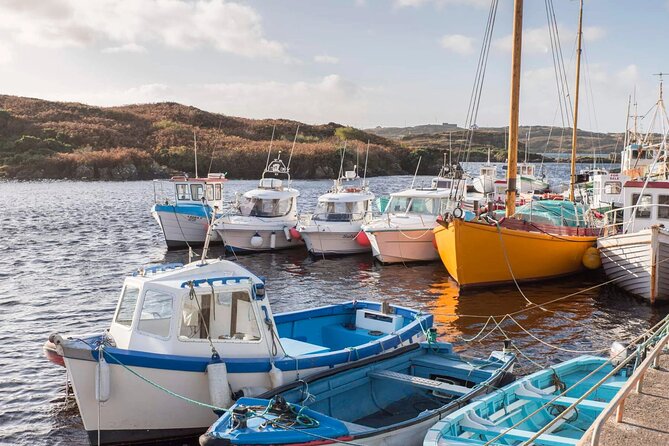
Your ride begins at Bunbeg Harbour, beside Teac Campbell Guesthouse in Magheraclogher. The harbour was created in the late 1830s to encourage local fishing, so the start gives the tour a useful sense of place before you even get on the bike.
The setting beside the pier is practical as well as scenic. Sarah and Rory meet riders there, provide the bikes and safety gear, and help you get set up. Rory has been praised for patiently explaining how the e-bikes work, which matters if this is your first time using one. The controls can seem unfamiliar at first, but a short introduction should help you feel comfortable before setting off.
You receive a top-quality fat-tyre e-bike, a helmet, and safety equipment. The fat tyres are useful here because they offer a steady ride over ground that may feel less friendly than a smooth city cycle path. You still need to pay attention on hills and descents, but you do not have to treat every rise as a test of character.
The ride is self-guided rather than a traditional follow-the-leader tour. You download the route app using the available Wi-Fi, then follow its directions and listen to commentary along the way. I like this format for photographers and independent explorers. You can pause when the light looks good, take a breath, or spend longer at a place that catches your eye.
More bike tours:
- Donegal Coast One Day Self-Guided E-Bike Tour
★ 5.0 · 66 reviews - Donegal Electric Bike Tour with Local Guide: Half-Day Adventure
★ 5.0 · 26 reviews - Cycle Dublin – Bike & ebike Tours
★ 5.0 · 748 reviews
The E-Bike Changes the Effort Level
The motor is the reason this route works for a wide range of fitness levels. One rider in their late fifties described being in poor shape but still keeping up comfortably with a stronger partner. That does not mean the ride requires no effort, but it does mean you are not relying on leg power alone.
The bikes have several assistance levels. One rider stayed mostly on level 4, while a companion used level 5 throughout. The exact battery range is not provided, so you should follow the provider’s instructions and use the support sensibly. Higher assistance makes hills easier, but it may also use more battery.
You may still need to slow down on steep sections. The e-bike helps with climbing, not with judgment. Take care on descents, corners, and any rough patches, and use the helmet provided. This is an outdoor ride, not a motorized sightseeing bus with pedals attached.
The duration is listed as about three hours, including cycling time. Actual timing depends on your pace and how often you stop. One group completed the route in around two hours, while other riders spent about three and a half hours enjoying the outing. If you want good photographs, do not plan the tightest possible schedule.
Famine Cottages Bring a Sobering Pause
One of the route’s most meaningful stops is an abandoned village of stone cottages. These homes once held families during the Great Famine in nineteenth-century Ireland. The remains are simple, but that is part of their power. You see the physical traces of ordinary homes rather than a polished museum display.
This stop gives the ride more weight than a scenic cycle alone. The surrounding views may be beautiful, but the empty cottages remind you that Donegal’s rural story includes hunger, displacement, and hard choices. Give yourself time here. A self-guided route is particularly useful at a place like this because you can pause without waiting for a group to move on.
The supplied information does not name the village, so you should not expect a large visitor center or a detailed indoor exhibit. Treat it as an outdoor historical stop. Weather can change the feel of the site, and wet stone or uneven ground may require care when you leave the bike to look around.
Poison Glen Offers the Big Scenic Stop
The viewpoint at Poison Glen is likely to be one of the ride’s visual high points. The name alone sounds like it belongs in a local legend, and the stop gives you a chance to step away from the saddle and take in the surrounding Donegal scenery.
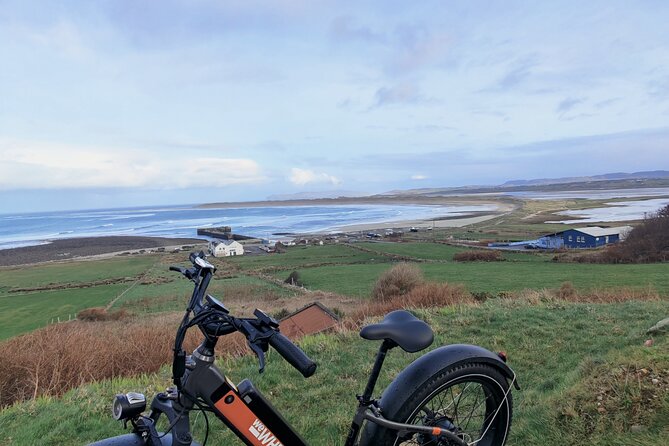
The route is praised for changing views every 15 minutes or so. That variety is important. You are not pedaling beside one unchanging stretch of countryside for three hours. The ride moves through a sequence of different settings, with the viewpoint providing a natural place to stop and look around.
The name is sometimes written as Poisoned Glen in the route details. Do not let that wording worry you. It identifies the viewpoint included in the ride, not a warning that you are entering a dangerous area. Still, use ordinary outdoor sense: stay aware of the ground, keep your bike secure, and do not let a good photo distract you from where you are standing.
A few more trips worth weighing up
- Dublin Panoramic e-Bike Tour with Howth Adventures
★ 5.0 · 544 reviews - Dublin: Bike & E-Bike Tour with a Local Guide
★ 4.6 · 477 reviews - E-Bike & Bike Tour with a Local Guide in Dublin
★ 5.0 · 412 reviews - Dublin: Guided Bike & E-Bike Tour
★ 4.7 · 308 reviews
An Abandoned Church Adds Another Layer
The route also visits an abandoned church. Like the cottage village, this is not presented as a grand restored monument. Its appeal comes from its quiet condition and the way it fits into the surrounding countryside.
For you, the stop works best as part of the larger route rather than as a stand-alone attraction. The cottages show former homes, while the church points to the community life that once connected those homes. The combination helps you picture a settled area that is now largely empty.
Because the experience is self-guided, the amount of historical explanation depends on the app commentary and your own interest. You will not have a guide beside you adding extra stories or answering questions at every stop. That is a fair trade for privacy and flexibility, but it is worth knowing before you book.
Lakes, a Dam, and Changing Views
At one point, you cycle over a dam separating Lough Nacung and Dunlewy Lough. This is a memorable route feature because the ride takes you directly between two bodies of water rather than simply pointing them out from a distant viewpoint.
The dam also helps break up the ride. After historical stops and open viewpoints, the crossing gives you a clear sense of moving through Donegal’s waterways. The route’s changing scenery is one of its strongest features, and this section should appeal to anyone who enjoys seeing how roads, water, and hills fit together.
The information provided does not give detailed measurements or road conditions for the dam. Ride at a controlled speed and follow the route instructions. You have motor assistance, but you remain responsible for handling the bike and watching the surface ahead.
Bád Eddie Is the Route’s Quirkiest Landmark
The final memorable stop is the shipwreck of Bád Eddie, which means Eddie’s Boat. The vessel ran aground during a storm in 1977 and remains a striking reminder of the Atlantic coast’s rough conditions.
A shipwreck is a fine ending for this kind of outing. It is unusual, easy to remember, and tied to a specific local event rather than being a generic photo stop. You get a story, a visual landmark, and a reason to think about the weather that shapes life along this coast.
The wreck is exposed to the elements, so the experience depends on the day. On a clear day, it should be a rewarding place to photograph. In poor weather, it may feel more stark than charming. That is not a flaw, but it is part of the coastal character. Bring clothing suited to changing conditions, especially outside summer.
Why the Self-Guided Format Works
I like the balance between support and independence here. You are not left to find a bike, guess the route, and hope the gears behave. The provider supplies the e-bike, helmet, safety gear, route app, and technical and mechanical support. At the same time, you are not locked into a guide’s pace.
The app provides turn-by-turn direction and commentary. That is especially helpful in an area where you may want to focus on the views rather than constantly checking a paper map. It also makes the outing feel more personal. You can ride quietly, stop often, and decide how long each place deserves.
The trade-off is that a self-guided ride has less human storytelling. Sarah and Rory are there to get you started and help with the equipment, but they do not accompany you as a guide through every stop. If your ideal tour includes a local expert explaining every detail in person, this may feel too independent.
The group limit is 10 people, which keeps the initial setup manageable. Since the route is self-guided, the experience may feel less like a formal group excursion and more like a supported private outing.
The Location Matters More Than the Price
At $58.81 per person, this is a reasonable price if you are already staying in the Bunbeg area or can reach the meeting point without a costly transfer. The package includes the e-bike, safety equipment, route technology, and technical support. Renting a good e-bike independently could involve more planning, and you would still need to work out where to ride.
The value drops quickly if you are based in Donegal town and assume the tour is nearby. One unhappy booking experience involved a long taxi journey and a large unexpected fare. That problem is avoidable: put Teac Campbell Guesthouse, Magheraclogher, Bunbeg, County Donegal into your map before paying.
The tour ends back at the meeting point, which makes planning easier once you arrive. Public transportation is nearby, according to the activity information, but exact connections are not supplied. You should check the local timetable rather than assume a bus or taxi will appear when you need one.
This is also an experience that requires good weather. If poor conditions cause cancellation, you are offered another date or a full refund. You can cancel for a full refund if you do so at least 24 hours before the start time. Changes or cancellations inside that window are not accepted, so do not leave the decision until the last minute.
Who Will Enjoy This Donegal Ride Most
I would recommend this outing to you if you want scenery, light adventure, and a little local history in the same half-day. It suits couples, friends, and families with participants who can operate a bicycle safely. Most people can take part, but you should be comfortable riding a bike and managing hills, turns, and changing surfaces.
It is also a strong choice for mixed-ability pairs. A fitter cyclist can ride alongside someone who needs motor assistance, and both can enjoy the same route. The e-bike helps reduce the usual gap between riders without removing the pleasure of being outdoors.
You may want something else if you prefer a fully guided history tour, a gentle paved cycle with no hills, or a tightly timed sightseeing trip. The route includes tricky terrain and steep sections, even though the motor makes them easier. It is an active outing, not a passive one.
Wear clothing you can move in and prepare for cool, changeable weather. A spring ride may call for gloves and a jacket, although conditions can vary. Food and drinks are not included, so plan that part yourself. The duration is short enough to fit into a busy day, but you should not count on eating during the ride unless you arrange it separately.
Should You Book Electric Bike Donegal?
Book it if you are staying near Bunbeg or have a sensible plan for reaching the harbour. The combination of easy-to-use e-bikes, strong scenery, unusual stops, and freedom to set your own pace makes this one of the better active half-day choices in the area.
The biggest mistake is booking by the county name alone. Donegal town and Bunbeg are not interchangeable destinations. Confirm the starting point first, then consider the weather, your cycling comfort, and whether you want a self-guided or fully guided experience.
If those details work for you, the $58.81 price is fair for a well-equipped ride through some of northwest Donegal’s most memorable sights. The route’s best qualities are its variety and independence: one moment you are beside a harbour, later you are crossing between lakes, and soon after you are standing beside a shipwreck from 1977. That is a lot of Donegal in three hours.
FAQ
Where does the e-bike tour start?
The tour starts at Teac Campbell Guesthouse in Magheraclogher, Bunbeg, County Donegal, Ireland, beside Bunbeg Harbour.
Where does the tour finish?
The activity ends back at the meeting point.
How long does the experience take?
The advertised duration is approximately three hours, including cycling time. Actual completion time can vary depending on your pace and how often you stop.
Is the tour guided?
It is a self-guided e-bike tour. An app provides directions and commentary, while the provider offers technical and mechanical support.
What is included in the price?
The price includes a fat-tyre e-bike, safety gear, a helmet, and technical and mechanical support. Food and drinks are not included.
What happens if the weather is poor?
The experience requires good weather. If it is canceled because of poor weather, you can choose a different date or receive a full refund. You can also cancel at least 24 hours before the start time for a full refund.
More Half-Day
- From Dublin: Half-Day Trip to Glendalough and Wicklow
★ 4.2 · 1,791 reviews - From Dublin: Half-Day Guided Coastal Tour to Howth Village
★ 4.4 · 1,331 reviews - Glendalough & Wicklow Mountains Half Day Morning Tour from Dublin
★ 4.5 · 872 reviews - From Galway: Cliffs of Moher Half-Day Express Trip
★ 4.6 · 698 reviews
Just added around Donegal
- Christian Tour of East Donegal★ 5.0 · 3 reviews
- 7 Arches Kayak Tour★ 4.0 · 4 reviews
- Donegal: Sunset Kayak Trip on Dunlewey Lake★ 5.0 · 5 reviews
- A Walk Through Time in Fort Dunree★ 5.0 · 5 reviews
- DONEGAL DAY TOUR: Coast and Castles★ 5.0 · 6 reviews
- Teresa’s slieve league tour★ 5.0 · 6 reviews
- DAY TOUR: Highlights of Derry and Donegal★ 5.0 · 8 reviews
- 2 Hour Walking Tour in Slieve League Ireland★ 5.0 · 9 reviews
Cycling Tours, compared.
Dublin Panoramic e-Bike Tour with Howth Adventures
Read our review →

E-Bike & Bike Tour with a Local Guide in Dublin
Read our review →
Self-Guided Bike Tour of Killarney National Park, Muckross Gardens & Waterfall
Read our review →
Aran Islands Bike Tour with Tea & Scones – Day Trip to Inisheer from Doolin
Read our review →Browse the lists this tour appears in