
Reviewed · 3-DAY EXPERIENCES
From Dublin: 3-Day Dingle, Killarney & the Wild Atlantic Way
Ireland rewards the curious. This three-day small-group trip links quiet monastic ruins, dramatic coastal roads, medieval sites, and friendly market towns without asking you to drive on the left. I especially like the time spent on the Dingle Peninsula and the mix of famous sights with smaller stops such as Kilcullen and Adare. The main drawback is the pace: you cover a lot of ground, and two nights in Dingle means your days are full.
I also like the 16-seat Mercedes mini-coach, which keeps the group small enough for a more personal guide experience. Tom receives particular praise for making the west of Ireland feel personal and welcoming, while handling flooding and strong winds with calm care. Do prepare for modest guesthouse accommodation, limited luggage space, and admission fees that are not included in the $684 price.
In This Review
- Key points to know before booking
- Why this three-day route works
- Day one: Glendalough, Dunamase, Adare, and Dingle
- Staying in Dingle: what the accommodation means
- Day two: the Dingle Peninsula and the Irish-speaking west
- Day three: Inch Beach, Torc Waterfall, and Killarney
- The Rock of Cashel and the return to Dublin
- Is $684 good value?
- Who should book this Dingle and Killarney tour?
- FAQ
- Where does the tour depart from in Dublin?
- Where does the tour finish?
- How many people can join the tour?
- What accommodation is included?
- How much luggage can I bring?
- Are meals and admission fees included?
- Should you book it?
Key points to know before booking
- Glendalough begins the journey quietly, with lakes, a secluded valley, and the remains of an early monastic settlement.
- Dingle gets the most time, including Conor Pass, Slea Head, Gallarus Oratory, Beehive Huts, and the Irish-speaking Gaeltacht.
- The small-group format matters, since the tour uses a 16-seat Mercedes mini-coach and includes a driver-guide.
- Accommodation is local and simple, with two nights in an en-suite B&B or guesthouse, often 20 to 30 minutes on foot from town facilities.
- Day three adds Killarney National Park and the Rock of Cashel, giving you waterfalls, lakes, medieval ruins, and a long return to Dublin.
- Weather can affect the feel of the trip, so bring waterproof clothing and expect exposed coastal conditions.
Why this three-day route works
This tour is built for you if you want to see several major parts of southern and western Ireland but do not want to rent a car. The route covers Wicklow, County Laois, County Limerick, County Kerry, Dingle, Killarney, and Cashel in three days.
That is a lot of Ireland in a short time. You will spend several hours on the road, but the journeys are part of the experience. The route moves from Dublin through mountains and valleys to the Atlantic coast, then back across the island by way of some of Ireland’s best-known historic sites.
The strongest feature is the balance between famous places and quieter stops. Glendalough and the Rock of Cashel draw the biggest crowds and carry the most name recognition. Dingle gives you something different: Irish language, small coastal communities, open beaches, and old stone buildings that feel tied to local life rather than arranged for a quick photo.
With a maximum of 16 participants, the trip should feel more manageable than a large coach tour. You can expect a driver-guide who handles the roads while explaining the places along the way. One guide, Tom, is praised for storytelling, good humor, and making the area feel like a shared family journey. That personal touch can make a major difference on a route where the guide’s commentary helps connect one stop to the next.
More Wild Atlantic Way tours:
- Dingle Peninsula Tour from Killarney: Including Wild Atlantic Way
★ 3.5 · 22 reviews - Dublin to Cliffs of Moher, including Wild Atlantic Way and Galway
★ 5.0 · 23,331 reviews - Dublin to Cliffs of Moher, Burren, Wild Atlantic Way, Galway Tour
★ 5.0 · 12,924 reviews
Day one: Glendalough, Dunamase, Adare, and Dingle
The first morning begins opposite the Kilkenny Shop at 6 Nassau Street in Dublin 2. From there, you head south through the Wicklow Mountains toward Glendalough.
Glendalough sits in a peaceful valley beside two lakes. Its monastic remains include stone buildings and a famous round tower, and the setting does much of the work. You get free time to walk around, take in the water and hills, and visit the visitor center for more background.
I like Glendalough as the first stop because it eases you into the trip. The ruins are not isolated in a dry historical setting. They sit among trees, water, and mountain slopes, so you can appreciate both the site and the sense of quiet around it. If you prefer a relaxed start, this is one of the day’s best moments.
The free time also means you are not tied to one exact activity. You can focus on the monastic city, spend time near the lakes, or use the visitor center to put the ruins into context. The tradeoff is that you may want much longer here than the schedule allows.
The route then continues west to Kilcullen, a traditional market town where you have a lunch break. Meals are not included, so this is your chance to buy lunch and refreshments at your own expense. Because the stop is part of a long driving day, keep your meal practical and do not count on having time for a long restaurant visit.
After lunch, the tour reaches the Rock of Dunamase and the ruins of Dunamase Castle in County Laois. The site sits on an ancient plain and offers a strong change of mood from Glendalough. At Glendalough, the setting feels sheltered and reflective. At Dunamase, the remains are tied to an exposed high point and a wider view.
The final stop before County Kerry is Adare, known as Ireland’s prettiest village. Its thatched cottages and old structures give you a classic Irish village scene, while the ruins of a 15th-century Franciscan Monastery add a more substantial historical layer.
Adare is a good short stop for photographs and a walk. It also breaks up the day before the long run to Dingle. You should not expect a full village tour in the time available, but you get a useful glimpse of its architecture and atmosphere.
By evening, you reach Dingle, where you stay for two nights. That two-night base is important. You unpack once, avoid changing hotels every night, and have a full day to explore the peninsula without hauling your bag back onto the mini-coach.
Staying in Dingle: what the accommodation means
The tour uses a selection of small, locally owned B&Bs and guesthouses. Rooms are en suite, and breakfast is included. This is not a polished city hotel arrangement, and that is part of the appeal for many people. The lodging is local, personal, and suited to a route through smaller Irish towns.
There are practical limits. Some B&Bs are on the outskirts of town, and you may face a 20 to 30 minute walk to pubs and restaurants. That matters after a long day on the road, particularly in rain or wind. If being close to evening dining is important, ask for the location details before booking.
Lifts are not available in this type of property, so mention any difficulty with stairs in advance. You also need to pack lightly. The luggage limit is 14 kilograms per person, with one airline carry-on-sized case, about 55 by 45 by 25 centimeters, plus a small onboard bag.
Breakfast is included, but other meals and drinks are not. Budget for lunches, evening meals, snacks, and any site admissions. The small bag limit is sensible for a mini-coach, but it requires discipline. Pack a waterproof jacket, walking shoes, and layers rather than a full wardrobe.
Day two: the Dingle Peninsula and the Irish-speaking west
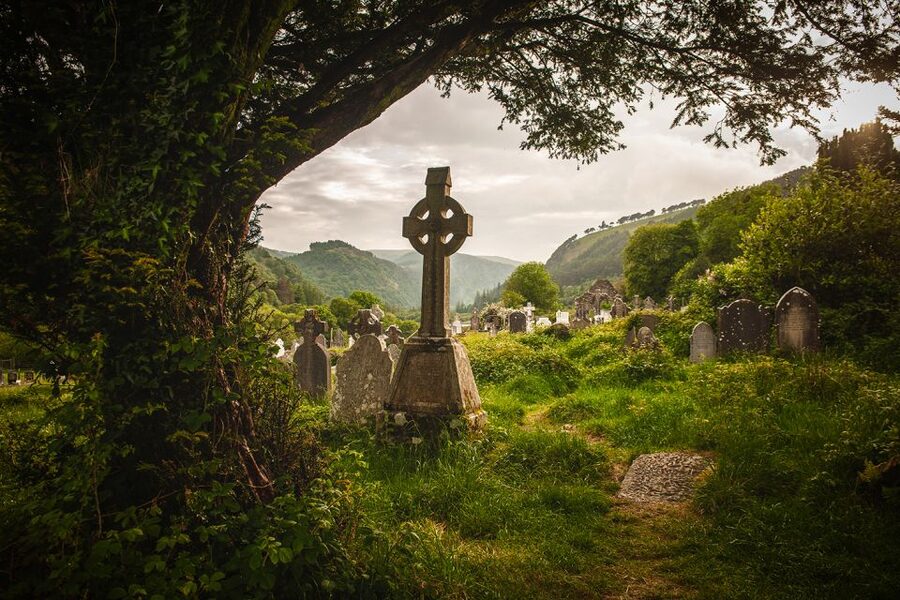
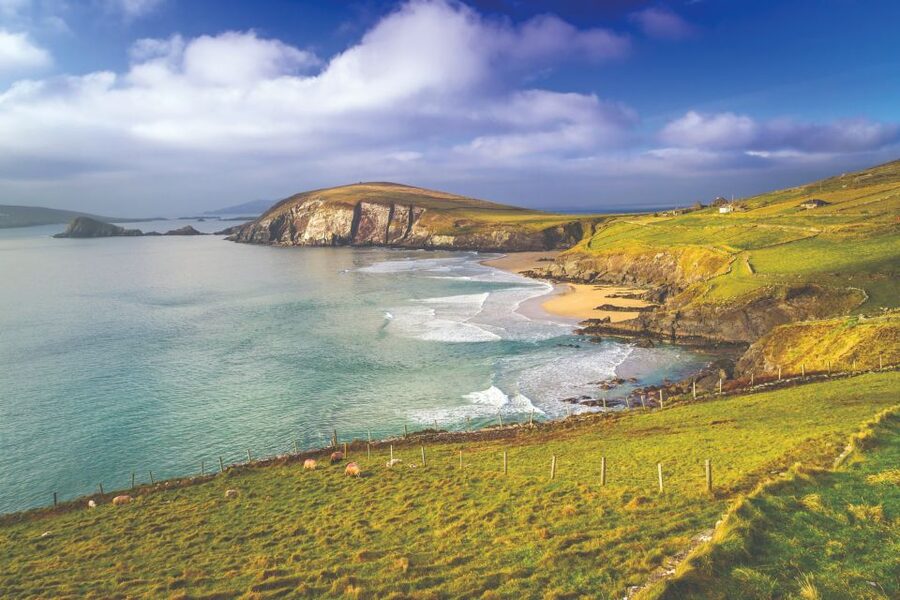
Day two is the heart of the tour. You travel through the Dingle Peninsula, one of Ireland’s best-known stretches of the Wild Atlantic Way.
The route enters the Gaeltacht, an area where Irish is the main language used by local people. This gives the day more cultural depth than a simple scenic drive. You are not only looking at cliffs, beaches, and stone buildings. You are passing through a part of Ireland where the language remains central to daily life.
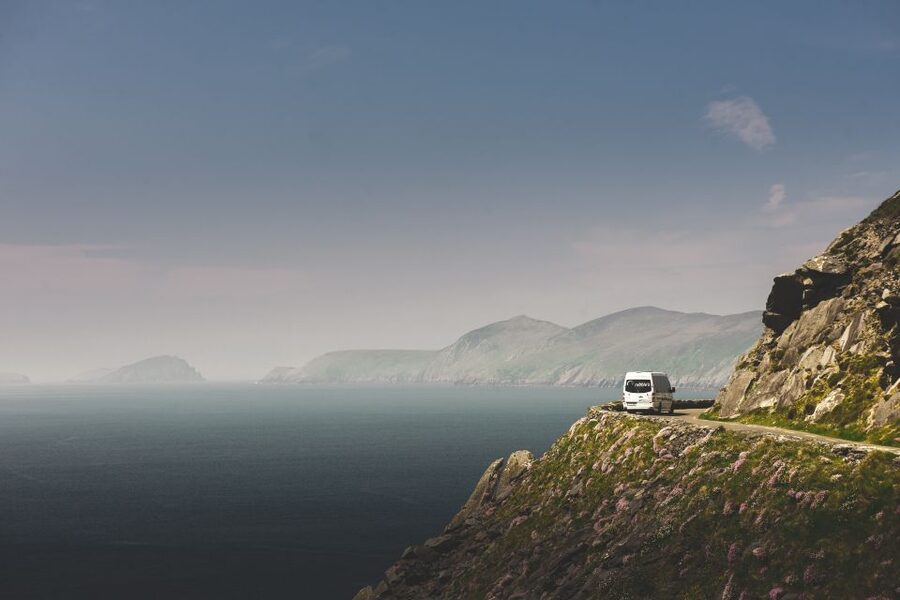
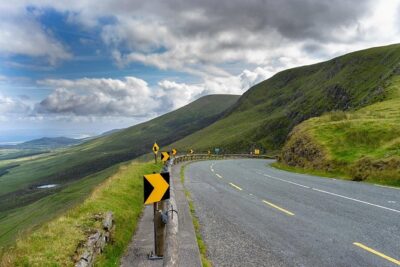
Conor Pass brings mountain views and exposed roads. The weather can change quickly in this part of the country, and the experience depends heavily on the conditions. On a clear day, you can expect wide views across the peninsula. In wind and rain, the same route feels wilder and more dramatic.
That weather is not a minor detail. One highly praised guide handled flooding and strong winds safely, which tells you something useful about the route. Conditions can be serious, and a careful driver-guide is a real benefit when narrow or exposed roads become difficult.
The day also includes Tóchar Maothaithe, the Beehive Huts, Slea Head, and Gallarus Oratory. These stops show different sides of the peninsula.
The Beehive Huts are old dry-stone structures built in a distinctive beehive shape. Gallarus Oratory is another memorable stone building, with a simple form that fits the surrounding countryside. Slea Head brings the coastal setting, where beaches and open Atlantic views make the route feel far removed from Dublin.
Dingle Peninsula is especially rewarding because the sights do not all feel alike. One stop may focus on stone construction, another on coastal views, another on language and local tradition. The guide’s storytelling helps give these places meaning, and Tom is praised for sharing the area’s stories in a warm, accessible way.
There is still a limitation: this is a guided overview, not a long walking holiday. You will stop at several points, but you will not have unlimited time at each one. The day suits you if you want variety and good views. It may frustrate you if you prefer to settle into one village or spend hours on a single trail.
Dingle itself gives you the best chance for an evening at your own pace. You stay there again that night, so you can find a pub or restaurant, walk around town, and enjoy the feeling of a small coastal community. The tour does not include evening meals, and the B&B may be outside the center, so plan your return walk carefully.
A few more trips worth weighing up
- 3-Day Blarney Castle, Ring of Kerry, & Cliffs of Moher Rail tour
★ 4.5 · 211 reviews - 3-Day Southern Ireland Tour Including Galway and Kerry from Dublin
★ 4.5 · 123 reviews - From Dublin: Galway and Kerry 3-Day Budget Tour
★ 4.3 · 66 reviews - 3-Day Northern Ireland Tour from Dublin: Giant’s Causeway & Titanic Experience
★ 3.5 · 20 reviews
Day three: Inch Beach, Torc Waterfall, and Killarney
Before leaving the peninsula, the tour stops at Inch Beach. This broad beach gives you a view toward the Kerry Mountains and your next destination, Killarney National Park.
Inch works well as a final coastal pause. After the more concentrated stops around Dingle, it gives you room to look outward and appreciate the scale of the area. The beach also prepares you for the change from Atlantic shore to mountain and lake country.
The route continues past several lakes before a short walk to Torc Waterfall. The waterfall drops about 20 meters, with water coming down from the mountains. You also hear the old curse associated with its formation, a small piece of local folklore that adds personality to the stop.
The walk is short, but you should still wear proper shoes. This is not a full hike, yet wet Irish weather can make paths slippery. Torc is a compact attraction, so your time there will likely focus on the waterfall and the surrounding woodland rather than a long outing.
Killarney is the day’s main town stop. You break for lunch in this lively lakeside town before continuing across the country. Meals remain your responsibility, but the stop gives you a chance to eat, stretch your legs, and see a little of Killarney before the final historic site.
The inclusion of Killarney works well because it adds a social, town-based contrast to the quieter coastal stops. You get lakes, mountain views, a waterfall, and a place where you can sit down for lunch. The compromise is time. You are seeing Killarney as part of a larger route, not using it as a base for a full visit to the national park.
The Rock of Cashel and the return to Dublin
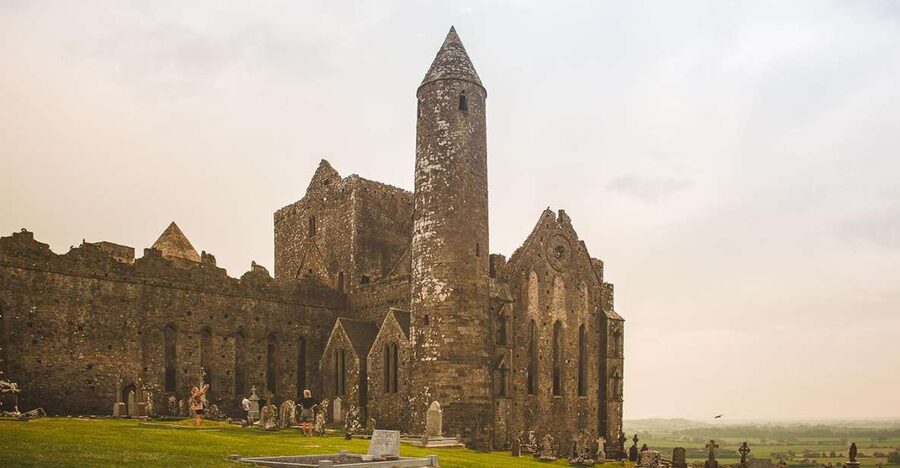
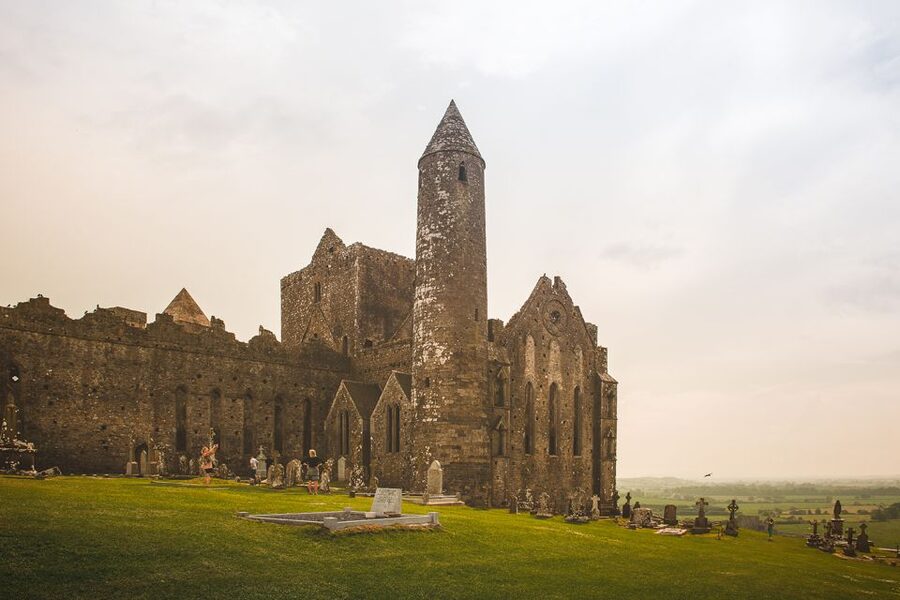
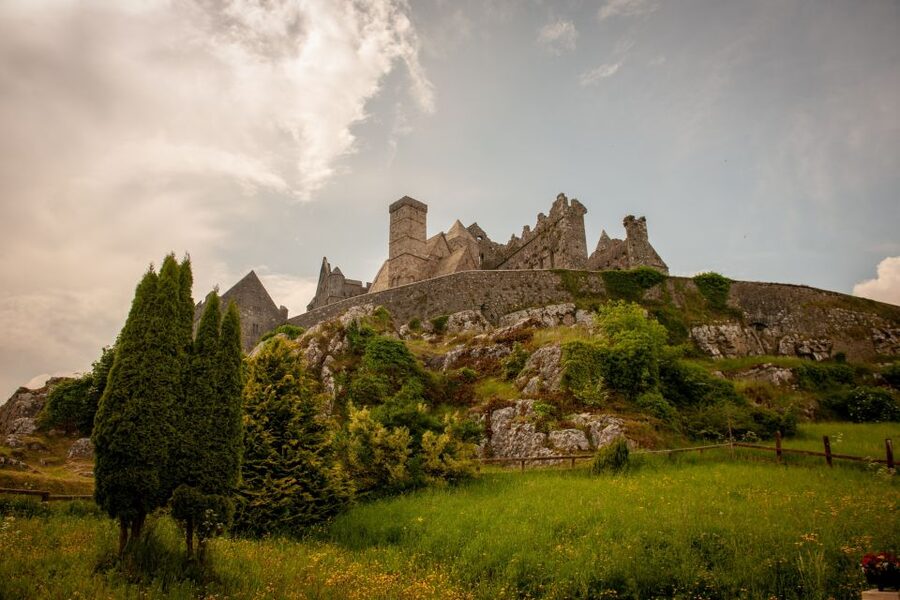
The final major stop is the Rock of Cashel, a striking group of medieval buildings set on a limestone outcrop. It is one of the most powerful visual stops on the route because the buildings rise above the surrounding area and can be seen as a complete historic group rather than a single ruin.
You have time to explore the round tower, High Cross, and Gothic Cathedral. Each adds a different shape and period to the site. The round tower is tall and unmistakable, the High Cross brings carved stonework, and the cathedral gives the complex a larger, more dramatic interior and exterior presence.
Cashel provides a fitting final chapter. Glendalough began the trip with a monastic site in a quiet valley. Cashel ends it with medieval religious and defensive buildings on an exposed stone height. You see how Ireland’s sacred and political past appears in very different settings.
After Cashel, you have a relaxing drive back to Dublin, arriving at the original meeting point at about 7:00 PM. That return time is useful for planning, but do not schedule an important evening flight or a tight connection. Road conditions and weather can affect the journey, and the tour itself warns you to expect an early evening arrival rather than a guaranteed exact time.
Is $684 good value?
At $684 per person, this trip is not a budget bus ride. The price includes transportation in a 16-seat Mercedes mini-coach, a driver-guide, two nights of en-suite B&B accommodation, and breakfast each morning.
The value comes from what you do not have to arrange yourself. You avoid car rental, left-side driving, navigation, hotel changes, and the work of planning a route across several counties. You also get a guide who can explain the places and manage difficult road conditions.
The price does not include admissions, lunches, dinners, or refreshments. Add those costs before deciding. You should also consider the time involved. If you have a full week in Ireland, you might prefer to spend more nights in Dingle or Killarney rather than cover both in a fast three-day circuit.
For a first visit from Dublin, I think the price can make sense if you value convenience and a smaller group. It is less compelling if you already have a car, prefer independent planning, or want long stretches of unstructured time.
Who should book this Dingle and Killarney tour?
I would recommend it most strongly to you if:
- You want to see the Wild Atlantic Way without driving.
- You enjoy a guide who adds stories and local context.
- You prefer a small group to a full-size coach.
- You like mixing ruins, villages, beaches, mountains, and waterfalls.
- You are comfortable with long road days and changing weather.
- You can pack within the 14-kilogram luggage limit.
Families can join if children are at least 5 years old, but parents should think about the pace. Three days include considerable time in the vehicle, several outdoor stops, and guesthouse accommodation that may involve stairs.
This trip is a weaker match for you if you need a central hotel, dislike walking from accommodation to dinner, require a lift, or want a slow schedule. It also may not suit anyone hoping to explore every corner of Killarney or Dingle in depth.
FAQ
Where does the tour depart from in Dublin?
The tour departs from opposite the Kilkenny Shop at 6 Nassau Street, Dublin 2.
Where does the tour finish?
The tour returns to the same meeting point in Dublin. Arrival is expected at around 7:00 PM on the third day.
How many people can join the tour?
The experience is limited to 16 participants and uses a 16-seat Mercedes mini-coach.
What accommodation is included?
You receive two nights in an en-suite room at a locally owned B&B or guesthouse, with breakfast included. Some properties are on the outskirts of town, around a 20 to 30 minute walk from pubs and restaurants.
How much luggage can I bring?
You may bring up to 14 kilograms, consisting of one airline carry-on-sized piece, about 55 by 45 by 25 centimeters, plus a small personal bag for the vehicle.
Are meals and admission fees included?
No. Transportation, the driver-guide, two nights of accommodation, and breakfast are included. Lunches, dinners, refreshments, and admission fees are extra.
Should you book it?
Book this tour if you want a carefully planned introduction to Dingle, Killarney, and the Wild Atlantic Way, with a guide handling the roads and the storytelling. The best reason to choose it is the combination of Dingle’s Irish-speaking culture and coastal views with major sites such as Glendalough and the Rock of Cashel.
Skip it if you need a slow pace or a centrally located hotel. For most first-time visitors without a car, though, this is a strong three-day route with real variety, sensible small-group transport, and enough time in Dingle to make the west of Ireland feel more than a passing view from a coach window.
Just added around Killarney
- Private Ring of Kerry Tour in Ireland★ 5.0 · 3 reviews
- Killarney: Private transfer to & from Dublin | Premium Cars★ 5.0 · 3 reviews
- Kayak to Innisfallen island. Killarney. Guided. 2½ hours.★ 5.0 · 3 reviews
- Private Dingle and Slea Head★ 5.0 · 3 reviews
- Killarney: Brewery Tour and Tasting★ 5.0 · 3 reviews
- The Cliffs of Moher and Burren National Park Private Tour.★ 5.0 · 3 reviews
- Dingle Peninsula & Slea Head – Private Tour★ 4.0 · 4 reviews
- Torc mountain & waterfall hike. Killarney. Private guided group. 3½ hours.★ 5.0 · 4 reviews
3-Day Experiences, compared.
3-Day Blarney Castle, Ring of Kerry, & Cliffs of Moher Rail tour
Read our review →
3-Day Southern Ireland Tour Including Galway and Kerry from Dublin
Read our review →
3-Day Northern Ireland Tour from Dublin: Giant’s Causeway & Titanic Experience
Read our review →
3-Day Cork, Ring of Kerry, Ciffs of Moher Tour
Read our review →
3-Day Cliffs of Moher, Connemara and Aran Islands Rail Tour from Dublin
Read our review →
3-Day West Coast Explorer from Dublin Including Admission
Read our review →
Ireland: Blarney Castle, Kilkenny & Irish Whiskey 3-Day Tour
Read our review →Browse the lists this tour appears in