

Reviewed · MUSEUMS
Skip the Line: Hunt Museum Ticket
A small museum can pack a big surprise. The Hunt Museum makes a strong rainy-day stop in Limerick, especially if you enjoy ancient objects and unusual works of art in equal measure. I like the prepaid mobile ticket, which keeps admission simple, and I like the museum’s setting in the Custom House, one of the city’s memorable buildings. The main drawback is that the museum may appeal more to adults than to young children or teenagers.
You should allow one to two hours here, depending on how closely you study the displays. The $15 price is fair for the range of material, though the ticket does not include transportation or any paid temporary exhibition. Also, do not assume you will face a long queue: prepaid admission saves time, but one visitor sensibly noted that lines may not often be large.
In This Review
- Key things to know before visiting
- Why the Hunt Museum works so well in Limerick
- Inside the Custom House: what you will see first
- Irish and European medieval art in close quarters
- From ancient objects to Picasso and Renoir
- Temporary exhibitions and the limits of the ticket
- Is $15 good value for one to two hours?
- Planning your visit around the opening hours
- Who will enjoy the Hunt Museum most?
- Practical booking advice and cancellation terms
- Should you book the Hunt Museum ticket?
- FAQ
- How much does the Hunt Museum ticket cost?
- How long does a visit to the Hunt Museum take?
- What does the ticket include?
- Is transportation included?
- Can I use a mobile ticket?
- What are the Hunt Museum opening hours?
- Is the Hunt Museum suitable for children?
- How many people can join the activity?
- Can I cancel for a full refund?
Key things to know before visiting

- The collection spans thousands of years: You can move from Neolithic objects and Bronze Age weapons to works by Picasso, Renoir, Jack B. Yeats, and Henry Moore.
- The Custom House adds atmosphere: The museum occupies an iconic Limerick building beside the River Shannon area, giving the visit a strong sense of place.
- The 9th-century Antrim Cross is a major highlight: It shares space with monastic bells, medieval sculpture, jewellery, enamels, and religious objects.
- A volunteer guide can transform the visit: If a guide is available, joining the walk-through may add useful stories and context to the displays.
- It suits mixed-interest days: Ancient Mediterranean objects, Irish archaeology, decorative arts, paintings, and ceramics give you plenty of different entry points.
- The ticket is practical, not all-inclusive: Admission is included, but transportation and paid temporary exhibitions are separate.
Why the Hunt Museum works so well in Limerick

The Hunt Museum is not built around one narrow subject. It is a cabinet of curiosities, with objects gathered across long stretches of time and from several parts of the world. That variety is the museum’s greatest strength.
You might begin with Irish prehistoric material, then find yourself looking at objects from Greece, Rome, Egypt, or the Olmec civilisation. A few steps later, the focus shifts to medieval Ireland, European religious art, fine silver, glass, ceramics, or modern painting. I enjoy this kind of museum because you can follow your own curiosity rather than move through one strict story.
The building matters, too. The museum occupies the Custom House, an important Limerick landmark. This is not a temporary room filled with display cases. The setting gives the collection a proper home and helps the visit feel connected to the city.
The museum was formed from the private collection of John and Gertrude Hunt. They worked as dealers who supplied museums and collectors, but they also kept objects that appealed to their own interests. Their taste was broad, and that personal quality still comes through. You are not looking at a single artist’s output or one archaeological site. You are seeing the results of two people following their curiosity.
That makes the museum particularly useful on a day when you want variety. You can spend extra time with Irish material, pass quickly through objects that do not interest you, and then stop when something catches your eye.
More museums:
- General Entry Tickets to Foynes Flying Boat and Maritime Museum
★ 5.0 · 33 reviews - Irish Rock ‘N’ Roll Museum Experience Dublin
★ 5.0 · 6,112 reviews - The Little Museum of Dublin Famous Guided Tour
★ 5.0 · 2,948 reviews
Inside the Custom House: what you will see first
Your admission covers the Hunt Museum collections. The visit is self-paced, so you can expect to set your own rhythm rather than follow a fixed group schedule.
The prehistoric displays give the collection an Irish foundation. Material ranges from the Mesolithic period through the Iron Age, with objects that help show how long people have lived, worked, travelled, and worshipped in Ireland. A Bronze Age shield and cauldron are among the more arresting pieces.
These are useful displays for visitors who want more than paintings. They place Irish archaeology beside objects from other civilisations, allowing you to compare local material with ancient Greece, Rome, Egypt, and the Olmec world.
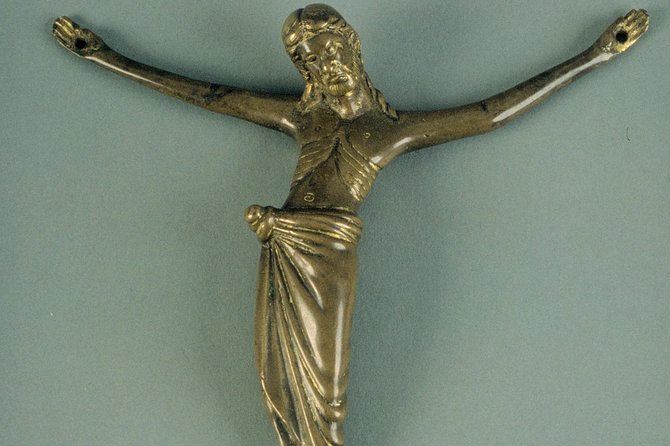
The early Christian and medieval sections are especially important. Heavy monastic bells provide a physical link to Ireland’s early religious culture. The 9th-century Antrim Cross is another central object, and its age alone makes it worth seeking out.
I would not rush this part of the museum. Medieval objects can be small, and the details are often where the interest lies: carved stone, painted panels, jewellery, enamel work, ivory, ceramics, crystal, and crucifixes. If you usually think of museums as places for large paintings, the Hunt offers a useful change of scale.
Irish and European medieval art in close quarters
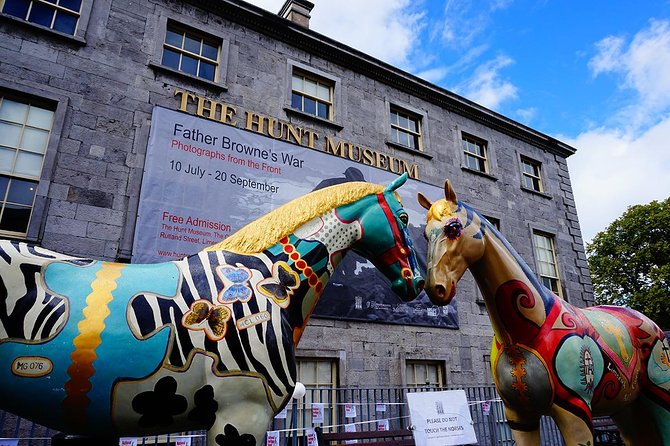
The medieval collection gives the museum much of its character. Stone and wooden statues share space with devotional objects and decorative pieces. You may find that the display rewards a slow circuit, since different materials reveal different aspects of medieval craftsmanship.
Religious art is well represented, but the appeal is not limited to religious visitors. The carving, metalwork, colour, and materials are interesting on their own. The collection also helps show how art was made for churches, homes, personal devotion, and display.
The scale can be both a benefit and a limitation. You can see a great deal in one visit, but a large amount of material also means the museum may feel dense. If you try to inspect every case, one hour will not be enough. If you choose a few areas that appeal to you, the museum becomes easier to enjoy.
A volunteer guide may be available during your visit. One particularly positive experience came from following a volunteer through the displays and hearing extra facts along the way. I would take that opportunity if it appears. A guide can explain why an object matters, connect separate periods, and help you notice details that a quick walk-through might miss.
No individual guide name is provided, and guided availability should not be treated as guaranteed. The included experience is admission and an expert tour of the collections, but you should be prepared for the possibility that your visit will be mainly self-directed.
From ancient objects to Picasso and Renoir
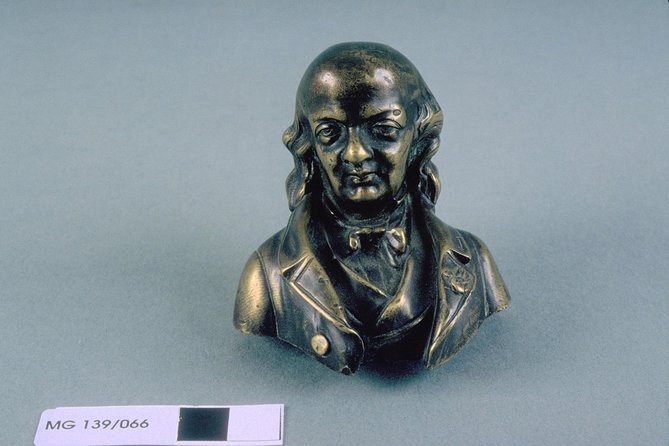
The Hunt Museum is not only about archaeology. Its collection also includes fine and decorative art from later periods, with works linked to Pablo Picasso, Pierre Auguste Renoir, Roderic O’Conor, Jack B. Yeats, Robert Fagan, and Henry Moore.
That mixture is one reason I think the museum works well for couples or small groups with different interests. One person can focus on ancient objects while another spends time with painting, sculpture, glass, or ceramics.
The 18th and 19th-century decorative arts deserve attention. Silver, glass, and ceramics may not have the immediate fame of a major painting, but they show how design and craftsmanship shaped everyday life and formal settings. These displays also make the museum feel less like an archaeology collection and more like a wide-ranging art museum.
Irish contemporary ceramics add another layer. Works by Frances Lambe, Henry Pim, and Christy Keeney show that the museum’s interests continue into modern Irish craft. If ceramics appeal to you, allow extra time here rather than treating this section as a quick add-on.
The collection’s range can create an uneven experience for some visitors. You may love the ancient Irish objects but feel less engaged by decorative art, or prefer the paintings and wish for more space devoted to them. That is not a flaw so much as the result of the Hunts’ wide interests.
A few more trips worth weighing up
- Skip the Line: Bunratty Castle and Folk Park Admission Ticket
★ 4.5 · 200 reviews - Dublin: Skip-the-Line Guinness and Jameson Whiskey Tour
★ 4.7 · 771 reviews - Skip the Line: Hook Lighthouse Entrance Ticket and Guided Tour
★ 5.0 · 470 reviews - Skip the Line: The National Wax Museum Admission Ticket
★ 4.0 · 216 reviews
Temporary exhibitions and the limits of the ticket
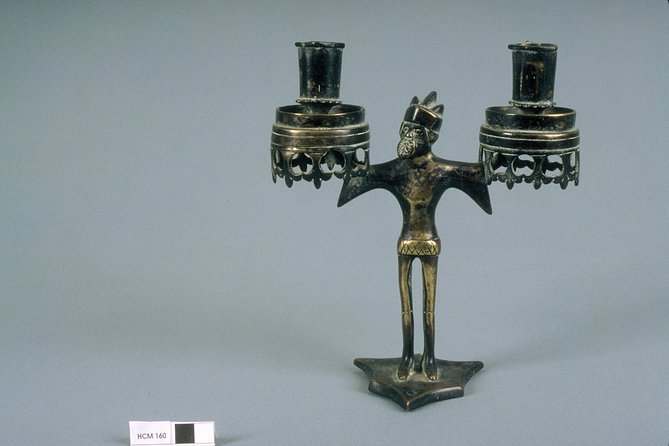
The museum also presents paid temporary exhibitions. One named example is Lavery & Osborne: Observing Life, focused on two Irish 19th-century artists and their connections to plein air and naturalist painting.
An exhibition like this can add real value if it is running during your visit and you enjoy painting. It may include portraits of notable figures such as Hazel Lavery and Queen Victoria, along with genre scenes. But you should check what is included before assuming your $15 admission covers every exhibition.
This point matters because one visitor was disappointed that no art exhibition was available during the visit. The permanent collection remains the main reason to come, but temporary displays can change the balance of the experience. If you have a strong interest in a named exhibition, confirm its dates and admission terms separately.
The ticket information identifies admission as included, while transportation and paid temporary exhibitions are not included. Keep that distinction in mind when working out your day’s budget.
Is $15 good value for one to two hours?
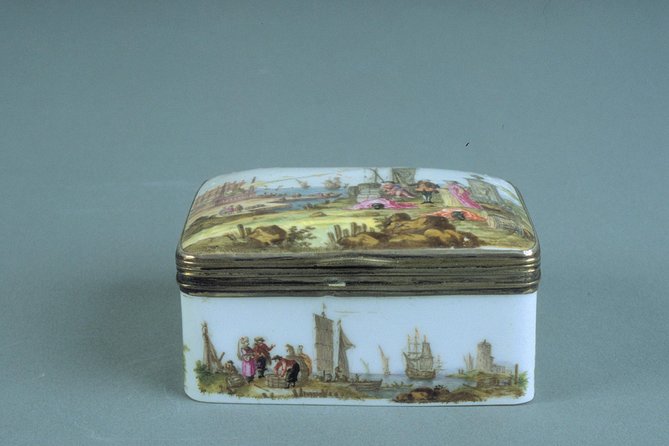
At $15 per person, the Hunt Museum offers reasonable value if you like museums and plan to spend close to two hours inside. The collection covers prehistoric Ireland, ancient civilisations, medieval Europe, decorative arts, Irish ceramics, and modern artists. That is a lot of variety for one admission.
The value is less clear if you only want a quick look or have little interest in objects displayed in cases. The museum is not a high-speed attraction with one spectacular room. Its appeal builds through the range and quality of the objects.
The prepaid ticket has a practical benefit. You receive confirmation at booking and can use a mobile ticket, which means you do not need to arrange a separate paper voucher. The skip-the-line feature may save a little time at admission, though the available feedback suggests queues are not always long.
Group discounts are available, which may improve the price for families or larger parties. The activity has a maximum of nine people, so the arrangement is suited to a small group rather than a large coach party.
If you are planning several paid stops in Limerick, compare the total cost with your other choices. If this is your main indoor attraction, the broad collection and flexible one to two-hour visit make the price easier to justify.
Planning your visit around the opening hours
The museum is open Tuesday through Saturday from 10 a.m. to 5 p.m. The supplied hours apply across 2025 and 2026. It is not listed as open on Sunday or Monday, so check your schedule carefully before placing it in your day.
Because the museum closes at 5 p.m., I would avoid leaving it until the final hour if you want time for the full collection. A one-hour visit can work for a focused look, but two hours gives you more room for the prehistoric, medieval, decorative arts, painting, and ceramics sections.
The Hunt Museum is particularly useful as a wet-weather plan in County Limerick. Rain can make outdoor sightseeing less pleasant, while this visit gives you a substantial indoor activity without requiring a full day.
You will need to arrange your own way there. Transportation to and from the attraction is not included, though the museum is near public transportation. That makes the ticket easiest to use as part of a Limerick city day rather than as a remote excursion.
Who will enjoy the Hunt Museum most?

I would recommend this experience to adults who like art, archaeology, antiques, or unusual collections. It is also a good choice for visitors who want to understand more about Irish material culture without committing to a large national museum.
Families can participate, and most people can take part. Still, the collection’s appeal depends on attention and curiosity. One direct assessment found it more interesting for adults than for teenagers or children, so parents should consider the interests of their own group.
The museum may also suit you if you prefer flexible sightseeing. You can take a quick one-hour visit or stay for two hours, use the mobile ticket, and focus on the objects that matter most to you.
It is less suitable if you want a highly interactive attraction, a large children’s programme, or a guaranteed live guide. The available information confirms an expert tour of the collections, but it does not promise a named guide or a fixed guided departure.
Service animals are allowed, the site is near public transportation, and most people can participate. Those details make it a practical stop for many visitors, but you should still confirm any personal access needs before booking if you require specific facilities.
Practical booking advice and cancellation terms
The experience is commonly booked about 13 days ahead, so booking in advance is sensible if your Limerick dates are fixed. You can receive confirmation at the time of booking, and the mobile ticket makes the process straightforward.
Free cancellation is available up to 24 hours before the experience start time for a full refund. If you cancel less than 24 hours ahead, the payment is not refunded, and changes made inside that period are not accepted.
All cut-off times use local time in Limerick. That is worth remembering if you are booking from another time zone or changing a wider Ireland itinerary.
Should you book the Hunt Museum ticket?
I would book it if you want a compact, varied museum visit in Limerick, especially on a rainy day. The strongest reasons are the Custom House setting, the spread from Irish prehistory to modern art, and memorable objects such as the Antrim Cross, Bronze Age shield and cauldron, and early Christian bells.
I would be more cautious if your group needs a hands-on children’s attraction or if you are mainly interested in one temporary art exhibition. Check that exhibition’s dates and cost first.
For most adults, couples, art fans, history fans, and small groups, the $15 admission is a fair way to spend one to two hours. Book ahead for convenience, but do not choose this solely to avoid a queue. Choose it for the collection itself.
FAQ
How much does the Hunt Museum ticket cost?
The ticket costs $15 per person. Group discounts are available.
How long does a visit to the Hunt Museum take?
The estimated visit lasts about one to two hours. You can make it shorter by focusing on selected sections or stay longer to examine more of the collection.
What does the ticket include?
Admission to the Hunt Museum is included, along with an expert tour of the Hunt Museum collections.
Is transportation included?
No. Transportation to and from the attraction is not included. The museum is near public transportation.
Can I use a mobile ticket?
Yes. The experience offers mobile ticketing, and confirmation is provided at the time of booking.
What are the Hunt Museum opening hours?
The museum is open Tuesday through Saturday from 10 a.m. to 5 p.m. The stated hours apply during 2025 and 2026.
Is the Hunt Museum suitable for children?
Families can participate and most people can take part. The collection may appeal more strongly to adults than to young children or teenagers.
How many people can join the activity?
The activity has a maximum of nine travelers.
Can I cancel for a full refund?
Yes, if you cancel at least 24 hours before the experience start time. Cancellations made less than 24 hours ahead are not refunded, and changes inside that period are not accepted.
Just added around Limerick
- Best of Limerick: Private Walking Tour with a Local★ 5.0 · 5 reviews
- Private Walking Tour of Adare★ 5.0 · 6 reviews
- Limerick City: Private transfer to & from Shannon Airport★ 5.0 · 7 reviews
- Guided eBike Tour – Killaloe and the Lough Derg Shore★ 5.0 · 9 reviews
- Private Walking Tour of Limerick City★ 4.0 · 10 reviews
- Angela’s Ashes 1.5hrs Walking Tour★ 5.0 · 20 reviews
- Self Guided Bike Tour on the Limerick Greenway★ 5.0 · 33 reviews
- General Entry Tickets to Foynes Flying Boat and Maritime Museum★ 5.0 · 33 reviews
Museums, compared.


The Little Museum of Dublin Famous Guided Tour
Read our review →

Giant’s Causeway with the Titanic Exhibition and the best of Northern Ireland
Read our review →

Irish Whiskey Museum: Whiskey Blending Experience
Read our review →
Irish Whiskey Museum Blending Tour with Tastings
Read our review →Browse the lists this tour appears in