
Reviewed · BURREN TOURS
Aran Knitting, History and Heritage in the Burren
Knitting comes with a sense of place. At Faerie Fort farm near Galway, Stephanie connects Aran sweater patterns with family history, wool, and the old Irish countryside around her home. The session takes place in a garden studio beside a thatched cottage and a 1,000-year-old fairy fort, giving this two-hour experience a setting far removed from a standard craft class.
I like the personal scale of the visit. This is a private activity, so your group gets direct help rather than sharing a table with strangers. I also like the mix of craft and food: you learn cable and stitch patterns, then enjoy smoked salmon on homemade brown bread, porter cake, tea, coffee, or herbal tea.
The main consideration is simple: this experience suits people who want a calm, hands-on visit, not a fast sightseeing stop. The meeting point is in Crannagh, County Galway, and the price of $78.27 per person may feel high if you only want a short demonstration rather than time to practice knitting yourself.
In This Review
- Key points to know before booking
- Arriving at Faerie Fort farm near Galway
- The opening story: farming, fairy forts, and local tradition
- Understanding what makes Aran knitting different
- The hands-on cable pattern session
- Tea, smoked salmon, and porter cake
- Why the private format changes the experience
- What makes the setting feel authentic
- Who will get the most from two hours here
- Is $78.27 per person fair?
- Timing, meeting point, and cancellation
- Should you book Aran Knitting, History and Heritage in the Burren?
- FAQ
- Where does the Aran knitting experience take place?
- How long does the experience last?
- Where does the experience end?
- What will I learn about Aran knitting?
- Do I get to knit during the visit?
- Is the activity private?
- Is food included?
- Can beginners participate?
- What is the cancellation policy?
Key points to know before booking
- A fourth-generation farm setting: Stephanie lives and teaches at Faerie Fort farm, a family property with a thatched cottage and an ancient fairy fort.
- Aran knitting with meaning: You learn about wool types, cable patterns, stitch designs, and how to plan your own sweater.
- Hands-on practice: The class includes a prepared cable pattern for you to knit during the visit.
- Private and personal: Only your group takes part, with one-on-one help available, including support for complete beginners.
- A generous Irish food break: Homemade brown bread with smoked salmon, traditional porter cake, and hot drinks are served during the session.
- Flexible cancellation: You can cancel for a full refund up to 24 hours before the local start time.
Arriving at Faerie Fort farm near Galway
The experience begins at Crannagh, County Galway, at the stated meeting point of H91 KVY6. It also ends there, so you should plan your transport to and from this location before booking. No separate transfer is included in the details provided.
The setting matters. You are not walking into a generic workshop in a town centre. You are visiting a working family farm where Stephanie is a fourth-generation farmer. Her family connection gives the opening talk a personal feel, and the surrounding property helps explain why the class is about more than making a few rows of stitches.
The garden studio sits beside a thatched cottage and a 1,000-year-old fairy fort. That combination gives the visit its character. The fort is part of the immediate setting, not a distant historical reference, while the cottage provides a clear link to older Irish domestic life.
You should allow a little mental space for the journey and arrival. The point is not to rush in, take a photograph, and hurry back to Galway. The class works best when you treat it as a small countryside visit with knitting at its centre.
More Historical Tours in Galway
- Galway: Dark History Guided City Walking Tour
★ 4.8 · 236 reviews - The Dark History Tour of Galway City
★ 5.0 · 146 reviews - Galway City on Foot with Seán: Stories, History, Local Tips, Chat and More..
★ 5.0 · 64 reviews
The opening story: farming, fairy forts, and local tradition
Stephanie begins with a brief account of the area’s heritage. The available description does not promise a long formal lecture, so expect an introduction rather than a full archaeological tour. That is probably the right balance for a two-hour visit, since the craft lesson still needs time.
The fairy fort gives this talk a memorable anchor. Ancient ring forts and similar sites are closely tied to Irish folklore, and having one beside the studio makes the setting feel tangible. You can look around and connect the stories to the place under your feet, rather than hearing an abstract account in a classroom.
The farm’s age also adds weight to the introduction. Stephanie’s family has lived and worked there for generations, and the property is described as a 209-year-old family farm. That detail gives you a sense of continuity without pretending that every part of the modern class is unchanged tradition.
I appreciate that the history is tied to a person and a home. You are not being handed a broad, polished version of Ireland designed for a coach tour. You are hearing how one local family relates to its property and its crafts.
Understanding what makes Aran knitting different
The next part turns to Aran knitting. Stephanie explains the origins of Aran knitting, the different types of wool available, and the meanings associated with a range of stitch patterns.
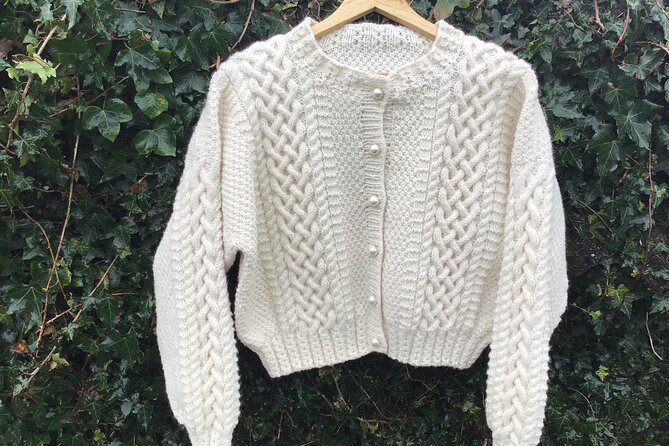
This is where the visit gains value for anyone who has seen Aran sweaters but never looked closely at how they are made. The familiar raised cables are not simply decoration. They give a sweater texture and structure, and they can also carry traditional associations.
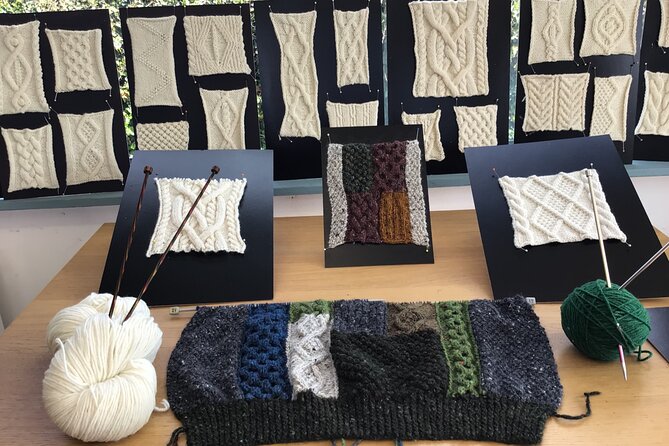
You will see examples of cable and stitch patterns before trying one yourself. That order is useful. First, you can handle the ideas visually. Then you have a better chance of understanding what your needles are doing when you begin.
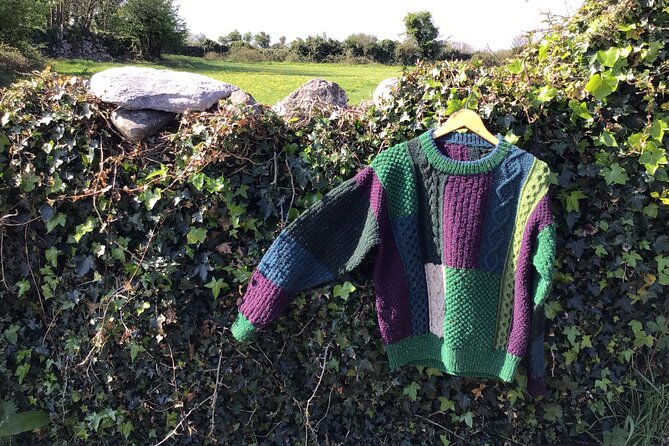
The discussion also covers sweater design. Stephanie explains how you can plan your own sweater, rather than limiting the lesson to copying one small sample. You will not finish a full sweater in two hours, of course, but you can leave with a clearer sense of how individual motifs might work together.
The wool section should appeal to knitters who usually buy yarn based only on colour or softness. Different wool types behave differently, and the explanation gives you a practical reason to think about fibre as well as pattern. The information supplied does not name particular wool brands or guarantee that you will handle every type discussed, so keep your expectations focused on instruction and examples.
The hands-on cable pattern session
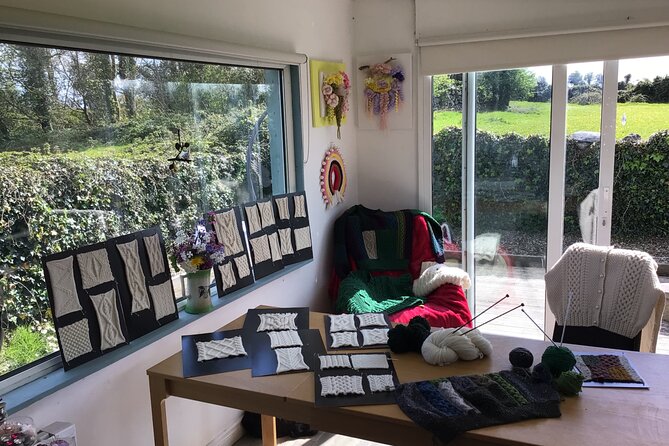
After the introduction, you knit a prepared cable pattern. This is the part that makes the experience more than a talk.
A prepared pattern keeps the class moving. You do not have to spend the session choosing a design, counting out a large project, or trying to decide where to begin. You can get straight to the technique while Stephanie watches your work and offers corrections.
This arrangement works well for mixed-skill groups. One person can already knit, while another may be picking up needles for the first time. Stephanie has provided one-on-one help to a group member who had never knitted before, while also giving more experienced participants advice for their own projects.
That personal teaching is one of the strongest reasons to consider the private format. In a large workshop, a beginner can fall behind quietly. Here, the group can ask for help as it goes, and an experienced knitter can spend time refining a pattern or discussing design choices.
Still, you should be realistic about the result. The activity is a lesson, not a finished Aran sweater. You will work on a prepared cable pattern and gain skills to use on a future project. The practical souvenir is the technique and the pattern, not a completed garment.
More Burren tours:
- From Galway: Full-Day Cliffs of Moher & Burren Guided Tour
★ 4.8 · 2,815 reviews - Cliffs of Moher & the Burren Tour from Galway
★ 5.0 · 1,913 reviews - From Galway: Cliffs of Moher and The Burren Guided Day Trip
★ 4.7 · 1,770 reviews - Cliffs of Moher & Burren Day Tour with a 2 hour stop at Cliffs
★ 5.0 · 539 reviews
Tea, smoked salmon, and porter cake
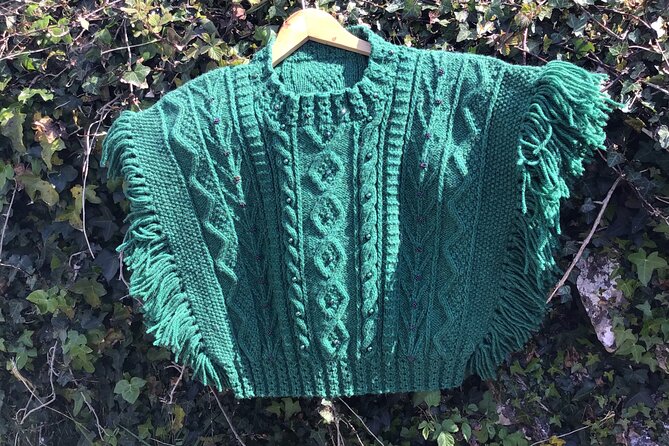
Food is served at your convenience during the visit. The offering includes smoked salmon on homemade brown bread, traditional Irish porter cake, tea, coffee, and herbal teas.
This is more than a snack list. Homemade brown bread and porter cake reinforce the home-based nature of the experience, while smoked salmon makes the break feel like a proper welcome rather than a bowl of packaged biscuits. The food also gives your hands and attention a rest between explanations and knitting practice.
The timing is flexible, which suits a private class. You can pause for a drink or eat while talking through a stitch pattern. The information does not specify a separate meal period, so do not book this as a full lunch replacement. Think of it as generous hospitality built into the lesson.
I like this part because it gives the experience a social rhythm. You listen, try a pattern, stop for food, and continue talking. It feels closer to being welcomed into someone’s home than to sitting through a fixed demonstration.
If you have dietary needs, ask ahead of time. The stated food includes fish, bread, cake, and several drinks, but no other dietary information is provided.
Why the private format changes the experience
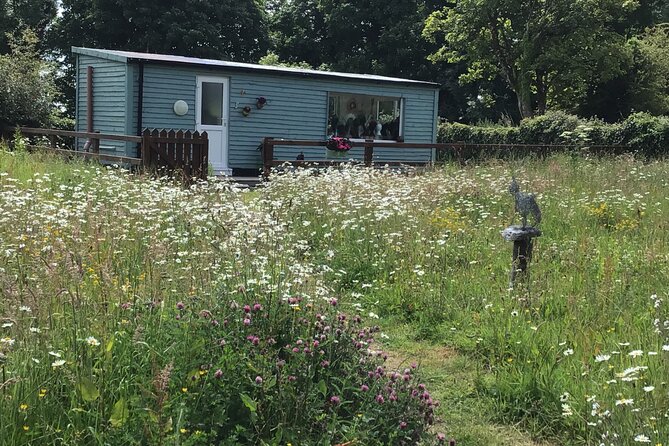
Only your group takes part. That is a major practical benefit for families, couples, or friends with different levels of knitting experience.
A private class lets the pace adjust. If you need extra help with a cable, you can ask without holding up a room full of people. If you already knit, you can spend more time discussing pattern design rather than repeating basic needle work.
The private setup can also make the history feel more conversational. You have room to ask about the farm, the fort, the cottage, or the patterns without worrying about a large group’s schedule.
There is one trade-off. A private activity depends on your group enjoying the same kind of quiet, focused visit. If one person wants a quick photo stop and another wants to study Aran construction, the two-hour schedule may feel less relaxed. The experience works best when everyone is willing to take part in the craft and conversation.
The strong response to Stephanie’s teaching is understandable. She is described as kind, patient, welcoming, and accommodating. Those qualities matter more in a practical class than a polished speech. A teacher can know a craft well and still be poor at explaining it. Here, the useful detail is that she gives individual guidance and does not rush the group.
What makes the setting feel authentic
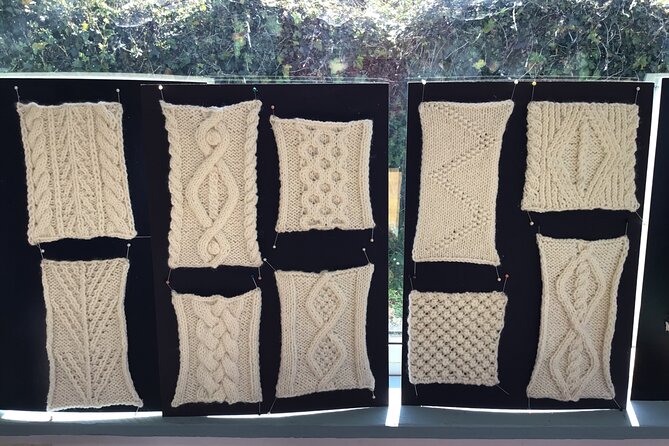
The word authentic is overused in tourism, but this visit has several concrete details that support it. Stephanie teaches from her family farm, works in a garden studio, lives beside a thatched cottage, and shares local knowledge connected to the immediate property.
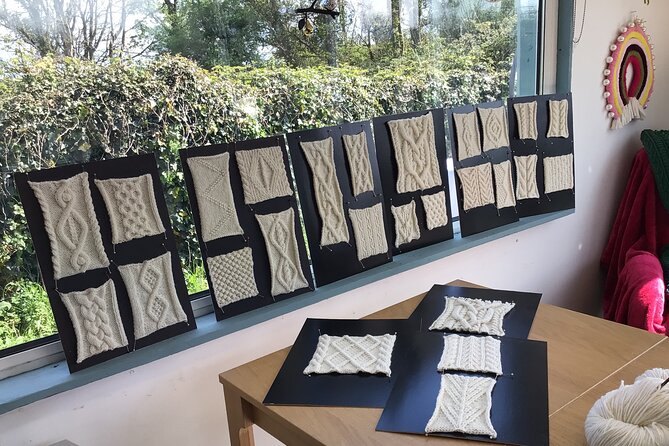
You are also seeing ongoing creative work in the studio. The space contains examples and projects, so you can understand how a knitter thinks through patterns beyond the single exercise prepared for the class.
That matters because Aran knitting is often encountered as a finished product in a shop. This visit lets you look at the process. You see how a cable is built, how a motif is repeated, and how a sweater can be planned before the first major section is complete.
The setting does not turn the class into a full tour of the Burren. You should not expect a broad regional excursion, a long walk, or a catalogue of nearby sights. Its strength is focus: one farm, one teacher, one traditional craft, and a small amount of local history.
Who will get the most from two hours here
I would recommend this experience most strongly to:
- People who already knit and want to understand Aran cable patterns more clearly
- Beginners who prefer patient, individual instruction
- Couples or families looking for a quiet Irish activity
- Craft lovers interested in wool, design, and traditional techniques
- Visitors who value a family-run setting over a large commercial attraction
- Anyone who enjoys food and conversation as part of a cultural experience
You do not need to be an expert. The private format and one-on-one help make the class suitable for beginners, and most people can participate. Service animals are allowed.
You might not enjoy it as much if you have no interest in knitting, do not want to spend two hours seated and focused on a craft, or are trying to pack several major Galway sights into a tight schedule.
The experience is also not the best choice for someone who wants to buy a finished sweater or see a large production process. Its purpose is teaching and conversation, not retail shopping or factory viewing.
Is $78.27 per person fair?
At $78.27 per person, the price is not low for a two-hour activity. But the value depends on what you count as included.
You are paying for a private class, a local guide with family ties to the farm, examples of Aran patterns, instruction with a prepared cable design, and food and drinks. You also get the setting of the studio, cottage, and fairy fort, which gives the session a strong sense of place.
For a person who wants to learn a skill, that is a reasonable package. A short public demonstration might cost less, but it would not provide the same amount of direct correction or personal attention. The price becomes harder to justify if you plan to sit back and watch without knitting.
I would think of the fee as the cost of a small cultural workshop rather than an admission ticket. The more questions you ask and the more actively you practice, the more value you are likely to get.
The fact that the experience is often booked 31 days in advance suggests that you should not leave it until the last minute if it fits your plans. That is especially important if your Galway visit has fixed dates.
Timing, meeting point, and cancellation
The class lasts about two hours. It starts and ends at Crannagh, County Galway, H91 KVY6, so confirm your route before setting out. The details provided do not include transport from Galway or explain the best way to reach the farm.
A mobile ticket is accepted, and confirmation arrives when you book. Most people can participate, and service animals are allowed.
Free cancellation is available until 24 hours before the experience’s local start time. If you cancel later, the amount paid is not refunded, and changes made within that 24-hour window are not accepted. That policy is fairly clear, but check the local start time carefully if you are booking from another time zone.
Should you book Aran Knitting, History and Heritage in the Burren?
Book it if you want a personal Irish craft lesson with a real family setting, not just a quick explanation of Aran sweaters. Stephanie’s patient teaching, the private format, the ancient fairy fort, and the homemade food give the two hours a strong sense of purpose.
I would especially choose it for a couple or small group with mixed knitting ability. Beginners get support, experienced knitters have room to ask about design, and everyone can share the food and local stories.
Skip it if your schedule is too tight for the journey to Crannagh, or if knitting is not likely to hold your attention. At $78.27, this is worthwhile when you take part fully. It is less convincing as a passive stop.
For the right audience, it offers something a standard sightseeing tour cannot: a chance to learn a traditional skill from a local maker in the place where she lives and works.
FAQ
Where does the Aran knitting experience take place?
It takes place at Faerie Fort farm in Crannagh, County Galway, at H91 KVY6, Ireland.
How long does the experience last?
The activity lasts approximately two hours.
Where does the experience end?
It ends back at the meeting point in Crannagh.
What will I learn about Aran knitting?
You will learn about the origins of Aran knitting, different types of wool, the meanings of various stitch patterns, and ways to design your own sweater.
Do I get to knit during the visit?
Yes. You will knit a prepared cable pattern during the experience.
Is the activity private?
Yes. Only your group will participate.
Is food included?
Yes. Smoked salmon on homemade brown bread, traditional Irish porter cake, tea, coffee, and herbal teas are served during the visit.
Can beginners participate?
Yes. Most people can participate, and individual help is available. One group member with no previous knitting experience received one-on-one instruction.
What is the cancellation policy?
You can cancel up to 24 hours before the local start time for a full refund. Cancellations or changes made less than 24 hours before the start are not accepted for a refund.
Just added around Galway
- Galway’s Historical Gems: A Walk Through Time★ 5.0 · 3 reviews
- Connemara/Galway: Inis Meáin Return Ferry Transfer★ 4.7 · 3 reviews
- Galway: HerGalway Walking Tour★ 5.0 · 3 reviews
- Galway: Medieval Galway Tour★ 4.7 · 3 reviews
- From Galway: Cliffs of Moher and The Burren Tour★ 5.0 · 3 reviews
- 2.5 Hour Guided Sea Kayaking in Roundstone Bay★ 5.0 · 3 reviews
- Galway Tasting and Walking Tour★ 5.0 · 3 reviews
- Ferry ticket – Day return ticket to Inishbofin Island from Cleggan. Self Guided.★ 5.0 · 3 reviews
Burren Tours, compared.

Cliffs of Moher, Burren & Galway City Day Tour
Read our review →
Dublin to Cliffs of Moher, Burren, Wild Atlantic Way, Galway Tour
Read our review →
Cliffs of Moher, Doolin, Burren, and Galway Day Trip
Read our review →
Full-Day Cliffs of Moher & Burren Guided Tour
Read our review →
Cliffs of Moher, Burren and Galway Day Tour from Dublin
Read our review →
Cliffs of Moher & the Burren Tour from Galway
Read our review →
Cliffs of Moher and The Burren Guided Day Trip
Read our review →
Dublin to Bunratty Castle, Cliffs of Moher, Burren Galway by Rail
Read our review →Browse the lists this tour appears in