Reviewed · DUBLIN TOURS
Dark Dublin: Torture, Murder & Mystery
Dark stories give Dublin extra bite. This two-hour walking tour links famous landmarks with tales of torture, murder, grave robbery, and cannibalism, then leads you beyond the usual city-center route to Smithfield. I like the mix of major sights and lesser-known corners, and I like that the tour stays on foot, making it easy to see how old Dublin fits together.
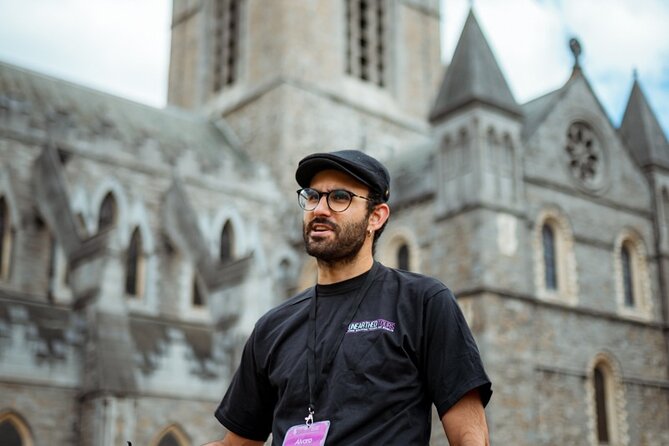
The guides are the heart of the experience. Cillian, Killian, Michael, Kim, Mikayla, Stephen, and others have earned praise for lively storytelling, humor, and clear enthusiasm for Dublin’s past. The main drawback is that the tour does not enter Dublin’s churches or castles, and parts of the route can feel fast or noisy when traffic and crowds get in the way.
In This Review
- Key points to know before you book
- A dark introduction at Barnardo Square
- Dublin Castle and the Devil’s Half Acre
- The 40 Steps and stories of cannibalism
- Saint Patrick’s Cathedral and Jonathan Swift
- Christ Church Cathedral and the city beneath the surface
- St. Audoen’s Church and grave robbing
- St. Michan’s Church and Billy in the Bowl
- Ending in Smithfield with a local murder story
- How the guides shape the experience
- Walking, group size, and evening comfort
- Is $23.22 a fair price?
- Who should book Dark Dublin?
- FAQ
- Where does Dark Dublin: Torture, Murder & Mystery begin?
- What time does the tour start?
- How long does the walking tour last?
- Where does the tour end?
- Does the tour enter Dublin Castle or the churches?
- How many people can join the tour?
- Should you book it?
Key points to know before you book
- The route connects eight historic stops: Begin at Barnardo Square and finish in Smithfield Square after passing Dublin Castle, both cathedrals, St. Audoen’s, and St. Michan’s.
- The focus is grim but historical: Expect stories of executions, body snatching, grave robbing, cannibalism, torture, murder, and local legends.
- You see the buildings from outside: The tour visits cathedral grounds and castle courtyards, but admission inside the main religious buildings and Dublin Castle is not included.
- The 5:30 pm start suits an evening in Dublin: You finish at about 7:30 pm in Smithfield, close to places to continue your night.
- The group can reach 30 people: It is described as a small-group experience, but it is not a private or intimate walk.
- The walk costs $23.22 per person: That is fair value if you want guided stories and historic context rather than indoor admission tickets.
A dark introduction at Barnardo Square
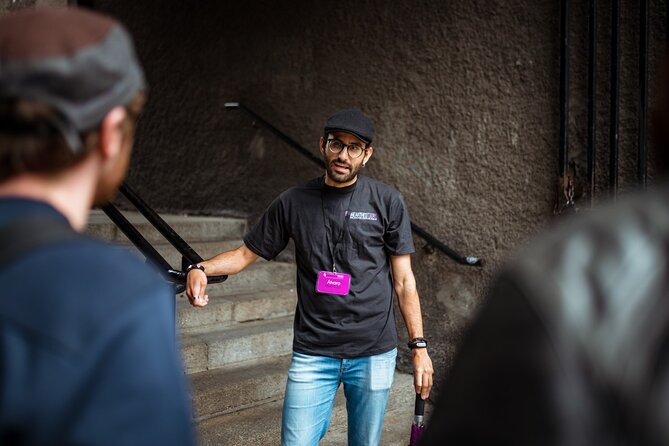
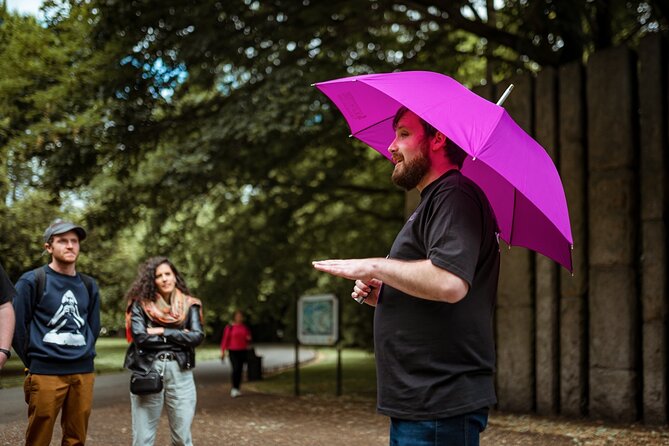
The tour starts at Barnardo Square on Dame Street at 5:30 pm. The meeting point is beside City Hall and opposite the Olympia Theatre, so it is relatively easy to locate. Guides carry purple umbrellas, a useful landmark in a busy central area.
This is a practical starting point because you are already near several of Dublin’s major sights. You do not need private transport, and the tour uses the city streets from the first minute. Wear shoes suited to walking and arrive ready to remain outdoors for roughly two hours.
The opening stop takes only about five minutes. That is enough time to gather the group and set the mood without wasting the evening on a long introduction. You may want to use the toilet and pick up a snack before starting, since the tour does not include dinner and the walk keeps moving.
A few more trips worth weighing up
- Dublin to Cliffs of Moher, including Wild Atlantic Way and Galway
★ 5.0 · 23,331 reviews - From Dublin: Cliffs of Moher, Burren & Galway City Day Tour
★ 4.8 · 18,888 reviews - Dublin: Guinness Storehouse Entry Ticket
★ 4.6 · 16,863 reviews
Dublin Castle and the Devil’s Half Acre
The first substantial stop is Dublin Castle. You walk through the Lower Courtyard, where the guide explains the darker forms of punishment and torture used in earlier periods. The setting helps because the castle is not treated simply as a grand government building. You hear how power, law, and cruelty once operated in the same place.
The route then reaches the Upper Courtyard and the story of the Devil’s Half Acre. This gives the tour a strong early contrast: an important civic landmark on one hand, and unsettling tales connected with its past on the other.
You do not enter Dublin Castle. That matters if you hoped to see the state rooms or interior exhibitions. Still, the castle courtyards provide a useful historical backdrop, and the outdoor format keeps the cost low. If you want a full castle visit, plan that separately.
The castle section lasts about 15 minutes. That is long enough for a few well-developed stories, but not enough for an extended architectural tour. The emphasis is firmly on the darker side of the site.
The 40 Steps and stories of cannibalism
The stop called the 40 Steps shifts the subject toward cannibalism. It is one of the tour’s more unusual sections, since this is not the sort of material that appears in a standard Dublin sightseeing walk.
The story is likely to appeal most to people who enjoy grim social history and true crime. It is also the point where you should judge the tone of the experience. This tour does not merely hint at Dublin’s unpleasant past. The advertised subjects include torture, murder, grave robbery, and cannibalism, so the content can be graphic or disturbing.
The guide’s delivery makes a major difference here. Cillian, Killian, Michael, Kim, and Mikayla have all been praised for balancing dark material with humor and energy. That lighter touch can make the stories easier to follow, but it may not suit you if you want a solemn historical lecture.
Saint Patrick’s Cathedral and Jonathan Swift
The walk continues to the grounds of Saint Patrick’s Cathedral. Here, the guide discusses Jonathan Swift and the cathedral’s connection with Dublin’s intellectual and religious past.
You do not enter the cathedral. Instead, you hear the story from the grounds and take in the exterior setting. This is a useful distinction when planning your day. The tour offers context and atmosphere, not an interior church visit or a detailed art-and-architecture presentation.
Swift adds a more literary dimension to the walk. The subject is not only blood and punishment. The route also shows how writers, clergy, politics, and public life shaped Dublin. That broader scope keeps the experience from becoming a string of unrelated horror stories.
The stop lasts about 15 minutes. I like this kind of pacing because you get time to absorb a story without spending half an hour in one place. On the other hand, anyone who wants a detailed visit to Saint Patrick’s Cathedral will need a separate ticket and extra time.
A completely different kind of day out from Dublin:
- Dublin to Cliffs of Moher, Burren, Wild Atlantic Way, Galway Tour
★ 5.0 · 12,924 reviews - Dublin to Belfast Black Cab, Dunluce Castle and Giant’s Causeway
★ 5.0 · 7,954 reviews - Kilkenny, Wicklow Mountains & Glendalough Day Tour from Dublin
★ 5.0 · 7,897 reviews - From Dublin: Wicklow Mountains, Glendalough & Kilkenny Tour
★ 4.8 · 6,235 reviews
Christ Church Cathedral and the city beneath the surface
Christ Church Cathedral is another major Dublin landmark on the route. The guide explains its less familiar past, using the building as a doorway into stories that are not usually part of a quick city-center walk.
Again, you remain outside. The tour does not include entry to Christ Church, so the value comes from the guide’s interpretation and the chance to see the cathedral while hearing about its darker associations.
This is one of the strongest parts of the route for first-time visitors because it combines a famous sight with material you probably would not get from a normal hop-on, hop-off commentary. You see the city’s postcard landmarks, but the stories change how you read them.
The route also helps place Dublin’s historic core in context. The cathedral area is not presented as a polished museum zone. It becomes a place shaped by religious authority, crime, fear, and changing ideas about death.
St. Audoen’s Church and grave robbing
At St. Audoen’s Church, the tour turns to grave robbing and attacks linked with the Black Pig. The church is one of the more atmospheric stops because it sits near the old heart of Dublin, where medieval streets and later buildings overlap.
The guide does not take you inside St. Audoen’s. You hear the stories outdoors and view the site as part of the surrounding historic area. That arrangement works well for a walking tour, though it can be less satisfying if you want to explore the church itself.
Grave robbing gives the tour a useful social-history angle. The subject is not just supernatural fear. It raises questions about medicine, poverty, burial practices, and the value placed on human remains. The darker stories work best when they reveal how people lived and what they feared, and this stop appears designed to do exactly that.
St. Michan’s Church and Billy in the Bowl
The next stop is St. Michan’s Church, where the guide tells the story of Billy in the Bowl and other grim events from Dublin’s more recent past.
The church is well suited to the tour’s mood, but you do not go inside. That limitation is worth noting because St. Michan’s is known for its own unusual interior attractions. If you want to visit it as a separate sight, check admission and opening details for your date.
The Billy in the Bowl story adds a local character to the walk. Instead of hearing only about famous institutions, you get a tale rooted in Dublin’s streets and neighborhoods. This is one reason the route feels different from a standard central sightseeing circuit.
The tour also passes through areas that you might not reach on your own during a short visit. That is a real benefit for anyone who wants to move beyond the most familiar streets without spending time working out the route.
Ending in Smithfield with a local murder story
The tour finishes in Smithfield Square after a final story about a local murderer. The end point is public, at 7 Smithfield, Dublin, and the walk takes about 15 minutes to close out the experience.
Smithfield makes a sensible ending. You are no longer at the tight center of the main sightseeing zone, and the neighborhood offers a change of scene after the castle and cathedral stops. The tour does not provide dinner or private transport, so you will need to make your own plans after the finish.
Ending here also reinforces the tour’s purpose. This is not only a route between famous buildings. It carries you into a different part of Dublin and shows how dark stories belong to ordinary streets and squares, not just grand landmarks.
The full experience lasts about two hours. Several people found that the time passed quickly, while others felt the tour was a little short. I would describe the length as a strength if you have limited time or want to fit it between other plans. It may feel brief if you want a long, theatrical ghost walk.
How the guides shape the experience
The strongest praise is directed at the guides. Cillian and Killian are repeatedly singled out for captivating delivery, humor, and strong command of the material. Michael is praised for keeping the group focused, while Kim and Mikayla receive credit for making difficult subjects both informative and entertaining.
Stephen is described as a good storyteller who covers a lot of ground and several centuries of trouble. Ciarán also receives praise for staying engaging despite rain and for bringing humor to grim subjects. These details suggest that the company has several guides who can give the walk real personality.
That said, the experience depends on who leads your particular departure. One guide was considered pleasant but less dramatic, and one person found the delivery too quiet or flat to hold attention. City traffic and passing crowds can also make certain stories harder to hear.
Ask questions when there is a chance. The guides are described as open to them, and a question can turn a quick stop into a more useful exchange. If you need a slow pace, say so early. One account found the walking speed too brisk for part of the group.
Walking, group size, and evening comfort
The route is on foot and covers several historic areas between Dame Street and Smithfield. The tour is described as a small-group experience but allows up to 30 people, so you should expect a medium-sized group rather than a private walk.
Most people can take part, and service animals are allowed. The experience is near public transportation, which helps at both ends, though the tour itself does not include transport. You will be outside for the complete walk, so rain can affect comfort and sound quality.
The 5:30 pm start is well chosen for an evening activity. It gives you time to sightsee earlier in the day and leaves the rest of the night open after about 7:30 pm. In October, the timing can add to the spooky mood, but the darker hours may also make wet streets and poor visibility more noticeable.
The walk is described as an easy amount of walking with breaks between stories. Still, you should not assume it is effortless. The route moves through city streets, and one account found the pace fast. If someone in your group walks slowly, allow extra patience and stay near the guide.
Is $23.22 a fair price?
At $23.22 per person, this tour offers solid value for a guided two-hour walk. You are paying for a live storyteller, a planned route, local context, and access to stories that are difficult to find in a normal guidebook.
The price does not include entry to Dublin Castle, Saint Patrick’s Cathedral, Christ Church Cathedral, or St. Michan’s Church. That keeps the cost down, but it also means you should not compare this directly with a ticketed interior tour.
I think the value is strongest if you want a themed introduction to Dublin. You see several important landmarks while learning about torture, crime, burial practices, legends, and murder. If your priority is only museum admission or formal architectural detail, the price may feel less worthwhile.
Group discounts are available, and confirmation arrives when you book. Free cancellation is available up to 24 hours before the start time. Cancellations made within 24 hours are not refunded, and late changes are not accepted. If the minimum number is not reached and the company cancels, you are offered another date or experience, or a full refund.
Who should book Dark Dublin?
I would choose this for anyone who likes true crime, folklore, unusual local stories, or history with a macabre edge. It also works well as a first Dublin activity because the route introduces major landmarks while showing you parts of the city beyond the most obvious center.
It suits solo visitors, couples, and groups of friends. A group of true crime fans would likely get the most from the subject matter. The tour can also make a good October or Halloween activity, though the stories are offered year-round.
I would think twice if you dislike graphic subjects or expect a polished theatrical performance at every stop. The quality of the evening depends heavily on the guide’s voice, timing, and ability to compete with traffic noise. You should also book a different kind of tour if entering the cathedrals and castle is essential.
FAQ
Where does Dark Dublin: Torture, Murder & Mystery begin?
The tour begins at Barnardo Square on Dame Street in Dublin 8, beside City Hall and opposite the Olympia Theatre. Guides are identifiable by purple umbrellas.
What time does the tour start?
The scheduled start time is 5:30 pm.
How long does the walking tour last?
The tour lasts approximately two hours and finishes at about 7:30 pm.
Where does the tour end?
The walk finishes in Smithfield Square at 7 Smithfield, Dublin.
Does the tour enter Dublin Castle or the churches?
No. The route includes the courtyards or grounds of Dublin Castle, Saint Patrick’s Cathedral, Christ Church Cathedral, St. Audoen’s Church, and St. Michan’s Church, but interior admission is not included.
How many people can join the tour?
The maximum group size is 30 people. The experience is described as a small-group tour, but it is not a private tour.
Should you book it?
Book Dark Dublin if you want a lively two-hour walk through Dublin’s darker past, not a conventional sightseeing lecture. The route combines Dublin Castle, both cathedrals, old church sites, and Smithfield with stories of torture, cannibalism, body snatching, grave robbing, and murder.
The main decision is simple: can you enjoy the subject even when the delivery is less theatrical than expected? If yes, $23.22 is a reasonable price for an unusual introduction to the city. Arrive early at Barnardo Square, wear comfortable shoes, prepare for outdoor conditions, and keep your expectations clear about the lack of interior visits.
Just added around Dublin
- A Self Guided Walking Tour of Dublin’s Docklands★ 4.5 · 3 reviews
- Waterford Crystal and Kilkenny Full-Day Rail Tour from Dublin★ 5.0 · 3 reviews
- Secret and unusual Dublin: guided walking tour★ 5.0 · 3 reviews
- Turtle Bunbury’s Dublin: A Self-Guided Audio Tour from a Celebrated Author★ 5.0 · 3 reviews
- Cliffs of Moher and The Burren Private Tour from Dublin★ 5.0 · 3 reviews
- Skip-the-line St. Patrick’s Cathedral and Dublin City Tour★ 5.0 · 3 reviews
- Dublin Full-Day Tour through Boyne Valley★ 5.0 · 3 reviews
- Rock Of Cashel And Blarney Castle Private Chauffeur Full Day Sightseeing Tour★ 4.5 · 3 reviews
Dublin Tours, compared.

Dublin to Cliffs of Moher, including Wild Atlantic Way and Galway
Read our review →
Cliffs of Moher, Burren & Galway City Day Tour
Read our review →

Dublin to Cliffs of Moher, Burren, Wild Atlantic Way, Galway Tour
Read our review →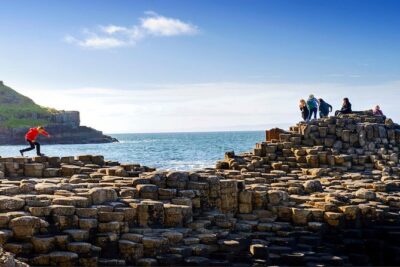
Dublin to Belfast Black Cab, Dunluce Castle and Giant’s Causeway
Read our review →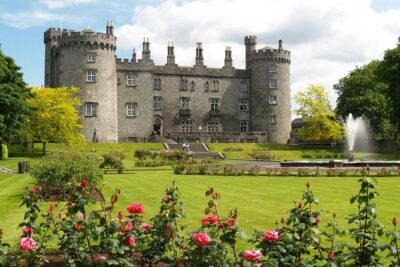
Kilkenny, Wicklow Mountains & Glendalough Day Tour from Dublin
Read our review →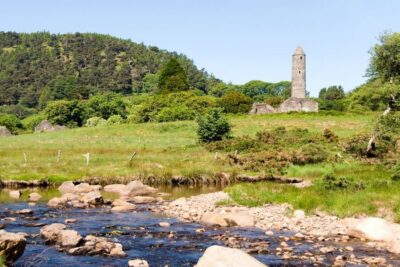
Wicklow Mountains, Glendalough & Kilkenny Tour
Read our review →