
Reviewed · WALKING TOURS
Secret and unusual Dublin: guided walking tour
Dublin has more stories than statues. This two-hour walk looks past the city’s best-known sights to uncover unusual corners, traces of rebellion, Viking connections, street art, music, literature, and Celtic symbols. You still get quick stops at major landmarks, but the real point is learning how to see familiar streets differently.
I like the mix of lesser-known places and classic Dublin landmarks, which gives you both orientation and surprise. I also like the tone promised by the tour: friendly, relaxed, humorous, and packed with useful information alongside a few legendary tales. The main consideration is that the tour is in French, and entrance fees are not included.
At $57 per person, this is not the cheapest way to walk around Dublin. Still, a small-group guided walk can be good value if you want context you would likely miss on your own, especially during a first visit. The route covers a lot in two hours, so expect a brisk pace rather than a slow, leisurely stroll.
In This Review
- Key points to know before you book
- Why this walk offers a different Dublin
- Starting at the O’Connell Monument
- Temple Bar beyond the postcard image
- The unnamed stops are part of the appeal
- Viking Dublin, Celtic signs, and older layers
- Dublin Castle and the weight of official history
- Powerscourt Townhouse and Dublin’s architectural contrasts
- Trinity College and the route’s practical question
- What $57 means in practical value
- Who will enjoy this walk most
- Weather, pace, and what to bring
- My verdict: book it for stories, not entry tickets
- FAQ
- Where does the tour start?
- Where does the tour finish?
- How long does the walking tour last?
- What language is the tour in?
- Are entrance fees included?
- Is the tour suitable for wheelchair users?
- Can I cancel for a full refund?
Key points to know before you book
- O’Connell Monument starts the story: You meet in front of the monument at the bottom of O’Connell Street, an easy place to find and a useful central starting point.
- Temple Bar gets more than the usual pub stop: The walk includes street art, culture, and less obvious details in one of Dublin’s most visited areas.
- The themes range widely: Expect connections to Viking Dublin, independence rebellions, architecture, music, literature, and Celtic symbols.
- Several stops remain deliberately unnamed: The itinerary promises secret and unusual places, but does not list every location in advance.
- The guide leads in French: This matters greatly to the value of the experience, since the stories and anecdotes are the main attraction.
- You finish near Trinity College, with a meeting-point detail to confirm: The route lists Trinity College as the finish, while the meeting information says the activity ends back at the starting point.
Why this walk offers a different Dublin
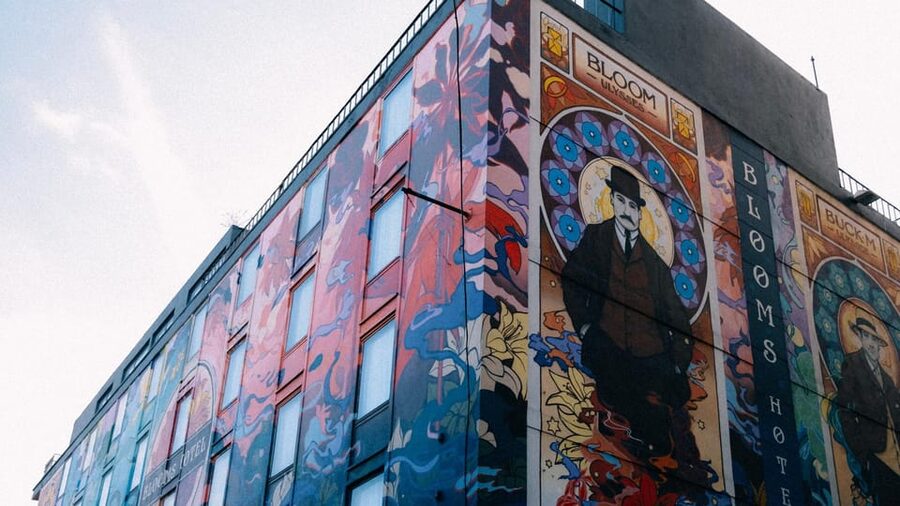
Many city walks follow the standard chain of major sights. You hear a short explanation, take a photograph, and move on. This experience uses the famous places mainly as anchors, then shifts attention to details that are easy to miss.
That approach suits me because Dublin rewards close looking. An old façade, a symbol carved into stone, a narrow corner, or a piece of street art can open a door into the city’s past. The tour is designed around those moments rather than around a long list of headline attractions.
You will hear about the old independence rebellions, but the focus is not limited to political events. Viking heritage, music, literature, architecture, and Celtic meanings all appear in the two-hour route. That broad mix should give you a more rounded sense of Dublin’s character.
The guide also adds anecdotes and some legendary stories. That is useful in a city where fact, folklore, and local memory often sit close together. You should not expect an academic lecture. The appeal is a lively explanation that helps you connect streets and buildings with the people and ideas tied to them.
The three written comments describe a friendly and erudite guide, a relaxed visit with humor, and a good balance of useful information and legendary material. Those points matter. A tour about obscure corners can become dry if the guide simply recites dates. Here, the strongest praise centers on warmth, humor, and the quality of the explanations.
More Walking Tours in Dublin
- Dublin Highlights and Hidden Gems Guided Walking Tour
★ 5.0 · 6,020 reviews - Dublin: Highlights and Hidden Gems Walking Tour
★ 4.9 · 2,140 reviews - 1916 Rebellion Walking Tour
★ 5.0 · 1,605 reviews
Starting at the O’Connell Monument
The meeting point is in front of the O’Connell Monument at the bottom of O’Connell Street. This gives you a clear central landmark and places you near one of Dublin’s major north-south routes.
Beginning here makes practical sense. You can arrive with a quick introduction to the city and then move into the less familiar material. The monument also sets up the tour’s interest in public memory, rebellion, and Ireland’s path toward independence.
Do not treat the opening stop as the whole experience. The outline describes iconic sights as quick introductions and photo stops, not as long visits. You will likely get your bearings, hear why the location matters, and then move on before the walk settles into a conventional sightseeing routine.
Arrive ready to walk immediately. The tour lasts only two hours, so every minute counts. Comfortable shoes and clothing suited to Irish weather are sensible. Dublin weather can change quickly, and there is no indication that the tour takes place indoors for long stretches.
Temple Bar beyond the postcard image
Temple Bar is one of Dublin’s most recognizable districts. Many people associate it with pubs, crowds, and evening entertainment, but this tour looks at its street art and culture as well.
That is a welcome change. You may have seen Temple Bar already, but a guide can direct your eyes toward details you would otherwise pass without noticing. The area’s artistic side gives the tour a modern counterpoint to its stories about Vikings and rebellions.
The stop also shows how the walk handles famous places. Rather than avoiding all popular sights, it uses them as a quick introduction before turning to less obvious material. I find that a useful balance. You get the Dublin landmarks you expect, but you do not spend the entire two hours standing in the most photographed spots.
Because Temple Bar is a busy part of the city, stay close to the guide and listen carefully. The tour is not described as a private walk, and the itinerary does not provide group-size information. A crowded street can make a soft-spoken explanation difficult to catch.
The unnamed stops are part of the appeal
After Temple Bar, the route lists several stops simply as a guided tour, a secret stop, or a hidden gem. The lack of names keeps the discovery element intact, but it also makes advance planning harder.
You are promised unusual corners, old buildings, Celtic symbols, and places connected with music and literature. The supplied details do not identify each exact location, so I would not expect a stop-by-stop checklist of addresses. The tour is built around the guide’s route and storytelling rather than a fixed catalogue of attractions.
This is one of the experience’s strengths. You can walk through Dublin without knowing every surprise in advance. It also creates one of the few practical limitations: you cannot easily decide beforehand whether a particular site is a must-see for you.
The unnamed stops seem especially suited to repeat visitors and curious first-time visitors. If you have already photographed the obvious sights, the chance to see Dublin through smaller details gives the walk a fresh purpose. If this is your first day in the city, the route can also help you notice places worth returning to later.
You should keep your expectations realistic. The information promises unusual corners and anecdotes, but it does not promise entry to private buildings, museums, or restricted sites. Most of the value comes from what the guide points out and explains from the streets.
A completely different kind of day out from Dublin:
- Dublin to Cliffs of Moher, including Wild Atlantic Way and Galway
★ 5.0 · 23,331 reviews - From Dublin: Cliffs of Moher, Burren & Galway City Day Tour
★ 4.8 · 18,888 reviews - Dublin: Guinness Storehouse Entry Ticket
★ 4.6 · 16,863 reviews - Dublin to Cliffs of Moher, Burren, Wild Atlantic Way, Galway Tour
★ 5.0 · 12,924 reviews
Viking Dublin, Celtic signs, and older layers
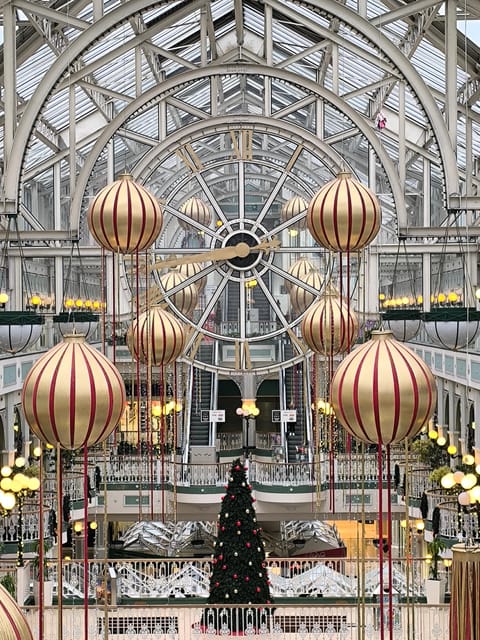
Viking heritage is one of the tour’s central themes. The itinerary does not specify which Viking sites you will visit or how much time the guide spends on them, so I would treat this as a thread running through the walk rather than a dedicated archaeology tour.
That can still be valuable. Dublin’s older layers are easy to miss when you focus only on its Georgian buildings, literary associations, or modern pub culture. A guide can help you picture the city as a place shaped by several periods, not as a collection of unrelated landmarks.
The tour also covers Celtic symbols and their meanings. Again, the real benefit is learning how to look. Symbols on buildings and decorative details can seem like background until someone explains what they represent or why they appear in a particular setting.
I like these themes because they connect the city’s visible details with a larger story. You are not simply hearing that a building is old. You are being encouraged to ask what ideas, beliefs, communities, and conflicts left their mark on it.
The guide’s use of both useful information and legendary stories should work well here. You can enjoy the folklore without confusing it with documented fact, provided the explanations make the distinction clear. The available comments praise the guide’s balance, which is reassuring for anyone who likes stories but still wants solid context.
Dublin Castle and the weight of official history
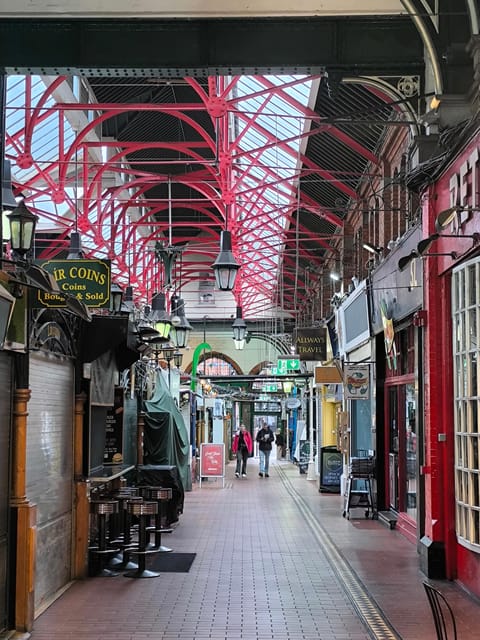
Dublin Castle appears later in the route. It is one of the more emblematic buildings included in the walk and provides a contrast to the smaller corners and informal street culture seen earlier.
The tour promises discussion of buildings from other centuries, but it does not say that you enter the castle. Entrance fees are specifically excluded, so you should expect to view and discuss the site from the tour route rather than take an included interior visit.
That distinction affects your planning. If you want a full visit inside Dublin Castle, you will need to arrange and pay for that separately. Do not assume the two-hour walking tour covers admission simply because the castle is part of the route.
As a guided stop, Dublin Castle should help bring the city’s official and political side into the picture. It also fits the tour’s interest in rebellion and independence. You get a setting where the guide can connect architecture and public power with the broader story of Dublin.
The castle stop may be especially useful if you are choosing between a standard landmark tour and this more unusual walk. You do not lose the major sight entirely. You simply encounter it as one part of a wider conversation.
Powerscourt Townhouse and Dublin’s architectural contrasts
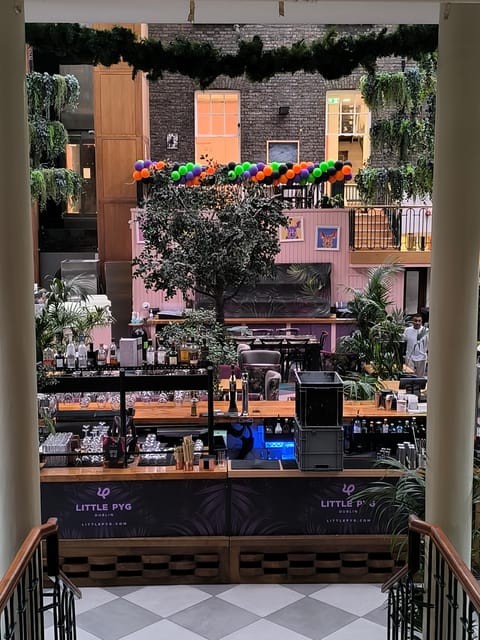
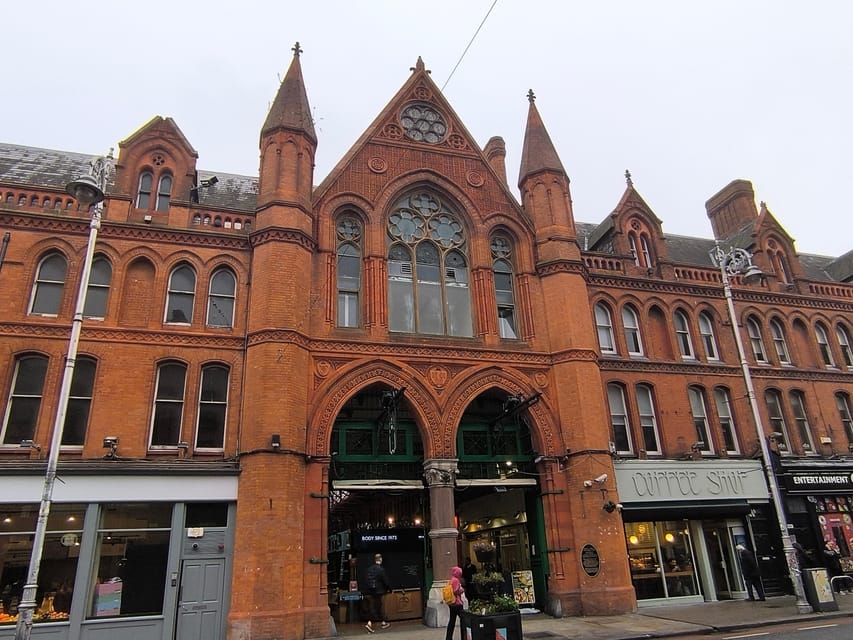
Powerscourt Townhouse is another named stop. Its inclusion adds an architectural focus and gives the route a chance to discuss one of Dublin’s notable historic buildings.
The available details do not state whether you enter Powerscourt Townhouse, and the general warning about entrance fees applies. Plan on an exterior explanation unless the guide confirms otherwise. That may disappoint you if you want an indoor visit, but it keeps the tour moving through the city rather than turning it into a sequence of admissions.
I like the way the route places this building among street art, Viking themes, Celtic signs, music, and literature. Dublin’s character comes from those contrasts. A polished historic townhouse can sit within the same city experience as an unexpected artistic detail or an anecdote about a writer.
This stop also gives you another chance to judge whether the walk’s style suits you. If you enjoy architecture only when you can enter a building, a street-based tour may feel limited. If you enjoy façades, symbols, and the stories attached to buildings, the stop should fit the tour well.
Trinity College and the route’s practical question
The route lists Trinity College as the finish. That makes sense as a final landmark, since Trinity is one of Dublin’s best-known cultural and architectural sites.
However, the meeting information says the activity ends back at the meeting point. Those details do not match perfectly. Before booking, I would confirm whether the walk finishes at Trinity College or returns to the O’Connell Monument. This is a small issue, but it matters if you have a timed booking, a restaurant reservation, or luggage waiting somewhere.
The information also does not say that you enter Trinity College. Treat it as the end point or an exterior stop unless admission is clearly confirmed. The tour is a guided walk, not an included attraction ticket.
Ending at Trinity would put you near a different part of central Dublin than where you started. Returning to O’Connell Street would make the logistics simpler. Either way, ask for the exact finish location when you check availability.
What $57 means in practical value

The price is $57 per person for two hours. That is a fairly serious price for a walking tour, particularly because entrances are not included. You are paying for the guide’s route, explanations, language, and ability to connect scattered details into a story.
I would consider it reasonable value if you want a French-language experience and enjoy local anecdotes more than formal attraction visits. The three available ratings are all five out of five, with particular praise for the guide’s friendliness, erudition, humor, and useful explanations. That is exactly where this tour earns its price.
The value is weaker if you mainly want access to Dublin Castle, Powerscourt Townhouse, or Trinity College. You would still need to pay any applicable admission separately, and the tour does not promise extended time inside those places.
The two-hour length is both an advantage and a limit. It is short enough to fit into a busy Dublin schedule, perhaps on your first afternoon in the city. It is also short enough that the route must move briskly. You will receive highlights and stories, not an exhaustive study of Dublin.
The reserve-now-and-pay-later option helps if your plans are still shifting. Free cancellation is available up to 24 hours before the activity for a full refund. Those terms reduce the risk, but I would still check the exact starting time and finish point before committing to other plans.
Who will enjoy this walk most
I would recommend this experience to you if:
- You prefer unusual city stories to a standard list of landmarks.
- You speak French and want the tour in that language.
- You enjoy folklore, architecture, street art, literature, music, and political history in one walk.
- You are happy viewing major buildings from the outside.
- You want a two-hour orientation early in a Dublin visit.
- You have already seen the obvious sights and want a different angle.
I would be more cautious if you need step-free access. The tour is listed as unsuitable for wheelchair users, and no accessibility details are provided for the route.
I would also think twice if you dislike surprises. Several locations are described only as secret or unusual stops, with no complete list of addresses. That is part of the fun, but it makes the experience less predictable.
The language requirement is decisive. This is a live guided tour in French. If you do not understand French comfortably, the stories and wordplay will lose much of their value.
Weather, pace, and what to bring
Bring clothing suitable for Irish weather. That advice is simple but important because this is an outdoor walking experience, and the tour lasts two hours.
Wear shoes you can walk in comfortably. The information does not give a distance, number of steps, or pace, so I would avoid assuming it will feel like a short stroll between two nearby landmarks. The number of stops suggests regular movement through central Dublin.
A rain layer is more useful than relying on a compact umbrella, especially if you want to keep your hands free and hear the guide. Bring only what you need, since you may be walking and stopping on city streets throughout the experience.
I would also arrive at the O’Connell Monument a little early. The starting point is clear, but a city-centre meeting can still take longer to reach than expected, especially if you are unfamiliar with the street layout.
My verdict: book it for stories, not entry tickets
I would book this tour if I wanted a French-language introduction to Dublin that goes beyond the standard landmark circuit. The combination of rebellion stories, Viking links, Celtic symbols, street art, literature, music, and unusual corners gives the walk a clear identity.
The strongest reason to choose it is the guide. The available comments consistently praise a friendly, humorous, and well-informed style, with useful explanations mixed with legendary tales. That sounds like the right approach for Dublin, where a good story can make an ordinary-looking corner suddenly worth a second look.
I would skip it if you want long visits inside Dublin Castle, Powerscourt Townhouse, or Trinity College, or if you need wheelchair access. I would also confirm the final meeting point before booking because the route and meeting information describe different finishes.
For curious French-speaking visitors who value local context and surprising details, $57 can be fair value. You are not buying a ticket to Dublin’s biggest attractions. You are buying two hours of guided attention, a route designed around less obvious places, and a fresh way to read the city.
FAQ
Where does the tour start?
The tour starts in front of the O’Connell Monument at the bottom of O’Connell Street in Dublin.
Where does the tour finish?
The route lists Trinity College as the finish, while the meeting information says the activity ends back at the meeting point. Confirm the exact end location when checking availability.
How long does the walking tour last?
The tour lasts two hours.
What language is the tour in?
The live guided tour is in French.
Are entrance fees included?
No. Entrance fees to visited sites are not included in the price.
Is the tour suitable for wheelchair users?
No. The activity is listed as not suitable for wheelchair users.
Can I cancel for a full refund?
Yes. You can cancel up to 24 hours in advance for a full refund. You can also reserve now and pay later, which keeps your plans flexible.
Just added around Dublin
- A Self Guided Walking Tour of Dublin’s Docklands★ 4.5 · 3 reviews
- Waterford Crystal and Kilkenny Full-Day Rail Tour from Dublin★ 5.0 · 3 reviews
- Turtle Bunbury’s Dublin: A Self-Guided Audio Tour from a Celebrated Author★ 5.0 · 3 reviews
- Cliffs of Moher and The Burren Private Tour from Dublin★ 5.0 · 3 reviews
- Skip-the-line St. Patrick’s Cathedral and Dublin City Tour★ 5.0 · 3 reviews
- Dublin Full-Day Tour through Boyne Valley★ 5.0 · 3 reviews
- Rock Of Cashel And Blarney Castle Private Chauffeur Full Day Sightseeing Tour★ 4.5 · 3 reviews
- Eco Bike Tour of Dublin City Top Attractions and Nature★ 4.7 · 3 reviews
Walking Tours, compared.
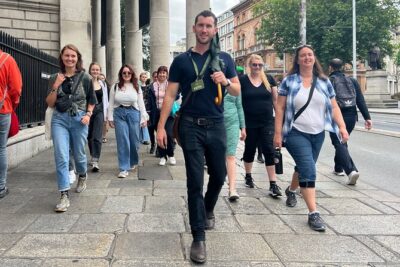
Dublin Highlights and Hidden Gems Guided Walking Tour
Read our review →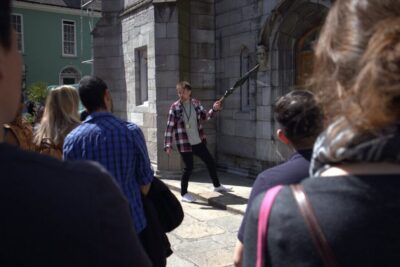

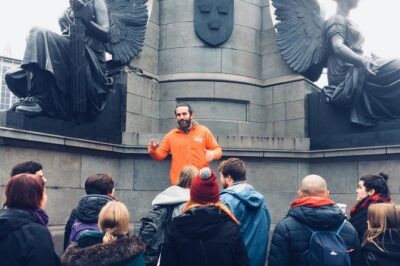
90 Minute Dublin Walking tour and Sightseeing tips
Read our review →

Historical 2-Hour Guided Walking Tour of Dublin
Read our review →
Dublin Traditional Irish 3 Course Meal Walking Tour with Local
Read our review →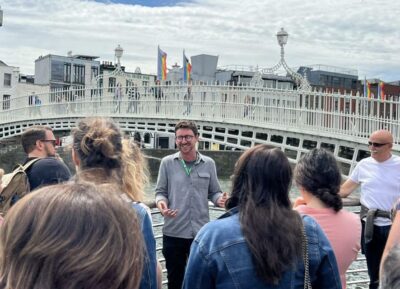
Browse the lists this tour appears in