
Reviewed · MUSEUMS
Dublin: Irish Famine Exhibition Entry Ticket
History can change how you see Ireland. This small exhibition in Stephens Green Shopping Centre explains the Irish Potato Famine through photographs, films, newspapers, letters, and original objects. I like its self-paced format and its plain, step-by-step presentation. I also like that the material asks difficult questions about food, power, poverty, and responsibility rather than treating the famine as a simple natural disaster.
The main consideration is emotional weight. This is not a light stop between shopping and lunch. The subjects include starvation, disease, forced evictions, workhouses, coffin ships, and the deaths of more than a million people. The exhibition is concise, but its subject may stay with you long after you leave.
In This Review
- Key Points To Know Before You Go
- Why This Exhibition Matters
- Finding Unit 200b In Stephens Green Shopping Centre
- The Exhibition’s Step-By-Step Layout
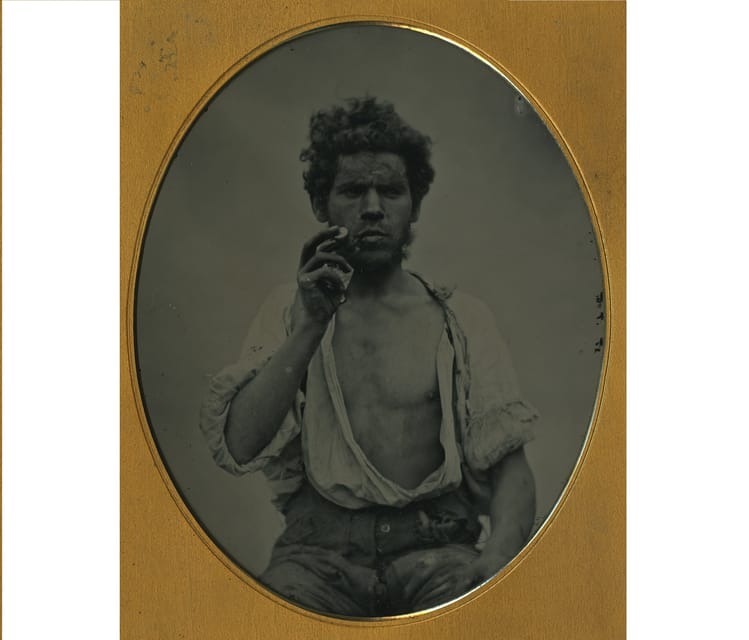
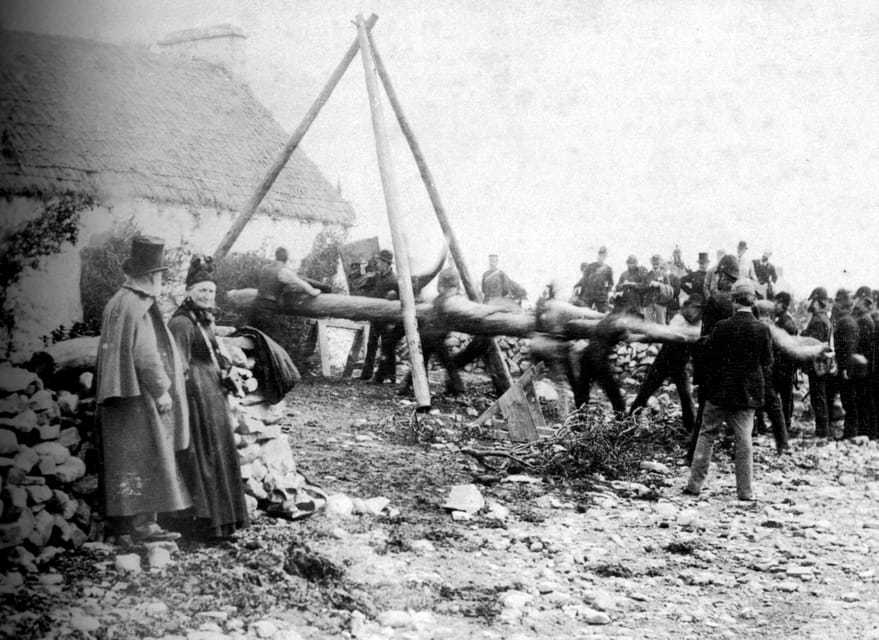
- Rare Nineteenth-Century Photographs
- Newspapers, Letters, And A Cast Iron Soup Pot
- The 15-Minute Overview Film
- Workhouses, Evictions, Coffin Ships, And Disease
- Is One Hour Enough?
- The $16 Price And Overall Value
- Who Should Visit This Exhibition?
- Practical Tips For A Better Visit
- Should You Book The Irish Famine Exhibition?
- FAQ
- Where is the Irish Famine Exhibition located?
- How do I find the exhibition from Grafton Street?
- What are the opening hours?
- How long should I allow for the visit?
- What is included with admission?
- Are the book and USB stick included?
- Is the exhibition wheelchair accessible?
- Can I cancel my booking for a refund?
Key Points To Know Before You Go
- Allow about one hour: The exhibition is self-paced, with benches in each room and seating for a 15-minute overview film.
- See original famine-era material: Two newspapers, two personal letters, and an original cast iron soup pot are on display.
- Find it on the top floor: The exhibition is in unit 200b on the second floor of Stephens Green Shopping Centre.
- Visit during the listed opening hours: It is open every day from 12pm to 6pm.
- Use the translation manual: French, German, and Italian translation help is available at the exhibition.
- Book with flexibility: The ticket costs $16 per person, is valid for 180 days, and allows cancellation up to 24 hours ahead for a full refund.
Why This Exhibition Matters
The Irish Potato Famine lasted through the late 1840s and affected every part of Irish life. Potato blight destroyed the crop that many poor families depended on, but the wider story involved much more than a failed harvest.
At the time, Ireland was part of the British Empire, one of the wealthiest political powers in the world. Food continued to exist in Ireland during the famine years, yet more than a million people died from starvation and disease, while millions more left the country.
That tension is central to the exhibition. It asks how a country could have food available and still suffer mass death. The answer cannot be reduced to weather or plant disease. Land ownership, poverty, government decisions, eviction, public relief, and the treatment of tenants all shaped what happened.
I appreciate this framing because it gives you a way to think about the famine without reducing it to one dramatic image. The exhibition presents the human cost, but it also points toward the political and economic choices behind that cost.
More Museums in Dublin
- Irish Rock ‘N’ Roll Museum Experience Dublin
★ 5.0 · 6,112 reviews - The Little Museum of Dublin Famous Guided Tour
★ 5.0 · 2,948 reviews - Dublin EPIC Museum Admission Ticket
★ 4.5 · 1,729 reviews
Finding Unit 200b In Stephens Green Shopping Centre
The location is practical, though you should know where you are going before entering. The exhibition occupies unit 200b on the top floor of Stephens Green Shopping Centre.
If you enter through the main entrance on Grafton Street, look for the elevator about 20 metres inside on the right. Take it to the second floor, then turn left. If you arrive through the car park, the exhibition is at the opposite end of the shopping centre.
This is not a large standalone museum with a grand street entrance. You are entering a shopping centre, then heading upstairs to a dedicated exhibition space. That setting may feel unexpected for a serious subject, but it also makes the visit easy to fit into a day in central Dublin.
The exhibition is wheelchair accessible. The elevator route from the Grafton Street entrance is especially useful if stairs are difficult for you.
The Exhibition’s Step-By-Step Layout

Inside, you walk through several rooms lined with storyboards. The information is arranged in an easy-to-follow sequence, so you can build the story from one room to the next rather than trying to absorb a wall of dates and names all at once.
That structure suits a self-guided visit. You can stop when something catches your attention, reread a section, or move on when you need a pause. The format is not designed for a fast photo stop. If you rush, you will miss the connections between the famine, eviction, disease, workhouses, and emigration.
Each room has a bench. That small detail matters because the subject is demanding, and standing for the entire visit would make it harder to read carefully. Seating also lets you pause between sections instead of treating the exhibition like a corridor.
You should plan on at least one hour. Some people may finish a little sooner, especially if they read selectively, while others will want more time with the original documents and film. The ticket remains valid for 180 days, but the stated opening hours are 12pm to 6pm every day, so check the current availability information before setting out.
Rare Nineteenth-Century Photographs
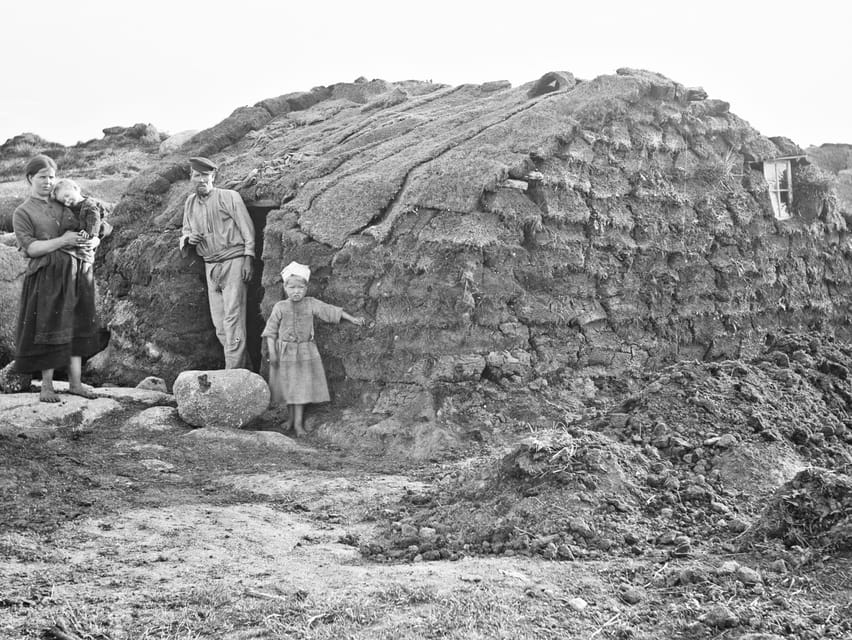
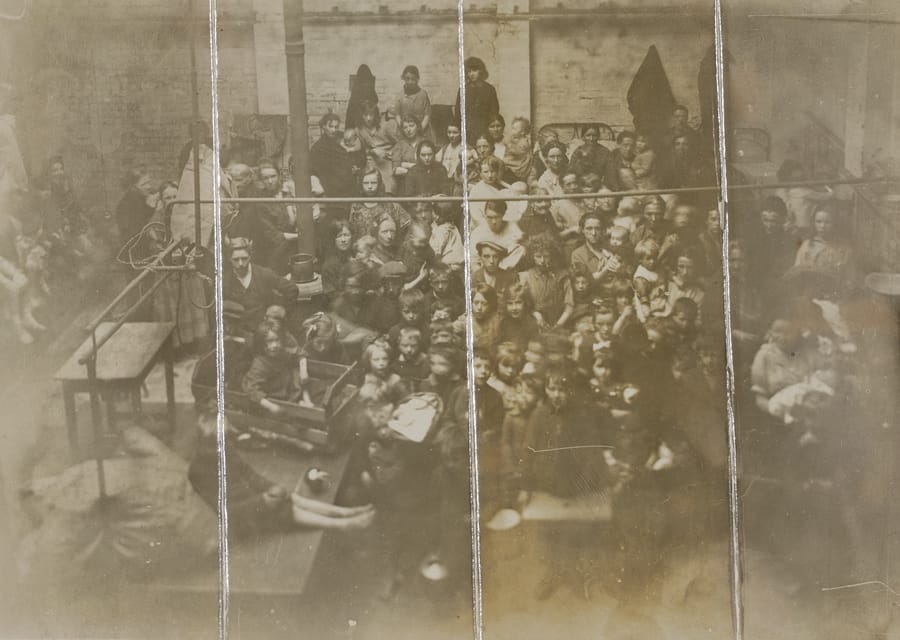
The photographs are among the most useful parts of the exhibition. They bring the famine period closer to you than a list of statistics can.
Nineteenth-century photographs are rare by their nature, and these images offer a direct look at Ireland during a time of severe hardship. They help place faces, homes, rural communities, and poverty alongside the written story.
You should not expect a huge photography collection. The value comes from how the images work with the storyboards. A photograph can make a general explanation more concrete, showing the kind of people and places affected by the crisis.
For me, this is one of the strongest reasons to visit. Written history can feel distant, especially when it deals with a disaster of such scale. The photographs narrow that distance.
A completely different kind of day out from Dublin:
- Dublin to Cliffs of Moher, including Wild Atlantic Way and Galway
★ 5.0 · 23,331 reviews - From Dublin: Cliffs of Moher, Burren & Galway City Day Tour
★ 4.8 · 18,888 reviews - Dublin: Guinness Storehouse Entry Ticket
★ 4.6 · 16,863 reviews - Dublin to Cliffs of Moher, Burren, Wild Atlantic Way, Galway Tour
★ 5.0 · 12,924 reviews
Newspapers, Letters, And A Cast Iron Soup Pot
The exhibition includes two original newspaper articles describing the catastrophe. These are more than decorative old papers. They show how the crisis was reported at the time and give you a sense of the language used to describe suffering, public policy, and disaster.
Two personal letters provide an even more intimate view. One was written by a tenant to his landlord. The other was written by a father to his son. Those relationships matter because they connect the wider famine to ordinary obligations, fear, family separation, and dependence on landowners.
An original cast iron soup pot is also displayed. It is a simple object, but it carries a clear reminder of how relief efforts worked at ground level. When you see an everyday item beside letters and newspaper reports, the famine becomes less abstract.
I would spend time with these objects rather than rushing past them. The exhibition has only a small number of original artifacts listed, but each one helps anchor the larger explanation.
The 15-Minute Overview Film
A 15-minute overview film is included as part of the visit. Seating is provided, so you do not have to stand while watching it.
The film gives you a compact version of the story and can help tie together the material from the rooms. You can watch it early to get the main outline, then read the storyboards with more context, or watch it later as a recap.
For a first-time visitor, I would use the film as an introduction or closing summary rather than the entire visit. The written panels and original material are where the exhibition gains its detail. The film is useful, but it is only 15 minutes long and cannot replace the rest of the presentation.
The film is also included on the optional USB stick sold at reception, along with the storyboard content broken into film format and set to mood music. The USB stick and book cost extra, so they are optional souvenirs rather than part of the $16 admission.
Workhouses, Evictions, Coffin Ships, And Disease
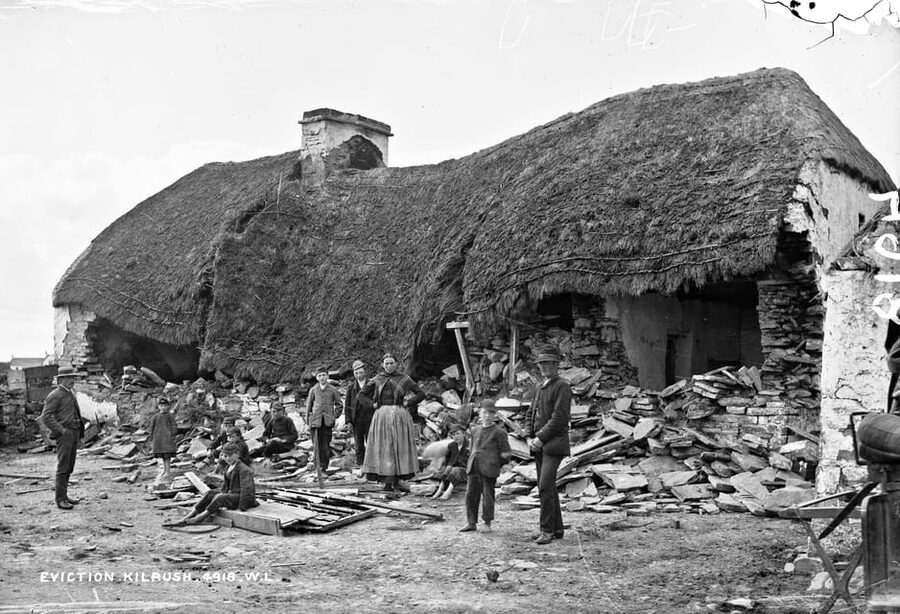
The exhibition covers the harsh conditions faced by people who lost their food supply and had few alternatives. Workhouses, evictions, coffin ships, and disease are not side topics here. They are part of the central story.
Workhouses represented one form of public relief, but entering one could mean separation from normal family life and a difficult existence in crowded conditions. Evictions show how vulnerable tenants could be when they could not pay rent. The phrase coffin ships refers to the emigrant vessels on which many people attempted to leave Ireland, often in terrible conditions.
Disease made starvation even more deadly. People weakened by hunger were less able to resist illness, and poor living conditions increased the danger. The result was not simply hunger. It was a chain of suffering that affected health, housing, family stability, and the decision to leave Ireland.
I value the exhibition’s willingness to name these parts of the story. A visitor who only knows that the potato crop failed will leave with an incomplete picture. The panels help explain how a crop failure became a national catastrophe.
Is One Hour Enough?
One hour is a sensible minimum, and the exhibition is designed for that kind of visit. You can move through the storyboards, watch the film, examine the photographs and artifacts, and take a few seated pauses without turning the visit into a half-day commitment.
The concise format is one of its strengths. A previous visitor described the exhibition as taking about an hour while still delivering a good amount of information. That balance is important in Dublin, where you may have several major sights competing for your time.
The drawback is that a one-hour exhibition cannot answer every question about the famine. You will get a clear introduction and a firm framework, but you should not expect a large research library, a huge artifact collection, or an extended guided seminar.
This is best treated as a focused history visit. If you already know a great deal about the famine, you may want more depth. If the subject is new to you, the straightforward structure should give you a useful foundation.
The $16 Price And Overall Value
At $16 per person, the ticket is reasonably priced for a central Dublin cultural stop lasting at least an hour. The value is strongest if you take your time with the panels and use the film, rather than popping in for 20 minutes.
The price also includes access to the original documents and object displays, plus a translation manual in French, German, and Italian. The translation information is useful for families or groups who are more comfortable reading history in one of those languages.
The exhibition does not include the book or USB stick. Those are sold separately at the reception desk. I would decide after the visit, since you will then know whether you want a physical or digital copy of the material.
The flexible 180-day validity adds practical value. You do not have to build the visit into one exact date, although you still need to check available times and remember that the stated opening hours are noon to 6pm.
Who Should Visit This Exhibition?
I would recommend it to you if you want historical context before visiting other Irish sites connected to poverty, emigration, or national identity. It also suits anyone who prefers a focused indoor visit with clear written explanations rather than a long guided walk.
Families with older children and teenagers may find the format useful, but the subject is serious. Parents should decide whether starvation, disease, eviction, and death are suitable for their children.
The exhibition is also a good choice on a rainy Dublin afternoon. Its location in Stephens Green Shopping Centre makes it easy to reach, and the benches and elevator make the visit manageable for people who need regular seating or step-free access.
I would be less likely to recommend it if you want an entertaining attraction or a broad survey of Irish history. This is a single-subject exhibition, and it asks you to pay attention.
Practical Tips For A Better Visit
Go earlier in the afternoon if you want more time before the 6pm closing. Since the exhibition is self-paced, a late arrival could make the hour feel rushed.
Use the elevator from the Grafton Street entrance if you want the clearest route. Remember that the unit is on the second floor, to the left after you arrive upstairs.
Plan a quiet pause afterward. The exhibition is concise, but the material is heavy. Pairing it with a busy shopping trip may feel abrupt, so give yourself a little space to think about what you have seen.
If you use French, German, or Italian, ask for the translation manual at reception. And if you are considering the book or USB stick, wait until the end so you can judge how useful the extra material will be.
Should You Book The Irish Famine Exhibition?
Book it if you want a serious, affordable introduction to one of the most important events in Irish history. I especially like the combination of rare photographs, personal letters, original newspapers, the soup pot, and the short film. Together, they make a compact visit feel human rather than purely academic.
Skip it if you are looking for a light attraction or a large museum collection. The subject is painful, and the exhibition is modest in size. Still, its clear presentation and self-paced design make it a worthwhile Dublin stop for anyone who wants to understand how crop failure, political decisions, poverty, disease, and emigration combined to devastate Ireland.
FAQ
Where is the Irish Famine Exhibition located?
It is in unit 200b on the top floor, or second floor, of Stephens Green Shopping Centre in Dublin.
How do I find the exhibition from Grafton Street?
Enter through the main entrance on Grafton Street. An elevator is about 20 metres inside on the right. Take it to the second floor and go left.
What are the opening hours?
The exhibition is open every day from 12pm to 6pm.
How long should I allow for the visit?
You should allow at least one hour. The visit is self-paced and includes storyboards, artifacts, photographs, and a 15-minute overview film.
What is included with admission?
Admission includes entry to the Irish Famine Exhibition and a translation manual in French, German, and Italian.
Are the book and USB stick included?
No. The book and USB stick are sold separately at the reception desk.
Is the exhibition wheelchair accessible?
Yes, the exhibition is wheelchair accessible.
Can I cancel my booking for a refund?
Yes. You can cancel up to 24 hours in advance for a full refund.
Just added around Dublin
- A Self Guided Walking Tour of Dublin’s Docklands★ 4.5 · 3 reviews
- Waterford Crystal and Kilkenny Full-Day Rail Tour from Dublin★ 5.0 · 3 reviews
- Secret and unusual Dublin: guided walking tour★ 5.0 · 3 reviews
- Turtle Bunbury’s Dublin: A Self-Guided Audio Tour from a Celebrated Author★ 5.0 · 3 reviews
- Cliffs of Moher and The Burren Private Tour from Dublin★ 5.0 · 3 reviews
- Skip-the-line St. Patrick’s Cathedral and Dublin City Tour★ 5.0 · 3 reviews
- Dublin Full-Day Tour through Boyne Valley★ 5.0 · 3 reviews
- Rock Of Cashel And Blarney Castle Private Chauffeur Full Day Sightseeing Tour★ 4.5 · 3 reviews
Museums, compared.
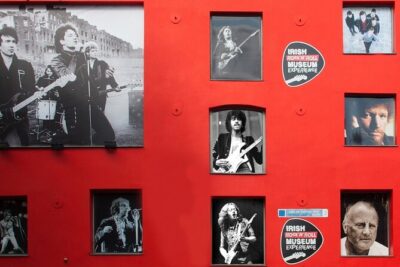
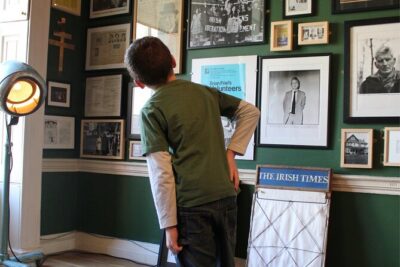
The Little Museum of Dublin Famous Guided Tour
Read our review →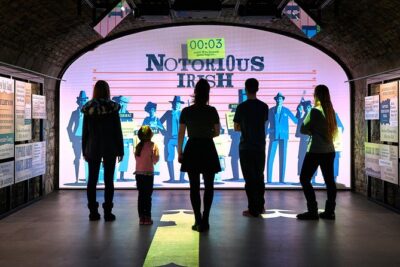
Giant’s Causeway with the Titanic Exhibition and the best of Northern Ireland
Read our review →

Irish Whiskey Museum: Whiskey Blending Experience
Read our review →
Irish Whiskey Museum Blending Tour with Tastings
Read our review →Browse the lists this tour appears in