
Reviewed · MUSEUMS
Dublin: Irish Rock ‘N’ Roll Museum with Tour in English
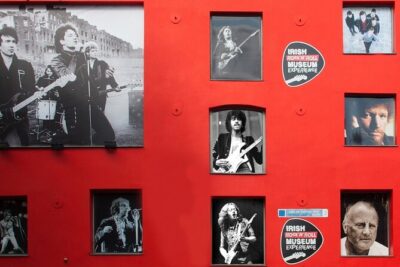
Music history gets a Temple Bar backstage pass. The Irish Rock ’N’ Roll Museum Experience takes you behind Dublin’s Wall of Fame for a guided look at Irish performers, recording spaces, rehearsal rooms, and memorabilia linked to artists including Thin Lizzy, U2, Hozier, Van Morrison, The Script, and Sinéad O’Connor. I like the working music venue and studio access, which gives the visit more life than a display of framed photographs. I also like the dedicated Thin Lizzy exhibition and the way the guide connects Irish music to real careers and places.
The main consideration is that this is a fully guided tour in English, not a museum you freely explore at your own pace. A great guide can make the visit funny and memorable, as Alan and Bryan have done for many groups, but one quieter or less even-handed guide can affect the experience. U2 fans, in particular, should be prepared for the guide’s personal opinions to shape part of the presentation.
In This Review
- Four things worth knowing before you go
- Finding the museum on Curved Street
- The opening story of Irish rock ’n’ roll
- Thin Lizzy’s Dublin chapter
- U2, The Pogues, and the wider collection
- Behind the Wall of Fame
- Why the live guide makes or breaks the visit
- How long the 75 minutes feels
- Is $25 a fair price?
- Who should book this Dublin music tour?
- FAQ
- Where does the Irish Rock ’N’ Roll Museum tour start?
- Where does the tour end?
- How long is the tour?
- What language is the tour in?
- Is video recording allowed?
- Is the tour suitable for children under five?
- Is the experience suitable for wheelchair users?
- Should you book the Irish Rock ’N’ Roll Museum?
Four things worth knowing before you go
- You enter through Dublin’s Wall of Fame: The museum sits in Temple Bar, so the tour begins in one of the city’s best-known entertainment districts.
- The studio is part of the visit: You get access to a commercial recording studio, rehearsal spaces, and a music venue that have hosted Irish performers.
- Thin Lizzy has a dedicated exhibition: This is more than a passing mention in a general display.
- U2 appears alongside newer Irish acts: The collection includes U2 material, but the story also reaches bands and artists from later generations.
- The tour lasts 75 minutes: Some feedback describes the visit as closer to an hour and a half, so allow a little breathing room if your day is tightly planned.
- It is not a hands-off museum visit: The guide supplies the structure, stories, humor, and much of the context.
Finding the museum on Curved Street
The meeting point is on Curved Street in Temple Bar, Dublin 2. That puts you in the center of Dublin’s Cultural Quarter, surrounded by pubs, restaurants, galleries, and other attractions.
The location matters because this is not a remote collection that asks you to make a special journey across the city. You can fit it into a day of central Dublin sightseeing, perhaps before dinner or after exploring the nearby streets. Give yourself enough time to find Curved Street and arrive ready for a set starting time.
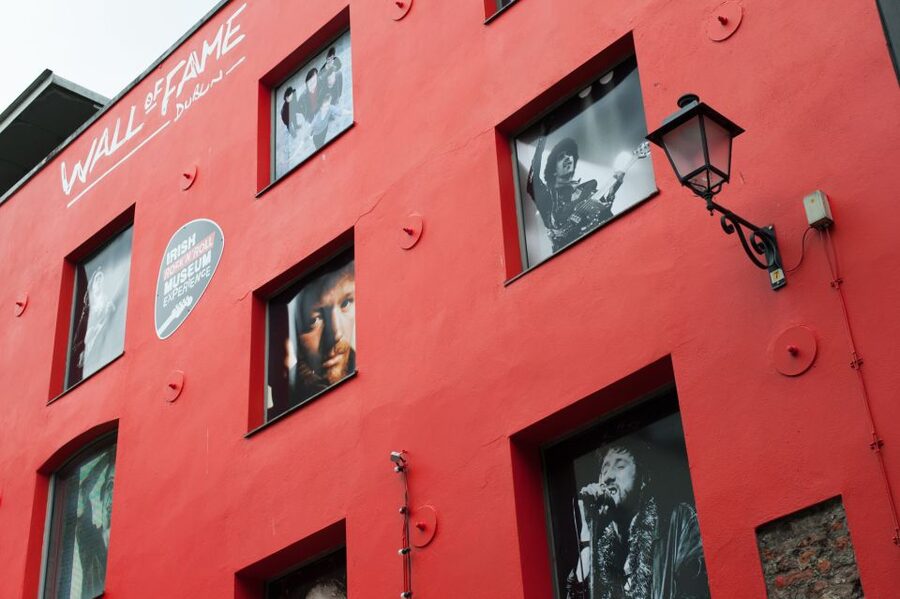
The museum is housed inside the Wall of Fame. That placement helps set the tone immediately. You are not simply walking into a silent room of objects. You are entering a place built around the idea of Irish music as a living part of Dublin.
The tour ends back at the meeting point, which makes planning easy. You will not need to arrange transport from a separate ending location.
More Museums in Dublin
- Irish Rock ‘N’ Roll Museum Experience Dublin
★ 5.0 · 6,112 reviews - The Little Museum of Dublin Famous Guided Tour
★ 5.0 · 2,948 reviews - Dublin EPIC Museum Admission Ticket
★ 4.5 · 1,729 reviews
The opening story of Irish rock ’n’ roll
The first part of the tour introduces the wider story of Irish rock ’n’ roll. The purpose is not just to name famous artists. It is to show how Irish performers built careers, gained attention beyond Ireland, and helped shape the country’s place in popular music.
I like this approach because it gives the displays a reason to exist. A photograph or instrument means more when you understand the performer’s career and the musical period around it. The guide also adds the personal stories and small facts that turn a standard museum visit into a conversation about people, ambition, success, and the occasional musical misstep.
The presentation can be especially useful if your knowledge of Irish music begins and ends with U2 or The Pogues. You will hear about a wider range of performers, including established names and newer bands that are not yet part of the traditional historical record.
One strong point is the attention to current Irish music. A comment from one particularly happy visitor praised the updated information about newer bands, even those that have not yet become history. That is a good reason to choose this tour over a display focused only on older stars.
The guide’s personality matters here. Alan is praised for adding lesser-known details, while Bryan is noted for being informative. Another guide was described as hilarious, which suggests that the tone can be lively rather than academic. Still, you should expect a personal, spoken interpretation rather than a neutral audio guide.
Thin Lizzy’s Dublin chapter
The dedicated Thin Lizzy exhibition is one of the clearest reasons to book this experience. Thin Lizzy is not treated as a footnote in a general collection. The band receives its own space for a closer look at its place in Irish rock.
You might find photographs, memorabilia, and career details that help you see the band as part of Ireland’s musical story rather than simply a famous name. The information provided does not promise a particular instrument or costume, so I would not arrive expecting one specific object. The value lies in the focused treatment and the guide’s explanation.
For fans, this section is likely to be the emotional center of the tour. For everyone else, it supplies a useful case study in how Irish artists reached a broad audience. That makes the exhibition worthwhile even if you know only the band’s best-known songs.
The guided format is useful here. Thin Lizzy’s story can be reduced to a few familiar facts, but a good guide can add dates, relationships, career turns, and details that are easy to miss on a wall label. The tour’s strongest moments seem to come from that spoken layer.
U2, The Pogues, and the wider collection
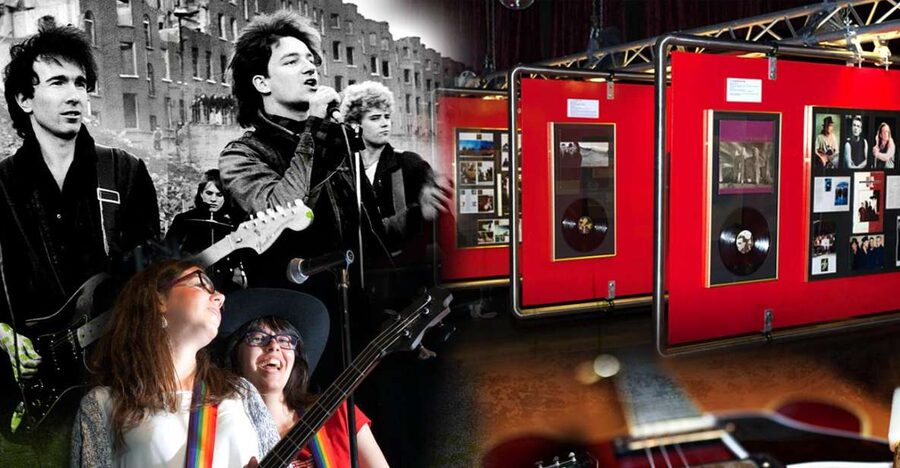
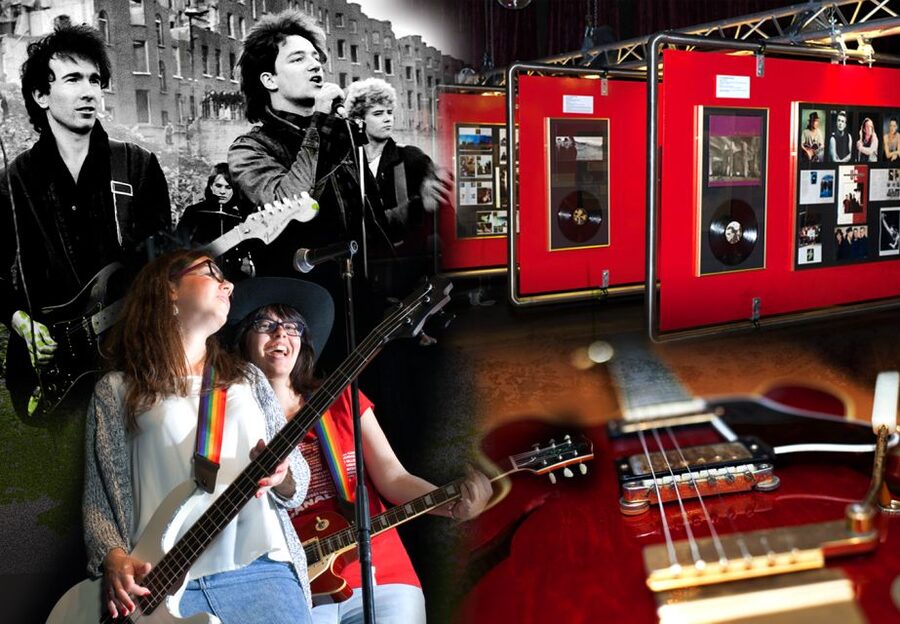
U2 memorabilia is part of the museum, along with material connected to The Pogues, The Script, and Michael Jackson. The collection therefore reaches beyond one sound or one decade.
U2 fans should keep their expectations sensible. This is not presented as a museum devoted entirely to the band, and the tour covers Irish rock ’n’ roll as a whole. One less positive account found the guide’s treatment of U2 too negative, even describing the guide as making fun of the band. That is not a reason to skip the tour automatically, but it is worth knowing if U2 is your main reason for coming.
I prefer to view this section as a chance to hear an interpretation rather than receive a formal tribute. If you want only praise for U2, the guide’s personal tone may frustrate you. If you enjoy hearing different opinions about major artists, it may add some bite to the visit.
The inclusion of Michael Jackson also broadens the collection beyond strictly Irish performers. The museum’s focus remains Irish rock, but the memorabilia helps place Irish artists within a larger popular music world.
The photographic exhibitions add another layer. They let you look at the people behind the songs and trace changing styles across Irish rock ’n’ roll. The exact items on display can change, so it is best to think of the museum as a guided collection rather than a fixed list of objects.
A completely different kind of day out from Dublin:
- Dublin to Cliffs of Moher, including Wild Atlantic Way and Galway
★ 5.0 · 23,331 reviews - From Dublin: Cliffs of Moher, Burren & Galway City Day Tour
★ 4.8 · 18,888 reviews - Dublin: Guinness Storehouse Entry Ticket
★ 4.6 · 16,863 reviews - Dublin to Cliffs of Moher, Burren, Wild Atlantic Way, Galway Tour
★ 5.0 · 12,924 reviews
Behind the Wall of Fame
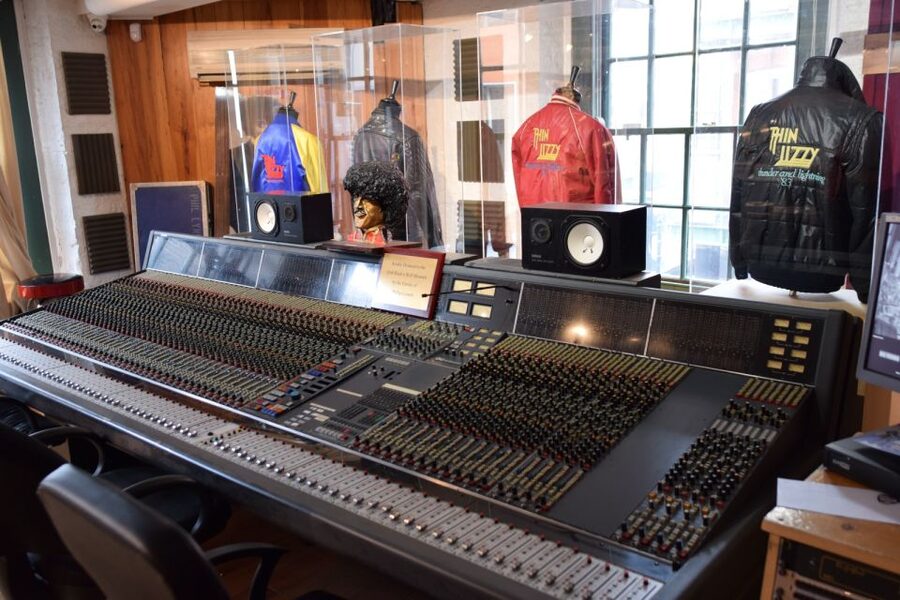
The access-all-areas element is the most distinctive part of the experience. You are shown spaces connected with a top Dublin music venue, working rehearsal rooms, and a commercial recording studio.
This changes the feel of the visit. A conventional museum can tell you where music was made. Here, you get a chance to see the kind of rooms where performers rehearse and record. The facilities have hosted Irish artists such as Thin Lizzy, Van Morrison, Hozier, The Script, and Sinéad O’Connor.
That connection gives the tour its strongest sense of place. You are not just learning about artists in an abstract way. You are standing in an active music setting linked to real performers and productions.
I would not read access all areas as permission to handle equipment or record everything yourself. The information states that video recording is not allowed. Treat the studio and rehearsal areas as working spaces, follow the guide, and keep your phone away when asked.
The recording studio is particularly valuable for anyone interested in how songs come together. You may not receive a technical lesson in sound engineering, since that is not promised, but the setting helps you understand the difference between seeing memorabilia and seeing the places where music is shaped.
Why the live guide makes or breaks the visit

This tour depends heavily on the person leading it. You are with a live English-speaking guide for the full visit, so the quality of the storytelling matters as much as the objects on the walls.
The best accounts praise guides who add funny details, explain Irish music clearly, and keep the 75 minutes moving. Alan is singled out as a professional who shared facts not everyone would know. Bryan is praised for informative commentary. Another guide apparently made the whole place more enjoyable through humor.
That is a strong sign for anyone who enjoys personal storytelling. You will not simply read panels and move on. You can expect the guide to shape the order, explain the connections, and set the mood.
There is a downside. One account describes a guide who spoke too quietly and slowly and seemed openly hostile toward U2. That kind of uneven delivery can be a real problem in a compact tour. If you cannot hear comfortably, the displays alone may not provide enough information.
The English-only format also matters. You need enough English to follow spoken stories, jokes, names, and music references. The tour is not suitable for children under five, and the material and format will probably appeal more to older children, teens, and adults who already have an interest in music.
How long the 75 minutes feels
The stated duration is 75 minutes. That is a useful length for a city break because it gives you a substantial music stop without taking up half a day.
Some feedback describes the tour as about an hour and a half, with the time passing quickly. That may reflect the actual pace on a particular departure or a little extra conversation. I would plan around 75 minutes, then leave a modest buffer before your next booking.
The compact duration works well for the content. You get the broad Irish music story, the main exhibitions, the Thin Lizzy section, and access to the venue and studio without committing to a long specialist program.
You should not expect a slow, self-directed afternoon here. The guide controls the pace, and the group moves through the different parts of the museum and music facilities together. That is ideal if you like a clear route and regular explanation. It is less ideal if you want to stop for a long time at one photograph or read every item in silence.
Is $25 a fair price?
At $25 per person, this is not the cheapest way to spend an hour in Dublin. The price makes more sense when you count what is included: a live guided tour, the Thin Lizzy and U2 displays, photographic exhibitions, music memorabilia, and access to a venue, rehearsal spaces, and a commercial recording studio.
I see good value here for music fans because the studio and rehearsal access give the visit something that a free display or standard city museum may not. You are paying for the guide’s stories and for entry into working music spaces, not just for a room of posters.
The value is weaker if you have little interest in Irish music or dislike guided tours. The museum’s appeal depends on the story being told and your willingness to spend 75 minutes listening in English.
For a fan of Thin Lizzy, U2, The Pogues, or newer Irish acts, $25 is reasonable. For a general sightseeing schedule, I would book it only if the behind-the-scenes setting sounds more appealing than another conventional attraction.
Free cancellation up to 24 hours before the start and the option to reserve now and pay later reduce the risk of fitting it into a changing Dublin itinerary. Those policies are useful, but the main value still comes from the music content and the access to the venue.
Who should book this Dublin music tour?
I would recommend it most strongly to:
- People who enjoy Irish rock, pop, and live music
- Thin Lizzy fans who want a dedicated section
- U2 fans who are open to a broader Irish music story and personal opinions
- Visitors curious about recording studios and rehearsal spaces
- Adults and older children who can follow an English-speaking guide
- Anyone looking for a central Temple Bar activity lasting about 75 minutes
I would be more cautious if you need wheelchair access, since the experience is not suitable for wheelchair users. I would also skip it for children under five, as they are specifically excluded.
Do not book it expecting video recording, a quiet self-guided visit, or a museum devoted to one band. Book it for the combination of music stories, memorabilia, a dedicated Thin Lizzy exhibition, and access to places linked with working Irish music.
FAQ
Where does the Irish Rock ’N’ Roll Museum tour start?
The tour starts on Curved Street in Temple Bar, Dublin 2.
Where does the tour end?
The activity ends back at the meeting point.
How long is the tour?
The stated duration is 75 minutes. Some feedback describes the visit as lasting about an hour and a half, so leaving a little extra time is sensible.
What language is the tour in?
The guided tour is available in English only.
Is video recording allowed?
No. Video recording is not allowed during the experience.
Is the tour suitable for children under five?
No. The experience is not suitable for children under five.
Is the experience suitable for wheelchair users?
No. The experience is listed as not suitable for wheelchair users.
Should you book the Irish Rock ’N’ Roll Museum?
Book this tour if you want Irish music explained by a live guide and like the idea of seeing a recording studio and rehearsal spaces connected with major performers. The combination of Thin Lizzy, U2, The Pogues, The Script, Michael Jackson memorabilia, and newer Irish artists gives the visit a broad musical reach.
I would make the booking with two expectations: the tour is English-only, and the guide’s personality will shape the experience. At $25, it is a fair choice for music fans, especially with the behind-the-scenes access. If your interest in Dublin’s music scene is only casual, spend your sightseeing money elsewhere. If the names on the Wall of Fame mean something to you, this is one of the city’s more personal ways to hear how Irish rock found its voice.
Just added around Dublin
- A Self Guided Walking Tour of Dublin’s Docklands★ 4.5 · 3 reviews
- Waterford Crystal and Kilkenny Full-Day Rail Tour from Dublin★ 5.0 · 3 reviews
- Turtle Bunbury’s Dublin: A Self-Guided Audio Tour from a Celebrated Author★ 5.0 · 3 reviews
- Secret and unusual Dublin: guided walking tour★ 5.0 · 3 reviews
- Cliffs of Moher and The Burren Private Tour from Dublin★ 5.0 · 3 reviews
- Skip-the-line St. Patrick’s Cathedral and Dublin City Tour★ 5.0 · 3 reviews
- Dublin Full-Day Tour through Boyne Valley★ 5.0 · 3 reviews
- Rock Of Cashel And Blarney Castle Private Chauffeur Full Day Sightseeing Tour★ 4.5 · 3 reviews
Museums, compared.
The Little Museum of Dublin Famous Guided Tour
Read our review →
Giant’s Causeway with the Titanic Exhibition and the best of Northern Ireland
Read our review →

Irish Whiskey Museum: Whiskey Blending Experience
Read our review →
Irish Whiskey Museum Blending Tour with Tastings
Read our review →Browse the lists this tour appears in