Reviewed · DUBLIN TOURS
Dublin Jewellery Forge a Hammered Silver Ring: Drury Street
Make your own Dublin keepsake. This two-hour workshop lets you cut, shape, solder, texture, and polish a sterling silver ring at Silver Works on Drury Street. I like the hands-on process, which gives you a real part in every stage, and I like that the finished ring is useful rather than just decorative. The main drawback is the strict late-arrival rule, along with stairs and no lift in the old studio buildings.
This is a friendly, practical activity for couples, families with older children, and anyone who wants a break from sightseeing. Tutors guide you through each tool and technique, and the small-group setting leaves room for questions. Just arrive early, since entry is refused after 10 minutes and there is no refund or rescheduling in that case.
In This Review
- Key points before you book
- What makes this Dublin jewellery class worth your time
- Finding Silver Works at 24 Drury Street
- Measuring and cutting your silver
- Bending the strip into a ring
- Watching the soldering and learning why it matters
- Filing the ring into your chosen curve
- Creating texture with the planishing hammer
- Choosing between rustic and high polish
- The small extras that make the class comfortable
- Who will enjoy this workshop most
- How the $104.05 price compares with the experience
- Booking, timing, and cancellation details
- Should you book the Drury Street ring workshop?
- FAQ
- Where does the ring-making workshop begin and end?
- How long does the experience last?
- What is included in the price?
- Do I need previous jewellery-making experience?
- Can I choose the ring finish?
- Can children take part?
- Is the workshop wheelchair accessible?
- What happens if I arrive late?
- Can I cancel for a full refund?
Key points before you book
- You make the ring from raw sterling silver, starting with a strip that you measure and cut yourself.
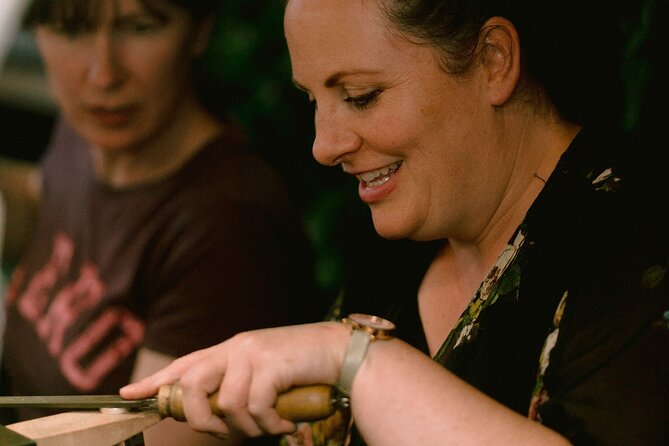
- The planishing hammer creates the personal touch, with three texture choices and room to shape the surface your own way.
- An expert tutor handles the soldering, while explaining what is happening at the bench.
- You choose the final finish, from an artistic rustic look to a bright, fully polished surface.
- The studio is central and easy to find, at Silver Works, 24 Drury Street in Dublin.
- Arrive at least 10 minutes early, since late entry is not allowed and the building has stairs but no lift.
What makes this Dublin jewellery class worth your time
Dublin offers plenty of ways to spend two hours, from museum visits to pub stops. This workshop gives you something different: a small piece of work that carries a physical memory of your time in Ireland.
I especially like that you are not simply stringing beads or decorating a ready-made item. You begin with sterling silver and take it through several real metalworking steps. The tools are simple enough for a beginner, but each one changes the ring in a visible way.
The price is listed at $104.05 per person. That is not a bargain activity in the same sense as a free gallery or a walk through the city, but the fee includes the sterling silver, all workshop equipment, instruction, and the finished ring. You also get coffee or tea and chocolate during the session. For a wearable keepsake made by your own hands, the cost is reasonable, particularly when compared with jewellery workshops that charge extra for materials or finishing.
The class is also a good choice when you want shared time with someone. Couples have used it as a date and as a Christmas present, while parents and adult children have made matching or personal rings together. A group can work side by side without needing prior metalworking skill.
There is one point to clarify before booking. The experience is described as an intimate class of up to six in the highlights, while the additional information gives a maximum of 12. Ask Silver Works to confirm the expected group size for your chosen session if that matters to you.
A few more trips worth weighing up
- Dublin to Cliffs of Moher, including Wild Atlantic Way and Galway
★ 5.0 · 23,331 reviews - From Dublin: Cliffs of Moher, Burren & Galway City Day Tour
★ 4.8 · 18,888 reviews - Dublin: Guinness Storehouse Entry Ticket
★ 4.6 · 16,863 reviews
Finding Silver Works at 24 Drury Street
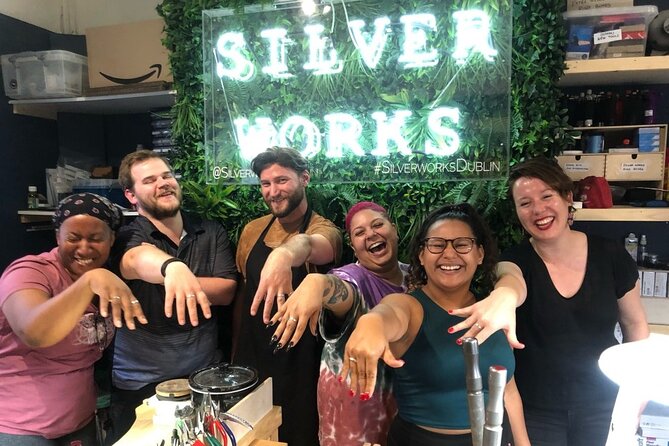
The meeting point is Silver Works, 24 Drury Street, Dublin, D02 V658. The address is provided clearly, and the activity both starts and finishes there, so you do not need to arrange transport between stages.
Drury Street is a handy central location for fitting this workshop into a day in Dublin. You can plan it around other city sightseeing, but leave yourself enough time to reach the address without rushing. This is not an activity where arriving at the last second is wise.
The late-arrival policy is unusually strict. If you arrive more than 10 minutes after the start time, you will not be admitted, and you will not receive a refund or a new booking. I would aim to be at the street at least 15 minutes early, then use the extra time to find the exact doorway and settle in.
The studio occupies two old period buildings. That gives the setting character, but it also means plenty of stairs and no lift. The buildings are not wheelchair accessible. Service animals are allowed, and the activity is near public transport, but anyone with mobility concerns should contact the provider before booking.
There is no luggage storage, and the studio space is small. Bring only what you need for the class.
Measuring and cutting your silver
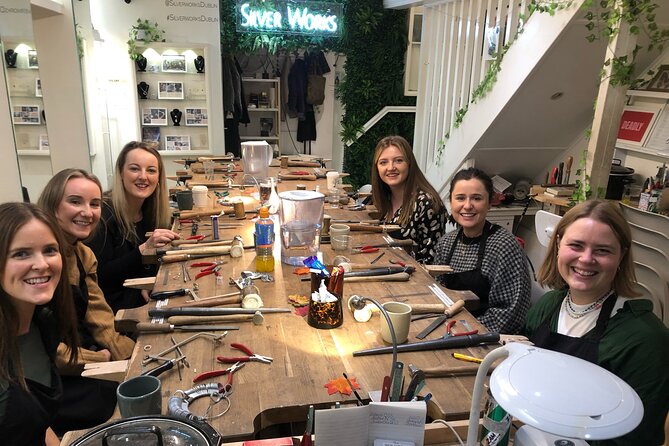
The workshop begins with a practical choice: which finger will wear the ring? You mark the length of sterling silver needed for that finger, then use a handsaw to cut it to size.
This first stage matters because the ring must be long enough to meet around your finger without being too tight. The instructor guides you through the process, so you are not expected to know how to measure metal or use a jeweller’s saw before arriving.
Using the saw gives the class an honest craft feel. You are not watching someone make the entire piece while you wait for the final decoration. You take part from the start, with the tutor nearby to help you keep the cut controlled.
At this point, the ring is still a straight strip. That makes the next step especially satisfying.
Bending the strip into a ring
You use a mallet and a ring mandrel to form the silver into a circular shape. The mandrel is the tapered metal tool that helps set the size and curve, while the mallet lets you shape the strip without marking it in the same way a harder hammer might.
The process is taught step by step. You do not need to strike with great force, and the tutor can help you correct the shape as it develops. This is one place where patience helps. Rushing the curve can leave the ring uneven, while careful taps produce a better base for soldering.
The ring will not look finished yet. That is part of the appeal. You can see the piece change from flat metal to something that already resembles jewellery, even before the join is closed.
A completely different kind of day out from Dublin:
- Dublin to Cliffs of Moher, Burren, Wild Atlantic Way, Galway Tour
★ 5.0 · 12,924 reviews - Dublin to Belfast Black Cab, Dunluce Castle and Giant’s Causeway
★ 5.0 · 7,954 reviews - Kilkenny, Wicklow Mountains & Glendalough Day Tour from Dublin
★ 5.0 · 7,897 reviews - From Dublin: Wicklow Mountains, Glendalough & Kilkenny Tour
★ 4.8 · 6,235 reviews
Watching the soldering and learning why it matters
The tutor solders the ring in front of you, explaining each part of the job as it happens. This is the one major stage that is not handed over to you, since soldering requires careful control of heat and timing.
Having an expert handle this step is sensible. It protects the ring from a poor join and lets you focus on the later stages that give the piece its character. You also get a short lesson in how a jeweller turns a shaped strip into a secure ring.
The explanation is important. This is not just a pause while someone else does the technical work. You can see how the join becomes part of a complete circle, then prepare to refine the shape and surface yourself.
Filing the ring into your chosen curve
Once the ring is soldered, you use several hand files to smooth and refine it. This is where the final shape begins to reflect your choices.
The tutor shows you how to work along the metal and remove rough edges. You can decide how much curve or softness you want in the profile. A slightly rounded edge gives a different feel from a more angular form, so this stage can change the look of the completed ring more than you might expect.
It is also a good reminder that handmade jewellery is built through small adjustments. You are not pressing one button and receiving an instant souvenir. You file, check, adjust, and file again until the shape feels right.
The class is designed for beginners, and the instructors are present throughout the process. Names mentioned by participants include Trish, Kate, Luke, Lucy, Holly, and other members of the Silver Works teaching team. The useful point is not which tutor you receive, but that the staff are described as patient, helpful, and clear when explaining each step.
Creating texture with the planishing hammer
The planishing hammer is the tool that gives the ring its most personal feature. You choose from three different textures, then use the hammer to mark the surface of the silver.
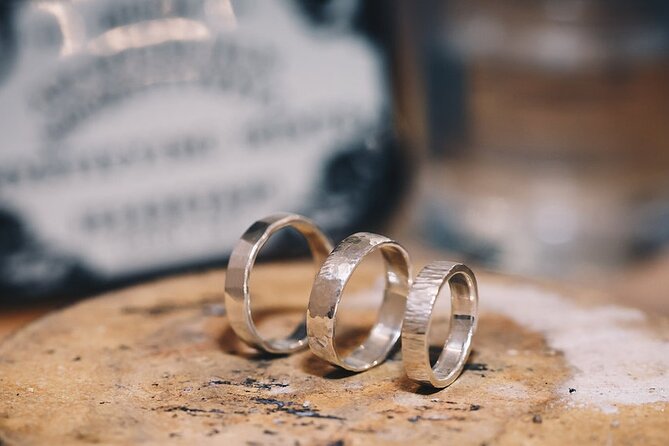
This part is popular because the result depends on your own rhythm and placement. Light, even taps can produce a restrained pattern, while a stronger or more varied approach gives the ring a more rustic character. The exact finish will depend on how you use the tool, which means no two rings need to look exactly alike.
You do not need to be an artist to enjoy this step. The tutor explains how to use the hammer, and you can build the texture gradually rather than making every mark at once. I would take a moment before starting to decide if you want a regular pattern or something more irregular and handmade.
The texture also hides small inconsistencies that might otherwise bother a beginner. That is useful if this is your first time working with metal.
Choosing between rustic and high polish
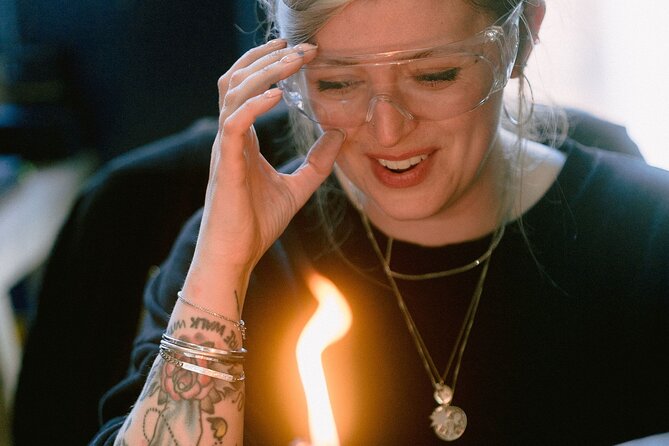
The final choice is the polish. You can have the ring polished only on the inside, leaving the outside with an artistic or rustic appearance, or choose a glittery, fully polished finish.
This is more than a minor option. A full polish gives the ring a bright, traditional jewellery look. Leaving the outer surface textured keeps the marks from your hammering visible and makes the handmade quality part of the design.
Think about how you want to wear the ring before choosing. If you like a simple, bright piece, full polishing may suit you. If the point is to show that you made it yourself, the rustic finish will preserve more of the workshop’s character.
The finished ring is yours to keep. Several people have worn theirs every day, and one long-term comment reported that the ring had neither broken nor tarnished. That is encouraging, though normal care for sterling silver remains sensible.
The small extras that make the class comfortable
Coffee and tea are included, along with plenty of chocolate. Water and a toilet are also available at the studio.
These are small details, but they help during a two-hour practical session. You can take a short pause, ask questions, and keep the mood relaxed. The chocolate also adds a cheerful touch without changing the main purpose of the activity.
The studio itself is small, so expect a close working setup rather than a large classroom. That can be a benefit because the tutor can see what you are doing and answer questions quickly. It also means you should avoid bringing bulky bags or luggage.
Who will enjoy this workshop most
I would recommend this experience to:
- Couples looking for a hands-on date in Dublin
- Parents and children aged 10 or older
- Families who want one shared souvenir from the trip
- First-time jewellery makers who prefer clear instruction
- Anyone who values an object with a personal story
- Visitors who want a change from museums, shops, and sightseeing walks
Children under 10 cannot take part. Anyone under 16 must be accompanied by a paying adult. The activity suits older children best, especially those who can listen carefully and work with hand tools under supervision.
It also works well for a special occasion. Rings have been made for anniversaries, Christmas gifts, and family trips. One participant made a ring for her daughter during the class, which shows how the souvenir can carry a meaning beyond Dublin itself.
This may not suit you if you want a quiet, passive activity or if stairs are difficult. It is also not ideal if your schedule is tight, since the late-arrival policy leaves no room for a delayed bus or a wrong turn.
How the $104.05 price compares with the experience
At $104.05 per person, this is a mid-priced Dublin activity. You are paying for more than entry to a room: the fee covers sterling silver, access to specialist tools, direct instruction, soldering by the tutor, finishing, and the ring you take home.
The value improves if you would otherwise buy a souvenir ring in a shop. A shop-bought item may be faster, but it will not carry the same memory of cutting, shaping, hammering, and finishing the metal yourself. The class also gives you two hours of focused time, which can be worth a lot during a busy city break.
The price is less appealing if you are mainly looking for a cheap activity or if you are unsure you will wear the finished ring. Before booking, think about the design described by the workshop. One person expected a different ring style, so check what kind of ring you will make and what texture and finish choices are available.
The experience is recommended by 99 percent of participants and carries a 4.9 rating from 410 reviews. Those figures suggest a strong record, especially for an activity where the final result depends partly on each person’s own work.
Booking, timing, and cancellation details
Confirmation is provided at booking, and the ticket is mobile, so you can keep it on your phone. The activity is offered in English.
The session lasts about two hours, though it can finish earlier. One relaxed class finished in roughly an hour and 30 minutes, so do not assume you will always use the full two hours. Still, keep the full time free because the exact pace depends on the group.
Free cancellation is available if you cancel at least 24 hours before the start time. Cancellations made less than 24 hours ahead are not refunded, and changes inside that window are not accepted. The cut-off uses local Dublin time.
Because the class is often booked well ahead, with an average booking lead time of 49 days, reserve early if you need a particular date. This matters most during busy holiday periods or if you want to schedule the workshop around flights and day trips.
Should you book the Drury Street ring workshop?
Yes, if you want a personal Dublin souvenir and enjoy making things with your hands. The strongest part is the complete process: you measure and cut the silver, shape it, watch it get soldered, file the edges, add texture, and select the finish.
I would book it for a couple, an anniversary, a parent and older child, or a small family group. The patient teaching, chocolate, and useful final product make it more memorable than a standard shopping stop.
I would skip it if you need step-free access, plan to arrive close to the start time, or want a large studio with lots of personal space. Confirm the expected group size and ring style before paying, then arrive early with no luggage.
For most visitors who can manage the stairs and commit to being punctual, this is a smart use of two hours in Dublin. You leave with a ring, but the better souvenir is knowing exactly how it took shape.
FAQ
Where does the ring-making workshop begin and end?
It begins and ends at Silver Works, 24 Drury Street, Dublin, D02 V658, Ireland.
How long does the experience last?
The workshop lasts approximately two hours, although some sessions may finish earlier.
What is included in the price?
The price includes sterling silver for your ring, use of the workshop equipment, instruction, and coffee or tea with chocolate.
Do I need previous jewellery-making experience?
No previous experience is stated as a requirement. The tutor explains each stage, including cutting, shaping, filing, texturing, and finishing.
Can I choose the ring finish?
Yes. You can choose a fully polished ring or have the outside retain an artistic, rustic texture while the inside is polished.
Can children take part?
Children under 10 cannot take part. Anyone under 16 must be accompanied by a paying adult.
Is the workshop wheelchair accessible?
No. The activity takes place in two old period buildings with many stairs and no lift, and the buildings are not wheelchair accessible.
What happens if I arrive late?
If you arrive more than 10 minutes late, you will not be admitted and you will not receive a refund or rescheduling option. Arrive at least 10 minutes early.
Can I cancel for a full refund?
Yes. You can cancel for a full refund up to 24 hours before the experience start time. Cancellations made less than 24 hours before the start time are not refunded.
Just added around Dublin
- A Self Guided Walking Tour of Dublin’s Docklands★ 4.5 · 3 reviews
- Waterford Crystal and Kilkenny Full-Day Rail Tour from Dublin★ 5.0 · 3 reviews
- Secret and unusual Dublin: guided walking tour★ 5.0 · 3 reviews
- Turtle Bunbury’s Dublin: A Self-Guided Audio Tour from a Celebrated Author★ 5.0 · 3 reviews
- Cliffs of Moher and The Burren Private Tour from Dublin★ 5.0 · 3 reviews
- Skip-the-line St. Patrick’s Cathedral and Dublin City Tour★ 5.0 · 3 reviews
- Dublin Full-Day Tour through Boyne Valley★ 5.0 · 3 reviews
- Rock Of Cashel And Blarney Castle Private Chauffeur Full Day Sightseeing Tour★ 4.5 · 3 reviews
Dublin Tours, compared.

Dublin to Cliffs of Moher, including Wild Atlantic Way and Galway
Read our review →
Cliffs of Moher, Burren & Galway City Day Tour
Read our review →

Dublin to Cliffs of Moher, Burren, Wild Atlantic Way, Galway Tour
Read our review →
Dublin to Belfast Black Cab, Dunluce Castle and Giant’s Causeway
Read our review →
Kilkenny, Wicklow Mountains & Glendalough Day Tour from Dublin
Read our review →
Wicklow Mountains, Glendalough & Kilkenny Tour
Read our review →