
Reviewed · MUSEUMS
Irish Famine Museum / Exhibition Dublin
The past is waiting above a shopping centre. Dublin’s Irish Famine Museum gives you a compact, thoughtful look at the Great Hunger, with rare aerial views of St. Stephen’s Green and a 15-minute documentary included. I like the freedom to move at my own pace, and I appreciate the original objects, period images, and newspapers that give the display more weight than a wall of modern text. The main drawback is clear: this is a temporary, self-guided pop-up exhibition, not a large traditional museum.
You should allow about an hour, though readers who carefully study every panel may need longer. The exhibit is especially useful if you want historical context before visiting other Irish sites, but it asks you to read and think rather than simply watch or listen.
In This Review
- Key points to know before you go
- Finding the exhibition above St. Stephen’s Green
- Why the setting changes the experience
- Reading your way through the Great Hunger
- The objects that keep the display grounded
- A 15-minute film, with one practical warning
- The unexpected views over St. Stephen’s Green
- How much value do you get for $18.15?
- Who will get the most from this visit?
- Booking, timing, and cancellation advice
- My verdict: a serious one-hour history stop
- FAQ
- Where is the Irish Famine Museum located?
- How long does the museum visit take?
- Is the exhibition self-guided?
- Is a documentary included?
- What language is the experience offered in?
- What are the opening hours?
- How much does admission cost?
- Can children visit?
- Are service animals allowed?
- Can I cancel for a refund?
Key points to know before you go
- The museum is upstairs in St. Stephen’s Green Shopping Centre, not in a separate historic building.
- A 15-minute documentary adds an audiovisual element, but most of the visit involves reading display panels.
- Original objects include a 19th-century soup pot, newspapers, and other museum artefacts.
- The aerial views of St. Stephen’s Green are unusual, offering a different angle on one of central Dublin’s best-known parks.
- French, German, Italian, and Spanish translation guides are available, while the main experience is offered in English.
- The visit costs $18.15 per person, and advance booking gives you a mobile ticket and helps you avoid entrance lines.
Finding the exhibition above St. Stephen’s Green
The experience begins at St. Stephen’s Green Shopping Centre, at St. Stephen’s Green, Dublin, D02 HX65. That location matters. You are not entering a grand famine memorial or a restored 19th-century building. You are going into a modern shopping centre and heading upstairs to a temporary exhibition space.
That setting may feel unexpected, even slightly plain, when you first arrive. It also makes the museum easy to fit into a day in central Dublin. You can combine it with time around St. Stephen’s Green, nearby shops, cafés, and public transport. Since the activity begins and ends at the same place, there is no complicated meeting point or transfer to manage.
The exhibition is open daily from noon to 6 p.m. between April 1 and September 30, 2026. That schedule gives you useful flexibility, though the late opening means you cannot visit in the morning. If you have a packed sightseeing day, an early afternoon stop may work better than trying to squeeze it in just before closing.
The mobile ticket is practical. Booking ahead lets you skip entrance lines, and confirmation arrives at the time of booking. The exhibition can accept up to 90 people, but the self-guided format means you are not tied to a guide’s pace or to a fixed departure time.
More Museums in Dublin
- Irish Rock ‘N’ Roll Museum Experience Dublin
★ 5.0 · 6,112 reviews - The Little Museum of Dublin Famous Guided Tour
★ 5.0 · 2,948 reviews - Dublin EPIC Museum Admission Ticket
★ 4.5 · 1,729 reviews
Why the setting changes the experience
The shopping-centre location is both a strength and a weakness. I like the convenience, especially for a short visit in the middle of Dublin. You can reach the museum without setting aside half a day, and you can leave when you have absorbed enough.
At the same time, the setting does not create the solemn atmosphere you might expect from a museum about famine, displacement, and hardship. One of the strongest practical criticisms is that it can feel like a pop-up display upstairs in a mall. That is not a surprise once you know what to expect, but it is worth considering before you pay admission.
The exhibition is designed to deliver a focused account rather than a full museum collection. You will not be spending hours among many galleries. Instead, you follow the information around a single exhibition area, pausing at photographs, written explanations, objects, and newspapers.
I would treat the setting as part of the bargain. You get a convenient, accessible introduction to a serious subject, but not the atmosphere or scale of a major national museum.
Reading your way through the Great Hunger

The main part of the visit is self-guided. You move around the room, read the panels, examine the objects, and decide how quickly to proceed. I like this format for a subject that benefits from quiet attention. You can stop when a particular account or image catches you, then move on when you are ready.
The display explains the Irish Potato Famine, also called the Great Hunger. It looks at the crisis itself and at the political decisions and slow disaster response that shaped its effect on ordinary people. The exhibit also connects the famine with emigration, giving you a clearer sense of why so many people left Ireland.
Much of the display depends on text. That makes the visit rewarding if you enjoy reading historical information, but less suitable if you want a highly interactive attraction. One direct assessment described the museum as a room of posters with limited audiovisual material. That is a fair warning, not a reason to dismiss it.
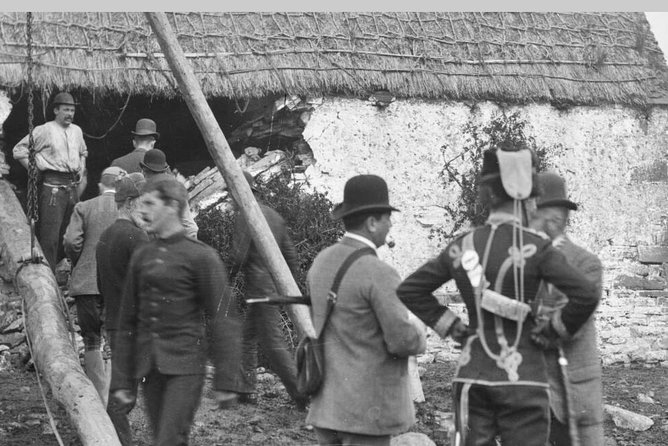
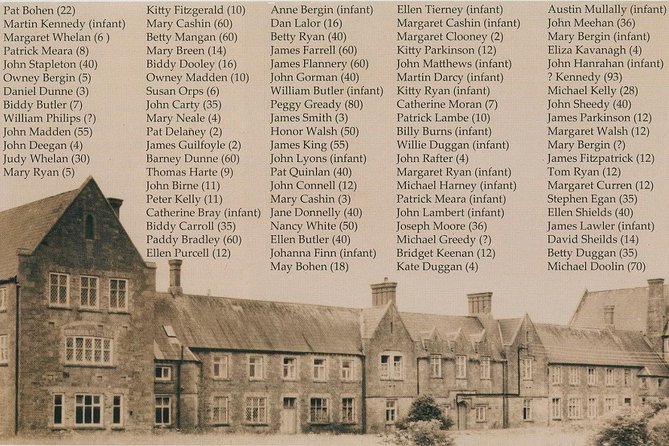
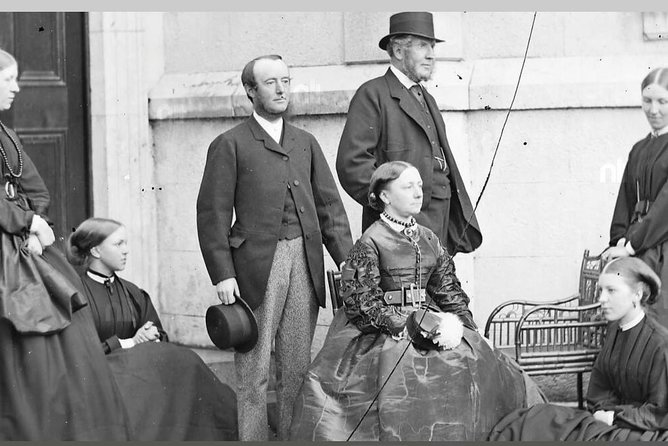
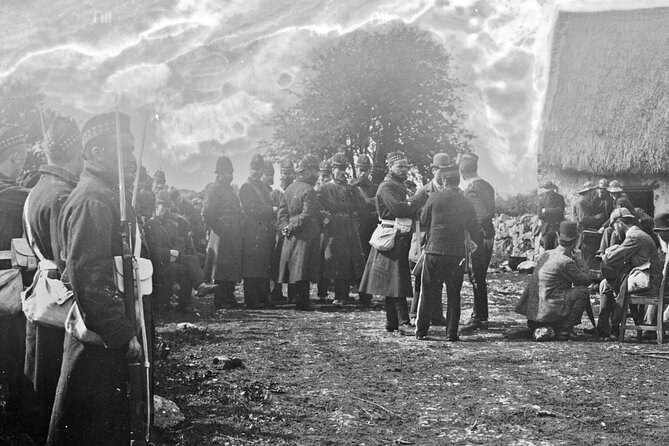
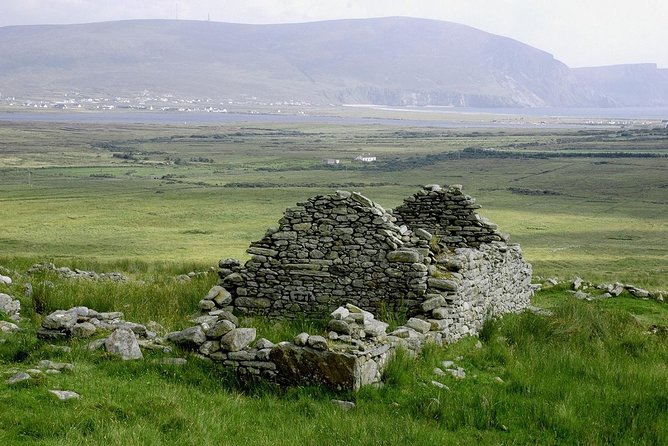
The presentation aims to limit text where possible and uses many 19th-century photographs. Those images help put human faces and real conditions alongside the written account. Newspapers add a sense of period evidence, while the original soup pot gives you a physical reminder of hunger and relief efforts.
I would not rush this section. A one-hour estimate is reasonable for a normal visit, but you may spend more time if the subject is personal to your family or if you want to read every panel carefully.
The objects that keep the display grounded
The original soup pot is one of the most useful objects in the exhibition because it is concrete and ordinary. A political explanation can remain abstract. A pot connected with soup provision makes the practical side of hunger easier to picture.
The newspapers serve a different purpose. They bring the period’s reporting and public discussion into the room. Along with the photographs, they help break up the written panels and give the exhibition some physical evidence.
The museum also uses historical images to show the famine’s effect on Ireland and its people. I found this mix of objects, images, and text more effective than relying on one format alone. Still, the display remains modest in scale. You should expect a small collection of selected artefacts, not an extensive archive.
The exhibit also presents the failure of political leadership and the slow response to the crisis. The interpretation is direct and critical. It draws attention to the money spent on military personnel in Ireland compared with aid for starving people, a contrast that helps explain why the subject still carries strong emotional and political force.
The tone may feel angry at times. That is appropriate to the material, but you should know that the exhibition does not treat the famine as a detached, purely academic topic. It asks you to consider responsibility, government action, and the human cost of delay.
A completely different kind of day out from Dublin:
- Dublin to Cliffs of Moher, including Wild Atlantic Way and Galway
★ 5.0 · 23,331 reviews - From Dublin: Cliffs of Moher, Burren & Galway City Day Tour
★ 4.8 · 18,888 reviews - Dublin: Guinness Storehouse Entry Ticket
★ 4.6 · 16,863 reviews - Dublin to Cliffs of Moher, Burren, Wild Atlantic Way, Galway Tour
★ 5.0 · 12,924 reviews
A 15-minute film, with one practical warning
The documentary lasts about 15 minutes and is included in your admission. It gives the visit a change of pace after the reading-heavy display. If you prefer a clear narrative before studying panels, you might watch the film first. If you like to build your own understanding, save it for the middle or end.
The film is the main audiovisual feature. Do not book this expecting a long cinema presentation, multiple videos, or an immersive multimedia show. The exhibition’s core remains the written material and physical displays.
The film area may become warm because the exhibition space is not climate controlled. That is a small but useful point, particularly if you visit during a warm afternoon. You may find the room less comfortable than a modern museum gallery, so dress for ordinary indoor conditions rather than assuming strong air conditioning.
The documentary adds value because it helps gather the major themes into one short sitting. It also gives children or family members who tire of reading a way to engage with the subject. Even so, the experience is still best for people willing to spend most of the hour reading.
The unexpected views over St. Stephen’s Green
The rare aerial views of St. Stephen’s Green are one of the exhibition’s more unusual features. They give you a fresh look at the park from above, something you are unlikely to get from ground-level sightseeing.
These views also make a useful contrast with the historical material. After looking at famine photographs, newspapers, and artefacts, you can look out over a familiar Dublin setting from a different angle. The park is not simply scenery here. It helps place the exhibition in the middle of the modern city.
I would not book the museum only for the views. They are an extra benefit, not the main reason to come. But if you already plan to visit St. Stephen’s Green, the view makes this short stop feel more distinctive.
How much value do you get for $18.15?
At $18.15 per person, the price is fair if you want a focused history lesson and are comfortable with a self-guided format. You are paying for about an hour of access, the documentary, photographs, artefacts, newspapers, translation support, and the convenience of advance admission.
The value is weaker if you expect a large museum, a live guide, or an extensive collection. There is no guided storytelling built into the visit, and the exhibition space is temporary. You also pay separately if you want to buy the exhibition book.
I see the admission as reasonable for a short, central Dublin activity, especially if the famine is an important part of your family story or Irish history interests. For a family that dislikes reading, however, the price may feel high because the film is only 15 minutes and the rest of the visit depends heavily on written information.
The strong overall response supports the idea that the exhibit delivers what it promises. It has a 4.7 rating from 247 reviews, with 93 percent recommending it. I would read those numbers as evidence of a well-received educational experience, not proof that everyone will enjoy the format.
Who will get the most from this visit?
I would recommend the exhibition to you if you want a concise introduction to the famine and prefer to control your own pace. It also suits people researching Irish family history, since the subject of emigration is presented as part of the wider story.
Families can make good use of the visit, but children must be accompanied by an adult. The self-guided format allows you to move on when younger children lose interest. On the other hand, the reading requirement may test their patience.
The museum is also a good choice if you have limited time in Dublin. One hour is manageable, and the location is close to central sights and public transportation. You do not need to commit to a full-day historical tour.
I would be more cautious if you want a polished, climate-controlled museum with interactive exhibits and a large collection. This is a temporary display in a shopping centre, and that description should guide your expectations.
The exhibition is offered in English, but translation guides are available in French, German, Italian, and Spanish. That makes the written content more accessible to people who do not want to rely entirely on English. Service animals are allowed, and most people can participate.
Booking, timing, and cancellation advice
You can book with a mobile ticket, and confirmation is provided at booking. Since the experience is often reserved about 35 days ahead, advance planning is sensible if this visit is important to your schedule.
The daily opening hours are noon to 6 p.m. from April through September 2026. The activity ends where it starts, so you do not need to arrange transport back from another site.
Free cancellation is available if you cancel at least 24 hours before the start time. Changes or cancellations inside that 24-hour window are not accepted for a refund, and the cut-off follows Dublin local time.
I would plan to arrive with enough time to read rather than treating the museum as a quick photo stop. If you only have 20 minutes, you can still see part of it, but you will miss much of what gives the exhibition its purpose.
My verdict: a serious one-hour history stop
The Irish Famine Museum is small, direct, and worthwhile for the right audience. I like its use of photographs, newspapers, an original soup pot, and a short documentary to explain a painful period without requiring a full day. The aerial views of St. Stephen’s Green add a memorable touch, and the self-guided structure gives you control.
I would book it if you want to understand the famine, emigration, and the political response in a compact format. I would skip it if you dislike reading, need a large collection, or expect a guided tour with constant narration.
For most visitors, the best approach is simple: allow an hour, read carefully, watch the film, and expect a temporary exhibition rather than a grand museum. At $18.15, it offers solid value as a focused lesson in Irish history, especially when you pair it with other Dublin sights.
FAQ
Where is the Irish Famine Museum located?
It is located at St. Stephen’s Green Shopping Centre, St. Stephen’s Green, Dublin, D02 HX65, Ireland.
How long does the museum visit take?
The visit takes approximately one hour.
Is the exhibition self-guided?
Yes. You explore the exhibition at your own pace rather than joining a guided tour.
Is a documentary included?
Yes. Admission includes a documentary film lasting about 15 minutes.
What language is the experience offered in?
The experience is offered in English. Translation guides are available in French, German, Italian, and Spanish.
What are the opening hours?
From April 1 through September 30, 2026, it is open Monday through Sunday from noon to 6 p.m.
How much does admission cost?
The listed price is $18.15 per person.
Can children visit?
Yes, but children must be accompanied by an adult.
Are service animals allowed?
Yes. Service animals are allowed.
Can I cancel for a refund?
Yes. You can receive a full refund if you cancel at least 24 hours before the experience start time. Cancellations or changes made less than 24 hours before the start time are not accepted for a refund.
Just added around Dublin
- A Self Guided Walking Tour of Dublin’s Docklands★ 4.5 · 3 reviews
- Waterford Crystal and Kilkenny Full-Day Rail Tour from Dublin★ 5.0 · 3 reviews
- Secret and unusual Dublin: guided walking tour★ 5.0 · 3 reviews
- Turtle Bunbury’s Dublin: A Self-Guided Audio Tour from a Celebrated Author★ 5.0 · 3 reviews
- Cliffs of Moher and The Burren Private Tour from Dublin★ 5.0 · 3 reviews
- Skip-the-line St. Patrick’s Cathedral and Dublin City Tour★ 5.0 · 3 reviews
- Dublin Full-Day Tour through Boyne Valley★ 5.0 · 3 reviews
- Rock Of Cashel And Blarney Castle Private Chauffeur Full Day Sightseeing Tour★ 4.5 · 3 reviews
Museums, compared.
The Little Museum of Dublin Famous Guided Tour
Read our review →
Giant’s Causeway with the Titanic Exhibition and the best of Northern Ireland
Read our review →

Irish Whiskey Museum: Whiskey Blending Experience
Read our review →
Irish Whiskey Museum Blending Tour with Tastings
Read our review →Browse the lists this tour appears in