
Reviewed · SELF-GUIDED TOURS
St Patrick’s Cathedral: Self-Guided Cathedral Admission
History is built into every stone here. Saint Patrick’s Cathedral gives you a calm, flexible way to explore Dublin’s national cathedral, with audio guides, interactive displays, Gothic architecture, and strong links to Jonathan Swift and Ireland’s religious past. For $12 per person, I like the freedom to move at my own pace, and I like that the ticket includes audio guides in six languages. The main consideration is that the cathedral can feel crowded at popular times, and there is a lot to absorb without a printed guidebook.
I also like the Discovery Space, where touch screens, iPads, choir recordings, and brass rubbing turn a quiet church visit into something more hands-on. If you prefer a person-led tour, guided visits may also be offered at set times, with guides such as Anna and David praised for making the building’s story clear and engaging.
In This Review
- Key points at a glance
- Why Saint Patrick’s Cathedral matters in Dublin
- Entering the Gothic interior
- Jonathan Swift’s connection to the cathedral
- The Door of Reconciliation and Irish history
- Using the audio guide at your own pace
- The Discovery Space and brass rubbing
- How long to spend inside
- Is $12 good value?
- Practical details before you go
- Who will enjoy this visit most?
- Should you book Saint Patrick’s Cathedral?
- FAQ
- Where does the Saint Patrick’s Cathedral experience begin and end?
- How much does admission cost?
- How long is the ticket valid?
- Is an audio guide included?
- Which languages are available for the audio guide?
- Can I skip the ticket line?
- Is the cathedral wheelchair accessible?
- Can children visit without an adult?
Key points at a glance
- Jonathan Swift’s cathedral: See the burial place and artifacts connected with the author of Gulliver’s Travels, who served as dean from 1713 to 1745.
- A famous doorway: The Door of Reconciliation is linked to the Irish expression to chance your arm.
- 39 images of Saint Patrick: Look for the stained-glass window that tells his life in a sequence of 39 scenes.
- Useful audio guides: English, French, German, Italian, Spanish, and Irish options are included.
- A hands-on Discovery Space: Use touch screens, listen to choir samples, and make a brass rubbing.
- Flexible one-day admission: You can take your time rather than follow a fixed route or rushed group.
Why Saint Patrick’s Cathedral matters in Dublin
Saint Patrick’s Cathedral is not simply a pretty church dropped into the middle of Dublin. It has been tied to Ireland’s religious and cultural life for more than 800 years, making it one of the city’s most meaningful historic buildings.
The cathedral was built in 1220 in honor of Saint Patrick, Ireland’s patron saint. It sits beside the famous well associated with Saint Patrick’s visit to Dublin, where tradition says he baptized converts. That connection gives the building a physical link to one of Ireland’s oldest Christian stories.
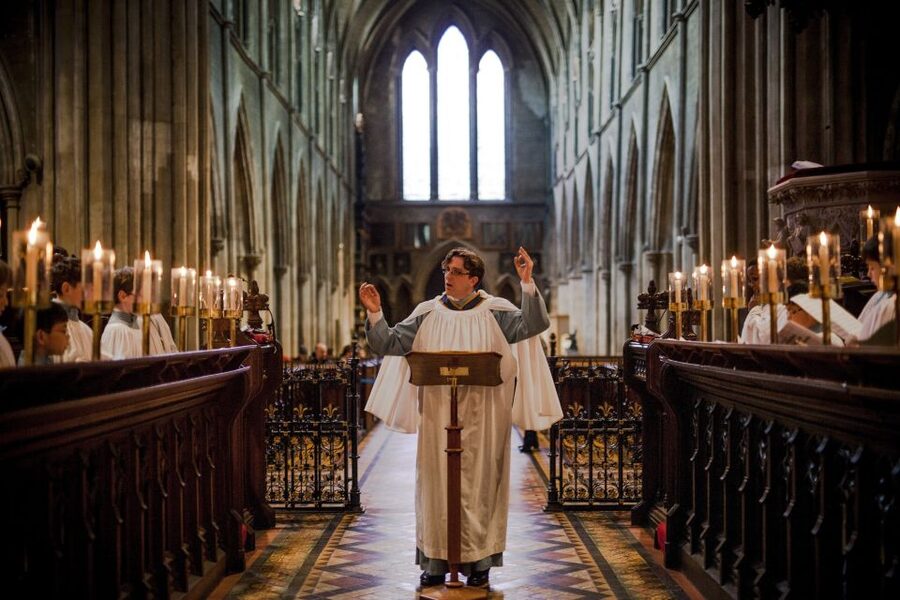
Today, Saint Patrick’s is the National Cathedral of the Church of Ireland. It also remains a working place of worship, with sung services twice daily from Sunday through Friday. You may therefore find the atmosphere more solemn than at a standard sightseeing attraction, particularly when music or worship is taking place.
I like this combination. You can study medieval architecture, examine memorials, and listen to an audio explanation, but you are still in a living cathedral rather than a museum display. Keep your voice low, follow any staff instructions, and remember that services may affect where you can walk.
A few more trips worth weighing up
- Christ Church Cathedral Entrance Ticket & Self-Guided Tour
★ 4.6 · 773 reviews - Dublin Ghost Hunt Exploration Game and Tour
★ 4.0 · 34 reviews - Private Dublin Treasure Hunt Self Guided Tour
★ 4.5 · 14 reviews
Entering the Gothic interior
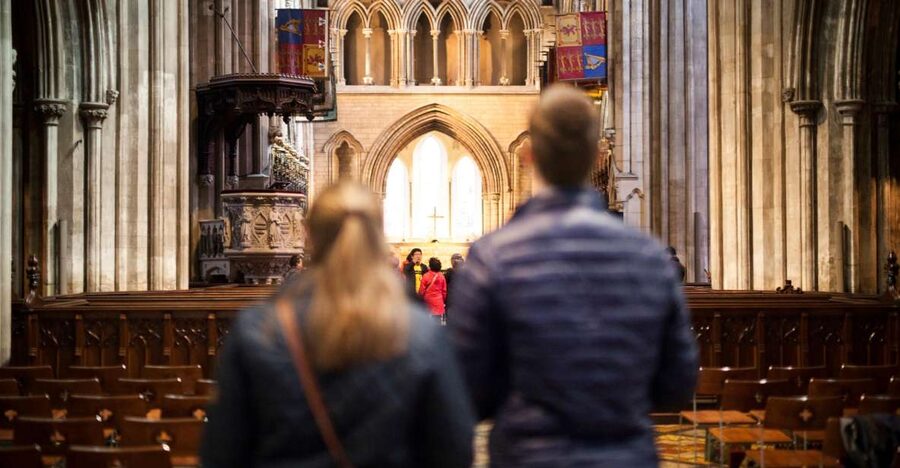
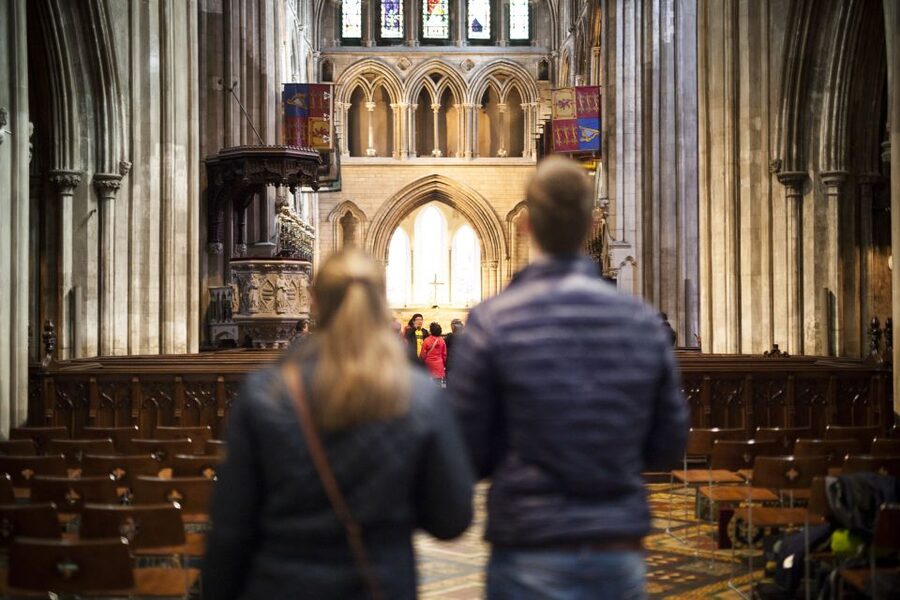
The first impression comes from the scale and stonework. The Gothic design gives the interior a vertical feel, with pointed arches, long lines, carved details, and stained glass drawing your eyes upward. Even if you are not deeply interested in church architecture, the workmanship is hard to miss.
The building is well maintained, which helps you notice smaller details instead of seeing only age and wear. I would give yourself a few minutes before starting the audio guide. Look around without commentary first. This lets you get a feel for the size and shape of the cathedral before individual stops begin competing for your attention.
The stained glass is one of the strongest reasons to visit. A particularly useful feature is the window showing the life of Saint Patrick in 39 images. The sequence gives you something specific to study, rather than asking you to admire colored glass without context.
You will also find beautiful stonework throughout the church. The materials, memorials, and architectural details show how much skill went into buildings of this kind. One practical point: the interior can be visually busy, so do not rush from one display to the next. The cathedral rewards a slower look.
Jonathan Swift’s connection to the cathedral

Saint Patrick’s Cathedral has a special literary connection through Jonathan Swift, author of Gulliver’s Travels. Swift served as dean here from 1713 to 1745, and he is buried inside the cathedral.
His grave and the selection of Swift-related artifacts provide a welcome change of focus from architecture. You can move from religious history to Irish literary history without leaving the building. The audio guide helps explain Swift’s life and his work, giving more meaning to a grave that could otherwise be easy to pass.
I think this is one of the best parts for visitors who are not especially interested in church interiors. If you know Gulliver’s Travels, the connection adds a personal story to the building. If you do not, the cathedral still gives you enough context to understand why Swift matters here.
Take your time around the Swift displays. The cathedral’s story is not told through one period alone. Its importance comes from the way religious, literary, political, and social stories overlap inside the same walls.
The Door of Reconciliation and Irish history
The Door of Reconciliation is another small feature with an outsized story. It is linked to the expression to chance your arm, giving a familiar Irish phrase a physical point of reference.
This is exactly the kind of detail that makes a self-guided visit work well. You are not just looking at an old door. You are learning how a particular event and object became part of everyday language. The story also shows how the cathedral connects to wider Irish history, rather than existing apart from it.
Use the audio guide at this point if you want the full explanation. The handheld guides are designed to let you choose individual stops, so you do not need to listen to every recording in order. That flexibility is helpful when one subject interests you more than another.
A completely different kind of day out from Dublin:
- Dublin to Cliffs of Moher, including Wild Atlantic Way and Galway
★ 5.0 · 23,331 reviews - From Dublin: Cliffs of Moher, Burren & Galway City Day Tour
★ 4.8 · 18,888 reviews - Dublin: Guinness Storehouse Entry Ticket
★ 4.6 · 16,863 reviews - Dublin to Cliffs of Moher, Burren, Wild Atlantic Way, Galway Tour
★ 5.0 · 12,924 reviews
Using the audio guide at your own pace
Audio guides are included with admission, with English, French, German, Italian, Spanish, and Irish available. The guide is one of the clearest strengths of this visit because it gives structure without forcing you into a group.
I like that you can pause, skip, or revisit information. Some people want a quick look at the windows and architecture. Others want to spend much longer on Swift, the cathedral’s construction, or the religious traditions connected with Saint Patrick. A self-guided format works for both.
The supplied equipment is described as a handheld guide, and you may find it easier to use your own wired headphones or connect through your phone if that option is available during your visit. That is a practical comfort tip, especially if you want to listen closely in a busy interior.
The guide is detailed enough to help you understand what you are seeing, but do not treat it like a race. I would select the stops that catch your attention, then put the device down occasionally and simply look. An audio explanation is useful, but it should not prevent you from noticing the space itself.
If you prefer direct conversation, guided tours may be offered at regular intervals, sometimes about every 15 minutes. Availability and timing can vary, so check on arrival. Guides mentioned by name include Anna and David, both praised for explaining the cathedral clearly and answering questions. The self-guided ticket gives you flexibility, while a live guide can add a more personal feel.
The Discovery Space and brass rubbing

The Discovery Space gives the visit a more active side. Here you can use touch-screen technology to explore the cathedral’s long history, listen to samples from the choir on iPads, and make a brass rubbing.
The digital displays are especially useful if you are visiting with children or if you want a break from reading plaques and listening to audio. The brass rubbing offers a simple physical activity that connects you with the decorative and historic details of the building.
I would not plan the entire visit around the Discovery Space, but I would make sure not to miss it. It adds variety and helps younger visitors stay engaged. It also gives you a different way to process the cathedral’s story, rather than relying only on dates and names.
Families should note that anyone under 18 must be accompanied by a parent or guardian. The activity is wheelchair accessible, which makes it a practical choice for a wider range of visitors.
How long to spend inside
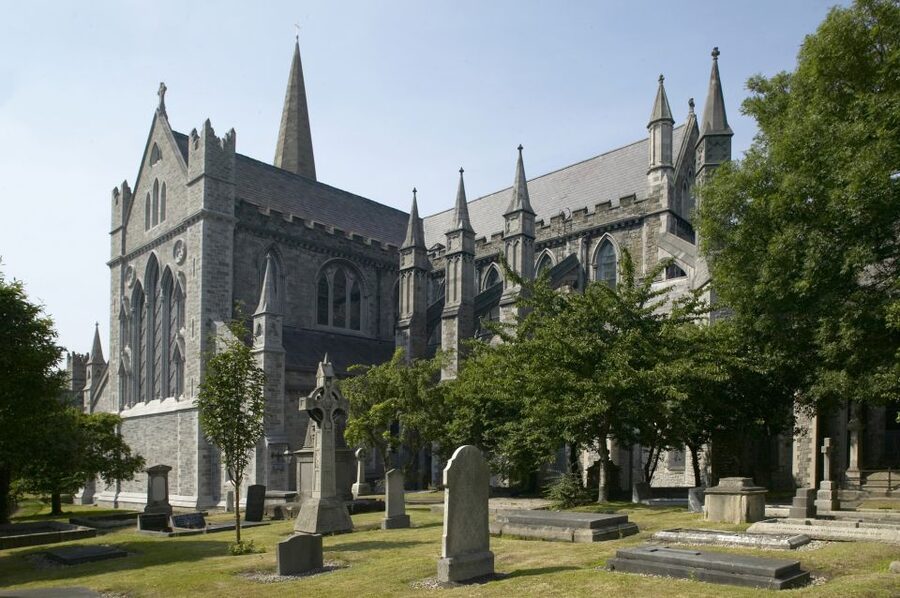
Admission is valid for one day, and the activity begins and ends at Saint Patrick’s Cathedral. There is no fixed tour route, so your visit can be short or leisurely.
A quick visit can cover the main architecture, stained glass, Swift connection, Door of Reconciliation, and a few audio stops. If you listen to more of the guide, use the Discovery Space, and pause for close looks at the windows and stonework, you will need considerably longer.
I would avoid squeezing this into a ten-minute gap between other Dublin sights. The cathedral is worth enough time to let the information settle. You do not need to listen to every audio stop, but you should give yourself room to look up, read, and move at an unhurried pace.
The building may be crowded around midday, including on weekdays during the summer. Crowd management is generally handled well, but busy periods can make the audio experience less peaceful. Earlier or later timing may give you a quieter visit, though the available starting times should be checked when booking.
Is $12 good value?
At $12, this is a solid-value Dublin attraction, especially because audio guides are included. You are paying for access to a major national building, a working cathedral, the Swift connection, stained glass, interactive displays, and a flexible format rather than a short walk-through.
The price feels strongest if you use the interpretation. Simply entering, taking a few photographs, and leaving would make the ticket less worthwhile. The audio guide turns the building from an attractive interior into a place with stories, people, and links to Irish culture.
The one limitation is that some visitors may want more printed material, especially a booklet about the stained-glass windows or the cathedral’s construction. A small guidebook would help you continue exploring after the visit. The on-site shop may have suitable material, though its style and placement may not appeal to everyone.
For a visitor interested in Irish history, architecture, religion, or literature, $12 is reasonable. It is also a useful rainy-day option because the main experience takes place indoors.
Practical details before you go
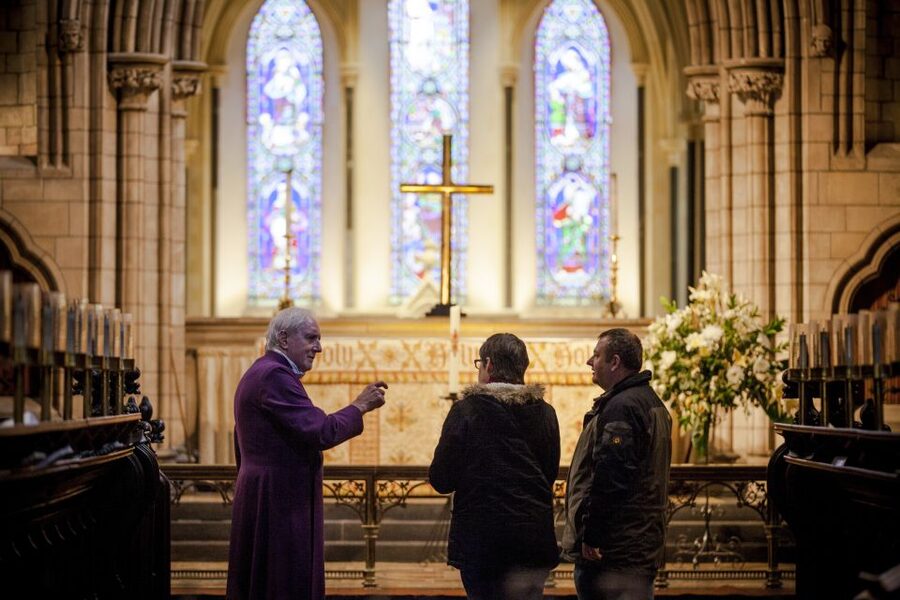
You start and finish at Saint Patrick’s Cathedral in Dublin County. The ticket is valid for one day, and the booking system allows you to reserve now and pay later, which can help if your plans are still shifting.
You can cancel up to 24 hours in advance for a full refund. The ticket also includes skip-the-ticket-line access, though you should still allow time for entry procedures and collecting or arranging the audio guide.
The cathedral is wheelchair accessible. Audio guide languages include English, French, German, Italian, Spanish, and Irish. Under-18s need to be with a parent or guardian.
Because Saint Patrick’s remains a place of worship, dress and behavior should be respectful. Sung services take place twice daily from Sunday through Friday, so check current arrangements if attending at a particular time matters to you.
Who will enjoy this visit most?
I would recommend Saint Patrick’s Cathedral to you if you enjoy historic buildings but want help understanding what you are seeing. The audio guide gives enough context to make the windows, doorways, memorials, and Swift connection feel connected rather than random.
It is also a good choice for families, thanks to the Discovery Space and brass rubbing. Children may not want a long lecture about medieval church history, but touch screens and a hands-on activity give them a reason to stay engaged.
Literature fans should make time for Jonathan Swift’s grave and artifacts. Architecture fans will appreciate the Gothic stonework and stained glass. Visitors looking for a quiet place in central Dublin may also value the cathedral’s calm atmosphere, although the busiest periods can reduce that sense of peace.
I would be less enthusiastic if you want a highly structured, fully guided experience from beginning to end. You may prefer to join a live tour if one is available. A self-guided visit requires you to choose your own pace and decide which parts deserve the most attention.
Should you book Saint Patrick’s Cathedral?
Yes, if you want an affordable Dublin sight with more substance than a quick photo stop. The combination of Gothic architecture, Saint Patrick traditions, Jonathan Swift, stained glass, audio commentary, and the Discovery Space gives you several good reasons to stay.
Book it if you value flexibility, need a multilingual guide, or want to explore without being tied to a group schedule. If you prefer a personal guide, ask about the next live tour when you arrive, but keep the self-guided option as a reliable fallback.
I would especially recommend setting aside enough time for the Saint Patrick window, Swift’s burial place, the Door of Reconciliation, and the Discovery Space. Those details turn a beautiful church visit into a clearer lesson in Dublin and Ireland’s past.
FAQ
Where does the Saint Patrick’s Cathedral experience begin and end?
It begins at Saint Patrick’s Cathedral and ends back at the same meeting point.
How much does admission cost?
Admission costs $12 per person.
How long is the ticket valid?
The admission is valid for one day.
Is an audio guide included?
Yes. Audio guides are included with admission.
Which languages are available for the audio guide?
The audio guide is available in English, French, German, Italian, Spanish, and Irish.
Can I skip the ticket line?
Yes. Skip-the-ticket-line access is included.
Is the cathedral wheelchair accessible?
Yes. The activity is wheelchair accessible.
Can children visit without an adult?
No. Anyone under 18 must be accompanied by a parent or guardian.
Just added around Dublin
- A Self Guided Walking Tour of Dublin’s Docklands★ 4.5 · 3 reviews
- Waterford Crystal and Kilkenny Full-Day Rail Tour from Dublin★ 5.0 · 3 reviews
- Turtle Bunbury’s Dublin: A Self-Guided Audio Tour from a Celebrated Author★ 5.0 · 3 reviews
- Secret and unusual Dublin: guided walking tour★ 5.0 · 3 reviews
- Cliffs of Moher and The Burren Private Tour from Dublin★ 5.0 · 3 reviews
- Skip-the-line St. Patrick’s Cathedral and Dublin City Tour★ 5.0 · 3 reviews
- Dublin Full-Day Tour through Boyne Valley★ 5.0 · 3 reviews
- Rock Of Cashel And Blarney Castle Private Chauffeur Full Day Sightseeing Tour★ 4.5 · 3 reviews
Self-Guided Tours, compared.

Christ Church Cathedral Entrance Ticket & Self-Guided Tour
Read our review →
Self-Guided Bike Tour of Killarney National Park, Muckross Gardens & Waterfall
Read our review →



Browse the lists this tour appears in