Reviewed · DUBLIN TOURS
The Dublin True Crime Tour
Dublin has plenty of dark stories. This two-hour walk pairs major landmarks with tales of murder, heists, punishment, grave robbers, and madness, giving you an unusual way to read the city center. I like the small maximum group of 19, which should make it easier to hear the guide and ask questions. I also like the route itself, since it links College Green, Trinity College, Dublin Castle, Christ Church, and other central sights without asking you to enter costly attractions.
The main drawback is the time period. You may expect a tour of Victorian poisonings and old murders, but part of the program reaches into modern Dublin, including the story of Veronica Guerin. The quality also depends heavily on the guide’s delivery, and one uneven account described a guide who was hard to hear and lost the thread of some stories.
In This Review
- Key points to know before booking
- Why this walking tour gives Dublin a different face
- Starting at the Bank of Ireland with a major heist
- Trinity College and the punishment of murderers
- Molly Malone, grave robbers, and eighteenth-century Dublin
- Dublin Castle and the missing Crown Jewels
- Dubh Linn Gardens and the Veronica Guerin memorial
- Christ Church Cathedral and the heart of St. Lawrence
- How much storytelling can you expect?
- Price, group size, and practical value
- Who will enjoy this tour most?
- Should you book the Dublin True Crime Tour?
- FAQ
- Where does the Dublin True Crime Tour begin?
- What time does the tour start?
- Where does the tour finish?
- How long does the tour last?
- What language is the tour offered in?
- How much does the tour cost?
- Which places are included on the route?
- Is admission to the stops included?
- How large is the tour group?
- Can I cancel for a full refund?
Key points to know before booking
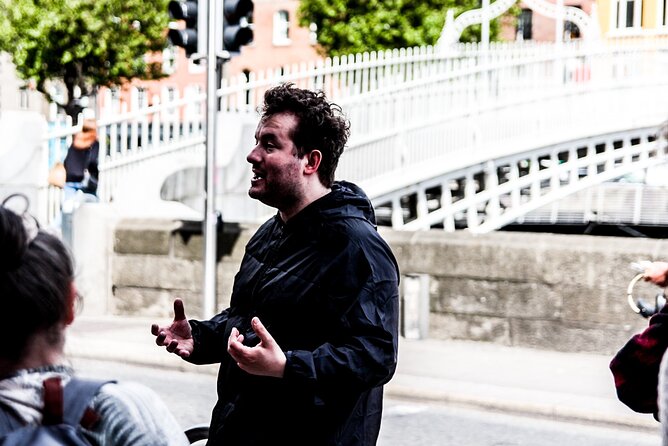
- The walk begins at 4:00 pm: You meet at 1 College Green, beside the Bank of Ireland in the Temple Bar area.
- Six story stops fill about two hours: The route covers the Bank of Ireland, Trinity College, Molly Malone, Dublin Castle, Dubh Linn Gardens, and Christ Church Cathedral.
- The crimes span centuries: Expect old murders and punishments, eighteenth-century courtesans and grave robbers, a crown jewels heist, a modern murder case, and a notorious postmortem tale.
- The group is capped at 19 people: That is a useful size for a walking tour built around spoken stories.
- You do not pay admission at the listed stops: The value comes from the guide, route, and storytelling rather than entry to interiors.
- The price is $16.90 per person: For roughly two hours in central Dublin, that is a reasonable low-cost add-on, especially if you enjoy true crime.
Why this walking tour gives Dublin a different face
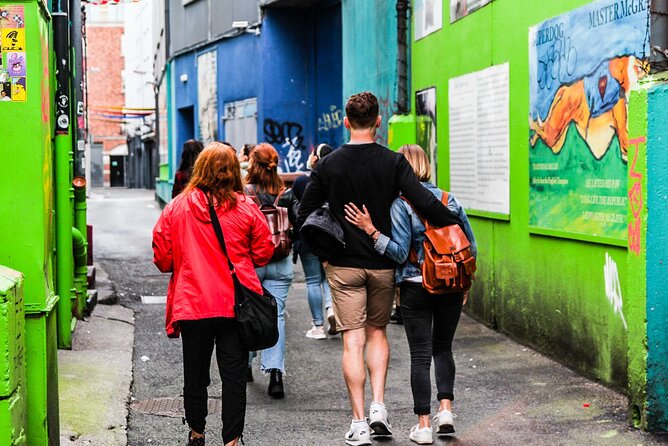
Most first walks through Dublin focus on pubs, writers, music, Georgian doors, and national history. This one takes a less polished path. You still see famous places, but the guide asks you to picture what happened around them when public punishment, theft, murder, and scandal were part of daily city life.
I like this format because the landmarks do real work. You are not simply standing in a room while someone recites a case. You are outside at places such as Trinity College and Dublin Castle, hearing how power, punishment, money, and crime crossed paths there.
The tour lasts about two hours. That is long enough to create a proper arc through the center, but short enough to fit before dinner or an evening activity. The route includes six main stops, with listed talks ranging from five to 15 minutes. The walking between them is part of the experience, so wear shoes you can manage on city streets.
The start time is 4:00 pm. That late-afternoon slot may suit you after a morning at the Book of Kells, the National Museum, or other central sights. It also means you should keep an eye on the weather, since the activity requires good conditions and can be rescheduled or refunded if poor weather forces cancellation.
A few more trips worth weighing up
- Dublin to Cliffs of Moher, including Wild Atlantic Way and Galway
★ 5.0 · 23,331 reviews - From Dublin: Cliffs of Moher, Burren & Galway City Day Tour
★ 4.8 · 18,888 reviews - Dublin: Guinness Storehouse Entry Ticket
★ 4.6 · 16,863 reviews
Starting at the Bank of Ireland with a major heist
The meeting point is 1 College Green, Dublin, D02 YT92, near the Bank of Ireland and the Temple Bar district. The first stop lasts about five minutes and introduces the tale of Ireland’s biggest heist, along with the tiger kidnapping connected to it.
That is a sharp opening. A heist gives the tour immediate movement, while the kidnapping angle adds the human pressure behind the crime. You get a sense of the sort of stories ahead: not just old legends, but cases involving planning, fear, money, and the consequences for people caught in the middle.
Because the talk is brief, do not expect a full case-file treatment at this first point. Think of it as a scene-setter. The Bank of Ireland is also a practical meeting place, since College Green is easy to reach by public transport and close to several well-known city-center streets.
Trinity College and the punishment of murderers
The walk then reaches Trinity College Dublin. Here, the guide covers old murders connected with the college and explains how the murderers were punished. The talk is listed at about five minutes, so the focus is likely on the most striking parts of the stories rather than every name and date.
This stop gives the tour a useful change of tone. Trinity is usually presented as a place of scholarship and grand architecture. Hearing about murder and punishment at the same setting reminds you that institutions with an orderly public image can also have unsettling private chapters.
I would pay close attention to the punishment element. True crime tours can become a string of gruesome anecdotes, but the question of punishment adds social context. It encourages you to consider how Dublin dealt with crime in earlier periods, rather than viewing each case as an isolated shock story.
Molly Malone, grave robbers, and eighteenth-century Dublin
The Molly Malone statue is the longest listed stop, at about 15 minutes. The subject shifts to grave robbers and courtesans in eighteenth-century Dublin, giving you a wider view of the city’s underworld.
This is likely one of the most atmospheric parts of the route. The Molly Malone statue is already one of Dublin’s best-known meeting points, but the surrounding story is less postcard-friendly. Grave robbing connects to the demand for bodies and the darker side of medical study, while courtesans point to the social and economic realities behind public respectability.
I like that this section is not limited to murder. Crime tours are more interesting when they show how a city functioned, including the people who lived outside accepted social rules. The 15-minute slot also gives the guide more space to build a story and explain the setting.
You should keep your expectations measured. The supplied information identifies the subjects but does not promise access to a particular building or a theatrical reenactment. You will be listening outdoors, with the statue and city streets as the backdrop.
A completely different kind of day out from Dublin:
- Dublin to Cliffs of Moher, Burren, Wild Atlantic Way, Galway Tour
★ 5.0 · 12,924 reviews - Dublin to Belfast Black Cab, Dunluce Castle and Giant’s Causeway
★ 5.0 · 7,954 reviews - Kilkenny, Wicklow Mountains & Glendalough Day Tour from Dublin
★ 5.0 · 7,897 reviews - From Dublin: Wicklow Mountains, Glendalough & Kilkenny Tour
★ 4.8 · 6,235 reviews
Dublin Castle and the missing Crown Jewels
At Dublin Castle, the story turns to the Irish Crown Jewels Heist. The guide also explains the types of punishment that could be handed out from this famous location. This stop lasts about 10 minutes.
The combination works well. The heist brings in high-value theft and official power, while the punishment discussion shows the severe response that could follow crime. Dublin Castle provides a fitting setting for stories about authority, security, and the gap between public ceremony and private wrongdoing.
The castle is one of the route’s strongest visual anchors. Even without an admission ticket, you get a guided story at a landmark many people already plan to see. That helps the tour offer value beyond a standard walk through streets you might otherwise pass without context.
If you want a detailed tour of the castle interiors, this is not a substitute. The purpose here is the crime story and the outdoor route. You should treat the stop as an introduction to the site, not a full castle visit.
Dubh Linn Gardens and the Veronica Guerin memorial
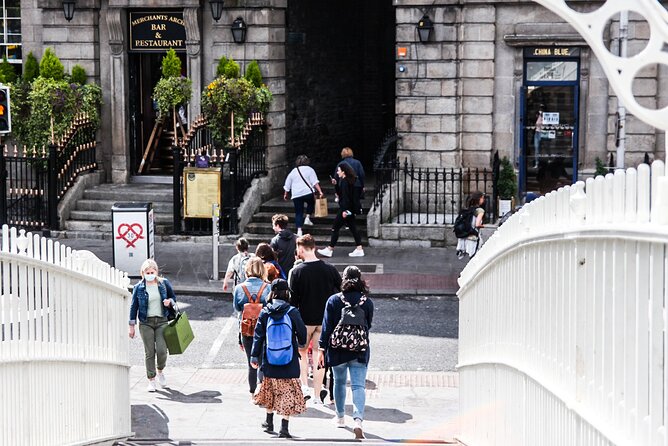
The next stop is Dubh Linn Gardens, where you hear about the Veronica Guerin memorial and a deceptive curator connected with the Chester Beatty. The talk lasts about 10 minutes.
This is where the tour moves clearly into more recent Dublin. Veronica Guerin was a contemporary Irish crime journalist whose murder became one of the country’s best-known modern cases. The memorial gives the story a direct connection to the city, rather than leaving it as a distant newspaper event.
That modern focus is both a strength and a possible mismatch. If you want twentieth and twenty-first century true crime alongside older cases, this variety keeps the tour from feeling like a single-period history lesson. If you booked mainly for Victorian-era murders, poisonings, and executions, you may find the modern material less in line with your expectations.
The Chester Beatty story adds another kind of wrongdoing. Instead of focusing only on violence, it brings in deception and the misuse of trust. That range is useful, since the tour covers crime as theft, social transgression, murder, and institutional betrayal.
Christ Church Cathedral and the heart of St. Lawrence
The final listed stop is Christ Church Cathedral. Here, the guide tells the story of the heart of St. Lawrence and its postmortem adventures. The stop lasts around 10 minutes, and the tour ends at St Audoen’s Catholic Church on High Street, in Merchants Quay.
This ending shifts away from a conventional criminal case and toward a strange, macabre story tied to a famous religious site. It gives the walk a suitably unsettling finish without requiring you to enter the cathedral as part of the tour.
Christ Church is a strong final setting because it connects crime, death, relics, religion, and public memory. You finish near another important historic church, so the route also leaves you well placed to continue exploring Dublin’s older center.
The end point is not the same as the start. That matters when planning your evening, but the walk remains within central Dublin. You can use the end of the tour as a jumping-off point for further sightseeing or dinner, depending on your plans.
How much storytelling can you expect?
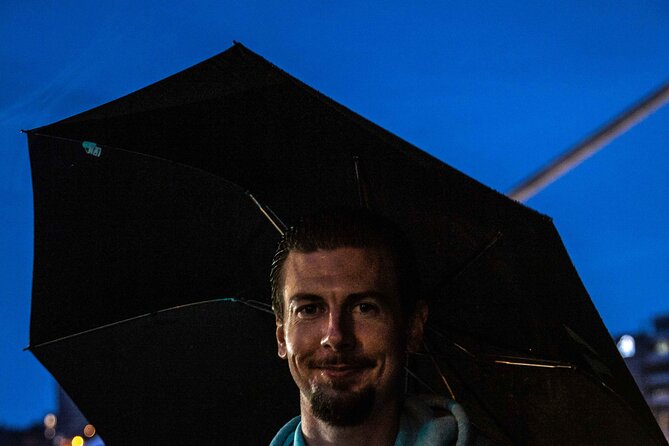
The best accounts of this experience praise the guide’s storytelling, friendliness, and willingness to answer questions. One particularly strong experience came during the off-season, when a small group made the walk feel relaxed and personal. That is a useful clue about the tour’s character: it works best when the guide can make eye contact, respond to questions, and adjust the pace.
The route is also described as beautiful, with stories attached to key sites rather than delivered in a featureless lecture. That combination of walking and narrative is the main reason to choose this experience.
Still, you should know that a story-led tour has some natural risk. If the guide is distracted, unwell, speaks too softly, or forgets parts of a story, the experience suffers quickly. One account found the narration disjointed and difficult to understand. Since the tour is conducted in English, clear delivery matters.
The maximum group size of 19 helps, but it cannot guarantee a particular guide’s energy or speaking style. I would choose a position close to the guide and avoid drifting toward the back of the group, especially on busy city streets.
Price, group size, and practical value
At $16.90 per person, this is fairly priced for a two-hour guided walk in central Dublin. You are not paying for museum entry, transport, or food. You are paying for research, route planning, and the guide’s ability to connect six city locations with memorable cases.
I see the price as good value if you already enjoy crime stories and want a structured way to see several landmarks. It is less compelling if you prefer architecture, art, or conventional political history, since the sites serve mainly as settings for the stories.
The mobile ticket keeps the booking simple. Confirmation arrives at booking, and the tour is offered in English. Service animals are allowed, the route is near public transport, and most people can take part. The supplied details do not give a precise walking distance or a full accessibility description, so you should contact the provider, Alternative Dublin, if you need specific information about surfaces, seating, or pace.
Free cancellation is available up to 24 hours before the 4:00 pm start for a full refund. Cancellations or changes inside that 24-hour window are not refunded or accepted. Since good weather is required, a weather cancellation can bring an alternative date or a full refund. A cancellation caused by too few bookings also offers an alternative or refund.
Who will enjoy this tour most?
I would recommend it first to true crime fans who want more than a staged scare walk. The program includes real crimes, punishments, heists, grave robbers, courtesans, and a modern memorial, so it has enough variety to hold your attention.
It also suits a first-time visitor who wants a guided orientation through central Dublin. You see several major landmarks while learning why they matter in darker terms. The short stop format keeps the walk moving and avoids spending the whole afternoon at one site.
This may not be the best choice for young children or anyone uncomfortable with murder and postmortem material. The available details do not set a child age limit, but the subject matter is plainly adult in tone.
You should also think about the period covered. The tour is not limited to one era. It includes eighteenth-century Dublin, older murders, historic punishment, a crown jewels theft, and the Veronica Guerin case. That variety is a plus for me, but a drawback if you want only Victorian crime or only unsolved mysteries.
Should you book the Dublin True Crime Tour?
Book it if you want an affordable, central walking tour with a dark edge and a wide time span. The strongest reasons are the compact route, the small group cap, the memorable landmarks, and the mix of violent crime, theft, deception, punishment, and strange historical stories.
I would skip it if you need a fully theatrical performance, a detailed interior tour, or a tightly focused Victorian program. I would also leave some flexibility in your schedule because the activity depends on good weather and the quality of the experience rests heavily on the guide’s delivery.
For most adults who enjoy true crime and want to see Dublin from an unusual angle, $16.90 is a sensible spend. Go in expecting a lively story walk, not a courtroom archive, and you will have the right measure for it.
FAQ
Where does the Dublin True Crime Tour begin?
The tour begins at 1 College Green, Temple Bar, Dublin, D02 YT92, Ireland.
What time does the tour start?
The scheduled start time is 4:00 pm.
Where does the tour finish?
The tour ends at St Audoen’s Catholic Church on High Street, Merchants Quay, Dublin.
How long does the tour last?
The walking tour lasts approximately two hours.
What language is the tour offered in?
The tour is offered in English.
How much does the tour cost?
The listed price is $16.90 per person.
Which places are included on the route?
The route includes the Bank of Ireland, Trinity College Dublin, the Molly Malone statue, Dublin Castle, Dubh Linn Gardens, and Christ Church Cathedral.
Is admission to the stops included?
Each listed stop has a free admission ticket. The experience is a guided walking tour rather than a package of paid interior admissions.
How large is the tour group?
The activity has a maximum group size of 19 people.
Can I cancel for a full refund?
Yes. You can cancel at least 24 hours before the start time for a full refund. Cancellations made less than 24 hours before the tour are not refunded.
Just added around Dublin
- A Self Guided Walking Tour of Dublin’s Docklands★ 4.5 · 3 reviews
- Waterford Crystal and Kilkenny Full-Day Rail Tour from Dublin★ 5.0 · 3 reviews
- Secret and unusual Dublin: guided walking tour★ 5.0 · 3 reviews
- Turtle Bunbury’s Dublin: A Self-Guided Audio Tour from a Celebrated Author★ 5.0 · 3 reviews
- Cliffs of Moher and The Burren Private Tour from Dublin★ 5.0 · 3 reviews
- Skip-the-line St. Patrick’s Cathedral and Dublin City Tour★ 5.0 · 3 reviews
- Dublin Full-Day Tour through Boyne Valley★ 5.0 · 3 reviews
- Rock Of Cashel And Blarney Castle Private Chauffeur Full Day Sightseeing Tour★ 4.5 · 3 reviews
Dublin Tours, compared.

Dublin to Cliffs of Moher, including Wild Atlantic Way and Galway
Read our review →
Cliffs of Moher, Burren & Galway City Day Tour
Read our review →

Dublin to Cliffs of Moher, Burren, Wild Atlantic Way, Galway Tour
Read our review →
Dublin to Belfast Black Cab, Dunluce Castle and Giant’s Causeway
Read our review →
Kilkenny, Wicklow Mountains & Glendalough Day Tour from Dublin
Read our review →
Wicklow Mountains, Glendalough & Kilkenny Tour
Read our review →