Reviewed · DUBLIN TOURS
Women Of Ireland: Trailblazers & Pioneers
Dublin’s women deserve their own walking tour. I like the way this 90-minute outing replaces the usual male-heavy roll call with figures such as Countess Markievicz, Margaret Anne Cusack, Hannah Sheehy-Skeffington, Veronica Guerin, and Anne Devlin. I also like the small group of no more than 14 people, which gives the guide room to tell stories rather than bark out dates. The main consideration is that this is a street-based history tour, so you do not enter the Royal College of Surgeons or Dublin Castle.
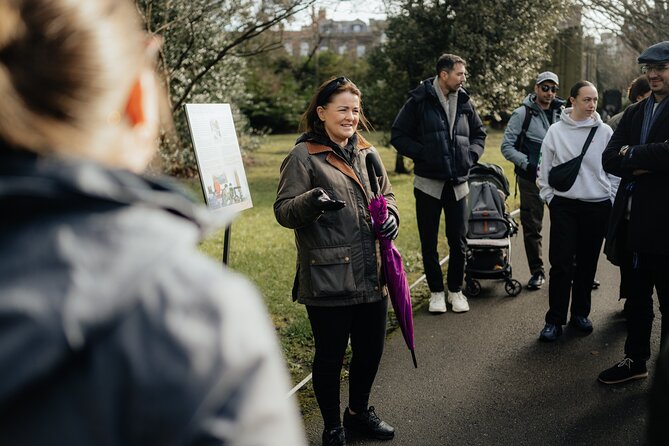
The route is easy to follow, beginning beside the Wolfe Tone sculpture at St Stephen’s Green and ending in the gardens of Dublin Castle. Guides including Tara and Ciarán have been praised for adjusting the amount of background to suit the group, keeping the pace comfortable, and adding light humor. At $17.35 per person, I see this as an affordable way to spend an hour and a half getting a different view of central Dublin.
In This Review
- Five details that shape the experience
- Why this women’s history walk is worth your time
- Starting with Countess Markievicz at St Stephen’s Green
- The Royal College of Surgeons and women in the rising
- Margaret Anne Cusack at Mercer Street Upper
- Suffragettes and Hannah Sheehy-Skeffington at Ship Street Great
- Veronica Guerin in Dubh Linn Gardens
- Anne Devlin and the walk’s finish at Dublin Castle
- What the small-group format changes
- Practical planning for the 11 a.m. walk
- Who should book this Dublin walking tour?
- Should you book Women of Ireland: Trailblazers and Pioneers?
- FAQ
- How long does the Women of Ireland tour last?
- Where does the tour begin?
- What time does the tour start?
- Where does the tour finish?
- How many people can join the tour?
- What locations are covered?
- Does the tour enter the Royal College of Surgeons?
- Does the tour enter Dublin Castle?
- Is lunch included?
- Can I cancel for a refund?
Five details that shape the experience
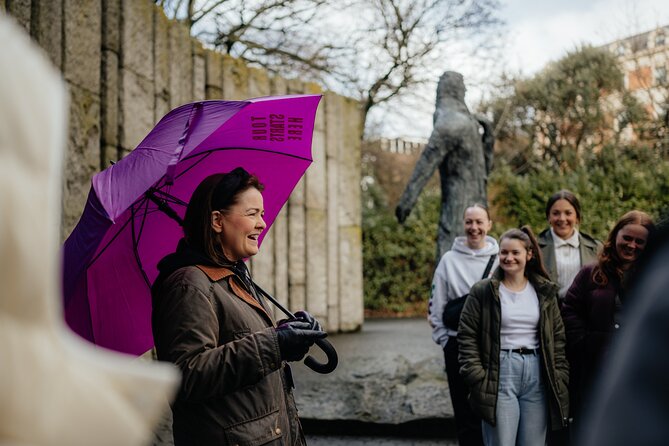
- Six central Dublin stops: The route links St Stephen’s Green, Mercer Street Upper, Ship Street Great, Dubh Linn Gardens, and Dublin Castle.
- Women at the center: You hear about revolutionaries, a religious reformer, suffragettes, a journalist, and other women whose stories are often missed.
- A compact 90-minute walk: The tour fits neatly into a morning or afternoon without taking over your day.
- A maximum of 14 people: The small format should make it easier to hear the guide and ask questions.
- An outdoor-focused route: You visit the gardens at Dublin Castle, but the tour does not enter either the Royal College of Surgeons or the castle.
- Free cancellation until 24 hours ahead: You can cancel for a full refund if you do so at least one day before the start time.
Why this women’s history walk is worth your time
Dublin is full of familiar names. Oscar Wilde, James Joyce, W. B. Yeats, and Bono appear on the city’s cultural shortlist again and again. This tour takes a different route, using women’s lives to explain Ireland’s political, social, and cultural changes.
That shift matters. You are not simply collecting six names and six dates. You are moving through places where women took part in independence campaigns, challenged social expectations, organized for voting rights, worked in public life, and shaped modern Ireland.
The format also works well for visitors who want context without committing to a long city walk. At about 1 hour 30 minutes, it is long enough to connect the stops but short enough to pair with other Dublin plans. You will be on foot throughout, with the guide providing the interpretation at each location.
I would especially recommend it early in your Dublin stay. The route covers several central places, so you get useful orientation while learning about people who are unlikely to receive much attention on a standard highlights tour. You finish near Dublin Castle, a handy point for continuing your sightseeing.
The experience is listed at $17.35 per person. For that price, the value comes from the guide’s storytelling and the focused theme, not from entry to paid attractions. Since there are no major admissions included, you are paying for a carefully shaped walking experience rather than tickets. That keeps the cost low, but it also means the quality depends heavily on the guide.
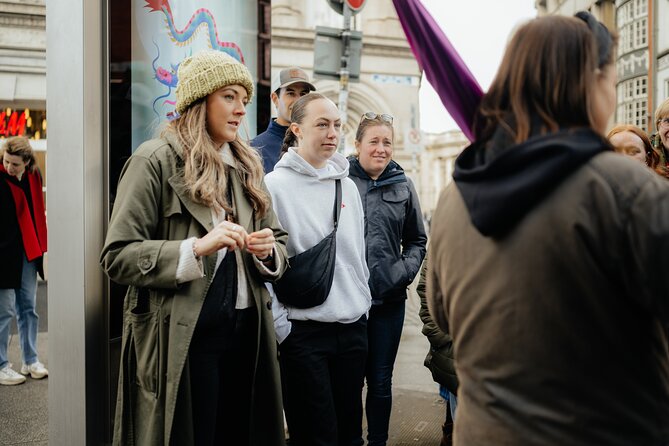
The available feedback points to a clear strength: guides make the material accessible to people with different levels of background knowledge. Tara has been praised for finding the right amount of detail, while Ciarán has been singled out for his enthusiasm, anecdotes, and ability to keep the mood light. Those qualities matter on a history walk. A dry presentation could make even remarkable lives feel distant, while a good storyteller helps the people and places stay with you.
A few more trips worth weighing up
- Dublin to Cliffs of Moher, including Wild Atlantic Way and Galway
★ 5.0 · 23,331 reviews - From Dublin: Cliffs of Moher, Burren & Galway City Day Tour
★ 4.8 · 18,888 reviews - Dublin: Guinness Storehouse Entry Ticket
★ 4.6 · 16,863 reviews
Starting with Countess Markievicz at St Stephen’s Green
Meet at 11:00 a.m. beside the Wolfe Tone sculpture in St Stephen’s Green. The opening stop introduces Countess Markievicz through her bust and her role in Ireland’s fight for independence.
This is a smart starting point because St Stephen’s Green gives the guide a clear setting for discussing political action and public memory. You are not just hearing a name in a lecture. You are standing in one of Dublin’s best-known central spaces and beginning with a woman tied to the independence movement.
The stop lasts about 15 minutes, and there is no admission charge. Expect an introduction rather than a long museum-style talk. The compact timing helps keep the walk moving, though anyone wanting a detailed biography may find this first section brief.
The meeting point is specific, but it is still wise to arrive a little early. You need to locate the Wolfe Tone sculpture before the 11:00 start, and the tour is designed for a small group rather than a large crowd that can wait for late arrivals.
The Royal College of Surgeons and women in the rising
The next stop is the Royal College of Surgeons. Here, the guide discusses the women who held the building during the rising, including Margaret Skinneder.
The story adds a practical, physical dimension to the political history. You are considering not only speeches and famous leaders, but also the women who took part in a dangerous event and occupied an important building. That focus helps correct the old habit of treating women as bystanders in Ireland’s struggle.
This section lasts about 15 minutes. The tour does not enter the Royal College of Surgeons, and admission is not included. You will hear the story from outside, so the value depends on the guide’s explanation rather than on viewing the interior.
That limitation is worth noting if you prefer tours built around indoor visits. If you are happy to use Dublin’s streets as the setting, the stop keeps the experience simple and affordable. You also avoid spending time on an admission visit when the main purpose here is the account of the women connected with the rising.
Margaret Anne Cusack at Mercer Street Upper
At Mercer Street Upper, the focus turns to Margaret Anne Cusack, known as the Nun of Kenmare. Her story gives the tour a different tone from the revolutionary material at the first two stops.
This change of subject is one of the route’s strengths. Ireland’s women did not all work in the same way or share the same goals. By moving from political rebellion to Cusack’s life, the guide can show a broader range of female influence and public action.
The stop lasts around 15 minutes and is free. You remain outdoors, with no entry stated for a building at this point. I would expect this to be a story-led pause, where the guide uses the location to explain Cusack’s role and reputation.
The name Nun of Kenmare may be unfamiliar to many people arriving in Dublin. That is part of the appeal. You are likely to leave with a figure to investigate later, rather than hearing only the names already printed on every souvenir.
A completely different kind of day out from Dublin:
- Dublin to Cliffs of Moher, Burren, Wild Atlantic Way, Galway Tour
★ 5.0 · 12,924 reviews - Dublin to Belfast Black Cab, Dunluce Castle and Giant’s Causeway
★ 5.0 · 7,954 reviews - Kilkenny, Wicklow Mountains & Glendalough Day Tour from Dublin
★ 5.0 · 7,897 reviews - From Dublin: Wicklow Mountains, Glendalough & Kilkenny Tour
★ 4.8 · 6,235 reviews
Suffragettes and Hannah Sheehy-Skeffington at Ship Street Great
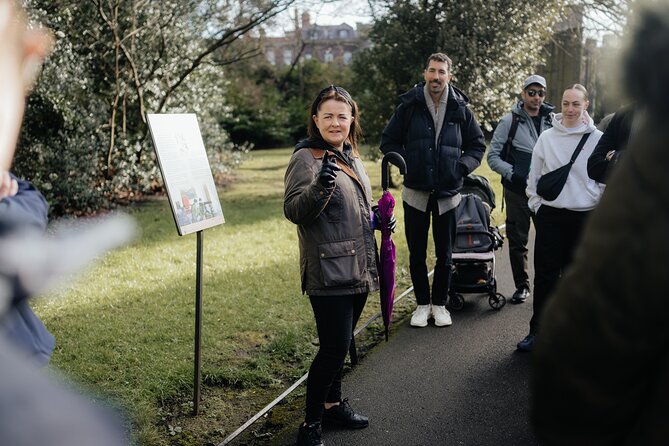
Ship Street Great brings the suffragette movement into the route. The guide discusses Hannah Sheehy-Skeffington and the campaign for women’s rights.
This stop gives the tour a clear connection to organized political change. The earlier stories relate to independence and individual action, while this section points toward women campaigning for the vote and a larger role in public life.
Again, the timing is about 15 minutes. That is enough for a focused account, but not enough for every detail of the suffrage movement in Ireland. You should see this as one chapter in a wider story, not a full lecture on voting rights.
I like the way this stop broadens the meaning of trailblazing. Courage does not always look like armed resistance or a dramatic act. It can also mean organizing, speaking publicly, and challenging the rules of a society that expects women to remain quiet.
Veronica Guerin in Dubh Linn Gardens
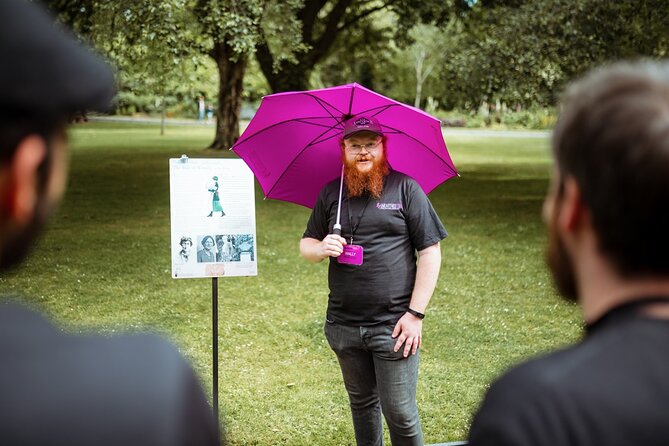
The tour then enters Dubh Linn Gardens for a stop on Veronica Guerin. This is the only named point where the route clearly enters a garden, and it gives the walk a change of pace after several street-side discussions.
Guerin’s story connects the tour’s theme with modern Ireland. Her life and work bring questions of journalism, crime, public courage, and the price of confronting powerful forces into the conversation.
The guide spends about 15 minutes here, and there is no admission fee. The garden setting should provide a more relaxed place to listen, although the tour remains an outdoor experience rather than a visit to an exhibition.
This is also a useful reminder that women’s history is not confined to distant centuries. The final subjects help connect Ireland’s past with the country you see today. The tone may shift here, since Guerin’s story is modern and serious, but the guide’s ability to keep the presentation lively is important.
Anne Devlin and the walk’s finish at Dublin Castle
The final section covers Anne Devlin and modern Ireland. The tour finishes in the gardens of Dublin Castle, on Dame Street.
Ending here makes practical sense. Dublin Castle is a major central landmark, and the gardens offer a clear finishing point after the route through the surrounding streets. You can continue exploring the castle area afterward, but this experience does not include entry into the castle itself.
Anne Devlin brings the story back to the struggle for Irish independence. Placing her near the end allows the guide to draw together several themes from the walk: resistance, loyalty, political conviction, and the ways women supported and shaped national movements.
The guide also discusses modern Ireland at this final stop. That gives the tour a chance to move beyond individual biographies and consider how the country has changed. Do not expect a full modern social history in 15 minutes, but the closing discussion should help connect the earlier stories to present-day Dublin.
What the small-group format changes
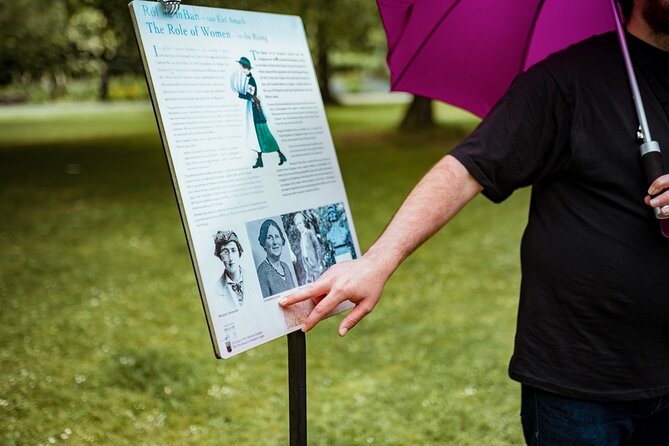
A maximum of 14 people is one of the most useful features here. You are less likely to be standing at the back of a large cluster, and the guide can respond to the group’s level of interest.
The pace has also been praised as comfortable and well judged. That matters because the tour stops roughly every 15 minutes, creating a steady rhythm of walking and listening. You get enough time at each location without turning the outing into a half-day commitment.
The guide is central to the experience. Tara has been noted for meeting different levels of prior knowledge, while Ciarán has been praised for strong storytelling, enthusiasm, anecdotes, and humor. Those details suggest a tour that does not treat history as a list of solemn facts.
Still, a small group is not a guarantee of a private experience. The tour remains shared, and the content follows a set route. If you want a completely tailored discussion of one person or period, a private guide would offer more flexibility, but private transportation and a private format are not part of this experience.
Practical planning for the 11 a.m. walk
The meeting point is at the Wolfe Tone sculpture in St Stephen’s Green. The end point is Dublin Castle, specifically the gardens. Both are in central Dublin and near public transportation, so you do not need private transport for the tour.
The mobile ticket makes entry and confirmation straightforward. Booking confirmation is provided at the time of booking, and the experience is generally open to most people who can take part in a walking tour. Service animals are allowed.
No lunch is included. Since the tour lasts about 90 minutes, you can plan your own meal before or after it. The start time is 11:00 a.m., so it works well as a late-morning activity, followed by lunch near Dublin Castle or another central sight.
The experience is eco-friendly, which fits the walking format. You are using your own feet and public city spaces rather than adding a private vehicle to a short central route.
It is usually booked about 24 days ahead. That is useful planning information, especially if your Dublin dates are fixed. The group limit is small, so I would not leave it until the last day if this particular theme matters to you.
You can cancel for a full refund up to 24 hours before the start time. Changes or cancellations inside that window are not accepted for a refund. The tour also requires a minimum number of bookings, and if that minimum is not reached, you are offered another date or experience, or a full refund.
Who should book this Dublin walking tour?
I would choose this experience if you want:
- A focused alternative to Dublin’s usual famous-men tour
- Short, engaging stories rather than a long academic lecture
- A small group with room for questions
- A central route that ends near Dublin Castle
- A low-cost introduction to Irish women’s political and public lives
- A tour led by a guide who can adjust the level of detail
You may want another option if your priority is entering historic buildings. The Royal College of Surgeons and Dublin Castle are outside stops, and no major admission is included.
It may also feel too brief if you want a full study of Irish women’s history. Six stops in 90 minutes require selectivity. The reward is a lively introduction, but you will not get every period, movement, or major figure.
Should you book Women of Ireland: Trailblazers and Pioneers?
Book it if you want Dublin to tell a less familiar story. The $17.35 price is fair for a guided 90-minute walk, especially with a maximum of 14 people and a route that links several central places without entry fees or transport costs.
I would put this near the start of a Dublin visit. You get useful bearings, a clear route to Dublin Castle, and a set of names that can change how you view the city. Just remember that the experience is about outdoor storytelling, not interior access.
For a compact, affordable, and often funny look at Ireland’s women, this is an easy choice. For grand rooms, museum exhibits, or a long specialist lecture, choose something else.
FAQ
How long does the Women of Ireland tour last?
The tour lasts approximately 1 hour and 30 minutes.
Where does the tour begin?
It begins at the Wolfe Tone sculpture in St Stephen’s Green, Dublin.
What time does the tour start?
The scheduled start time is 11:00 a.m.
Where does the tour finish?
The tour finishes in the gardens of Dublin Castle on Dame Street, Dublin 2.
How many people can join the tour?
The experience has a maximum group size of 14 people.
What locations are covered?
The route includes St Stephen’s Green, the Royal College of Surgeons, Mercer Street Upper, Ship Street Great, Dubh Linn Gardens, and Dublin Castle.
Does the tour enter the Royal College of Surgeons?
No. The discussion takes place outside, and entry to the Royal College of Surgeons is not included.
Does the tour enter Dublin Castle?
No. The tour finishes in the gardens of Dublin Castle and does not enter the castle.
Is lunch included?
No. Lunch is not included.
Can I cancel for a refund?
Yes. You can cancel at least 24 hours before the start time for a full refund. Cancellations or changes made less than 24 hours before the start time are not refunded.
Just added around Dublin
- A Self Guided Walking Tour of Dublin’s Docklands★ 4.5 · 3 reviews
- Waterford Crystal and Kilkenny Full-Day Rail Tour from Dublin★ 5.0 · 3 reviews
- Secret and unusual Dublin: guided walking tour★ 5.0 · 3 reviews
- Turtle Bunbury’s Dublin: A Self-Guided Audio Tour from a Celebrated Author★ 5.0 · 3 reviews
- Cliffs of Moher and The Burren Private Tour from Dublin★ 5.0 · 3 reviews
- Skip-the-line St. Patrick’s Cathedral and Dublin City Tour★ 5.0 · 3 reviews
- Dublin Full-Day Tour through Boyne Valley★ 5.0 · 3 reviews
- Rock Of Cashel And Blarney Castle Private Chauffeur Full Day Sightseeing Tour★ 4.5 · 3 reviews
Dublin Tours, compared.
Dublin to Cliffs of Moher, including Wild Atlantic Way and Galway
Read our review →
Cliffs of Moher, Burren & Galway City Day Tour
Read our review →
Dublin to Cliffs of Moher, Burren, Wild Atlantic Way, Galway Tour
Read our review →
Dublin to Belfast Black Cab, Dunluce Castle and Giant’s Causeway
Read our review →
Kilkenny, Wicklow Mountains & Glendalough Day Tour from Dublin
Read our review →
Wicklow Mountains, Glendalough & Kilkenny Tour
Read our review →