
Reviewed · SELF-GUIDED TOURS
A Self-Guided Stroll Along Dún Laoghaire’s East Pier
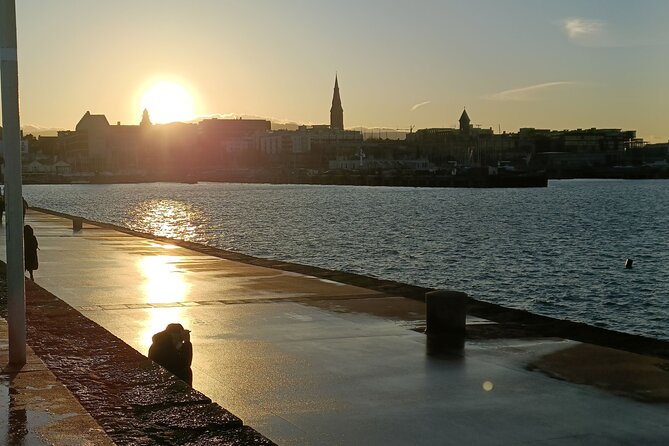
Harbor views meet Irish history. This one-hour audio walk takes you from St Michael’s Church through central Dún Laoghaire and out along the East Pier, linking churches, monuments, railway remnants, memorials, and lighthouse views. I like the way the route connects everyday town life with major events, from the arrival of the railway to the sinking of the RMS Leinster during World War I.
I also like the low price and flexible format. At $8.99, you get lifetime access to the tour in English through the VoiceMap app, with offline audio, maps, and location data. The main drawback is that you need your own smartphone and headphones, and the non-refundable booking policy gives you little room if your plans change.
- Start at St Michael’s Church, an 1820s landmark that introduces Dún Laoghaire’s long community story.
- Walk along the Metals, an old railway route now used as a promenade.
- Reach the East Pier Lighthouse for wide views across Dublin Bay and toward the city.
- See the RMS Leinster Memorial and Forgotten Irish Memorial, two stops with very different but equally serious stories.
- Spot the Romanov eagle on a Crimean War cannon, an unexpected Russian connection in an Irish harbor.
- Use offline maps and audio, a useful feature for a private walk without a scheduled group.
In This Review
- Why This Dún Laoghaire Walk Works
- Starting at St Michael’s Church on Marine Road
- Pavilion Theatre and the Changing Town Center
- Royal Connections and the RMS Leinster Memorial
- Following the Metals, Dún Laoghaire’s Old Railway Route
- The East Pier and Its Lighthouse Views
- Carlisle Pier and the Forgotten Irish Memorial
- The East Pier Bandstand Sun Shelter
- The Crimean War Cannon and Its Romanov Eagle
- Finishing Near the Roger Casement Statue
- What You Get for $8.99
- Practical Tips Before You Set Out
- Who Should Choose This Audio Walk?
- Should You Book This Dún Laoghaire Experience?
- FAQ
- Where does the tour begin?
- Where does the tour end?
- How long does the walk take?
- What language is available?
- Is the tour available offline?
- What do I need to bring?
- Can I take the tour at any time?
Why This Dún Laoghaire Walk Works
Dún Laoghaire is easy to treat as a pleasant seaside stop, but this route asks you to look more closely. Its streets and harbor contain traces of royal visits, emigration, transport, military history, maritime tragedy, and Irish nationalism.
The walk lasts about one hour to one hour and fifteen minutes. That is long enough to reach the East Pier and hear the main stories without taking over your day. You can pair it with time at the waterfront, a meal, or another visit around Dublin.
Because this is self-guided, you set the pace. You can stop for photographs, pause the audio, or spend longer at a memorial. The tradeoff is simple: there is no live guide to answer questions or adjust the walk around your interests.
The experience has a 4.5 rating from six ratings, though the written feedback is limited. One short entry, titled L’EspOir Reborn, appears heavily auto-translated and poetic, with references to adventure, discovery, and Ireland. It offers little practical detail, so I would put more weight on the route itself, the clear landmarks, and the useful offline format.
Starting at St Michael’s Church on Marine Road
The walk begins at St Michael’s Church on Marine Road. Established in the 1820s, the church gives you a firm starting point for understanding Dún Laoghaire as a settled community rather than simply a pier and harbor.
This is a good place to begin because the route starts with local continuity. The church reflects the town’s growth during the same broad period when Dún Laoghaire was becoming an important port. You are not thrown straight into a list of dates. Instead, the audio begins with a place connected to people who lived, worshipped, worked, and watched the harbor change.
You should arrive with your phone charged and the VoiceMap app ready. The tour is available in English, and the audio, map, and geographic data can be downloaded for offline use. That matters in practical terms. You do not need to rely on a constant mobile connection while walking.
A few more trips worth weighing up
- St Patrick’s Cathedral: Self-Guided Cathedral Admission
★ 4.5 · 2,126 reviews - Christ Church Cathedral Entrance Ticket & Self-Guided Tour
★ 4.6 · 773 reviews - Dublin Ghost Hunt Exploration Game and Tour
★ 4.0 · 34 reviews
Pavilion Theatre and the Changing Town Center
From the church, the route passes the modern Pavilion Theatre. This stop gives the walk a useful change of tone. After hearing about an older church and the town’s earlier development, you encounter a contemporary cultural venue.
I like this contrast because Dún Laoghaire is not presented as a preserved historical display. It is a living town. The theatre helps show how newer cultural spaces sit beside older civic and maritime landmarks.
The Pavilion Theatre is mainly a passing point rather than the central attraction of the tour. Do not expect an indoor theatre visit to be included. Its value comes from the wider point: Dún Laoghaire’s identity has continued to change, and the route places modern life beside older stories.
Royal Connections and the RMS Leinster Memorial
The King George IV Monument brings a royal connection into the walk. This stop helps explain the town’s links with Britain and the wider political setting in which the harbor developed.
The route then moves toward the RMS Leinster Memorial, which recalls one of the most painful events tied to Dún Laoghaire. The ship sank during World War I, causing one of Ireland’s deadliest maritime disasters. The memorial honors the people who died and connects a local waterfront with the wider human cost of war.
This is one of the most meaningful parts of the walk. A harbor can look calm and attractive, but the RMS Leinster story reminds you that these waters also carried fear, loss, and separation. I appreciate that the route does not treat history as a string of cheerful sightseeing stops. It makes room for grief as well as civic pride.
Give yourself time here. The audio may take only a few minutes, but the subject deserves more than a quick photograph and a glance at your phone.
Following the Metals, Dún Laoghaire’s Old Railway Route
One of the more unusual features is the route known as the Metals. These are remnants of the old railway track, now adapted into a promenade.
This section helps explain how Dún Laoghaire grew from a fishing village into a major port town. Rail connections changed how people and goods reached the harbor. Today, you walk through the remains of that transport system rather than watching trains pass.
I find former transport routes especially useful for understanding a place. A monument can tell you what a town wants to remember. An old railway path shows how the town actually functioned. The Metals link the inland streets with the waterfront and give the walk a clear sense of movement.
The surface is used as a promenade, but you should still wear comfortable shoes. The experience is a walking tour, not a seated audio program, and the route includes an extended stroll toward the pier.
A completely different kind of day out from Dublin:
- Dublin to Cliffs of Moher, including Wild Atlantic Way and Galway
★ 5.0 · 23,331 reviews - From Dublin: Cliffs of Moher, Burren & Galway City Day Tour
★ 4.8 · 18,888 reviews - Dublin: Guinness Storehouse Entry Ticket
★ 4.6 · 16,863 reviews - Dublin to Cliffs of Moher, Burren, Wild Atlantic Way, Galway Tour
★ 5.0 · 12,924 reviews
The East Pier and Its Lighthouse Views

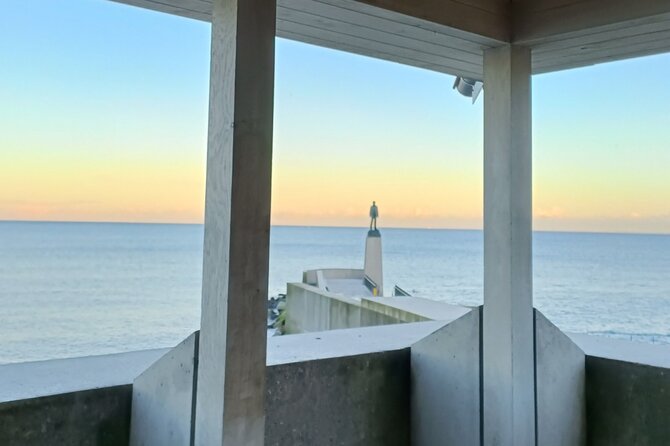
The main visual reward comes when you reach Dún Laoghaire Pier and continue toward the East Pier Lighthouse. Here, the route opens toward Dublin Bay and the city.
The audio explains how the harbor was built and why it mattered to Ireland’s development. That context gives the view more weight. You are not simply looking across the water. You are looking from a harbor that helped shape trade, transport, and the growth of the town around it.
The East Pier is also the place to slow down. The walk is advertised at roughly one hour to one hour and fifteen minutes, but your actual time will depend on how often you stop. The panoramic views invite pauses, especially if the weather is clear.
The main limitation is the weather. The tour runs every day, at any time, because it is self-guided, but the pier is an exposed waterfront route. Wind or rain could make the walk less comfortable. Since food, drink, transportation, and headphones are not included, plan those needs before you set off.
Carlisle Pier and the Forgotten Irish Memorial
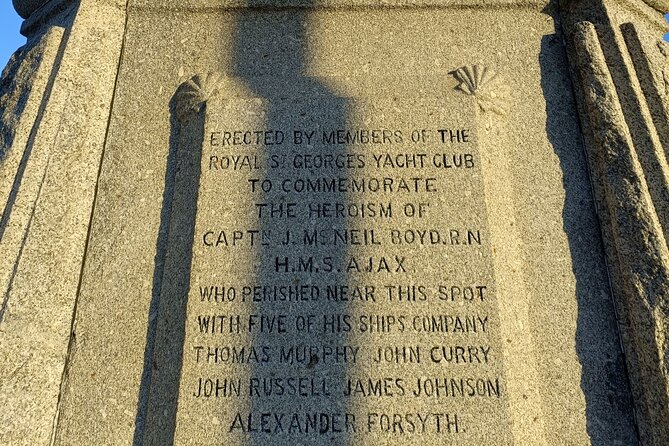
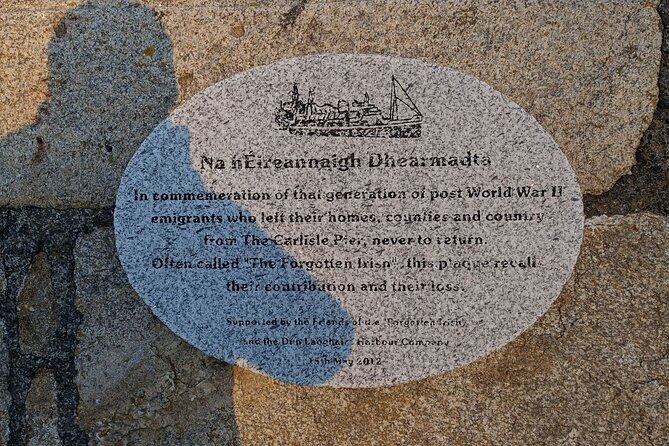
Carlisle Pier adds another layer to the harbor story. Dating from the 1820s, it reflects Dún Laoghaire’s role as a maritime gateway and its long connection with ships, passengers, and departure.
The pier is especially important when considered alongside the Forgotten Irish Memorial. That memorial honors Irish emigrants who left home to seek opportunities elsewhere. It recalls both hope and hardship, including the challenge of building a new life far away.
These two stops work well together. Carlisle Pier represents the physical act of leaving, while the memorial brings attention to the people and emotions behind that movement. You get a sense of the harbor as more than a place for boats. It was also a point of separation, ambition, uncertainty, and family memory.
If you have Irish family connections, this section may carry extra force. Even without that personal link, it gives a human scale to the town’s maritime past.
The East Pier Bandstand Sun Shelter
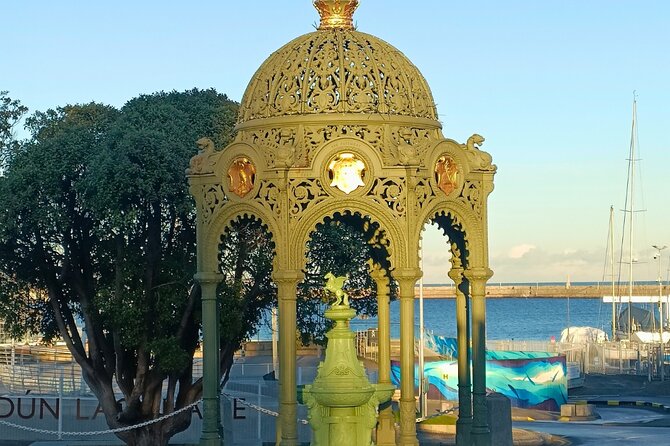
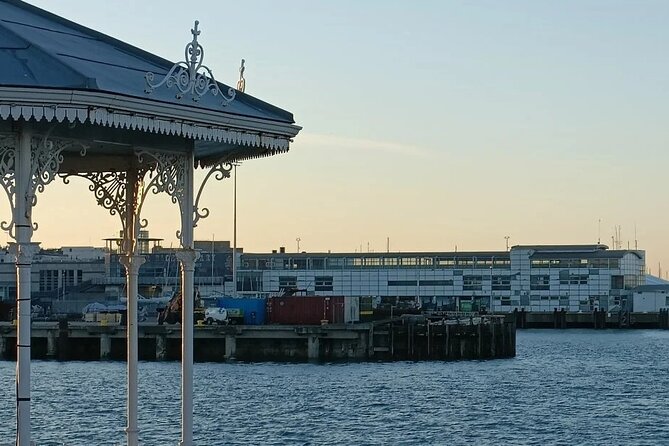
The East Pier Bandstand Sun Shelter is a smaller architectural feature, but it adds variety to the route. After the broad harbor views and serious memorials, this structure gives you something more visual and local to notice.
The stop shows how public waterfront design can become part of a town’s character. It is not just about engineering the harbor for ships. People also needed places to walk, pause, gather, and enjoy the sea.
I would not plan the entire outing around the shelter alone. Its value comes from being part of the sequence. The route keeps shifting between major events, practical harbor structures, and details that reward close attention.
The Crimean War Cannon and Its Romanov Eagle
The Crimean War cannon is one of the tour’s most unexpected objects. Look for the eagle motif associated with the Romanov family. The cannon’s presence in Dublin creates a surprising link between an Irish harbor and Russian imperial history.
This is the kind of detail that can easily be missed on an unstructured walk. You might pass the cannon, recognize it as an old military object, and keep going. The audio gives it a story and points you toward the Romanov eagle.
I like this stop because it prevents the route from becoming too predictable. You expect churches, piers, and memorials in a harbor town. You may not expect a Russian cannon with an imperial symbol. It is a small object with a wide geographic connection.
Finishing Near the Roger Casement Statue
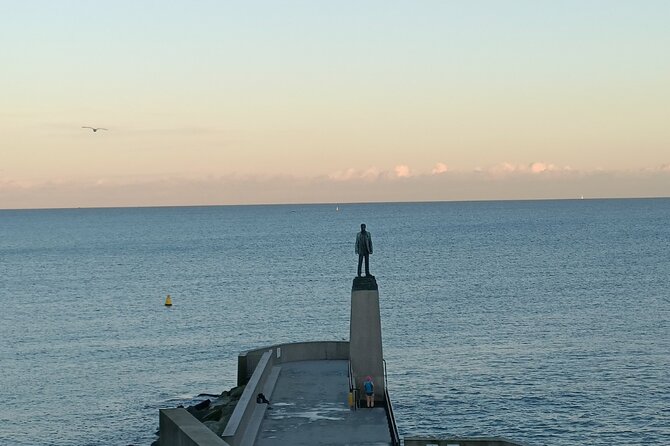
The walk ends near the Roger Casement Statue, honoring the Irish revolutionary. His presence brings the route back from royal and imperial connections to Irish political identity and resistance.
That ending gives the walk a strong arc. You begin with a historic church, pass through royal and maritime connections, confront war and emigration, and finish with a figure associated with Irish nationalism. Dún Laoghaire emerges as a place shaped by outside forces but also marked by its own determined spirit.
The stated end point is back at the meeting point, so check the route in the app as you approach the final stop. Nearby eateries make it easy to continue the outing with food, though meals and drinks are not part of the $8.99 price.
What You Get for $8.99
The price is one of the clearest strengths. For $8.99 per person, you receive lifetime access to an English-language VoiceMap tour, including offline audio, maps, and geographic data.
That is good value if you want structure without paying for a private guide. You are paying for the research, narration, route design, and app access. You also avoid the fixed departure times common on scheduled walking tours.
The value is weaker if you prefer live conversation. No guide is present, and the tour cannot respond to questions about your family history, photography interests, or favorite historical period. You also supply the smartphone and headphones.
The private format means only your group participates. That can make the walk more relaxed and easier to pace. It also means the quality of the experience depends partly on how well you use the app and how much attention you give the audio.
Practical Tips Before You Set Out
Download the audio, map, and geographic data before beginning. Offline access is included, but it is still sensible to prepare the app before leaving your accommodation or a reliable connection.
Bring headphones, since they are not supplied. A charged smartphone is essential because it handles the narration, map, and route guidance.
Allow at least an hour, and closer to one hour and fifteen minutes if you stop at the memorials and viewpoints. You can participate at any time on any day during the stated operating period, from February 14, 2024, through February 7, 2027.
The meeting point is St Michael’s Church, Marine Road, Dún Laoghaire, County Dublin. The area is near public transportation, and service animals are allowed. Most people can take part, but remember that this is an outdoor walk with a substantial pier section.
The activity is non-refundable and cannot be changed after booking. I would only book once your Dublin schedule and weather plans are reasonably firm.
Who Should Choose This Audio Walk?
I would recommend it to independent visitors who want a short, focused introduction to Dún Laoghaire. It suits you especially well if you like maritime history, memorials, transport stories, and walks that mix famous points with smaller details.
It is also a good choice for couples, families with older children, and small private groups who do not want to join a larger scheduled tour. The self-guided format lets you pause when you like and keep the outing at your own speed.
You may want something else if you need a guide in person, want extensive historical discussion, or dislike using your phone while sightseeing. The route is informative, but the experience depends on listening and walking rather than entering attractions.
Should You Book This Dún Laoghaire Experience?
Book it if you want an inexpensive, flexible way to connect Dún Laoghaire’s town center with its East Pier. The strongest features are the harbor views, the offline app access, and the range of subjects covered in a compact walk.
I would treat it as a well-priced introduction rather than a full-day historical tour. Bring headphones, leave time for the RMS Leinster and Forgotten Irish memorials, and do not rush the lighthouse section. If you are comfortable exploring by phone and your plans are firm, $8.99 is a sensible buy. If you want personal interaction, wait for a live walking tour instead.
FAQ
Where does the tour begin?
The tour begins at St Michael’s Church on Marine Road, Dún Laoghaire, County Dublin, Ireland.
Where does the tour end?
The activity ends back at the meeting point.
How long does the walk take?
The approximate duration is one hour to one hour and fifteen minutes.
What language is available?
The tour is offered in English.
Is the tour available offline?
Yes. The VoiceMap app provides offline access to the audio, maps, and geographic data.
What do I need to bring?
You need to provide your own smartphone and headphones. Transportation, food, and drinks are not included.
Can I take the tour at any time?
Yes. The activity is listed as available Monday through Sunday, from 12:00 AM to 11:59 PM, during the stated operating period from February 14, 2024, through February 7, 2027.
Just added around Dublin
- A Self Guided Walking Tour of Dublin’s Docklands★ 4.5 · 3 reviews
- Waterford Crystal and Kilkenny Full-Day Rail Tour from Dublin★ 5.0 · 3 reviews
- Secret and unusual Dublin: guided walking tour★ 5.0 · 3 reviews
- Turtle Bunbury’s Dublin: A Self-Guided Audio Tour from a Celebrated Author★ 5.0 · 3 reviews
- Cliffs of Moher and The Burren Private Tour from Dublin★ 5.0 · 3 reviews
- Skip-the-line St. Patrick’s Cathedral and Dublin City Tour★ 5.0 · 3 reviews
- Dublin Full-Day Tour through Boyne Valley★ 5.0 · 3 reviews
- Rock Of Cashel And Blarney Castle Private Chauffeur Full Day Sightseeing Tour★ 4.5 · 3 reviews
Self-Guided Tours, compared.
St Patrick’s Cathedral: Self-Guided Cathedral Admission
Read our review →
Christ Church Cathedral Entrance Ticket & Self-Guided Tour
Read our review →
Self-Guided Bike Tour of Killarney National Park, Muckross Gardens & Waterfall
Read our review →


Browse the lists this tour appears in