
Reviewed · HISTORICAL TOURS
Cork Chat and History Walking Tour
Start with Cork’s stories, not just its sights. This private two-hour walk connects St. Patrick Street, the English Market, old city walls, music, and local characters in a compact route led in English. I like that the tour looks beyond postcard views and explains how Cork became the city you see today.
I also like the personal touch. Guide Neasa is praised for her warmth, humor, and eye for small details, even when a Sunday closure means the English Market cannot be entered. The main drawback is the price: at $276.93 for up to six people, it makes the most sense for a group sharing the cost, not a solo visitor.
In This Review
- Key points about Cork’s private walking tour
- Why this two-hour walk works well in Cork
- St. Patrick Street and the Burning of Cork
- The English Market, Cork’s food center since 1788
- A cathedral, Gothic design, and the trumpet angel
- Coal Quay, the Corn Market, and Cork’s old crest
- Rory Gallagher and Cork’s music connection
- Bishop Lucey Park and the medieval city wall
- Neasa’s local style makes the difference
- Is $276.93 a fair price?
- Who should book this Cork walk?
- Final call: book it for the stories
- FAQ
- How much does the Cork Chat and History Walking Tour cost?
- How long does the walking tour last?
- Where does the tour start?
- Where does the tour end?
- Is this a private tour?
- What language is the tour offered in?
- Is admission to the stops included?
- What happens if the weather is poor?
Key points about Cork’s private walking tour
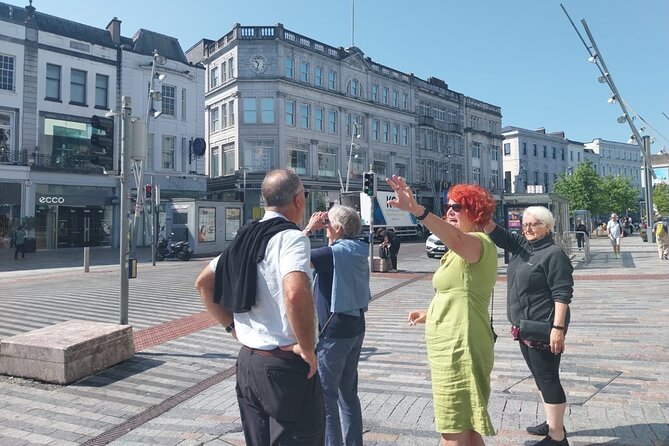
- The Burning of Cork comes alive on St. Patrick Street, where your guide explains one of the city’s darkest modern chapters.
- The English Market dates from 1788, making it a key stop for food lovers and Cork’s daily life.
- A Gothic cathedral includes a trumpet-playing angel, tied to a local story about the Last Day.
- The old Coal Quay and Corn Market reveal Cork’s trading past, including a city crest first used in 1458.
- Rory Gallagher’s tribute adds a strong music connection, with a link to Jimi Hendrix’s high praise.
- Bishop Lucey Park preserves parts of the 12th-century city wall, giving you a clear sense of old Cork beneath the modern streets.
Why this two-hour walk works well in Cork
Cork is easy to cross on foot, but its story is not always obvious. Streets curve around the River Lee, old buildings sit beside modern shops, and small plaques or carved details can be easy to miss. A local guide helps you connect those pieces without asking you to spend half a day in a museum.
This is a private tour for your group only, with a maximum of six people. That matters. You can ask questions, slow down for a detail, or focus more on food, architecture, politics, or music without waiting for a large crowd.
The advertised time is about two hours, and walking time is included. You should expect a steady city walk rather than a long-distance hike. The meeting point is the Crawford Art Gallery at 1 Emmett Place, beside the Opera House. The walk returns there, which makes it easy to continue your Cork sightseeing afterward.
The route includes free admission at the listed stops. You are paying for the guide’s time, local interpretation, and the convenience of seeing several central sights in one organized outing. For a group of six, the cost works out to about $46 per person. For two people, it is a much bigger spend, so the value depends on how much you want personal guidance.
More Walking Tours in Cork
- Cork: Guided Historical Walking Tour
★ 4.7 · 310 reviews - The Titanic Trail: 1-Hour Guided Walking Tour of Cobh
★ 4.8 · 78 reviews - Cork Instagram Photography Walking Tour
★ 5.0 · 54 reviews
St. Patrick Street and the Burning of Cork
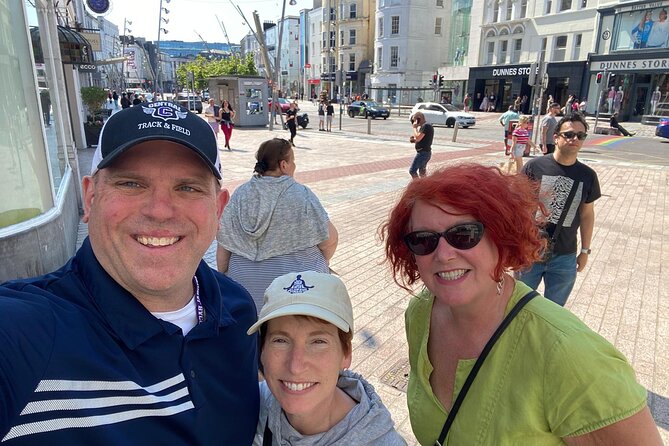
St. Patrick Street is Cork’s main shopping boulevard, known locally as Pana. At first glance, it may look like a practical retail street rather than a history stop. That is exactly why the guide’s story matters here.
The street is linked to the Burning of Cork in 1920, a major event during the Irish War of Independence. Instead of treating the episode as a quick date in a textbook, the walk uses the setting to show how political conflict affected the city itself.
I like this opening because it gives you a local frame right away. You are not simply told that Cork has an interesting past. You see how that past affected a familiar street where people now shop, walk, and meet friends.
The stop lasts about 10 minutes. That is enough for a focused explanation, but not enough for an extended discussion of every political detail. If Irish history is your main interest, use this moment to ask Neasa follow-up questions.
The English Market, Cork’s food center since 1788
The English Market is one of the strongest stops for anyone who enjoys food and local culture. Dating from 1788, it is described as Ireland’s oldest food market and remains one of Cork’s best-loved shopping places.
Inside, you might find familiar produce alongside items that are less common to visitors, including cheeses, olives, tripe, and drisheen. The point is not only to look at food. It is to see how Cork’s food traditions and everyday shopping habits have continued in a historic setting.
The planned visit lasts about 10 minutes and admission is free. That makes this more of a guided orientation than a meal stop. You should not expect a long tasting session or a built-in lunch. If the market is open, you can use the guide’s introduction to decide what deserves a closer look later.
Sunday timing deserves attention. The English Market may be closed on Sundays, as it was for one group visiting with Neasa. The tour can still explain the market and bring its story to life from outside, but you will miss the interior atmosphere and food displays. If entering the market matters to you, check its opening status before booking your date.
A cathedral, Gothic design, and the trumpet angel
One stop takes you to a magnificent cathedral designed by William Burges. Its Gothic design is compared with Notre Dame, giving you a useful visual reference if you enjoy grand church architecture.
The most memorable detail is the famous angel said to play her trumpet on the Last Day, warning Corkonians to get into heaven. It is the kind of local story that gives a building a sense of personality. You get architecture, religious imagery, and a bit of Cork humor in one short visit.
The supplied details do not name the cathedral, so the guide’s explanation is especially useful for placing it within the city. You can expect to see the exterior and hear the story, but no interior admission or special access is specified. If entering the cathedral is important to you, ask about that directly when arranging the tour.
This is a good example of the tour’s style. It does not rely only on famous sights. It points out one unusual feature, then adds the local tale that makes you remember it.
More historical tours:
- Historic Cork Delicious Donut Adventure by Underground Donut Tour
★ 5.0 · 232 reviews - Dublin Historical Centre Food Tour with 8 Food Tastings & Drinks
★ 5.0 · 1,718 reviews - 2-Hour Historical Walking Tour from Dublin
★ 5.0 · 875 reviews - Historical 2-Hour Guided Walking Tour of Dublin
★ 4.7 · 865 reviews
Coal Quay, the Corn Market, and Cork’s old crest
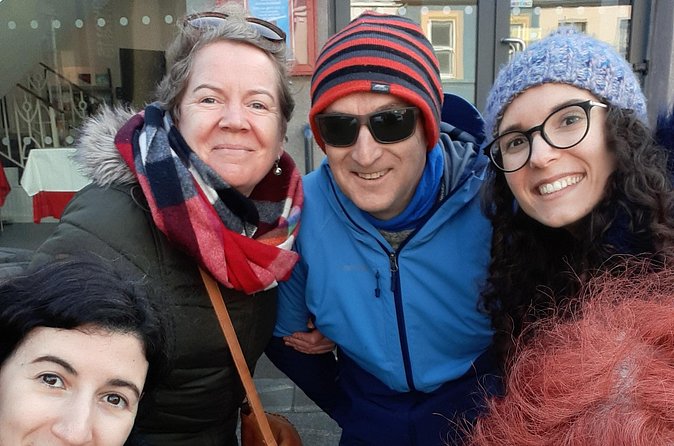
The Coal Quay and old Corn Market offer a look at Cork as a working port and trading city. The Corn Market dates from the 1720s and is described as one of the oldest buildings in Cork.
The city crest here is another small detail worth pausing for. It was first used in 1458 and remains in everyday use. That long life gives you a direct link between medieval Cork and the modern city, without needing a large historical display.
This stop is scheduled for about five minutes, so expect a concise explanation. The building and crest may not demand a long visit on their own, but together they help explain how commerce shaped the city.
I find short stops like this useful early in a visit. They give you reference points for later walks. After hearing about the Corn Market and Coal Quay, Cork’s old streets feel less random. You begin to see them as part of a city built around exchange, movement, and the river.
Rory Gallagher and Cork’s music connection
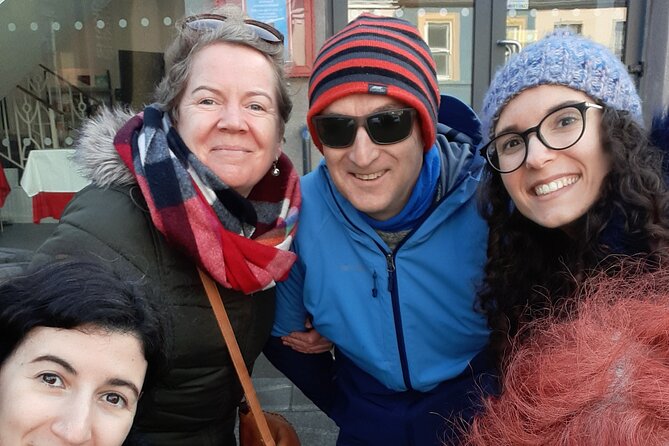
The tribute to Rory Gallagher shifts the mood from medieval buildings and political history to modern music. Gallagher is remembered as one of the greatest guitarists of all time, and Jimi Hendrix called him the greatest guitarist in the world.
That connection gives the walk a strong Cork identity. The tour is not limited to architecture or formal history. It also points to a musician whose work carries Cork’s name far beyond Ireland.
Music fans will appreciate this stop most, but you do not need to know Gallagher’s full career to enjoy it. The guide can provide context and explain why the tribute matters locally.
The route also passes vintage and second-hand shops with clothing, books, and assorted goods. No fixed shopping time is promised, so think of this as part of the streetscape rather than a dedicated retail stop. Still, it gives you a useful tip if you want to return later and browse on your own.
Bishop Lucey Park and the medieval city wall
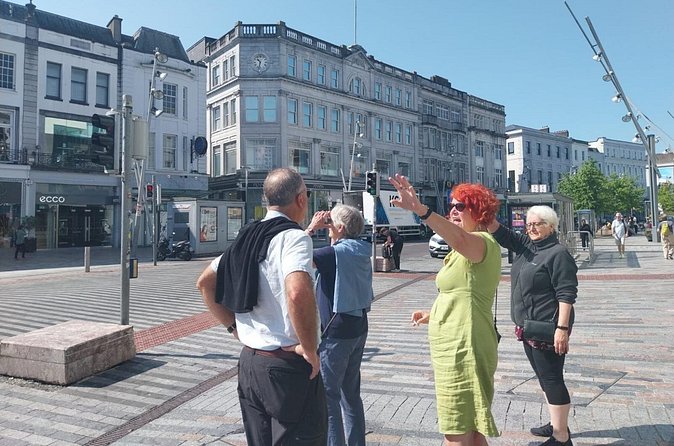
Bishop Lucey Park provides one of the clearest physical links to old Cork. When the city was first built, it was fully walled. In the park, you can see remnants of the old city wall dating from the 12th century.
The park stop lasts about five minutes. That may sound brief, but the remains are a strong visual finish because they show the city’s earlier boundaries. Modern Cork can feel open and spread out. The wall reminds you that the original city was smaller, fortified, and shaped by defense.
This is also a useful place to ask questions about how Cork grew beyond its medieval limits. The guide can help you connect the wall to the streets and buildings you have just passed.
The walk returns to the Crawford Art Gallery, so you finish near the Opera House rather than at an unfamiliar corner of town. That simple loop is practical if you have a restaurant booking, another attraction, or limited time before transport.
Neasa’s local style makes the difference
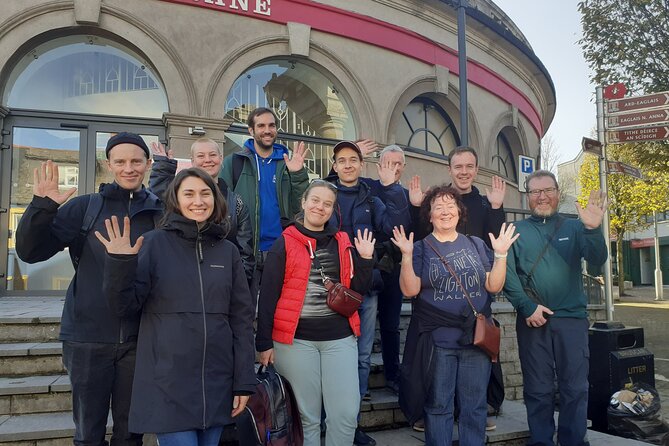
The guide can make or break a short walking tour. With only two hours, you need someone who can choose the right details and keep the pace moving.
Neasa receives especially warm praise for her personality, local affection, and ability to point out details that are easy to miss. One particularly useful strength is her ability to adapt. When the English Market was closed on a Sunday, she still explained the site and kept the stop worthwhile.
That flexibility matters on a private walk. You are not locked into a large group’s questions or a rigid presentation. You can ask Neasa to spend more time on Cork’s political past, food traditions, buildings, music, or shopping streets.
The tour is offered in English. The supplied information does not specify a particular level of historical background, so you can ask for a simpler overview or more detail as needed. The guide’s role is not just to name buildings. It is to help you notice why they matter.
Is $276.93 a fair price?
The price is $276.93 per group, with up to six people included. For six people, that is about $46.16 each. For four, it is about $69.23 each. For two, it is about $138.47 per person.
That is not a cheap city walk. You are paying for a private experience, not a basic group orientation. The cost becomes easier to justify if your party values personal attention, wants to ask many questions, or prefers a local guide who can adjust the conversation.
For a couple on a tight budget, this may feel excessive for two hours, especially since the listed stops have free admission. You could visit many of the locations independently. The value comes from the stories, connections, and details you might otherwise walk past.
The best price fit is a family or friend group of four to six. In that situation, the private format gives you a more relaxed experience without the high per-person cost of a private tour for two.
Who should book this Cork walk?
I would recommend it to first-time Cork visitors who want a quick orientation with real local context. It also suits people who enjoy city architecture, Irish political history, food markets, music, and small details more than grand sightseeing checklists.
Families may appreciate the short stops and the variety. Food lovers should pay special attention to the English Market, while music fans will enjoy the Rory Gallagher tribute. Shoppers can make a note of the vintage and second-hand stores for later.
The walk is also a good choice if you want a private setting. Most people can participate, service animals are allowed, and the meeting point is near public transportation. The information does not give a detailed accessibility assessment, so contact the provider if you have specific mobility needs.
The main caution is weather. This experience requires good weather, and poor conditions can lead to a new date or a full refund. Bring suitable rain protection when conditions are uncertain, but remember that cancellation decisions may depend on the operator.
You receive confirmation when booking, and free cancellation is available up to 24 hours before the start time for a full refund. Cancellations or changes within 24 hours are not accepted for a refund.
Final call: book it for the stories
I would book this tour if I were sharing it with a group and wanted Cork to make sense quickly. The best parts are not simply the market, cathedral, or city wall. They are the links between them, from the Burning of Cork to medieval trade, local food, and Rory Gallagher’s guitar.
Book it with Neasa if available, especially if you enjoy a guide with personality and a close local connection. Skip it if you prefer exploring alone, need the lowest possible cost, or want long interior visits rather than short guided stops.
For a small group seeking a friendly, story-led introduction, this is a strong use of two hours.
FAQ
How much does the Cork Chat and History Walking Tour cost?
The tour costs $276.93 per group, with up to six people included.
How long does the walking tour last?
The tour lasts approximately two hours, and walking time is included in that duration.
Where does the tour start?
The tour starts at the Crawford Art Gallery, 1 Emmett Place, Centre, Cork, beside the Opera House.
Where does the tour end?
The tour ends at the Crawford Art Gallery, the same place where it begins.
Is this a private tour?
Yes. Only your group participates, with a maximum of six people.
What language is the tour offered in?
The tour is offered in English.
Is admission to the stops included?
The listed stops have free admission. The information does not specify paid entry inside the cathedral or other additional visits.
What happens if the weather is poor?
The experience requires good weather. If it is canceled because of poor weather, you will be offered another date or a full refund.
Just added around Cork
- Fastnet Rock Lighthouse direct boat tour-Baltimore.Guided.★ 3.7 · 3 reviews
- Cork Private Transfer from Cork Airport to City centre★ 5.0 · 3 reviews
- Cork Private Walking Tour★ 5.0 · 3 reviews
- Kinsale and West Cork Classic Private Tour in modern a/c minibus★ 5.0 · 4 reviews
- Explore Cork City and Cork Harbour Greenway by Bike★ 5.0 · 5 reviews
- County Cork: 1-Hour Titanic Centenary Tour★ 3.6 · 5 reviews
- Cork: Midleton Distillery (Jameson) Premium Whiskey Tasting★ 5.0 · 5 reviews
- Clonakilty Distillery: Tour & Classic Whiskey Tasting★ 4.4 · 5 reviews
Historical Tours, compared.

Dublin Historical Centre Food Tour with 8 Food Tastings & Drinks
Read our review →

Historical 2-Hour Guided Walking Tour of Dublin
Read our review →
Dublin to Cork, Blarney Castle & Cóbh Heritage Centre by train
Read our review →
Jeanie Johnston Tall Ship Irish Famine History Tour
Read our review →
Deliciously Dublin: The Artisan Donut Walking & History Tour
Read our review →Browse the lists this tour appears in