
Reviewed · HISTORICAL TOURS
Galway History Walking tour with Local expert – Private Group
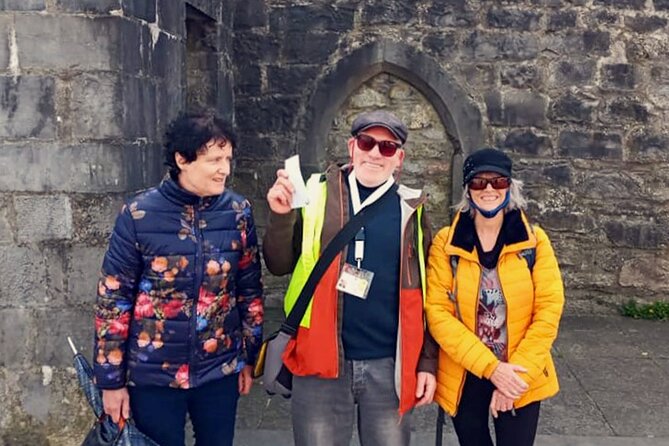
Galway reveals itself one doorway at a time. This private walk makes the city’s old streets easier to read, with local guide Ger, also called Gerard, linking buildings, family names, legends, and Galway’s ties to Ireland. I like the personal pace, and I like that St. Nicholas Collegiate Church is included at the eligible tour times. The main drawback is that nearly two hours on foot can feel slow if you want only a quick introduction.
You meet at the front entrance of The Hardiman Hotel on Eyre Square and finish back near the starting point. The route covers famous sights, but it also slips into churchyards, lanes, theatre corners, and lesser-known streets. Weather matters, and one poor-weather tour was affected by wind and rain, though the guide adapted the experience and used the church visit as a useful indoor stop.
In This Review
- Galway History Walking Tour: Key Points
- Starting at Eyre Square With Galway’s Tribes
- Williamsgate Street, Churchyards, and Courthouse Square
- The River Corrib View of Galway Cathedral
- Lynch’s Castle and the Power of One Galway Family
- Dead Man’s Lane and the Lynch Memorial Window
- Inside St. Nicholas Collegiate Church
- The Latin Quarter, King’s Head, and Galway’s Old Port
- Medieval Ruins and Galway’s Theatre Tradition
- Abbeygate Street and the Former Cathedral Building
- What the $150.60 Group Price Buys You
- Pace, Weather, and Group Size
- Who Should Book This Galway Walk?
- Should You Book the Galway History Walking Tour?
- FAQ
- Where does the Galway history walking tour begin?
- Where does the tour end?
- How long does the walking tour last?
- How many people can join the private tour?
- Is St. Nicholas Collegiate Church included?
- Is the tour offered in English?
- Can the route be shortened for mobility needs?
- Is transportation included?
- Can I cancel for a full refund?
Galway History Walking Tour: Key Points
- Private group up to 13: Your party has the guide to itself, with the route adjustable to your interests.
- St. Nicholas Church visit included: The voucher applies to the 10am and 1pm tours, so confirm your start time before booking.
- A city tour with local texture: Expect stories about the Lynch family, the Tribes of Galway, Nora Barnacle, James Joyce, and Galway’s old port.
- Nearly two hours on foot: The pace is leisurely, with frequent pauses for buildings, legends, and questions.
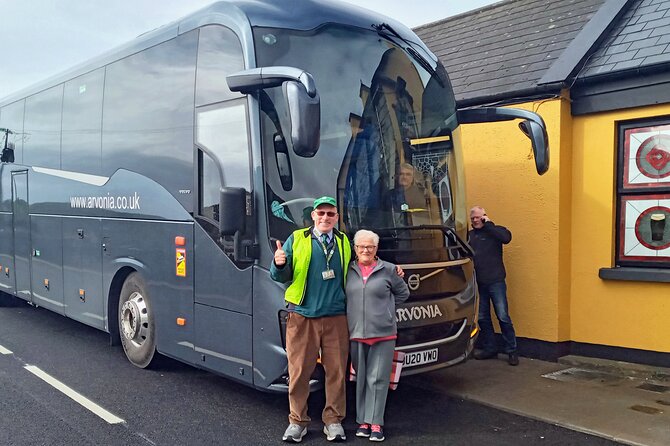
- Strong guide-led experience: Ger is praised for being friendly, flexible, attentive, and good at explaining complicated subjects in plain language.
- Good first-day orientation: The route gives you a useful sense of Galway’s central streets, eating places, pubs, landmarks, and theatre scene.
Starting at Eyre Square With Galway’s Tribes
The walk begins at Eyre Square, Galway’s main central gathering place. Ger meets you at The Hardiman Hotel, then leads you into the square for an opening look at the city.
This first stop is more than a quick photo pause. You hear about the Tribes of Galway, the fourteen merchant families whose influence shaped the medieval and early modern city. The square also gives the guide room to point out several small details that are easy to miss when you cross it on your way to Shop Street.
Look for the old Browne Doorway, one of the city’s surviving reminders of merchant power. The Tribes of Galway banners add a visual way to understand those families. Other talking points include the John F. Kennedy memorial, Galway’s connection with Boston, the Quincentenary Fountain, and the O’Connaire statue.
I like this opening because it gives you a map in your head before the streets become narrow. You also get a useful introduction to Galway’s political and commercial past without being shut inside a museum.
More Historical Tours in Galway
- Galway: Dark History Guided City Walking Tour
★ 4.8 · 236 reviews - The Dark History Tour of Galway City
★ 5.0 · 146 reviews - Galway City on Foot with Seán: Stories, History, Local Tips, Chat and More..
★ 5.0 · 64 reviews
Williamsgate Street, Churchyards, and Courthouse Square
From Eyre Square, the route moves along Williamsgate Street. Here, the elegant Browne Thomas building provides an example of the city’s commercial architecture, while the local Claddagh ring shops connect Galway’s past with one of Ireland’s best-known symbols.
If time permits, you pause at the Oscar Wilde statue, presented by Estonia to Ireland in 2004. It is a small but memorable stop, especially if you enjoy literary connections and public art with an international backstory.
The walk then turns toward Eglinton Street and passes the Franciscan Friary church. Behind it is a small graveyard that was an important burial place in the mid-1600s and early 1700s. This is exactly the sort of stop that gives the tour its local character. You are not simply moving from one major sight to another. You are being shown the spaces between them.
At Courthouse Square, Ger explains that Galway once had two important courthouses, one serving the county and one serving the city. One remains, with the Town Hall Theatre opposite. The stop is brief, but it helps you see how civic buildings occupied a central role in the old city.
The River Corrib View of Galway Cathedral
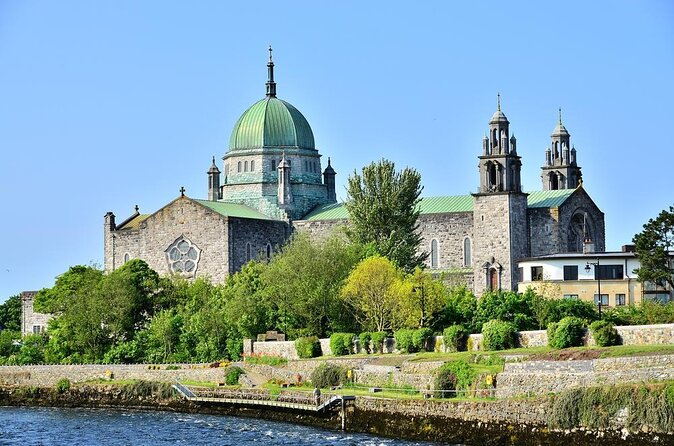
The route continues toward the River Corrib and the newer pedestrian bridge. From here, you pause for a view of Galway Cathedral and the Franciscan Chapel.
The cathedral is described as Europe’s newest stone cathedral, an unusual distinction for a modern building made in a traditional material. The bridge gives you a useful viewing angle without turning the stop into a formal interior visit.
This is one of the quieter moments of the walk. You are looking across the river, listening to the guide connect religious buildings with the city’s changing identity. It also offers a natural break from close-packed streets and doorways.
The cathedral is viewed from outside on this tour. If you want an extended interior visit, you would need to make separate plans.
Lynch’s Castle and the Power of One Galway Family
The walk returns along the River Walk before reaching the intersection where Lynch’s Castle catches your eye. This is the finest surviving town castle in Ireland, and the building gives the guide a strong visual aid for explaining Galway’s merchant families.
The Lynch clan once owned the castle. Ger points out the crests and roundels on its exterior, then explains the family’s place in Galway’s history. You do not need to memorize every name to appreciate the building. Its narrow, fortified appearance makes sense once you understand that wealthy urban families protected their homes while also displaying their status.
This is one of the tour’s best stops for architecture. It is also a good example of the way the walk handles Galway: a building you might pass in seconds becomes a clue to the city’s old social order.
More Walking Tours in Galway
- The Welcome to Galway Walking Tour
★ 5.0 · 427 reviews - Galway: Welcome to Galway Walking Tour
★ 4.8 · 338 reviews - Walking and Tasting Tour of Galway City
★ 5.0 · 283 reviews - The Legendary Walking Tour of Galway
★ 5.0 · 230 reviews
Dead Man’s Lane and the Lynch Memorial Window
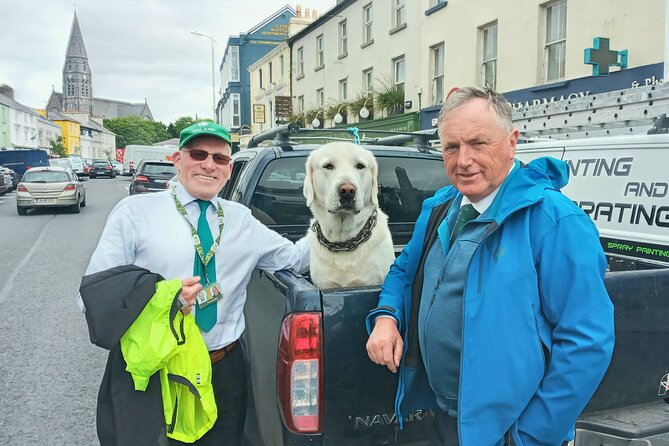
Next, the group turns into Church Lane, once known as Dead Man’s Lane because funeral processions used it on the way to an old graveyard. The name alone gives the narrow lane an eerie edge, but the guide supplies the context without turning the story into cheap drama.
The route continues through Market Street and then reaches the Lynch Memorial window. Local legend says Mayor Lynch hanged his own son at this spot. The memorial was erected in 1854, and the story has remained one of Galway’s most famous tales.
This is a good moment to listen carefully to the wording. The account is presented as a legend, not as a simple fact with no questions attached. That distinction matters in a city where old events, family stories, and later retellings often overlap.
Near Bowling Green, the guide also points out the former family home of Nora Barnacle. She later became closely associated with James Joyce, and their meeting on June 16, 1904, is linked with Bloomsday, the annual celebration of Joyce’s Ulysses.
For literary-minded visitors, this small stop adds another layer to Galway. The city is not only medieval walls and merchant houses. It also has strong links with modern Irish writing.
Inside St. Nicholas Collegiate Church
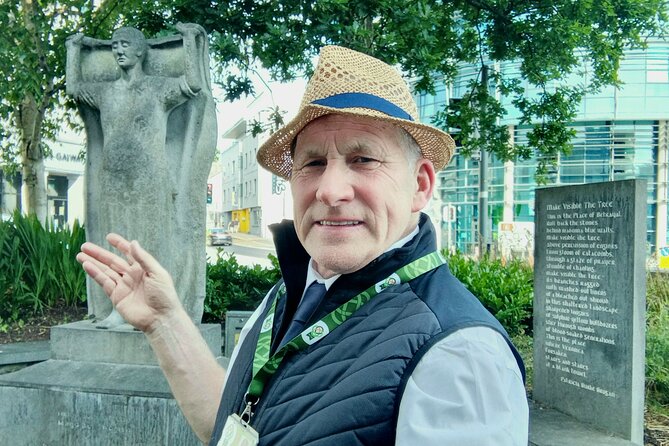
St. Nicholas Collegiate Church is the major indoor stop. The church is the largest medieval church in Ireland still in continuous use, and it began as a Catholic church before becoming Protestant.
The building carries centuries of religious and civic change. Ger explains its place in Galway’s story, while the interior gives you a chance to look at the physical details rather than hearing about them from the pavement.
A long-standing tradition holds that Christopher Columbus worshipped here before his famous voyage of discovery in 1492. Treat that as a historic claim connected with the church, rather than a reason by itself to visit. The building’s age and continued use are the more solid reasons to pay attention.
The voucher toward a visit applies to the 10am and 1pm tours only. The church also offers its own guided visits on weekdays, with listed times of 11am and 2pm, plus Wednesday times at noon and 3pm. Since church schedules can affect the experience, check the timing before you reserve.
One earlier tour had the church closed, so access should not be treated as guaranteed at every possible start time. If St. Nicholas is a priority, choose an eligible departure and confirm the arrangements.
The Latin Quarter, King’s Head, and Galway’s Old Port
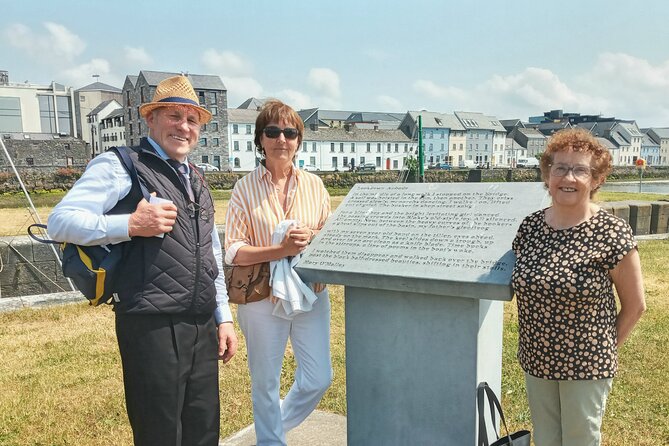
The route continues through High Street in Galway’s Latin Quarter. This is one of the city’s most atmospheric areas, but the value of the stop comes from the stories behind the facades, not just the street’s appearance.
At the King’s Head Pub, Ger shares the tale that Oliver Cromwell gave the site to the executioner of King Charles I as payment. Like the Lynch story, this is a legend worth hearing with a little caution. The story adds color, but the building is also part of Galway’s long commercial life.
You also pass Naughton House, once owned by Richard Humanity Martyn, an Irish member of the British Parliament. These names can make the city’s past feel less distant. Instead of hearing only about kings and dates, you meet merchants, politicians, families, and public figures who shaped daily life.
The Spanish Parade opens the route toward the water. Until 1840, this area formed part of Galway’s old port, where ships from Spain brought wine and spices for local merchant families. The nearby Spanish Arch marks that connection with the port and the city wall.
This section is particularly useful if you plan to explore Galway on your own later. It helps explain why the city’s name, architecture, and old family connections reflect contact with Spain and other trading centers.
Medieval Ruins and Galway’s Theatre Tradition
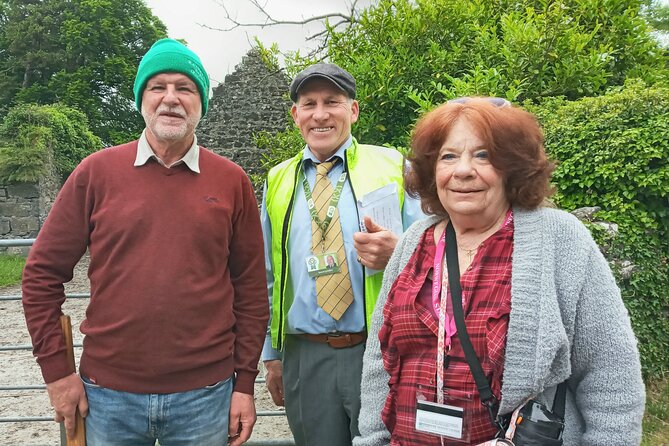
The Hall of the Red Earl brings you back to Galway’s medieval foundations. It was once the castle residence of Richard de Burgo, a powerful Norman figure, and remained important until the late 1500s.
The ruins were lost for centuries and rediscovered by archaeologists in the late 1990s. That detail gives the site an appealing sense of time layered upon time. You can be standing in a modern city street and still find the remains of a building whose importance had faded from public view.
The tour then shifts from medieval power to modern culture at the Druid Theatre. University graduates founded the company in Galway in 1975. Its work has maintained close links with writers including Tom Murphy and Martin McDonagh, and many Irish actors and directors have worked with Druid over the years.
An Taibhdhearc adds another cultural note. It is Ireland’s only Irish-language theatre, established as a major cultural project in the early 1920s after the creation of the Irish Free State. The first director and manager, Micheál Mac Liammóir, worked there from 1928.
These stops help explain why Galway is known as a city of culture. The focus is not just on old stone. You see how theatre, Irish-language performance, and writing remain part of the city’s identity.
Abbeygate Street and the Former Cathedral Building
The final part of the walk follows Middle Street toward An Taibhdhearc and the former cathedral building at the junction with Abbeygate Street Lower.
The guide also explains the Augustinian presence in Galway. The order arrived around 1500 and established an abbey in the Forthill area. Cromwell’s English army expelled the Augustinians for a period, but they returned in 1760 and established the building associated with this part of the route.
The former cathedral has Gothic and Tudor Revival details. It served the city for many years, but Galway’s bishop, Dr. Michael Browne, considered it inadequate by 1957.
This final stop works well because it brings together several themes from the walk: religious change, political upheaval, architecture, and the city’s habit of adapting old buildings to new needs. The tour then ends back at the meeting point.
What the $150.60 Group Price Buys You
The listed price is $150.60 for a private group of up to 13 people. For one or two people, that is a fairly expensive walking tour. For a family or larger party, the calculation improves quickly because the cost is shared across the group.
You are paying for a professional guide, a private booking, a flexible route, and a church voucher at the qualifying times. You are not paying for food, drinks, transport, accommodation, or personal expenses.
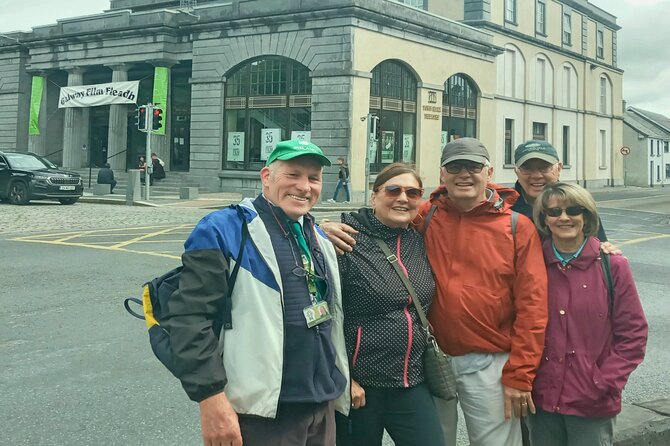
The strongest value comes from the ability to ask questions and adjust the emphasis. If your group cares about family roots, Irish-language culture, architecture, food, pubs, or writers, Ger has shown a willingness to adapt the conversation. Several tour accounts also note that he offered restaurant and pub suggestions and even helped take photographs.
The tour is almost two hours, so it is not a quick orientation. I would book it early in a Galway stay, then use the information to choose where to eat, which streets to revisit, and which buildings deserve a closer look.
Pace, Weather, and Group Size
The walk is described as leisurely and can be adapted for guests with mobility issues through a shortened version. Most people can participate, but you should expect nearly two hours of walking and standing on city streets.
Galway weather can change quickly. The experience requires good weather, and the operator may offer another date or a full refund if conditions force cancellation. Bring suitable rain protection even when the forecast looks promising.
Private normally means only your group participates, which is a major advantage for families and friends. One booking was combined into a group of ten after the operator was short a guide, and the party found it hard to hear in windy conditions. That appears to be an exception, but it is a useful reminder to confirm the private arrangement if your group especially values quiet conversation.
The tour is offered in English, uses a mobile ticket, and begins and ends at The Hardiman Hotel in Eyre Square. Service animals are allowed, and the meeting point is near public transportation.
Who Should Book This Galway Walk?
I would choose this tour for a first visit, especially if you want a clear introduction before exploring on your own. It suits families because the guide can adjust the pace and answer different questions without a large group schedule pressing everyone forward.
It also suits history fans, people tracing Irish family connections, and visitors who prefer local stories to a simple list of monuments. The route includes enough major sights to orient you, but its best moments often come from the smaller details: a graveyard behind a friary, the name of a lane, a family crest, or a theatre with a strong Irish-language role.
You might prefer a shorter city stroll if you have limited time or little interest in historical explanation. This is a talkative tour, and the guide takes time to explain Galway’s complicated past. That is its strength, but it will not suit anyone hoping to rush through the center.
Should You Book the Galway History Walking Tour?
Book it if you want a private, flexible introduction to Galway and enjoy stories tied to real streets and buildings. The 4.6 rating from 26 submitted ratings, with 92 percent recommending it, fits the main pattern: Ger is praised for his friendly manner, clear explanations, patience, and willingness to tailor the walk.
Choose the 10am or 1pm departure if the St. Nicholas Church voucher matters to you. Larger groups receive better value from the flat price, while solo visitors should decide if personal attention is worth the higher cost.
I would book this near the start of your Galway stay, allow for rain, and arrive ready to ask questions. For an easygoing look at Galway’s medieval families, port connections, religious buildings, literature, and theatre, it is a useful and personable choice.
FAQ
Where does the Galway history walking tour begin?
The guide meets you at the front entrance of The Hardiman Hotel in Eyre Square, Galway.
Where does the tour end?
The activity ends back at the meeting point near The Hardiman Hotel.
How long does the walking tour last?
The tour lasts approximately 1 hour and 55 minutes.
How many people can join the private tour?
The price covers a private group of up to 13 people.
Is St. Nicholas Collegiate Church included?
A voucher toward a visit to St. Nicholas Church is included for the 10am and 1pm tours. The church’s own guided tours operate Monday through Friday at 11am and 2pm, with additional Wednesday times at noon and 3pm.
Is the tour offered in English?
Yes. The experience is offered in English and uses a mobile ticket.
Can the route be shortened for mobility needs?
Yes. A shortened version can be offered to guests with mobility issues. The tour requires good weather, and most participants must be able to take part in a city walking experience.
Is transportation included?
No. Private transportation, transportation to and from the meeting point, meals, drinks, accommodation, gratuities, and personal expenses are not included.
Can I cancel for a full refund?
Yes, if you cancel at least 24 hours before the local start time. Cancellations or changes made less than 24 hours before the start are not refunded or accepted. If the supplier cancels because of poor weather, you can receive a different date or a full refund.
Just added around Galway
- Galway’s Historical Gems: A Walk Through Time★ 5.0 · 3 reviews
- Connemara/Galway: Inis Meáin Return Ferry Transfer★ 4.7 · 3 reviews
- Galway: HerGalway Walking Tour★ 5.0 · 3 reviews
- Galway: Medieval Galway Tour★ 4.7 · 3 reviews
- From Galway: Cliffs of Moher and The Burren Tour★ 5.0 · 3 reviews
- 2.5 Hour Guided Sea Kayaking in Roundstone Bay★ 5.0 · 3 reviews
- Galway Tasting and Walking Tour★ 5.0 · 3 reviews
- Ferry ticket – Day return ticket to Inishbofin Island from Cleggan. Self Guided.★ 5.0 · 3 reviews
Historical Tours, compared.

Dublin Historical Centre Food Tour with 8 Food Tastings & Drinks
Read our review →

Historical 2-Hour Guided Walking Tour of Dublin
Read our review →
Dublin to Cork, Blarney Castle & Cóbh Heritage Centre by train
Read our review →
Jeanie Johnston Tall Ship Irish Famine History Tour
Read our review →

Deliciously Dublin: The Artisan Donut Walking & History Tour
Read our review →Browse the lists this tour appears in