
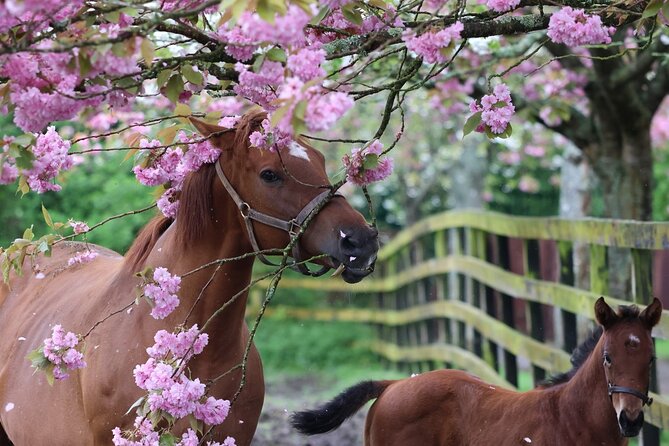
Reviewed · SKIP THE LINE
Irish National Stud & Gardens Skip the line Entrance
Great horses, quiet gardens, and a useful history lesson. The Irish National Stud & Gardens gives you a rare look at a working thoroughbred breeding farm open to the public, only about 40 minutes from Dublin. I especially like the chance to see retired champions such as Hurricane Fly and the beautifully designed Japanese Gardens. The main drawback is that horse numbers and activity can vary, and some visitors find the stables quiet or the horse information rather light.
I also like the freedom built into the visit. You can join the guided public tour, then explore the Irish Racehorse Experience and gardens at your own pace. Allow several hours if you want to see all three parts properly, rather than treating this as a quick photo stop.
In This Review
- Five things to know before you go
- Why this horse farm is worth the trip from Dublin
- Meeting the stud’s horses and retired racing stars
- The Irish Racehorse Experience explains the sport
- The Japanese Gardens deserve unhurried time
- St Fiachra’s Garden adds an Irish note
- Plan the journey from Dublin and Kildare
- How long should you spend at the stud?
- The main drawback: horse sightings are not guaranteed
- Who will enjoy the Irish National Stud most?
- Booking, cancellation, and practical value
- Should you book it?
- FAQ
- Where is the Irish National Stud & Gardens located?
- How much does admission cost?
- How long does the visit take?
- What is included with admission?
- Which retired racehorses can I see?
- Are the Japanese Gardens included?
- Is public transportation available?
- Can I cancel for a refund?
Five things to know before you go
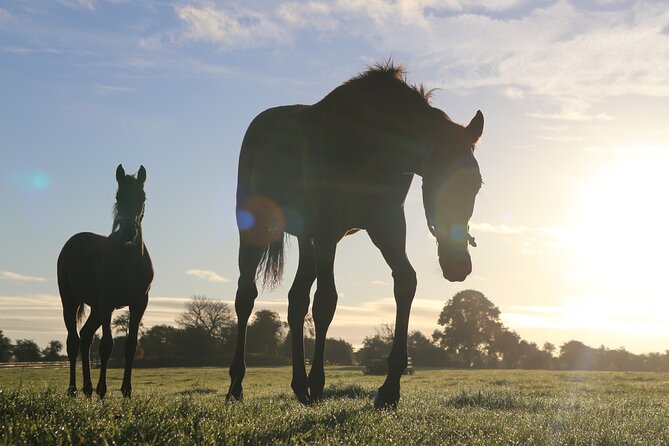
- Hurricane Fly, Beef or Salmon, and Faugheen are among the retired racing stars you may meet as part of the Living Legends team.
- The Japanese Gardens are a major attraction in their own right, with carefully planned paths and views.
- St Fiachra’s Garden adds a distinctly Irish, Celtic-themed garden experience beside the Japanese design.
- The Irish Racehorse Experience uses interactive displays to explain the life, breeding, training, and racing world of thoroughbreds.
- Kildare train station is not right beside the stud. The farm is about three miles away, and one visitor paid €13 for a taxi from the station.
- The ticket is flexible in duration. You may spend anywhere from one hour to a full day, depending on how deeply you explore.
Why this horse farm is worth the trip from Dublin
The Irish National Stud & Gardens is not simply a collection of horse stalls with a few flowers added around the edges. It combines breeding, racing, horticulture, and Irish cultural ideas in one visit.
The setting helps. The stud covers 850 acres of green rolling hills, giving the place room to feel like a real farm rather than a staged attraction. You get open views, working buildings, horses, and large garden areas instead of a tightly packed city exhibit.
For me, the attraction works best because it gives you two different kinds of pleasure. The horse side has energy, pedigree, and sporting drama. The gardens slow everything down. If one part feels quiet during your visit, another part gives you something to enjoy.
The stud began producing racehorses in the early 1900s and has played a role in the development of some of Europe’s finest thoroughbreds. You do not need to follow racing closely to understand the basic appeal. A visit helps explain why Irish horse breeding carries such weight and why a foal, a mare, or a retired champion can draw serious attention.
The ticket costs $22.98 per person. That is a fair price if you use the full admission package, which includes the public tour, Irish Racehorse Experience, guide, and access to both gardens. It is less convincing if you only have an hour and mainly want a quick look at the grounds.
A few more trips worth weighing up
- Dublin: Skip-the-Line Guinness and Jameson Whiskey Tour
★ 4.7 · 771 reviews - Skip the Line: The National Wax Museum Admission Ticket
★ 4.0 · 216 reviews - Skip the Line: Irish Night Show Including 4-Course Dinner Ticket
★ 4.5 · 216 reviews
Meeting the stud’s horses and retired racing stars
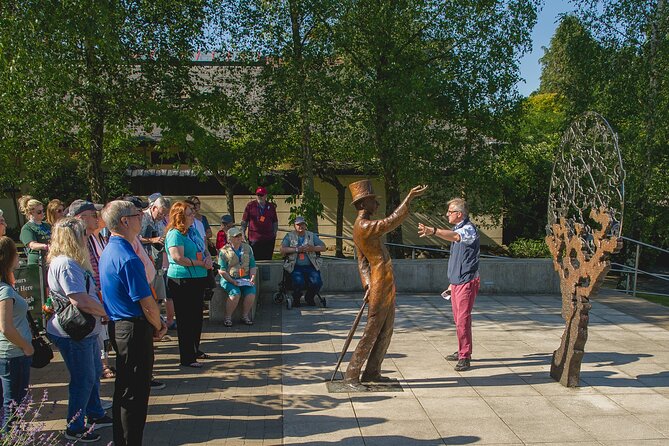
The public tour is the core of the visit. A guide takes you around the stud and explains the work connected with stallions, mares, foals, and racehorse breeding.
This is where the experience can feel most personal. You are not just looking at racehorses from a distance in a museum display. You are seeing animals connected with a living breeding operation, and the guide helps put their role into context.
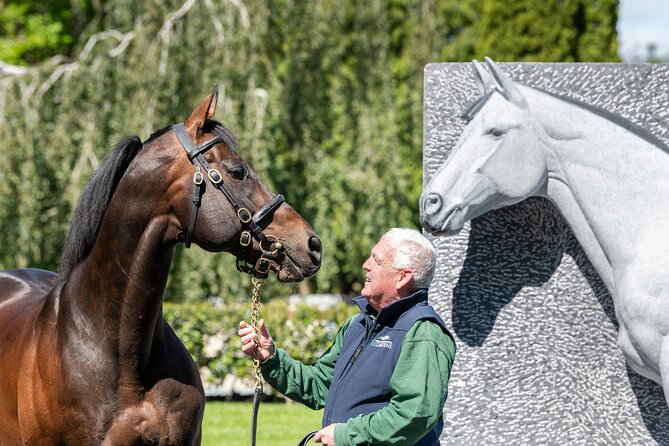
The retired Living Legends team is a special draw. Hurricane Fly, Beef or Salmon, and Faugheen are named among the former racing stars you may see. Their presence gives the visit a direct link to Ireland’s racing culture. You can look at a retired champion and then connect that animal to the racing stories explained during the tour.
Your exact horse sightings may vary. This is an active stud, not a theater show with every animal presented on schedule. Some stables may be empty, and you may not see as many horses as you hoped. That matters if your main reason for booking is close-up animal viewing.
I would plan your expectations carefully. The stud is best understood as a place where horses and breeding are part of the attraction, not as a guaranteed horse-handling session. You will get more from the tour if you are interested in how the operation works, not only in collecting photographs.
The quality of the guide also affects this part of the visit. A strong guide can explain breeding and racing in plain language, point out the importance of individual horses, and keep the tour moving without turning it into a lecture. One guide was praised for being engaging and well informed, which is exactly what you want here.
The Irish Racehorse Experience explains the sport
After seeing the horses, make time for the Irish Racehorse Experience. This interactive activity brings the world of thoroughbreds to life and gives the visit more depth than a simple farm tour.
The displays are especially useful if you know little about racing. The stud tour shows you the animals and working setting. The interactive experience helps explain the wider system around them, including the breeding process and the history of the stud.
I like this two-part structure. You first see the real horses, then get a clearer explanation of what makes them valuable and how their lives connect to racing. It gives children and first-time racing visitors something concrete to follow.
The experience also helps balance the quieter parts of the farm. If you happen to find empty stables or limited horse activity, the interactive section provides a dependable source of information.
Allow enough time to read and use the displays instead of rushing through. The attraction is sold as a visit lasting from one to seven hours, so your total time depends on how much attention you give each section. If you are traveling with children, this is likely to be one of the easier parts for them to enjoy because it changes the pace from walking and listening.
The Japanese Gardens deserve unhurried time
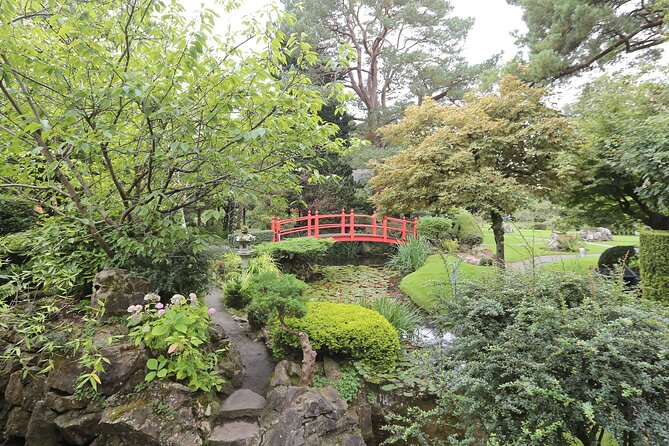
The Japanese Gardens are one of the strongest reasons to visit, even if horses are not your main interest. They are described as a remarkable garden and repeatedly praised as a must-see part of the grounds.
You can expect a carefully arranged garden with paths, planting, water-related features, and changing views as you walk. I would not rush this section after the farm tour. The appeal comes from the sequence of spaces, not from seeing everything in one glance.
The garden provides a welcome change after the horse facilities. You move from breeding and racing into a quieter setting where the focus is design, balance, and movement through space.
It is also a good option if your group has mixed interests. One person can focus on racehorses while another enjoys the gardens. Since admission covers the full attraction, you do not have to choose between them.
Give the Japanese Gardens at least enough time for a proper walk. The complete visit can be done in one hour if you are moving quickly, but that approach risks reducing the garden to a checklist. If you have three or more hours, you can take the public tour, use the racehorse displays, and walk the garden paths without constantly watching the clock.
A completely different kind of day out from Dublin:
- Dublin to Cliffs of Moher, including Wild Atlantic Way and Galway
★ 5.0 · 23,331 reviews - From Dublin: Cliffs of Moher, Burren & Galway City Day Tour
★ 4.8 · 18,888 reviews - Dublin: Guinness Storehouse Entry Ticket
★ 4.6 · 16,863 reviews - Dublin to Cliffs of Moher, Burren, Wild Atlantic Way, Galway Tour
★ 5.0 · 12,924 reviews
St Fiachra’s Garden adds an Irish note
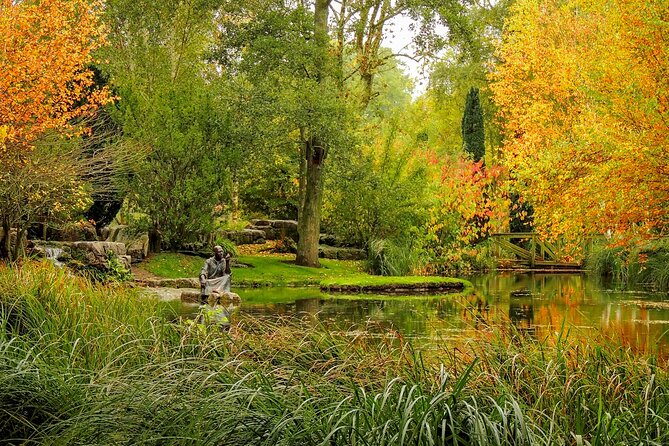
St Fiachra’s Garden provides the second major garden experience. While the Japanese Gardens use an East Asian design tradition, St Fiachra’s Garden draws on Celtic themes and gives the visit a more specifically Irish character.
This pairing is one of the attraction’s smartest features. You can compare two very different approaches to garden design in the same setting. The Japanese garden encourages a calm, carefully framed walk. St Fiachra’s Garden connects the grounds to Irish stories and symbols.
I would make sure you see both. It is easy to spend your available time with the horses and then assume the gardens are a minor extra. They are not. The gardens help make the stud suitable for a wider audience, including people who have little interest in racing.
The two garden areas also give you space to set your own pace. The guided tour has a fixed rhythm, but the garden visit is more flexible. You can stop for views, move slowly, or simply enjoy the grounds after the more structured horse section.
Plan the journey from Dublin and Kildare
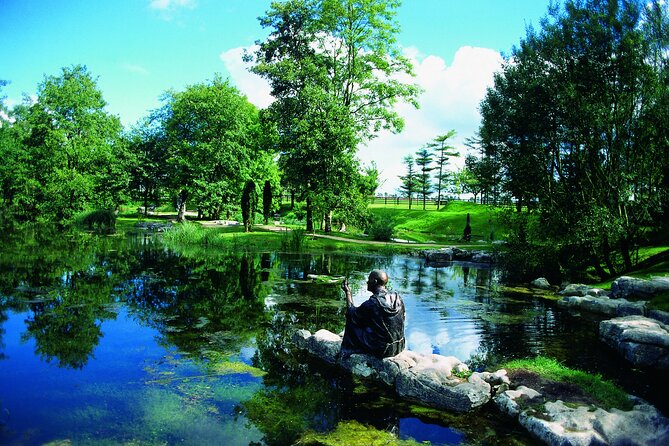
The Irish National Stud & Gardens is about 40 minutes from Dublin, making it a practical day trip or half-day outing from the capital. The exact timing will depend on your transport and traffic, but the distance is short enough to fit into a wider Kildare plan.
The location is near public transportation, though the final approach deserves attention. If you arrive by train at Kildare station, the stud is about three miles away and there is no bus running directly to the attraction. That walk may be manageable for some people, but it is not a convenient final connection for everyone.
A taxi is the simpler choice from the station. One visitor paid €13 for the ride, and the driver happened to be professional jockey Declan Shea. That is an unusually fitting introduction to the stud, though you should treat the fare as a useful example rather than a guaranteed price.
I would arrange the last part of the journey before you set out. The attraction itself is easy to enjoy, but a long walk from the station can eat into your time and energy before the tour even begins.
A mobile ticket keeps entry simple. The booking confirmation is issued at the time of booking, and the experience is offered in English. Most people can take part, and service animals are allowed.
How long should you spend at the stud?
The stated visit length ranges from one to seven hours. That wide range makes sense because the attraction combines a guided section with self-directed gardens and interactive exhibits.
Here is how I would think about your timing:
- One hour: Enough for a quick look, but likely too short for all three activities.
- Two to three hours: A sensible target for the guided stud tour, Irish Racehorse Experience, and a walk through both gardens.
- Four hours or more: Best if you want to linger in the gardens, read the displays, and avoid rushing.
- A full day: Possible for visitors who want a slow visit and have a wider Kildare day planned around it.
The guided tour gives your visit structure, but the gardens are where you can add time. If you are interested in photography, garden design, or horse history, you will probably appreciate a longer stay.
Because the attraction is spread across a large property, comfortable walking shoes make sense. That is practical advice based on the size of the grounds and the need to move between distinct parts of the visit.
The main drawback: horse sightings are not guaranteed
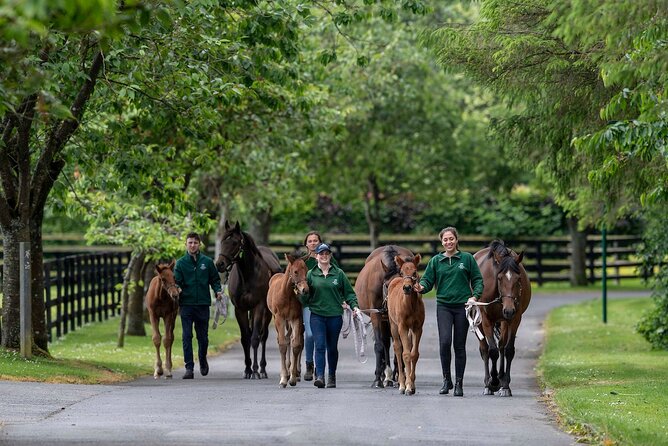
The biggest limitation is simple: you may not see as many horses as expected. Some stables can be empty, and the amount of information provided around individual horses may feel limited.
That does not make the visit poor, but it changes the value calculation. If you are a committed racing fan, the retired champions, breeding background, and racehorse displays may be enough to make the trip worthwhile. If you want a busy farm with constant animal activity, you might leave feeling the attraction was quieter than expected.
The guided tour is also only as strong as its guide. A good guide can make the breeding process and stud history clear and entertaining. A less detailed presentation may leave you wanting more information about the horses themselves.
I would treat the visit as a mix of horse culture and gardens, not as an animal encounter alone. That expectation gives you a much better chance of enjoying the full experience.
Who will enjoy the Irish National Stud most?
This attraction suits several kinds of visitors:
- You like horse racing, breeding, or Irish sporting culture.
- You want to meet famous retired racehorses such as Hurricane Fly, Beef or Salmon, and Faugheen.
- You enjoy formal gardens and want more than a standard farm visit.
- You are traveling with children who may enjoy interactive displays.
- You want an attraction near Dublin that can fill one to several hours.
- Your group has mixed interests, with some people drawn to horses and others to gardens.
It may be less suitable if you have very limited time, expect guaranteed close contact with many horses, or cannot manage a walk across large grounds.
The attraction also works well for a repeat visitor to Ireland who wants a quieter outing outside central Dublin. The combination of Japanese and Celtic garden styles gives it a character that you will not get from a standard city tour.
Booking, cancellation, and practical value
At $22.98 per person, the admission is strongest value when you complete all three main activities: the stud farm tour, Irish Racehorse Experience, and both gardens. Paying that amount for a brief walk around quiet stables would feel less worthwhile.
The experience is often booked about 23 days ahead, so planning early is sensible if your Dublin dates are fixed. You receive confirmation when you book, and the mobile ticket is convenient for a day of sightseeing.
Free cancellation is available if you cancel at least 24 hours before the experience start time. Changes or cancellations made inside that window are not accepted and are not refunded, with cut-off times based on local time.
Should you book it?
Book the Irish National Stud & Gardens if you want a well-rounded outing that combines retired racing champions, horse breeding, interactive displays, and two very different gardens. It offers good value for a half-day, especially when you take time with every included part.
I would not book it expecting a nonstop horse encounter. Animal activity can be limited, and empty stables are possible. But if you see the stud as a place to understand Irish racing while enjoying beautifully maintained gardens, the experience earns its strong reputation.
My practical advice is to plan for at least two or three hours, sort out your transport from Kildare station in advance, and do not skip the Japanese Gardens or St Fiachra’s Garden. Those garden visits are what turn a horse farm stop into a complete day out.
FAQ
Where is the Irish National Stud & Gardens located?
The Irish National Stud & Gardens is located in County Kildare, about 40 minutes from Dublin.
How much does admission cost?
The listed price is $22.98 per person.
How long does the visit take?
The experience can take approximately one to seven hours, depending on how much time you spend on the tour, interactive displays, and gardens.
What is included with admission?
Admission includes the Irish Racehorse Experience, the public tour, a guide, and access to the Irish National Stud & Gardens.
Which retired racehorses can I see?
The Living Legends team includes Hurricane Fly, Beef or Salmon, and Faugheen.
Are the Japanese Gardens included?
Yes. Access to the Japanese Gardens is included with admission.
Is public transportation available?
The attraction is near public transportation, but there is no direct bus from Kildare train station. The stud is about three miles from the station, and a taxi may be needed.
Can I cancel for a refund?
Yes. You can cancel up to 24 hours before the experience start time for a full refund. Cancellations or changes made less than 24 hours before the start time are not accepted.
Just added around Dublin
- A Self Guided Walking Tour of Dublin’s Docklands★ 4.5 · 3 reviews
- Waterford Crystal and Kilkenny Full-Day Rail Tour from Dublin★ 5.0 · 3 reviews
- Secret and unusual Dublin: guided walking tour★ 5.0 · 3 reviews
- Turtle Bunbury’s Dublin: A Self-Guided Audio Tour from a Celebrated Author★ 5.0 · 3 reviews
- Cliffs of Moher and The Burren Private Tour from Dublin★ 5.0 · 3 reviews
- Skip-the-line St. Patrick’s Cathedral and Dublin City Tour★ 5.0 · 3 reviews
- Dublin Full-Day Tour through Boyne Valley★ 5.0 · 3 reviews
- Rock Of Cashel And Blarney Castle Private Chauffeur Full Day Sightseeing Tour★ 4.5 · 3 reviews
Skip the Line, compared.

Skip-the-Line Guinness and Jameson Whiskey Tour
Read our review →
Skip the Line: Hook Lighthouse Entrance Ticket and Guided Tour
Read our review →
Skip the Line: The National Wax Museum Admission Ticket
Read our review →
Skip the Line: Irish Night Show Including 4-Course Dinner Ticket
Read our review →
Skip the Line: Bunratty Castle and Folk Park Admission Ticket
Read our review →


Browse the lists this tour appears in