
Reviewed · HISTORICAL TOURS
Bike Tour Along The Historic Waterways Of Dublin
Dublin reveals itself best beyond the main streets. This long, private bike ride links the coast, canals, parks, stadiums, cemeteries, and riverside paths in one ambitious day. I like the route’s mix of sea views and quiet cycle paths, and I like how it reaches places many first-time visitors miss, including Bull Island and the War Memorial Gardens. The main caution is the length: five to eight hours on a bike demands good fitness, and one past rider found an older bike uncomfortable over a full day.
This is not a quick sightseeing spin around central Dublin. It is a physical outing with a strong local-history thread, led by Ben, a guide praised for his clear communication, safe riding advice, and wide grasp of Irish culture, language, history, and wildlife. The ride is private, so your group sets the pace within the planned route. An e-bike may be available, but confirm that when booking rather than assuming it.
In This Review
- Key points at a glance
- Why this Dublin bike tour takes the long way
- Along the coast toward Bull Island
- Tree-lined lanes and the road to Croke Park
- Ninety minutes at Glasnevin Cemetery
- Lunch at John Kavanagh, The Gravediggers
- Tolka Valley Park and Phoenix Park
- The Liffey and the Irish National War Memorial Gardens
- Kilmainham Gaol, Royal Hospital, and Croppies Acre
- What the $198.25 price includes
- Bikes, comfort, and fitness
- Who should book this ride?
- Should you book the Dublin waterways bike tour?
- FAQ
- Where does the bike tour begin?
- Where does the tour end?
- Is hotel pickup available?
- How long does the experience last?
- Is this a private tour?
- What is included in the price?
- Is lunch included?
- Is admission to Glasnevin Cemetery included?
- Do I need to be fit for this experience?
- What happens if bad weather cancels the tour?
Key points at a glance
- Dublin Bay and Bull Island: Ride along the coast, breathe the sea air, and stop at a cafe built into a 200-year-old sea wall.
- Guinness and GAA connections: Pass through a park developed by the Guinness family and pause beneath the huge Croke Park stadium.
- Glasnevin Cemetery: Spend about 90 minutes on a public cemetery tour filled with famous, unusual, and solemn stories.
- A proper pub lunch: Stop at John Kavanagh, The Gravediggers, a pub dating to 1833. Lunch costs extra.
- Riverside history: Cycle beside the Liffey to the Irish National War Memorial Gardens and hear stories tied to Ireland’s past.
- Private, active touring: Bikes, helmets, and high-visibility vests are supplied, but you need to be comfortable cycling in city traffic.
Why this Dublin bike tour takes the long way
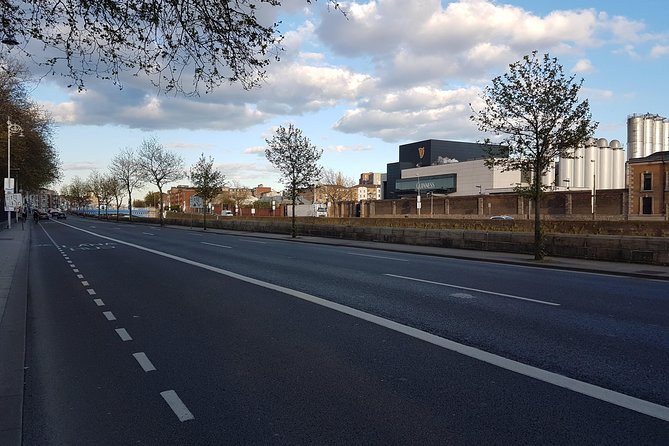
The tour begins at 37 Capel Street in North City, a useful central starting point for a day that quickly moves away from Dublin’s best-known visitor corridors. If you stay within 1 kilometer of the start, the guide can meet you at your accommodation up to 20 minutes before the scheduled departure and walk with you to the bike shop or starting point.
I like the route because it treats Dublin as a connected city rather than a collection of isolated sights. You follow transport routes and waterways, ride through green spaces, and see how the coast, suburbs, sports grounds, memorials, and old institutions fit together.
The exact duration is listed as roughly five to eight hours. That is a wide range, and it matters. The longer version includes generous time for stops, the cemetery tour, lunch, questions, and slower riding. You should not plan another major timed attraction immediately afterward.
This is a private activity, meaning only your own group takes part. That is useful for families or friends with a shared pace, though the route still requires everyone to handle a bicycle confidently. You will ride in an urban environment, so basic traffic awareness and steady control are important.
More Bike Tours in Dublin
- Cycle Dublin – Bike & ebike Tours
★ 5.0 · 748 reviews - Dublin Panoramic e-Bike Tour with Howth Adventures
★ 5.0 · 544 reviews - Dublin: Bike & E-Bike Tour with a Local Guide
★ 4.6 · 477 reviews
Along the coast toward Bull Island
The first major stretch heads out along a newly completed cycle lane beside Dublin Bay. As you ride, the guide explains the story of local transport infrastructure while you take in the water and open coastal views.
This is a good early section because it gives you room to settle onto the bike. The sea air and broad views make a pleasant change from central Dublin’s streets. I would pay close attention here to the guide’s explanations, since the point is not only the scenery but also how Dublin developed ways to move people and goods around the bay.
Bull Island provides the first substantial pause. You have about 30 minutes to sit with a cup of tea and a snack at a distinctive cafe perched on a 200-year-old sea wall. The wall was associated with Captain Bligh, the naval officer known from Mutiny on the Bounty, and the stop introduces the story of Dublin Bay’s changing shape.
The island itself is a particularly good example of nature shaped by human engineering. You hear how a major nature reserve formed by accident, rather than through a neatly planned conservation project. Admission to the stop is free, but your food and drink are not part of the tour price.
Tree-lined lanes and the road to Croke Park
After Bull Island, the route passes through an elegant park once owned and developed by the Guinness family. You ride along tree-lined lanes at an easier pace, giving your legs a break from the more exposed coastal section.
The contrast is part of the appeal. In a single morning, Dublin shifts from sea wall and salt air to planted parkland and leafy paths. You will not spend the entire day staring at famous facades. Instead, you see the city through its public spaces and old routes.
At Croke Park, the group stops for about 15 minutes. The stadium holds 83,000 people and is the third largest in Europe. You stand beneath the structure while the guide explains the Gaelic Athletic Association, an organization deeply tied to Irish communities at home and abroad.
The talk also covers the tragic story of a nearly forgotten man who helped shape the association after its foundation almost 150 years ago. This gives the stadium stop more weight than a simple photo opportunity. You learn why Gaelic games matter as part of Irish social life, not just as sport.
There is no admission charge for this brief exterior stop. It is not a stadium tour, so you should not expect access to the stands or interior displays.
Ninety minutes at Glasnevin Cemetery
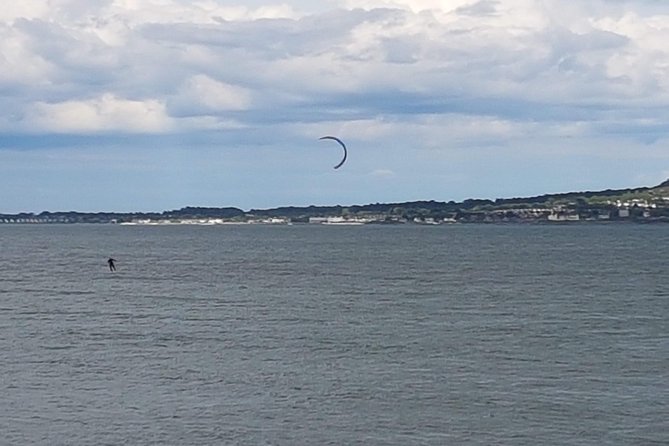
Glasnevin Cemetery is the most substantial historical visit on the route. You join a public tour lasting about one hour and 30 minutes, with stories about famous, unusual, obscure, and solemn figures buried there.
That timing changes the rhythm of the day. You are not simply cycling past a gate, taking a picture, and moving on. The cemetery tour gives you a focused block of storytelling and a chance to walk rather than pedal.
For me, this is one of the strongest reasons to choose the experience. The cemetery connects private lives with Ireland’s political and social past, but the stories are also meant to be quirky and human. That balance should suit you if you enjoy history told through people rather than dates alone.
Admission to the cemetery tour is not included in the $198.25 price. Check the final cost before booking, since this is an important extra. The stop may also be less appealing if you want a nonstop cycling day or prefer not to spend time in cemeteries.
More Historical Tours in Dublin
- Dublin Historical Centre Food Tour with 8 Food Tastings & Drinks
★ 5.0 · 1,718 reviews - 2-Hour Historical Walking Tour from Dublin
★ 5.0 · 875 reviews - Historical 2-Hour Guided Walking Tour of Dublin
★ 4.7 · 865 reviews - Dublin to Cork, Blarney Castle & Cóbh Heritage Centre by train
★ 4.5 · 510 reviews
Lunch at John Kavanagh, The Gravediggers
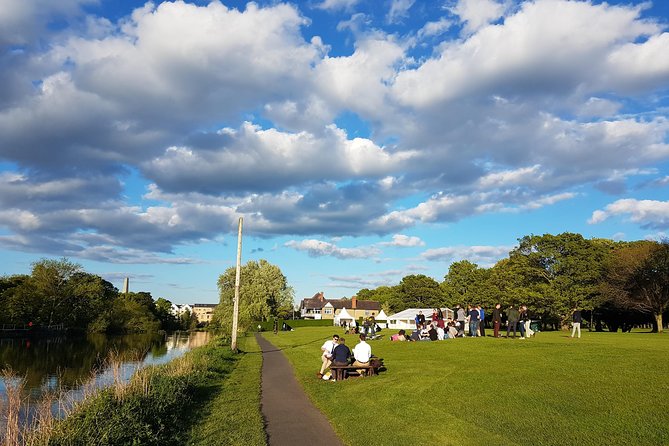
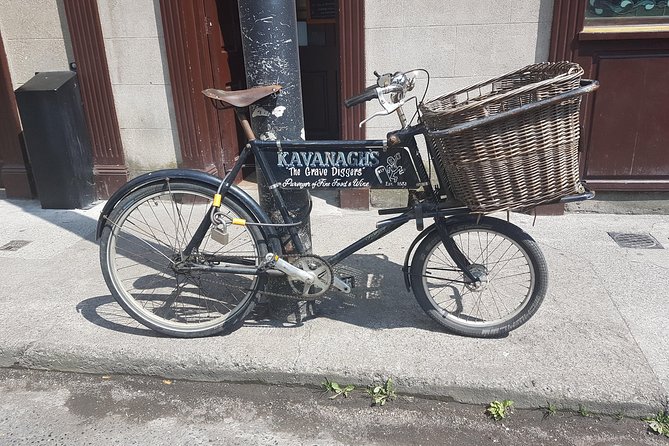
The next stop is John Kavanagh, known as The Gravediggers. The pub opened in 1833 and takes its nickname from the hardworking cemetery staff who frequented it.
You have about 45 minutes for a hearty lunch in this unusual setting. Lunch is not included, so budget separately for your meal and drink. The short stop works best if you arrive ready to order rather than expecting a long, leisurely pub session.
I like the choice of pub because it keeps the route tied to the places around it. This is not a random restaurant break inserted into a sightseeing schedule. Its name and location connect directly with the cemetery visit, giving the meal a clear sense of place.
The main practical point is time. Forty-five minutes is enough for a straightforward lunch, but it is not a relaxed afternoon meal. If your group eats slowly, keep an eye on the meeting time.
Tolka Valley Park and Phoenix Park
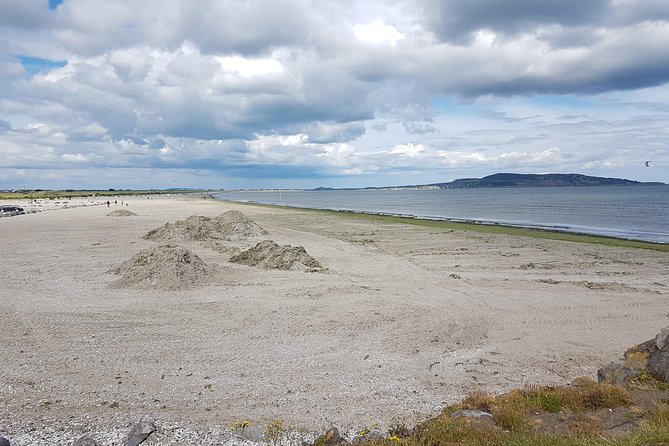
After lunch, the route uses a recently constructed cycle path through Tolka Valley Park. The stop itself is short, around 10 minutes, but the park adds another change of scenery. You ride through lush foliage on a path that feels removed from busy city roads.
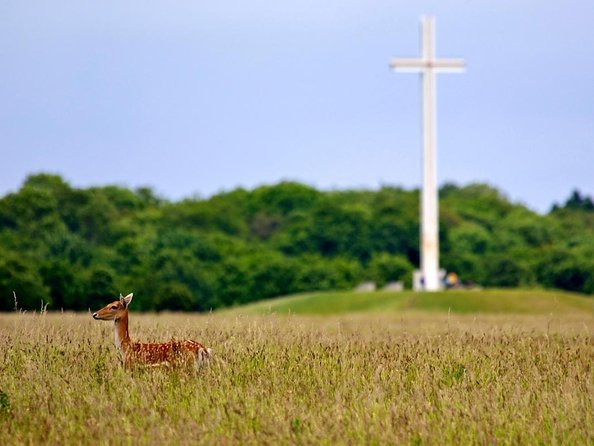
The tour then reaches Phoenix Park, described as the largest enclosed public park in any capital city in Europe. Its story begins with red deer introduced in 1662, and deer still roam there today.
This section is a welcome middle-to-late ride because the park offers space and greenery after the denser city portions. You should keep your eyes open for the deer, but do not treat this as a guaranteed wildlife viewing stop. The route passes through the park and uses its paths, with the guide providing context along the way.
The park also helps explain why this tour works for people who have already seen central Dublin. You get a sense of the city’s scale and its access to large public spaces, not just its compact historic core.
The Liffey and the Irish National War Memorial Gardens
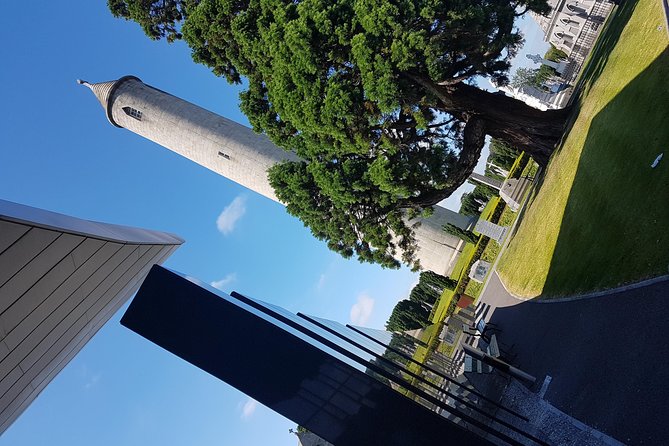
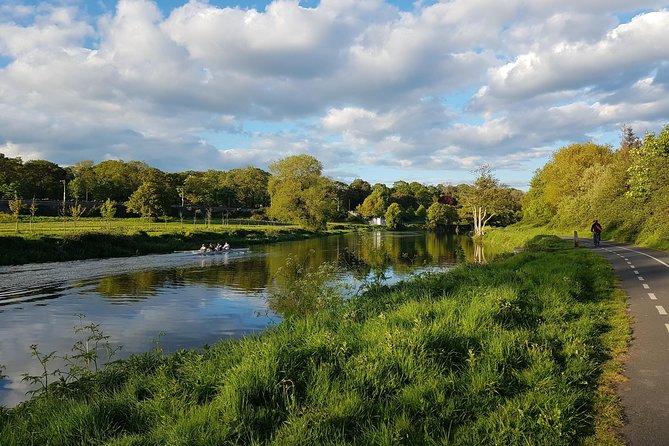
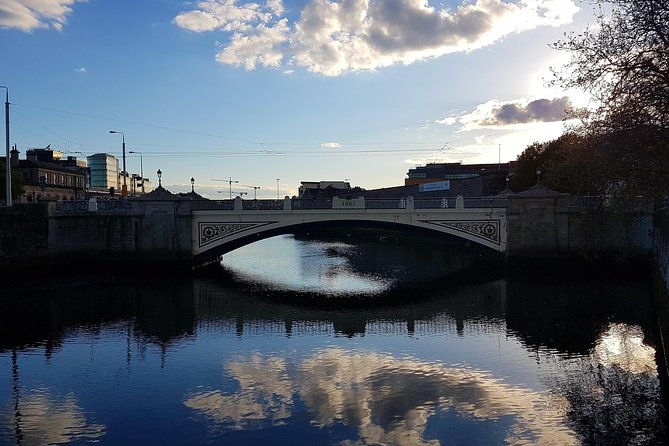
The ride beside the River Liffey is one of the route’s most reflective stretches. You follow a well-made riverside path, watch rowers on the water, and reach the Irish National War Memorial Gardens.
The gardens commemorate 49,400 Irishmen who served in the First World War. The guide also tells the little-known story of an Irish nationalist who avoided execution through cleverness and deception, along with the meaning of the two swans associated with the gardens.
You spend around 10 minutes here, so this is a brief outdoor visit rather than a long garden walk. Still, the setting gives the tour a chance to address a part of Irish memory that has often been overlooked or treated uneasily.
I value this stop because it adds balance. The day is not only about national pride or famous political figures. It also acknowledges service, loss, and the complicated ways Ireland has remembered its past.
Kilmainham Gaol, Royal Hospital, and Croppies Acre
At Kilmainham Gaol, you stop outside for about 10 minutes. The former prison is one of Dublin’s best-known attractions, with a story that includes public executions, the Great Famine, and the executions of leaders of the 1916 Rising.
The tour does not include a visit inside the prison. That distinction matters. If you want the full Kilmainham Gaol experience, book a separate interior tour for another time, and do not assume this bike stop replaces it.
The next pause is at the Royal Hospital Kilmainham. From here, you get a picturesque view over public gardens modeled on the original 17th-century design. The adjoining former military hospital now houses the Irish Museum of Modern Art.
This is a very short stop, about five minutes, so think of it as a view and orientation point rather than a museum visit. The museum is not included in the bike tour.
The final stop is Croppies Acre Memorial Park, another five-minute pause. According to local legend, it was a mass burial site for victims of the 1798 Rebellion. It sits opposite Collins Barracks National Museum, with the Guinness brewery nearby.
These final stops pack several layers of Dublin history into a small area. They are quick, but the guide’s explanation helps connect prisons, rebellions, military buildings, museums, breweries, and memorial spaces.
What the $198.25 price includes
At $198.25 per person, this is not a budget bike rental. The value depends on how much you want from a full-day private outing.
The fee includes the bicycle, a safety helmet, and a high-visibility vest. It also covers the guide’s time, route planning, historical commentary, and the private format. You are paying for access to a carefully linked day rather than simply hiring wheels for a few hours.
The price looks better if your group wants a guide and plans to visit several parts of Dublin in one outing. Transport between Bull Island, Glasnevin, Phoenix Park, the Liffey, and Kilmainham would otherwise take planning and separate fares. It looks less attractive if you mainly want a short ride through the center.
You need to add lunch and the admission cost for the Glasnevin public tour. The other listed stops are free, but paid entry to places such as Kilmainham Gaol or the Irish Museum of Modern Art is not part of this experience.
The tour is often booked well ahead, with an average booking lead time of 54 days. That suggests you should reserve early if your Dublin dates are fixed, especially if you want a particular day or have a larger private group.
Bikes, comfort, and fitness
The practical weak point is equipment consistency. One rider found a bicycle a little old, with gears that did not change and a seat without enough padding. That complaint is worth taking seriously because the outing can last most of a day.
Other feedback praised the e-bikes as safe and comfortable, so equipment may vary. Ask in advance what type of bike your group will receive and whether an e-bike can be arranged. Do not wait until the morning of the tour if comfort or hills are a concern.
You must have a reasonable fitness level and feel comfortable cycling in an urban setting. The route includes city streets, cycle lanes, park paths, coastal riding, and a long day in the saddle. Helmets and high-visibility vests are provided, but you remain responsible for riding steadily and following the guide’s safety instructions.
The guide, Ben, receives especially strong praise for safety, communication, and his explanations of Irish history and culture. That matters on a route with so many transitions. A calm guide can make the difference between feeling hurried and feeling well looked after.
Who should book this ride?
I would recommend it to active visitors who have several days in Dublin and want more than the usual central attractions. It suits you if you enjoy history, public parks, waterways, sports culture, cemeteries, memorials, and local stories in equal measure.
It is also a good choice for a private group that wants one guide for the day. Families with older children, couples, and friends who already cycle regularly should find the format appealing, provided everyone can manage urban riding.
I would hesitate if you have limited cycling experience, weak fitness, a strong dislike of traffic, or only a few hours available. I would also think twice if you want deep visits inside major attractions, since Kilmainham Gaol, the Royal Hospital, Collins Barracks, and the Guinness brewery are seen from outside or in passing.
Should you book the Dublin waterways bike tour?
Book it if you want to cover a wide slice of Dublin by bicycle, with Ben’s history-focused commentary linking the places together. The coast, Bull Island, Glasnevin Cemetery, Phoenix Park, and the Liffey gardens give you a side of the city that a standard walking tour cannot provide.
Before paying, confirm the bike type, ask about e-bike availability, and budget for lunch plus the Glasnevin admission. If your group is fit, curious, and happy to spend most of a day riding, the $198.25 fee can offer good value. If you want an easy ride or interior access to Dublin’s major museums and prisons, choose shorter, separate visits instead.
FAQ
Where does the bike tour begin?
It begins at 37 Capel Street, North City, Dublin, D01 X2E5, Ireland.
Where does the tour end?
The activity ends back at the meeting point on Capel Street.
Is hotel pickup available?
Yes. If your hotel or accommodation is within 1 kilometer of the starting point, the guide can meet you there up to 20 minutes before the scheduled start and walk with you to the tour start.
How long does the experience last?
The tour lasts approximately five to eight hours.
Is this a private tour?
Yes. Only your own group participates in the activity.
What is included in the price?
Use of a bicycle, safety helmet, and high-visibility vest are included.
Is lunch included?
No. Lunch at John Kavanagh, The Gravediggers, is not included.
Is admission to Glasnevin Cemetery included?
No. The public tour at Glasnevin Cemetery has an additional admission cost.
Do I need to be fit for this experience?
Yes. You should have a strong physical fitness level, be comfortable cycling in an urban environment, and manage a long day on a bicycle.
What happens if bad weather cancels the tour?
If poor weather causes cancellation, you will be offered another date or a full refund. You can also cancel for a full refund if you do so at least 24 hours before the scheduled start time.
Just added around Dublin
- A Self Guided Walking Tour of Dublin’s Docklands★ 4.5 · 3 reviews
- Waterford Crystal and Kilkenny Full-Day Rail Tour from Dublin★ 5.0 · 3 reviews
- Secret and unusual Dublin: guided walking tour★ 5.0 · 3 reviews
- Turtle Bunbury’s Dublin: A Self-Guided Audio Tour from a Celebrated Author★ 5.0 · 3 reviews
- Cliffs of Moher and The Burren Private Tour from Dublin★ 5.0 · 3 reviews
- Skip-the-line St. Patrick’s Cathedral and Dublin City Tour★ 5.0 · 3 reviews
- Dublin Full-Day Tour through Boyne Valley★ 5.0 · 3 reviews
- Rock Of Cashel And Blarney Castle Private Chauffeur Full Day Sightseeing Tour★ 4.5 · 3 reviews
Historical Tours, compared.

Dublin Historical Centre Food Tour with 8 Food Tastings & Drinks
Read our review →

Historical 2-Hour Guided Walking Tour of Dublin
Read our review →
Dublin to Cork, Blarney Castle & Cóbh Heritage Centre by train
Read our review →
Jeanie Johnston Tall Ship Irish Famine History Tour
Read our review →

Deliciously Dublin: The Artisan Donut Walking & History Tour
Read our review →Browse the lists this tour appears in