
Reviewed · IRELAND
Kildare: Irish National Stud & Gardens
Horse country begins just outside Dublin. The Irish National Stud & Gardens gives you a rare look at a working thoroughbred farm, with stallions, mares, foals, retired champions, formal gardens, and an entertaining racehorse simulator. I especially like the chance to see horses at close range and the calm beauty of the Japanese Gardens. The main thing to plan around is timing, since the public tour and Irish Racehorse Experience operate on set schedules.
I also like that the ticket covers more than a quick farm visit. You can spend much of a day moving from the breeding operation to the gardens, then into an interactive display that explains how a racehorse is bred, trained, bought, raced, and retired. The site is wheelchair accessible, but some areas are outdoors, so changing weather can affect your visit.
In This Review
- Key Points at a Glance
- Why the Irish National Stud Is Worth Your Time
- Begin With the Horses, Not Just the Buildings
- The Living Legends: Racing Stars in Retirement
- Two Very Different Gardens
- The Irish Racehorse Experience, From Foal to Finish Line
- A Practical One-Day Plan
- How the Price Compares With the Experience
- Who Will Enjoy This Most?
- Access, Booking, and Seasonal Timing
- Should You Book the Irish National Stud & Gardens?
- FAQ
- Where is the Irish National Stud & Gardens located?
- How much does admission cost?
- What does the ticket include?
- How long does the visit last?
- What time are the public tours?
- When is the Irish Racehorse Experience open?
- Can children under seven use the Irish Racehorse Experience?
- What are the main gardens at the stud?
- What retired racehorses can I see?
- Is the attraction wheelchair accessible?
Key Points at a Glance
- Watch mares and foals in the breeding farm: The young horses are often the most memorable part of the visit, especially during the February to September season.
- Meet famous retired racehorses: The Living Legends team includes Hurricane Fly, Beef, Salmon, and Faugheen.
- Allow time for both gardens: The Japanese Gardens follow the symbolic path called the Life of Man, while St Fiachra’s Garden celebrates Irish plants and wildlife.
- Join a free public tour: Tours explain how the stud operates and how a potential future stallion is selected.
- Try owning a racehorse: The Irish Racehorse Experience gives you a horse box, lets you buy an unbroken yearling in a mock auction, and places you in a simulated race.
- Plan around opening times: The racehorse display runs from 11 a.m. to 4 p.m., and public tour times change by season.
Why the Irish National Stud Is Worth Your Time
The Irish National Stud is about 40 minutes outside Dublin in County Kildare. It occupies 850 acres of rolling green ground, and it is one of the few thoroughbred breeding farms open to the public.
That matters because this is not simply a museum with old saddles and photographs. You are looking at an active operation where breeding, foaling, training, racing, and retirement are all part of the story. The setting also gives you a chance to see the difference between a working stud farm and a standard tourist attraction.
The $22 admission price covers the stud, both gardens, the free public tour, and the Irish Racehorse Experience. That is solid value if you plan to spend several hours on site. It becomes less attractive only if you arrive late and have time for just one small part of the property.
I would try to visit between February and September. From October onward, the stud begins to wind down and there is limited stock on the grounds. You can still enjoy the gardens and indoor displays, but the horse viewing is likely to be less rewarding.
Other Ireland trips travellers book alongside this one:
- Dublin to Cliffs of Moher, including Wild Atlantic Way and Galway
★ 5.0 · 23,331 reviews - From Dublin: Cliffs of Moher, Burren & Galway City Day Tour
★ 4.8 · 18,888 reviews - Dublin: Guinness Storehouse Entry Ticket
★ 4.6 · 16,863 reviews
Begin With the Horses, Not Just the Buildings
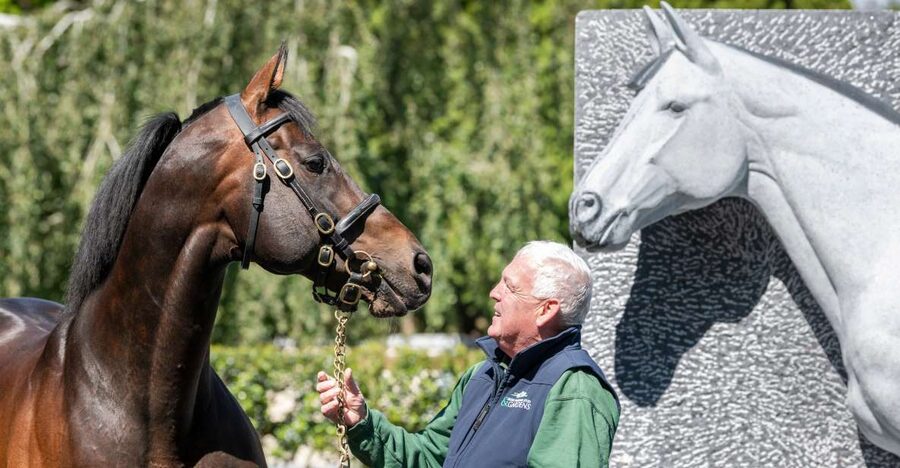
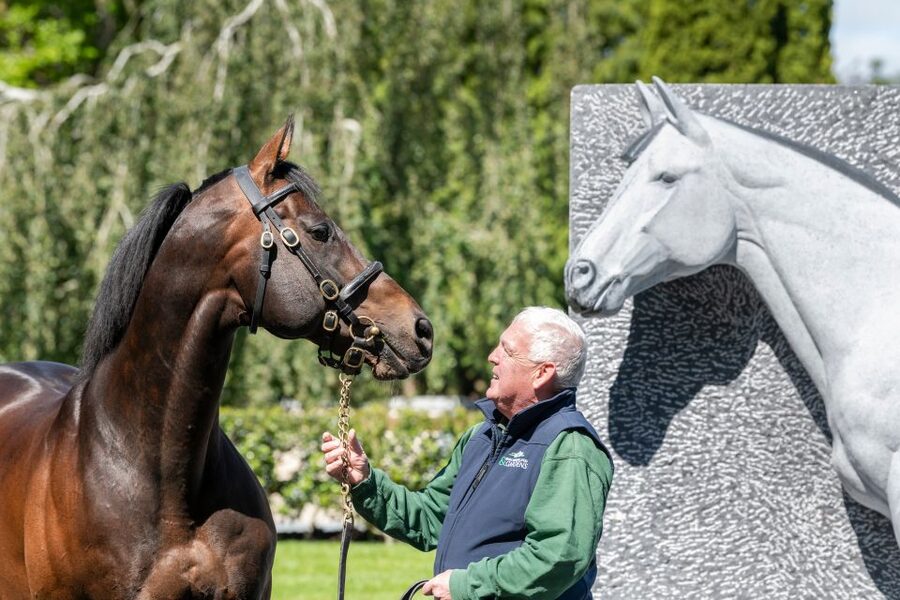
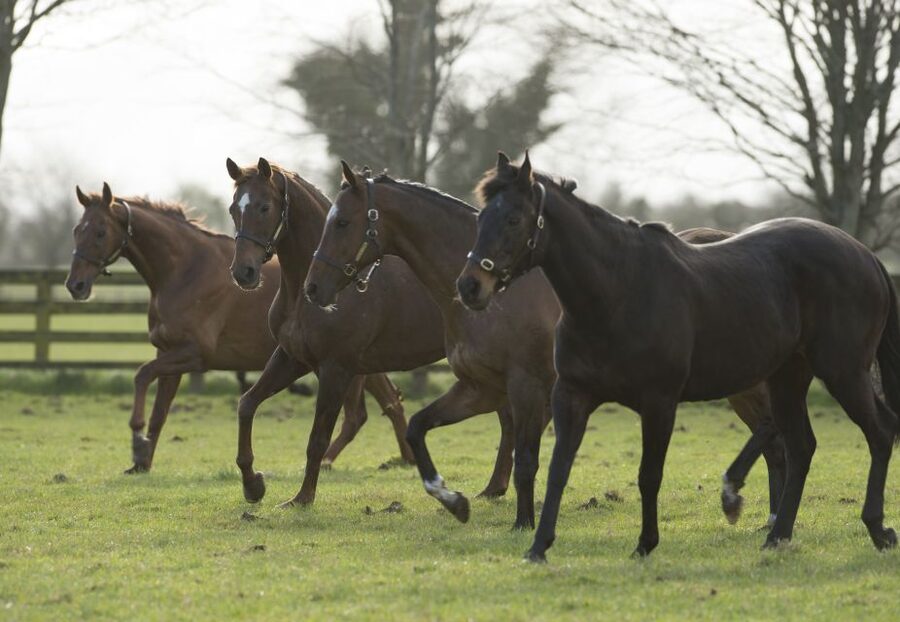
The heart of the visit is the breeding farm. A free public tour takes you through the stallion area, then toward mares and foals. The tour explains how the stud works and how it earns income, along with the careful steps used to assess a possible future stallion.
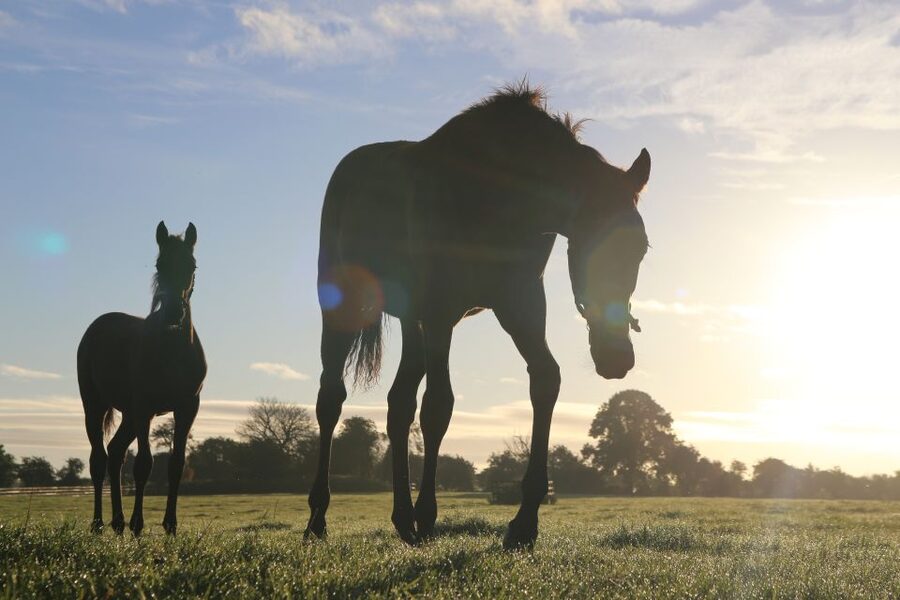
For many people, the best moment will be seeing the foals. They bring movement and personality to what could otherwise feel like a technical look at the breeding business. Mares remain close by for protection, while the stallions offer a more powerful and imposing sight.
The tour generally lasts just over an hour. That makes the start time important. Public tours are listed at 10:30 a.m., noon, 2 p.m., and 4 p.m. during the regular schedule. In summer, extra departures are offered at 1 p.m. and 3 p.m. From October, tours are reduced to 11 a.m. and 2 p.m.
The tour guides can make a real difference. Sue has been praised for making the visit informative and enjoyable, while Amanda is especially good at explaining the horses and the work of the stud. If you get a guide who clearly enjoys the subject, the details about breeding and horse care become much easier to follow.
You should remember that the tour is partly outdoors. Rain does not necessarily ruin the day, but it can make the walking less comfortable. Bring suitable clothing if the forecast is uncertain, especially if you want to see the horses and gardens at an easy pace.
The Living Legends: Racing Stars in Retirement
The Living Legends area gives the visit a strong emotional center. Here you can see retired racehorses that once had major careers, including Hurricane Fly, Beef, Salmon, and Faugheen.
This section helps connect the young foals and breeding program with the finished racehorse. You are not only looking at animals in a paddock. You are learning what happens after a racing career ends, and how famous horses continue to be cared for.
The Living Legend room has large windows overlooking the retired horses as they graze. It also explains what happens to well-known horses and people after their racing days, including how they have spread to different parts of the world.
For anyone interested in racing, this is likely to be a highlight. Even if you know little about the sport, the retirement area gives the visit a more human scale. The horses are no longer being judged by speed or breeding value. You get to see them in a quieter stage of life.
Two Very Different Gardens
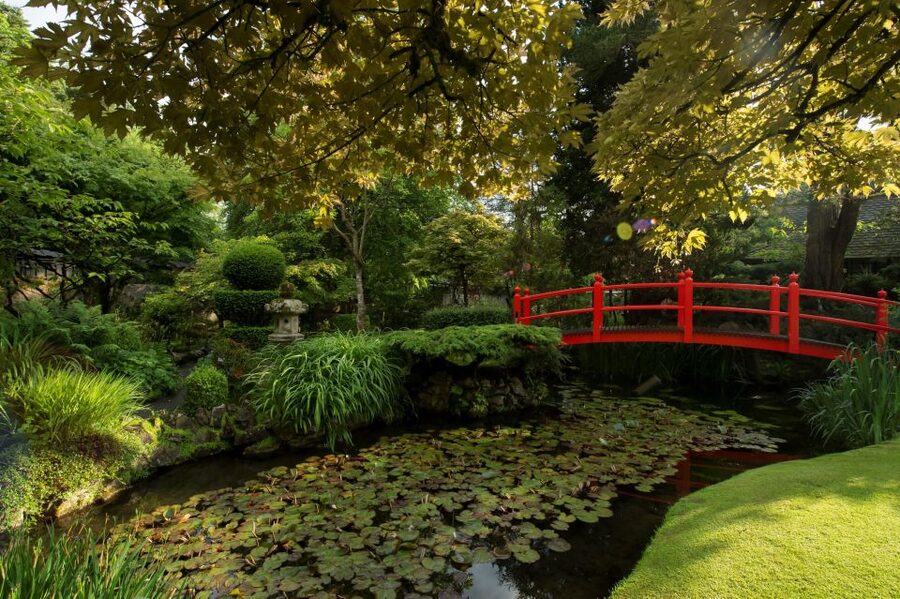
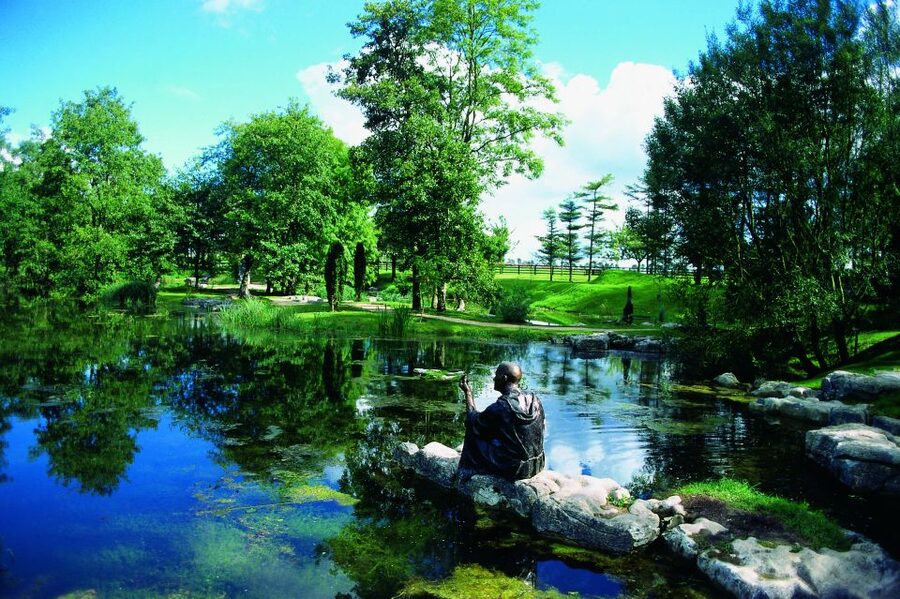
The Japanese Gardens provide a peaceful change from the energy of the horses. Their main idea is the Life of Man, a route that traces the passage of a soul from birth through death and beyond.
You can take this section slowly. The garden is designed for reflection rather than rushing from one sight to another. Its contrast with the stud farm is part of the appeal: one area focuses on breeding and competition, while the other asks you to pause and think about the stages of life.
St Fiachra’s Garden has a different character. It is an Irish garden built around the power of the Irish setting, with native plant species and opportunities to spot Irish wildlife. It feels more closely tied to County Kildare than the Japanese Gardens do.
I would not treat the gardens as an afterthought. They give the visit balance and make the $22 ticket more worthwhile. If you only attend the horse tour and leave, you will miss a large part of what makes this place distinctive.
The gardens are also useful if your group has mixed interests. One person can focus on horses, another can enjoy plants and design, and children can have room to walk between activities. The site is kept clean and well maintained, which helps the garden sections feel cared for rather than tacked onto the farm.
A completely different kind of day out from Ireland:
- Dublin to Cliffs of Moher, Burren, Wild Atlantic Way, Galway Tour
★ 5.0 · 12,924 reviews - Dublin to Belfast Black Cab, Dunluce Castle and Giant’s Causeway
★ 5.0 · 7,954 reviews - Kilkenny, Wicklow Mountains & Glendalough Day Tour from Dublin
★ 5.0 · 7,897 reviews - From Dublin: Wicklow Mountains, Glendalough & Kilkenny Tour
★ 4.8 · 6,235 reviews
The Irish Racehorse Experience, From Foal to Finish Line
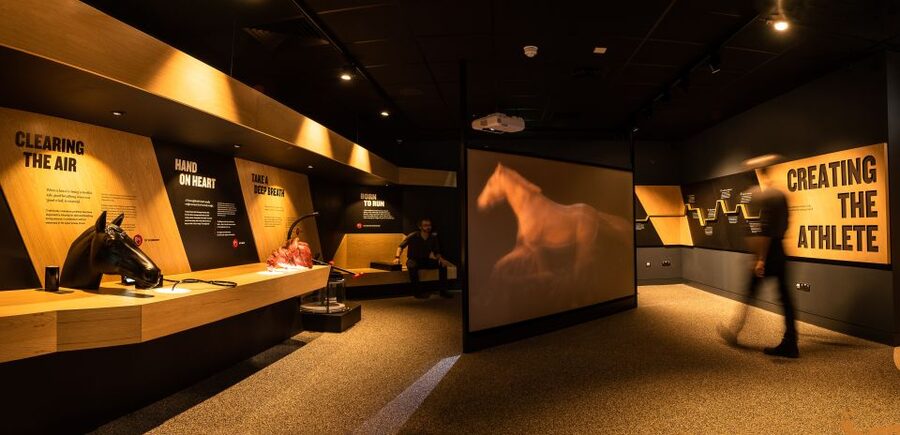
The award-winning Irish Racehorse Experience is an interactive indoor attraction. It follows a racehorse from birth to retirement and gives you a more active role than a standard exhibition.
At the beginning, you receive a horse box. This lets you take on the role of a racehorse owner as you move through the different stages. You learn about foaling, the early years, and the development of the thoroughbred.
The mock auction is one of the most playful parts. You can buy an unbroken yearling and then follow its progress through training and preparation. This gives you a simple way to understand the risks and choices involved in buying a young horse. A promising yearling is not a guaranteed winner, and the experience makes that uncertainty part of the fun.
The display continues through rooms covering training, racecourses, jockeys, and the anatomy and physiology of racehorses. It also includes racing fashion, betting, and animated commentary. Finally, you watch your chosen horse compete and can ride it through a simulated race to see how your investment turns out.
This section works well for families and first-time visitors because it turns complicated racing subjects into a game. You do not need to know bloodlines, odds, or racecourse terms before you arrive.
There is one important age restriction. Children under seven cannot use the Irish Racehorse Experience unless they are accompanied by an adult. The attraction is open from 11 a.m. to 4 p.m., so allow about 40 minutes if you want to enjoy it without rushing. If you have a public tour booked, do not leave this part until the last minute.
A Practical One-Day Plan
The property is described as a one-day experience, but you can shape the visit around your interests. I would start by checking the public tour schedule and then work the rest of the day around it.
A useful plan looks like this:
- Arrive in time for the Irish Racehorse Experience, especially if you want to spend around 40 minutes there.
- Join the public tour through the stallions, mares, and foals.
- Visit the Living Legends area and read about the retired horses.
- Walk through the Japanese Gardens.
- Finish with St Fiachra’s Garden, or reverse the garden order depending on the weather.
If you choose the 4 p.m. public tour, be careful. The last entry to the site is 5 p.m., and the Irish Racehorse Experience closes at 4 p.m. An earlier tour gives you more freedom and reduces the chance of missing an important section.
During summer, the extra 1 p.m. and 3 p.m. tours make planning easier. From October, the reduced 11 a.m. and 2 p.m. schedule means you should check times before setting out.
A helpful detail is that the staff may contact you if an earlier tour becomes available. That can work in your favor, particularly if you originally selected a late time but would prefer to see the grounds at a quieter pace. Do not depend on a change, though. Treat the published time as your plan.
How the Price Compares With the Experience
At $22 per person, the ticket offers several separate elements for one admission. You receive access to the stud, gardens, and interactive racehorse display, plus the public tour.
The value is strongest for people who enjoy variety. You can combine live animals, guided interpretation, garden design, and a hands-on indoor attraction in one visit. That is more satisfying than paying the same amount for a short viewing platform or a single guided walk.
The price may feel less worthwhile if you are only interested in horse racing and have no time for the gardens. The stud is spread across a large property, and the full experience depends on allowing enough time to move between the parts.
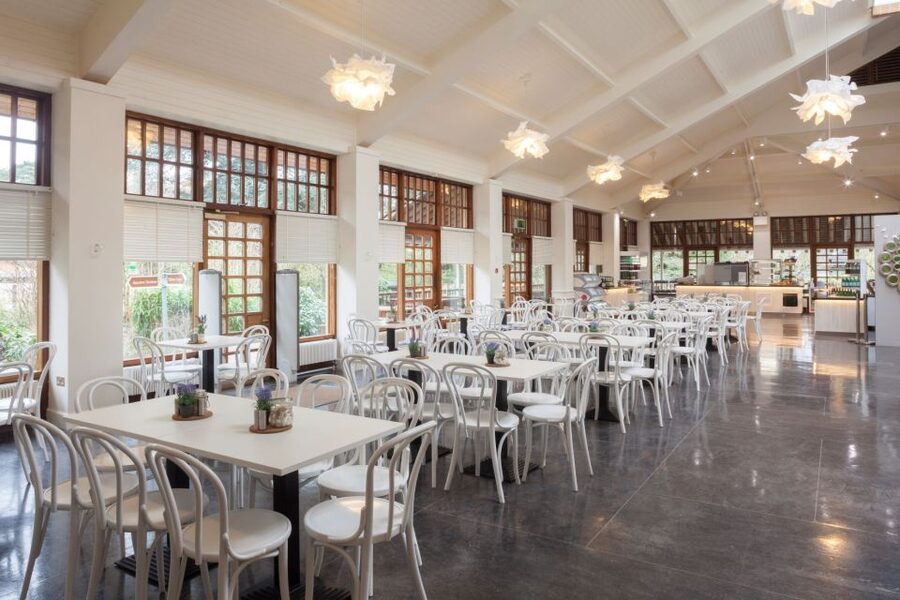
A restaurant is available at the gardens, and it can make the visit easier to treat as a full day out. The quality of the meal can vary by personal taste, but one detailed account described lunch as first class. Since the supplied information does not give menu prices or hours, check those separately if lunch is important to your plans.
Who Will Enjoy This Most?
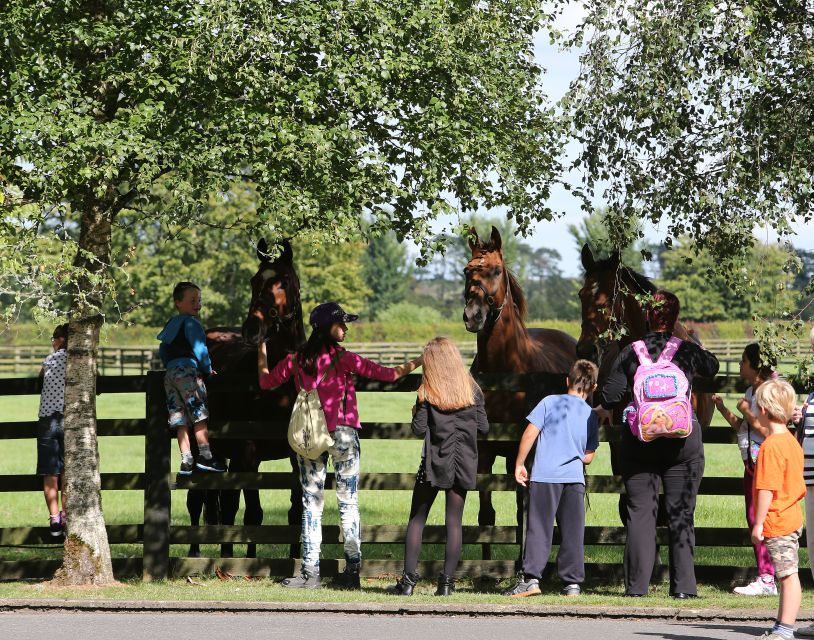
I would recommend the Irish National Stud & Gardens to horse lovers first. You get access to stallions, mares, foals, retired champions, and explanations of how the breeding operation works.
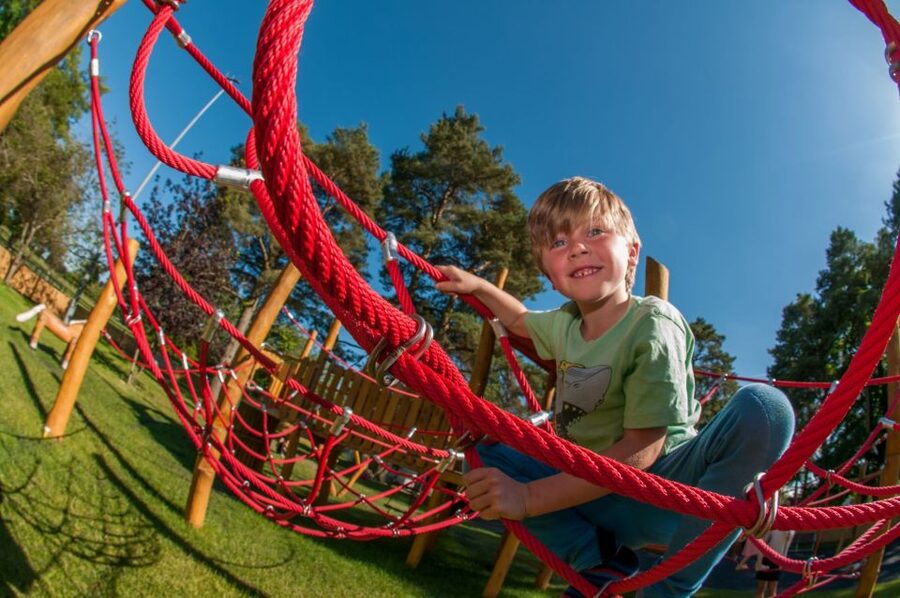
Families can also get a lot from the visit, especially through the simulated auction and race. Children who are fascinated by animals may prefer the foals and retired horses, while older children may enjoy making decisions in the racehorse display.
Garden lovers have a strong reason to come, even without a serious interest in racing. The Japanese Gardens and St Fiachra’s Garden are not filler attractions. They provide two distinct styles and enough variety to make the day feel broader than a farm tour.
You may want to reconsider if you dislike outdoor walking, have only a short window, or plan to arrive near closing time. The public tour, garden walks, and interactive display all need room in your schedule.
Access, Booking, and Seasonal Timing
The attraction is wheelchair accessible. The visit includes outdoor areas, however, so you should check current conditions if mobility needs are a major concern.
Free cancellation is available up to 24 hours before the visit for a full refund. You can also reserve now and pay later, which is useful if your Dublin plans are still shifting.
The best horse viewing is expected from February through September. From October, there is limited stock on the grounds and the tour schedule becomes shorter. That does not make an autumn or winter visit pointless, but it changes the balance toward gardens and indoor interpretation.
Should You Book the Irish National Stud & Gardens?
I would book this experience if you want a full, varied day near Dublin and have at least a passing interest in horses, gardens, or Irish racing. The strongest combination is an early or midday public tour, the racehorse simulation, and enough time for both gardens.
The main reason to skip it is lack of time. A late arrival can leave you choosing between the interactive display and the guided tour, while an October visit may offer fewer horses to see.
For the $22 price, the attraction gives you more than a look at a famous farm. You get a working stud, celebrated retired horses, carefully designed gardens, and a clear explanation of how a racehorse’s life unfolds. Check the seasonal times, arrive well before the last entry, and let the day unfold at a steady pace.
FAQ
Where is the Irish National Stud & Gardens located?
It is in County Kildare, Ireland, about 40 minutes outside Dublin.
How much does admission cost?
The ticket costs $22 per person.
What does the ticket include?
Admission includes the stud, the gardens, the Irish Racehorse Experience, and a free public tour.
How long does the visit last?
The ticket is valid for a one-day visit. The public tour lasts just over an hour, and you should allow about 40 minutes for the Irish Racehorse Experience.
What time are the public tours?
Regular public tour times are 10:30 a.m., noon, 2 p.m., and 4 p.m. During summer, additional tours run at 1 p.m. and 3 p.m. From October, tours run at 11 a.m. and 2 p.m.
When is the Irish Racehorse Experience open?
It is open from 11 a.m. to 4 p.m.
Can children under seven use the Irish Racehorse Experience?
Children under seven may use it only when accompanied by an adult.
What are the main gardens at the stud?
The site has the Japanese Gardens and St Fiachra’s Garden. The Japanese Gardens follow the Life of Man path, while St Fiachra’s Garden features native Irish species and wildlife.
What retired racehorses can I see?
The Living Legends team includes Hurricane Fly, Beef, Salmon, and Faugheen, along with other retired racing names.
Is the attraction wheelchair accessible?
Yes, the Irish National Stud & Gardens is wheelchair accessible.
Just added around Ireland
- A Self Guided Walking Tour of Dublin’s Docklands★ 4.5 · 3 reviews
- Galway’s Historical Gems: A Walk Through Time★ 5.0 · 3 reviews
- Cork Chat and History Walking Tour★ 5.0 · 3 reviews
- From Dublin: 3-Day Dingle, Killarney & the Wild Atlantic Way★ 5.0 · 3 reviews
- Fastnet Rock Lighthouse direct boat tour-Baltimore.Guided.★ 3.7 · 3 reviews
- Cork Private Walking Tour★ 5.0 · 3 reviews
- Cork Private Transfer from Cork Airport to City centre★ 5.0 · 3 reviews
- Waterford Crystal and Kilkenny Full-Day Rail Tour from Dublin★ 5.0 · 3 reviews