

Reviewed · WALKING TOURS
1916 Rebellion Walking Tour
History gets under your skin here. The 1916 Rebellion Walking Tour turns central Dublin into a walk-through lesson on the Easter Rising, connecting the Great Hunger of the 1840s to the revolutionary period and the later War of Independence. You visit the City Hall, Dublin Castle, Four Courts, the General Post Office, and other sites where the struggle unfolded.
I like the clear historical setup at the International Bar, where the guide explains the political build-up before the walking begins. I also like the human touch: guides such as Lorcan Collins, Phelim, Liz, Donal, and others use stories, humor, poetry, and sometimes rebel songs to make the subject easier to follow. The main drawback is timing. The tour is advertised at about two hours, but the route can run closer to three hours, especially with a group of up to 30 people.
In This Review
- Key points to know before you go
- Start with a pint and the road to 1916
- City Hall and Dublin Castle: power in the city center
- Four Courts and the road toward civil war
- O’Connell Monument and Jim Larkin’s working-class Dublin
- The GPO: the emotional center of the walk
- Moore Street and the final stand
- The Bank of Ireland and Trinity College connection
- How the guiding style shapes the experience
- Is $27.81 a fair price?
- What to bring and how to plan your time
- Who will get the most from this Dublin walk?
- Should you book the 1916 Rebellion Walking Tour?
- FAQ
- Where does the 1916 Rebellion Walking Tour begin?
- Where does the tour end?
- How long does the tour last?
- What language is the tour offered in?
- What is included in the ticket price?
- Are drinks included?
- Do I need prior knowledge of Irish history?
- Which sites can the tour visit?
- How large can the group be?
- Can children join the tour?
Key points to know before you go

- Begin at the International Bar: The tour starts at 23 Wicklow Street, where you can arrive early for a drink and introductory reading.
- See the GPO up close: The General Post Office receives the longest stop, with about 30 minutes devoted to its role as rebel headquarters.
- Expect a serious history lesson with personality: Guides may add songs, poetry, humor, and personal stories to the political account.
- The route can change: City Hall, Dublin Castle, Four Courts, O’Connell Monument, Jim Larkin’s statue, Moore Street, and the Bank of Ireland may all feature.
- Plan for more than two hours: The advertised duration is approximate, so avoid booking a tight appointment afterward.
- Good value for history lovers: At $27.81 per person, the tour costs less than many larger sightseeing activities while offering a focused look at Dublin’s revolutionary past.
Start with a pint and the road to 1916
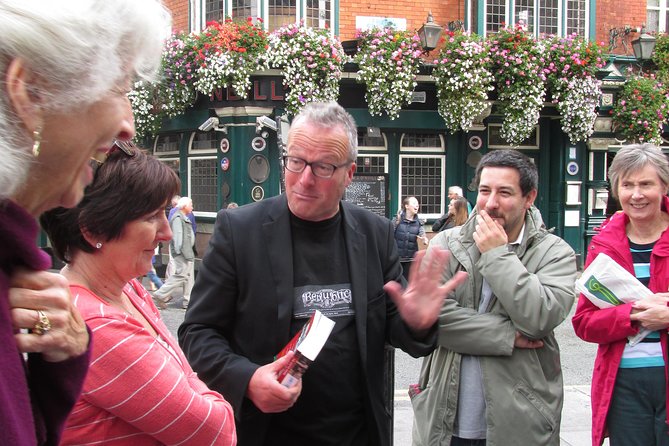
The meeting point is the famous International Bar at 23 Wicklow Street. This is not just a place to gather a group and immediately hurry outside. You can arrive early, buy a drink, and read the introductory material supplied by the guide.
That opening matters. The 1916 Rising did not appear out of nowhere, and the tour begins with the Great Hunger of the 1840s before moving toward the political and social tensions that led to rebellion. You get a short explanation of the forces shaping Ireland, then have time to ask questions before the walk begins.
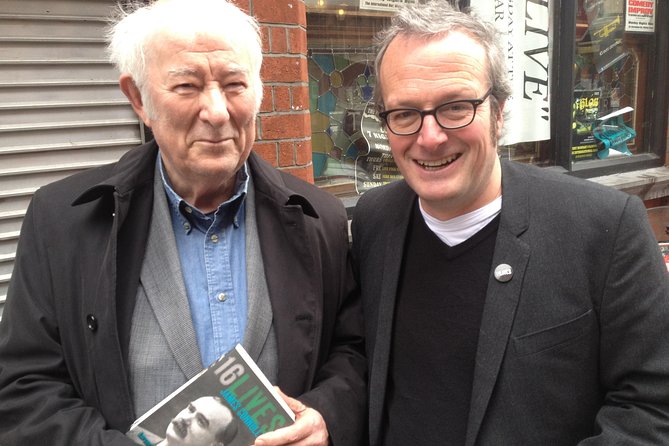
Lorcan Collins has run the 1916 Tour since 1996, and his long connection with the subject helps explain the tour’s strong reputation. The guiding team can vary. Liz, Phelim, Donal, Phil, Adam, Elaina, and Fallon have all been praised for clear delivery, humor, passion, and good care of the group.
The International Bar also sets the tone. You are starting in a working pub rather than a polished museum lobby, which suits a story about ordinary Dubliners, political organizing, labor, and armed revolt. Alcohol is available to purchase, but it is not included in the tour price.
More Walking Tours in Dublin
- Dublin Highlights and Hidden Gems Guided Walking Tour
★ 5.0 · 6,020 reviews - Dublin: Highlights and Hidden Gems Walking Tour
★ 4.9 · 2,140 reviews - 90 Minute Dublin Walking tour and Sightseeing tips
★ 5.0 · 916 reviews
City Hall and Dublin Castle: power in the city center
City Hall is an early stop and a useful place to see how the rebellion reached beyond one famous building. The Irish Citizen Army occupied City Hall during the 1916 Rising, and the guide explains that part of Easter Week here.
This stop gives the story a wider frame. The Rising was not only about the GPO and the reading of the Proclamation. Several buildings across Dublin became positions in a coordinated challenge to British rule. At City Hall, you begin to understand the city as a series of strategic locations rather than a collection of separate monuments.
From there, the walk usually continues to Dublin Castle. For centuries, Dublin Castle housed the British administration in Ireland, making it a natural symbol of authority. The guide discusses its part in the Rising and the War of Independence, and may connect the site with the public memory created by the film Michael Collins.
You will not get an exhaustive architectural tour of the castle. The value here is political context. The building helps explain what the revolutionaries were challenging and why control of Dublin’s civic center mattered so much.
Four Courts and the road toward civil war
The Four Courts brings the story into the more complicated period after 1916. Revolutionaries occupied it during the Rising, and it became important again during the events leading to the Irish Civil War in 1922.
The building is best viewed from a bridge over the River Liffey rather than approached directly. That viewpoint may be slightly less satisfying for anyone expecting to walk right up to the doors, but it gives the guide room to explain the building’s role and the divisions that emerged after the struggle with Britain.
This part of the walk is especially useful if you know the Easter Rising only as a single dramatic week. The tour links 1916 to the War of Independence and then to the civil conflict that followed. The political story becomes less tidy, but also more honest. You get help with the difficult differences between the revolutionary groups and the forces that later fought one another.
Allow time to listen closely here. The subject can become dense, especially if you have no prior knowledge of Irish political history. Guides generally explain it in accessible language, but you may want to ask questions rather than let unfamiliar names and factions pass too quickly.
O’Connell Monument and Jim Larkin’s working-class Dublin
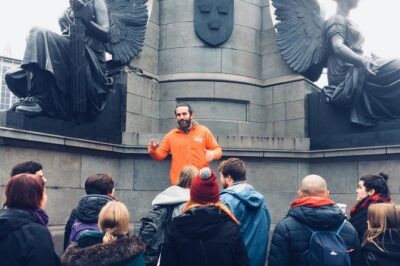
The walk includes several smaller stops that add physical evidence to the larger story. At the O’Connell Monument, you can see bullet holes from the Rising. The guide explains where British and Irish forces were positioned in 1916, helping you picture the fighting in relation to the street.
Those marks are easy to miss on your own. You might walk past the monument, notice its grand scale, and never realize that the stone still carries traces of Easter Week. This is one of the tour’s best features: the history is not left in a textbook. It is pointed out on statues, buildings, and corners you can see at close range.
The stop at the Jim Larkin statue adds the labor movement to the account. Larkin, a union leader from Liverpool, was an important comrade of James Connolly and a friend to Dublin’s working class. His role helps the tour move beyond military action and famous political leaders.
This is also where the tour can give you a better feel for social history. Elaina, one of the guides praised for her presentation, has placed particular attention on the role of women in Irish history. The exact emphasis depends on your guide, but the subject is part of the wider effort to show that the revolutionary period involved workers, women, organizers, writers, and civilians, not only armed men.
A completely different kind of day out from Dublin:
- Dublin to Cliffs of Moher, including Wild Atlantic Way and Galway
★ 5.0 · 23,331 reviews - From Dublin: Cliffs of Moher, Burren & Galway City Day Tour
★ 4.8 · 18,888 reviews - Dublin: Guinness Storehouse Entry Ticket
★ 4.6 · 16,863 reviews - Dublin to Cliffs of Moher, Burren, Wild Atlantic Way, Galway Tour
★ 5.0 · 12,924 reviews
The GPO: the emotional center of the walk
The General Post Office on O’Connell Street is the key stop. The building served as headquarters for the revolutionaries in Dublin, and Patrick Henry Pearse read the Proclamation here in 1916.
The tour spends about 30 minutes at the GPO, twice as long as at most other stops. That extra time is well used. You hear how the building functioned during Easter Week, why it became so important to the revolutionary cause, and how its place in Irish national memory grew after the Rising.
The GPO is still a working city landmark, so this is an outdoor explanation rather than a quiet museum visit. Street noise and passing crowds can be part of the experience. A strong guide makes the difference, speaking clearly and keeping the group focused.
Several guides have been praised for using songs and poetry at this point or elsewhere on the route. That approach will not suit everyone, but it can make the period feel less remote. Phil, for example, was praised for clear speech and singing, while Phelim has been noted for linking songs to the history. You may hear a short performance that connects a place with the emotions surrounding the rebellion.
The GPO is also a good test of your expectations. If you want a detailed indoor exhibition with objects and display cases, this walk is not a replacement for a museum visit. If you want to understand why the building matters while standing in front of it, the stop works very well.
Moore Street and the final stand
Depending on time and the route chosen that day, the walk may continue to Moore Street. This is where the GPO garrison made its last stand during Easter Week.
Because the route varies, Moore Street is not guaranteed on every tour. The same applies to some other possible stops. The guide may adjust the walk so it does not become a fixed script, but that means you should not treat the full list of sites as a promise that every location will be covered.
Moore Street adds a strong closing image to the GPO story. It shifts the focus from the famous proclamation and headquarters to the final stage of the fighting. If the group has already spent extra time on questions, this stop may be shorter or omitted.
The Bank of Ireland and Trinity College connection
The Bank of Ireland, often called the Old Parliament, may also appear depending on the route. Its place beside Trinity College allows the guide to connect the revolutionary story with older political institutions and Dublin’s historic center.
Again, the stop is not guaranteed. The changing route can be a benefit for repeat customers, since the walk does not become stale, but first-time visitors should understand that this is a flexible walking tour rather than a fixed sequence of every listed landmark.
The route’s variety also means the experience can feel different with different guides. Lorcan Collins has been associated with the tour for decades, while other guides bring their own strengths. Some focus on social history, some on clear political explanation, and some add more music and performance.
How the guiding style shapes the experience
The strongest feature is the quality of the storytelling. You are not simply given dates and names. Guides explain the connections among places, describe the positions held during the fighting, and answer questions as the walk develops.
The tone is usually serious without becoming gloomy. Humor appears at suitable moments, and songs or poetry may be used to bring the period to life. That balance helps you stay engaged during a subject that includes famine, rebellion, imprisonment, death, and civil conflict.
You should not expect every guide to perform in the same way. Some sessions may include several songs, while others may focus more on explanation and discussion. The consistently useful qualities are clear speech, enthusiasm, and a willingness to answer questions.
Group size can reach 30 people. That is not enormous for a city walking tour, but it is large enough to affect the experience. You may need to stand close to hear at busy streets, and moving between stops requires attention. One guide was specifically praised for looking after someone using a walker, suggesting a considerate approach, but the tour remains a city walk with changing surfaces and outdoor stops.
Most people can participate, and the meeting point is near public transportation. Children must be accompanied by an adult.
Is $27.81 a fair price?
At $27.81 per person, this is a good buy if you want a focused introduction to Ireland’s revolutionary period. The ticket covers a professional guide and access to several major sites from the outside. You are paying for interpretation, not entry to a paid attraction.
That distinction matters. The value comes from the connections among the places. You could walk past City Hall, Dublin Castle, the GPO, and the O’Connell Monument by yourself, but you would likely miss the bullet holes, military positions, and links among the Rising, the War of Independence, and the Civil War.
The price is also reasonable for a two-hour guided activity in central Dublin. If the tour runs closer to three hours, the value improves, although the longer timing can affect your plans. I would not schedule a meal reservation, museum entry, or train immediately afterward.
The tour is especially worthwhile early in your Dublin stay. It gives you a basic political map for later visits to other sites. If you already have extensive knowledge of 1916, you may find the introductory material familiar, but the street-level setting and guide’s personal style can still add something.
What to bring and how to plan your time
Wear shoes suitable for walking and plan for outdoor conditions. The experience requires good weather, and poor weather can lead to a different date or a full refund.
Arrive early if you want to enjoy the International Bar or read the introductory material before the talk. The group begins with an orientation, so arriving rushed may mean missing useful background.
Keep your schedule open after the stated two hours. One person reported a three-hour experience, and a flexible route, questions, singing, and a large group can all extend the timing. The tour ends back at the meeting point.
A mobile ticket makes entry simple, and the tour is offered in English. You do not need prior knowledge. In fact, the opening explanation is designed to give newcomers enough background to follow the walk.
Who will get the most from this Dublin walk?
I would choose this tour for anyone interested in Irish political history, the Easter Rising, labor history, or the way national memory is built around city streets. It is also a smart choice if you prefer stories tied to real places rather than a lecture in a classroom.
First-time visitors can follow it, even without knowing the names of Pearse, Connolly, Larkin, or the wider political groups. The guide fills in the necessary background and invites questions.
History buffs will appreciate the extra connections, especially the movement from the 1840s famine to 1916, then to the War of Independence and the Civil War. Repeat customers may enjoy the changing route and different guides.
I would think twice if you want a short, tightly timed sightseeing activity or dislike group walks. The possible three-hour duration and group size require patience. You should also know that the tour focuses on outdoor landmarks and spoken storytelling, not formal entry into every building.
Should you book the 1916 Rebellion Walking Tour?
Yes, if you want Dublin’s revolutionary past explained by a passionate guide who can connect monuments, streets, politics, and people. The GPO, bullet holes at the O’Connell Monument, City Hall, Dublin Castle, and the Four Courts give the walk real visual weight.
Book it early in your Dublin visit, arrive with time for the pub introduction, and leave your afternoon open. At $27.81, it offers strong value for a serious but lively lesson in Ireland’s modern political story.
Skip it only if you need a guaranteed two-hour finish, dislike outdoor walking, or want a museum-based presentation. For most curious visitors, this is one of the better ways to understand why 1916 still matters in Dublin.
FAQ
Where does the 1916 Rebellion Walking Tour begin?
It begins at the International Bar, 23 Wicklow Street, Dublin, D02 VH59, Ireland.
Where does the tour end?
The activity ends back at the meeting point.
How long does the tour last?
The stated duration is approximately two hours, but you should allow extra time because the walk can sometimes take closer to three hours.
What language is the tour offered in?
The tour is offered in English.
What is included in the ticket price?
A professional guide is included.
Are drinks included?
No. Alcoholic drinks are available to purchase, but they are not included in the tour price.
Do I need prior knowledge of Irish history?
No. The tour begins with background on the Great Hunger of the 1840s and the events leading toward the 1916 Rising.
Which sites can the tour visit?
Possible stops include City Hall, Dublin Castle, the Four Courts, the O’Connell Monument, the Jim Larkin statue, the General Post Office, Moore Street, and the Bank of Ireland. The route varies by day.
How large can the group be?
The tour can have a maximum of 30 people.
Can children join the tour?
Yes. Children must be accompanied by an adult.
Just added around Dublin
- A Self Guided Walking Tour of Dublin’s Docklands★ 4.5 · 3 reviews
- Waterford Crystal and Kilkenny Full-Day Rail Tour from Dublin★ 5.0 · 3 reviews
- Secret and unusual Dublin: guided walking tour★ 5.0 · 3 reviews
- Turtle Bunbury’s Dublin: A Self-Guided Audio Tour from a Celebrated Author★ 5.0 · 3 reviews
- Cliffs of Moher and The Burren Private Tour from Dublin★ 5.0 · 3 reviews
- Skip-the-line St. Patrick’s Cathedral and Dublin City Tour★ 5.0 · 3 reviews
- Dublin Full-Day Tour through Boyne Valley★ 5.0 · 3 reviews
- Rock Of Cashel And Blarney Castle Private Chauffeur Full Day Sightseeing Tour★ 4.5 · 3 reviews
Walking Tours, compared.
Dublin Highlights and Hidden Gems Guided Walking Tour
Read our review →
90 Minute Dublin Walking tour and Sightseeing tips
Read our review →

Historical 2-Hour Guided Walking Tour of Dublin
Read our review →
Dublin Traditional Irish 3 Course Meal Walking Tour with Local
Read our review →
Browse the lists this tour appears in