
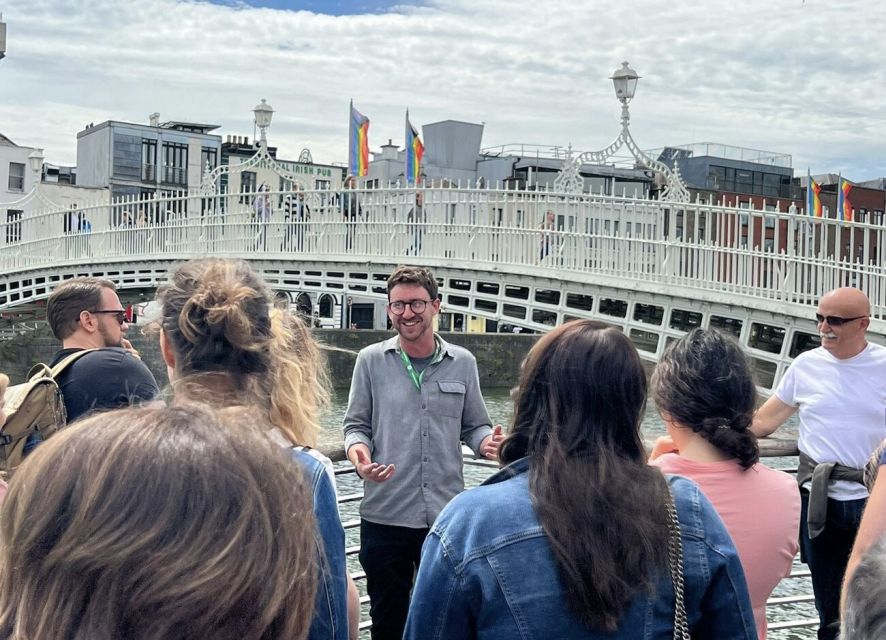
Reviewed · WALKING TOURS
Dublin: Mythology, Folklore and Legends Walking Tour
Stories give Dublin a second map. This two-hour walk looks past the usual sights and uses Irish mythology and folklore to explain how people, places, and national identity connect. I like the unusual route, which moves from Temple Bar through the Georgian Quarter to O’Connell Street, and I like the strong storytelling from guides such as Helena, Emily, Dave, and Lee. The main consideration is that the tour is conducted in English, so you will get the most from it if you enjoy listening to detailed stories while walking and standing outdoors.
I also like the tour’s manageable pace. Several stops provide time to rest, and the walk is not described as an exhausting march across the city. You hear about banshees, púca, leprechauns, fairies, ancient warriors, grave robbing, rebellions, and the Gaelic revival, all within two hours. The focus is less on checking off monuments and more on understanding how storytelling still shapes Dublin.
In This Review
- Key points to know before you book
- Starting under the green umbrella in Temple Bar
- Fairies, banshees, púca, and leprechauns
- Leaving the usual route for Dublin’s lesser-known corners
- The Georgian Quarter’s darker stories
- The Abbey Theatre and the power of a national story
- Finishing on O’Connell Street with Gaelic culture
- How much value do you get for $27?
- Who will enjoy this walk most?
- Practical details that make the day easier
- Should you book the Dublin folklore walk?
- FAQ
- How long does the Dublin Mythology, Folklore and Legends Walking Tour last?
- How much does the tour cost?
- Where does the tour start?
- Where does the tour end?
- What language is the tour conducted in?
- Is hotel pickup included?
- Is the walking tour wheelchair accessible?
- What folklore creatures are covered?
- Which Dublin areas are included?
- Can I cancel for a full refund?
Key points to know before you book
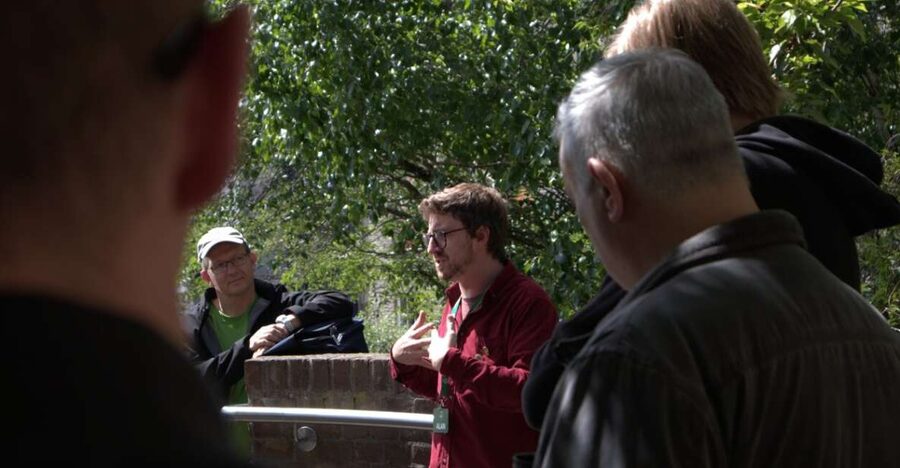
- Temple Bar is only the starting point: The tour uses this familiar district to explain Celtic beliefs and Ireland’s mythical beginnings, then moves beyond the standard tourist path.
- The folklore is tied to real places: You connect fairies, warriors, rebellions, grave robbing, theatre history, and Gaelic culture to Dublin streets and landmarks.
- Guides make the experience: Helena is praised for warmth, humor, and passion, while Emily, Dave, and Lee are also noted for engaging storytelling and useful Dublin tips.
- The pace suits many energy levels: The walk includes several longer stops, making it easier to listen without constant movement.
- It finishes on O’Connell Street: The closing section links old stories with the revival of the Irish language and culture, plus present-day Dublin street life.
- The $27 price is fair for a focused walk: For two hours with a live, accredited guide, the cost is reasonable, especially if you want something more distinctive than a standard city orientation.
Starting under the green umbrella in Temple Bar
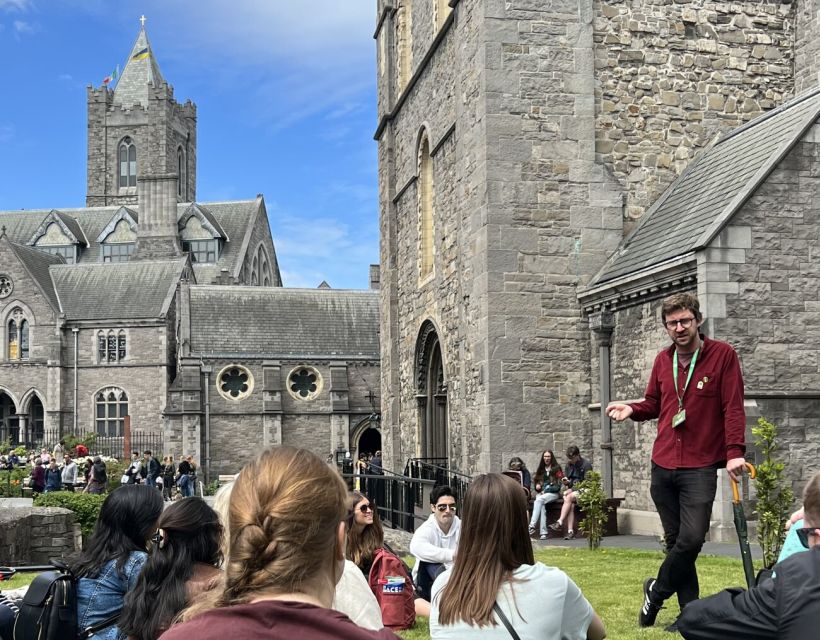
Meet outside The Old Storehouse pub in Temple Bar. Look for the green umbrella, which matters in a busy area where several pubs, tour groups, and lanes can look much alike.
Temple Bar is a familiar place for most people visiting Dublin, but this tour does not treat it simply as a nightlife district. The opening section sets up Ireland’s mythical origins and introduces Celtic traditions and beliefs. That gives the rest of the walk a useful frame: you are not just hearing disconnected ghost stories, but learning how old tales helped people explain the world, preserve identity, and pass ideas from one generation to the next.
This is a good start for a first day in Dublin. You get a sense of the city center while also learning to notice details beyond the postcard version. If you have already seen Temple Bar on a standard sightseeing walk, the folklore angle gives the area a new purpose.
The tour is led by a fully accredited local folklore guide. That credential is useful, but the guide’s delivery matters just as much here. Helena is repeatedly praised for her humor, warmth, enthusiasm, and ability to make complex material easy to follow. Emily is described as an excellent storyteller who connects old beliefs with modern Irish life. Dave brings jokes and practical Dublin suggestions, while Lee has been praised for keeping a small group entertained and making time for friendly conversation.
Guide assignments can change, so you should not book expecting a particular person. Still, the repeated praise for several guides suggests that the experience depends on a strong team rather than one lucky casting choice.
More Walking Tours in Dublin
- Dublin Highlights and Hidden Gems Guided Walking Tour
★ 5.0 · 6,020 reviews - Dublin: Highlights and Hidden Gems Walking Tour
★ 4.9 · 2,140 reviews - 1916 Rebellion Walking Tour
★ 5.0 · 1,605 reviews
Fairies, banshees, púca, and leprechauns
The central part of the tour introduces the creatures that make Irish folklore so memorable. You hear about fairies, banshees, púca, and leprechauns, along with Ireland’s ancient warriors and the mythological lineage of the country.
The value here is the explanation behind the names. Popular culture often reduces Irish folklore to green clothing, lucky charms, and cartoon leprechauns. This walk offers a more serious and entertaining look at the beliefs behind those figures. The banshee, púca, and fairy traditions become part of a larger story about Gaelic culture and the way oral storytelling carried memory.
I would choose this tour if you want more than dates and architecture. It gives you a way to think about Irish identity through stories. It also helps explain why folklore remains useful even when people do not treat every legend as literal fact. The tales can carry warnings, family memory, humor, grief, and a sense of place.
The guide’s performance is especially important during this section. A flat lecture would make these subjects feel like schoolwork. The strongest feedback praises guides for using humor, energy, and dramatic storytelling. Helena is described as making the time pass quickly, while Emily is praised for making complicated tales accessible. Dave’s jokes are also a recurring part of the experience.
You will probably enjoy this section most if you like myths told aloud. The tour is not designed as a quiet museum visit or an academic seminar. It is a live story session on city streets, with the guide turning Dublin into the setting.
Leaving the usual route for Dublin’s lesser-known corners
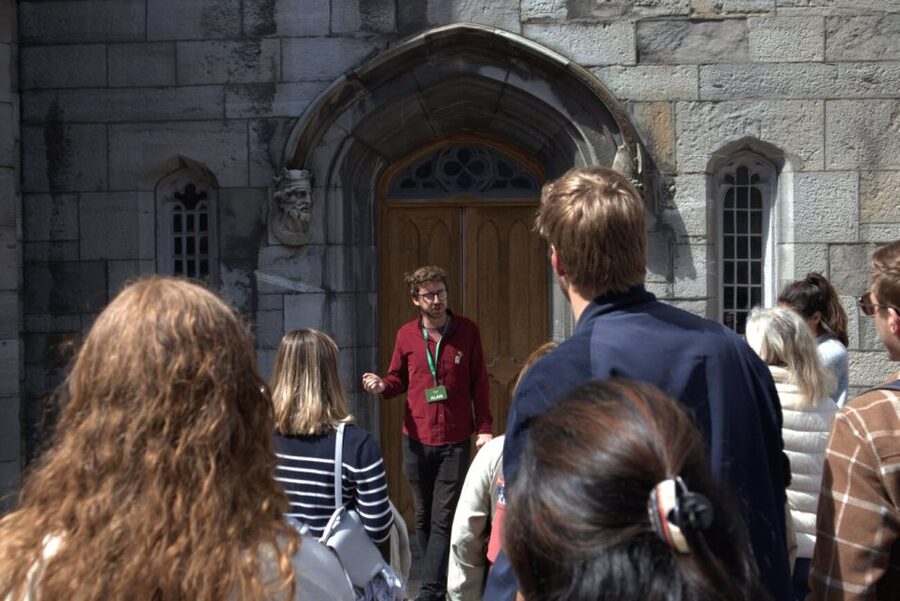
One of the tour’s best features is the change of pace from familiar attractions to parts of Dublin that do not usually appear on a first-time visitor’s route. The walk is still centered in the city, but it uses less expected locations to show how folklore and history overlap.
This matters because Dublin can become repetitive if every tour focuses on the same major buildings. Here, the guide uses places you might otherwise pass without much thought. The location gives the story weight, while the story gives the location a reason to remember it.
The route is not presented as a long-distance hike. The tour lasts about two hours, and several longer stops allow the group to listen without walking continuously. One guide was praised for choosing stopping points that suited different energy levels. Another guide kept children interested throughout the walk. That makes this a sensible choice after a day of sightseeing, when your feet may already be asking for a pub stool.
Still, it is a walking tour, not a seated activity. You should expect to move between locations and spend time outside. The exact starting time depends on availability, so check the schedule before fitting it around dinner, a museum visit, or another booked activity.
The Georgian Quarter’s darker stories
The Georgian Quarter brings a more macabre turn. Here the focus shifts to rebellions, grave robbing, and revolutions. This section gives the tour a darker edge and shows that Irish storytelling is not limited to fairies and playful creatures.
The appeal is the connection between unsettling stories and serious social history. Grave robbing, rebellion, and revolution are not just spooky subjects. They reveal fear, poverty, political conflict, and changing ideas about power. The folklore lens helps you see how historical events can gather stories around them, then remain alive in public memory.
This is also where the tour complements a classic Dublin sightseeing walk particularly well. A conventional city tour may explain what a building is and when it was built. This experience asks what happened around it, what people feared, and how the city remembered difficult times.
The material may be too dark for very young children, depending on your family’s comfort level. However, the overall presentation is not described as grim or heavy. Humor is a major part of the guides’ style, and one guide kept children engaged through the full experience. The tone appears to balance disturbing subjects with lively delivery.
A completely different kind of day out from Dublin:
- Dublin to Cliffs of Moher, including Wild Atlantic Way and Galway
★ 5.0 · 23,331 reviews - From Dublin: Cliffs of Moher, Burren & Galway City Day Tour
★ 4.8 · 18,888 reviews - Dublin: Guinness Storehouse Entry Ticket
★ 4.6 · 16,863 reviews - Dublin to Cliffs of Moher, Burren, Wild Atlantic Way, Galway Tour
★ 5.0 · 12,924 reviews
The Abbey Theatre and the power of a national story
The Abbey Theatre section adds another layer. You learn about its tragic history, then see how theatre and storytelling fit into the wider development of Irish culture.
This is a particularly useful stop because it links folklore with public performance. Irish stories were not kept only in private homes or rural traditions. They also became part of cultural movements, national debates, and modern artistic life. The Abbey Theatre gives the guide a place to explain how stories can shape how a country sees itself.
The tour’s strength is this movement between myth and documented history. You may hear about a supernatural creature in one part of the walk, then consider rebellion, theatre, language, or political memory in another. The subjects are different, but the common thread is storytelling as a way to preserve identity and make sense of change.
If you already know a lot about Irish political history, this section can still add something new. One person with a strong background in Irish history found the folklore material less familiar and especially worthwhile. That is a useful sign for repeat visitors and people from Ireland who want a different angle on familiar national stories.
Finishing on O’Connell Street with Gaelic culture
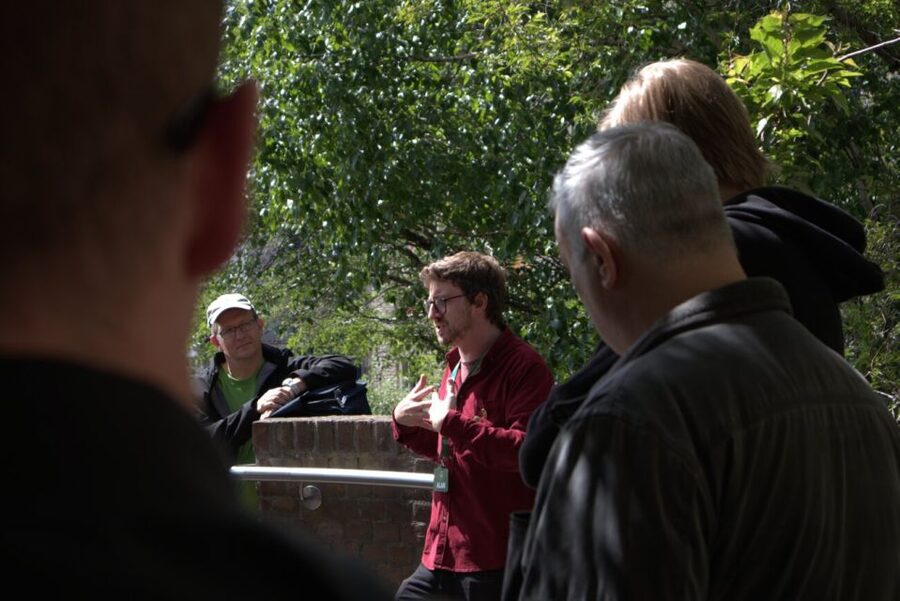
The tour ends back at the meeting point after reaching O’Connell Street. The final section introduces the revival of the Gaelic language and culture in Ireland, then turns toward contemporary Dublin street characters.
That ending keeps the tour from becoming a museum piece. You begin with ancient beliefs and mythical origins, move through historic conflict and theatre, and finish by considering how cultural identity continues in modern Ireland. The point is not that Dublin is frozen in the past. It is that old stories can continue to influence language, community, humor, and public life.
The contemporary street characters add a lighter, more immediate note. You finish by looking at the people and personalities who make present-day Dublin memorable, rather than ending with a final date or monument.
This is also a practical place to finish a city walk. O’Connell Street is a central Dublin location, and guides have offered useful suggestions for what to do afterward, including places that are easier on the budget. The tour itself returns to the original meeting point, so you will not need to arrange transport back to where you started.
How much value do you get for $27?
At $27 per person, this is priced like a midrange city walking tour. The value depends on what you want from Dublin.
If you want a basic introduction to major monuments, another tour may serve you better. This experience does not promise extensive interior visits, transport, food, or hotel pickup. It includes the guide and walking tour only, so the main product is the storytelling.
For the right audience, that is enough. You get two hours with a live, fully accredited local folklore guide, an unusual route, and a subject that is difficult to experience through a guidebook alone. A good storyteller can make ordinary streets memorable, and the repeated praise for Helena, Emily, Dave, and Lee suggests that the human element is a major part of the price.
I consider the fee reasonable if you enjoy history, myths, language, theatre, or local culture. It is also a useful early-trip purchase because the stories can change how you understand Dublin during the rest of your stay. One guide offered recommendations for additional places to visit, including affordable options, which adds a little practical value beyond the scheduled walk.
The tour has a 4.9 rating from 703 reviews, a strong signal of consistent satisfaction. Ratings never replace your own interests, but here they match the specific strengths of the experience: lively guides, memorable stories, a sensible length, and a route that feels different from a standard city circuit.
Who will enjoy this walk most?
I would recommend it to first-time visitors who want a quick cultural orientation with personality. You see familiar areas, but the focus gives them a fresh meaning.
It also suits:
- Mythology and folklore fans, especially people curious about banshees, púca, fairies, leprechauns, and ancient warriors.
- Repeat visitors to Dublin, who may already know the main historical facts and want less familiar stories.
- Families with older children, since a guide kept children interested and the walking distance is considered manageable.
- People who enjoy live performance, because the quality of the storytelling shapes the whole experience.
- Visitors with tired legs, thanks to the several longer stops and moderate two-hour length.
- Anyone interested in Gaelic culture, especially the link between mythology, language, national identity, and modern Irish life.
You may want to skip it if you prefer silent sightseeing, detailed architectural analysis, or a tour packed with indoor admissions. You should also bear in mind that the experience is in English, with an English-speaking guide.
The activity is wheelchair accessible, which makes it more practical for many visitors. Even so, street conditions and the exact stopping places can vary, so you may wish to confirm any specific mobility needs when booking.
Practical details that make the day easier
The meeting point is outside The Old Storehouse pub in Temple Bar. Look for the green umbrella, and arrive with enough time to identify the group in this busy district.
The walk lasts two hours, but the schedule varies. Check available starting times before booking. Hotel pickup and drop-off are not included, so plan your route to Temple Bar and your onward journey from the meeting point.
Bring shoes suitable for city walking and clothing that works for Dublin’s changeable weather. The tour takes place outdoors, and rain is possible. One guide managed to keep the group entertained despite wet conditions, but a waterproof layer will make the experience more comfortable.
You can cancel up to 24 hours before the tour for a full refund. The reserve-now-and-pay-later option also gives you some flexibility while planning a Dublin itinerary.
Should you book the Dublin folklore walk?
Book this tour if you want Dublin explained through stories rather than statistics. The strongest reasons are the unusual subject, the walkable two-hour format, and guides who bring humor and warmth to material that could otherwise feel remote.
I would especially choose it near the beginning of a Dublin visit. The route introduces Temple Bar, the Georgian Quarter, the Abbey Theatre, and O’Connell Street, while the folklore gives you ideas to notice elsewhere in the city. At $27, it offers good value for a focused cultural experience, provided you are happy to walk outdoors and listen in English.
Skip it if your priority is entering famous attractions or covering a large number of landmarks. For everyone else, this is a lively way to meet the Ireland behind the souvenirs: a country shaped not only by events, but by the stories people keep telling.
FAQ
How long does the Dublin Mythology, Folklore and Legends Walking Tour last?
The tour lasts two hours. Starting times vary, so check availability when booking.
How much does the tour cost?
The listed price is $27 per person.
Where does the tour start?
Meet outside The Old Storehouse pub in Temple Bar. Look for the green umbrella.
Where does the tour end?
The activity ends back at the meeting point.
What language is the tour conducted in?
The live tour guide speaks English, and the available tour language is English.
Is hotel pickup included?
No. Hotel pickup and drop-off are not included.
Is the walking tour wheelchair accessible?
Yes, the activity is listed as wheelchair accessible.
What folklore creatures are covered?
The tour covers fairies, the banshee, the púca, and the leprechaun. It also discusses Ireland’s ancient warriors and Celtic traditions.
Which Dublin areas are included?
The route begins in Temple Bar, continues through parts of the Georgian Quarter, includes the Abbey Theatre’s tragic history, and finishes with material about O’Connell Street, Gaelic culture, and contemporary Dublin street characters.
Can I cancel for a full refund?
Yes. You can cancel up to 24 hours in advance for a full refund.
Just added around Dublin
- A Self Guided Walking Tour of Dublin’s Docklands★ 4.5 · 3 reviews
- Waterford Crystal and Kilkenny Full-Day Rail Tour from Dublin★ 5.0 · 3 reviews
- Secret and unusual Dublin: guided walking tour★ 5.0 · 3 reviews
- Turtle Bunbury’s Dublin: A Self-Guided Audio Tour from a Celebrated Author★ 5.0 · 3 reviews
- Cliffs of Moher and The Burren Private Tour from Dublin★ 5.0 · 3 reviews
- Skip-the-line St. Patrick’s Cathedral and Dublin City Tour★ 5.0 · 3 reviews
- Dublin Full-Day Tour through Boyne Valley★ 5.0 · 3 reviews
- Rock Of Cashel And Blarney Castle Private Chauffeur Full Day Sightseeing Tour★ 4.5 · 3 reviews
Walking Tours, compared.
Dublin Highlights and Hidden Gems Guided Walking Tour
Read our review →

90 Minute Dublin Walking tour and Sightseeing tips
Read our review →

Historical 2-Hour Guided Walking Tour of Dublin
Read our review →
Dublin Traditional Irish 3 Course Meal Walking Tour with Local
Read our review →
Browse the lists this tour appears in