
Reviewed · WALKING TOURS
90 Minute Dublin Walking tour and Sightseeing tips
Dublin reveals itself on foot. This short city walk packs Viking beginnings, rebellion, Georgian streets, Trinity College, Temple Bar, Dublin Castle, and Christ Church Cathedral into a brisk introduction. I like the route’s strong first-day value and the way guides such as Alex turn dates and buildings into memorable stories. The main consideration is pace: with many major sights in roughly 90 minutes, you get an orientation rather than time to enter attractions.
I also like the practical local advice, especially around Temple Bar, Irish music, Guinness, restaurants, and what to explore after the walk. Guides can adjust the conversation to your interests, and Sam and Alex have both received praise for their warmth and storytelling. Still, traffic noise can make listening difficult, and one person found the talk too focused on architecture and dates, so this suits you best if you enjoy a history-led walk.
In This Review
- Key points to know before you book
- Why this Dublin walk works best early in your visit
- Aston Quay starts beside the River Liffey
- O’Connell Street and the General Post Office
- Trinity College links monks, students, and city life
- Temple Bar beyond the famous pub sign
- City Hall and the buried Viking settlement
- Dublin Castle explains centuries of authority
- Christ Church Cathedral provides a strong finish
- Guides, group size, and the listening experience
- Who gets the best value from $21.77
- Timing, weather, and cancellation details
- Should you book this Dublin walking tour?
- FAQ
- How long does the Dublin walking tour last?
- How much does the tour cost?
- What language is the tour offered in?
- Where does the tour begin?
- Where does the tour end?
- Are attraction admission tickets included?
- Are food and drinks included?
- How many people can join the tour?
- Can children join the tour?
- Can I cancel for a refund?
Key points to know before you book
- A compact route across central Dublin: Walk from Aston Quay to O’Connell Street, Trinity College, Temple Bar, Dublin Castle, and Christ Church Cathedral.
- Viking Dublin meets modern Ireland: The tour connects the settlement of Dubhlinn with independence, civil war, student life, music, pubs, and city traditions.
- Guides make the difference: Alex is especially praised for clear explanations, humor, local suggestions, and adapting the walk to questions. Sam has also led the tour with energy and care.
- Good orientation for your first day: You finish near Christ Church Cathedral with a useful sense of direction and ideas for places to return to.
- About $21.77 per person: That is a fair price for a local guide and a broad city introduction, though food, drinks, and attraction admission are not included.
- Prepare for Irish weather and city noise: The activity needs good weather, requires moderate fitness, and may be harder to hear beside busy roads.
Why this Dublin walk works best early in your visit
I see this experience as a city orientation with stories attached. It does not try to give you a full tour of every building or museum. Instead, it helps you place Dublin’s main quarters on a mental map, then gives you enough background to choose where to spend more time.
The route crosses the River Liffey and moves between the north and south sides of central Dublin. That matters because first-time visitors often treat the river as a dividing line without realizing how close many sights are. Here, you move from O’Connell Street and the General Post Office to Trinity College, Temple Bar, the castle quarter, and Christ Church.
The advertised title calls it a 90-minute tour, while the published duration is approximately 1 hour 45 minutes. Plan around the longer figure. The pace is active, but the stops are short, usually five or ten minutes, with much of the storytelling delivered while walking.
At $21.77, the price is reasonable for an introductory walk led in English by a local professional guide. You are paying for context and route planning, not admission tickets. Since the tour stays outside the attractions, you will need separate time and tickets if you want to visit Trinity’s Book of Kells exhibition, Dublin Castle interiors, the Chester Beatty Library, or Christ Church Cathedral.
More Walking Tours in Dublin
- Dublin Highlights and Hidden Gems Guided Walking Tour
★ 5.0 · 6,020 reviews - Dublin: Highlights and Hidden Gems Walking Tour
★ 4.9 · 2,140 reviews - 1916 Rebellion Walking Tour
★ 5.0 · 1,605 reviews
Aston Quay starts beside the River Liffey
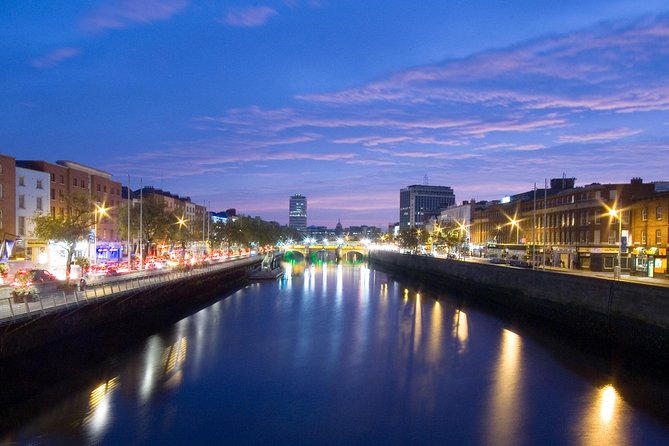
The meeting point is at 12 Aston Quay in the Temple Bar area. The opening is deliberately informal: a quick hello, an introduction to the guide, and a chance to explain what interests you.
That small conversation can shape the walk. If you care about politics, architecture, myths, food, pubs, or music, say so early. Alex has been praised for tailoring smaller tours to the group, including one outing for just two people, and for answering questions without losing the route.
You will want comfortable shoes and clothing suitable for changing weather. This is an outdoor walk, and the experience can be canceled if conditions are poor. The tour also requires a moderate level of fitness, so expect steady walking rather than a stop-and-start sightseeing bus.
O’Connell Street and the General Post Office
The first major section takes you north toward O’Connell Street, one of Dublin’s broadest and most important avenues. Your guide explains how the street received its present name after two earlier names, then uses its statues and buildings to tell the story of Ireland’s political struggles.
This is where the tour moves from general orientation into the 1916 Easter Rising and the later Irish Civil War. You hear about the fighting along O’Connell Street, the damage to the buildings, and the destruction of Nelson’s Pillar. The references to broken windows and artillery make the past feel tied to the street beneath your feet, rather than sealed away in a textbook.
The General Post Office is the strongest stop for that story. It served as a headquarters for the rebels, and the exterior still carries marks from the fighting. Depending on the timing and access, you might walk beneath its high interior roof, but the main point is the building’s role and visible damage.
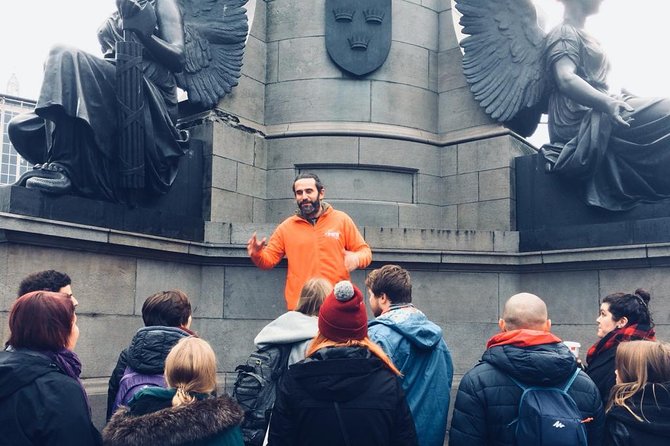
The guide also introduces the statue of the death of Cú Chulainn, cast by Oliver Sheppard in 1935. It connects the modern political story with Irish mythology, giving the tour a useful change of tone. The stop is short, so you will not get a full treatment of the Easter Rising. You will get the key setting and enough explanation to return later.
Trinity College links monks, students, and city life
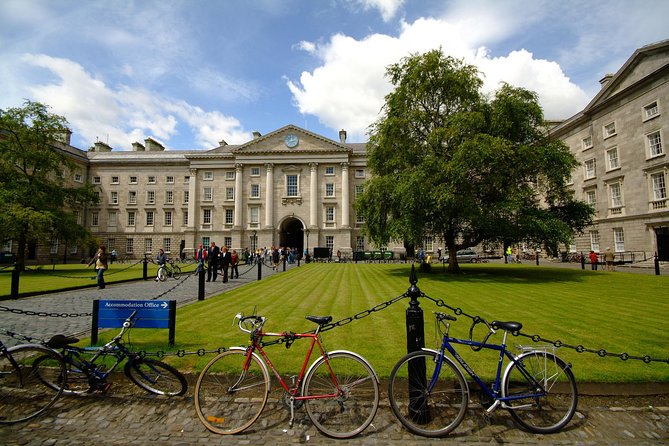
The route then crosses back toward College Green and Trinity College Dublin. This shift from the north side to the south side gives you a better feel for central Dublin’s layout.
The area has older religious associations, including a monastery traditionally linked with St Patrick’s conversion of early pagan Celts. From there, the guide moves through early Christian practices, the foundation of Trinity, and the habits and rituals of modern students.
I like this section because it shows how one central space can change purpose across centuries. You are not simply looking at a famous college gate. You are hearing how religion, education, politics, and daily city life have occupied the same part of Dublin at different times.
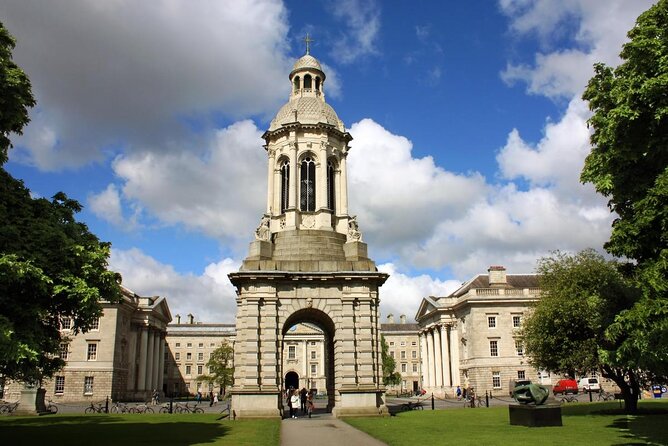
The exterior visit is brief. If you want to see the Book of Kells, the Old Library, or the college grounds in greater detail, save a separate block of time. This tour helps you decide if those visits belong on your list, but it does not replace them.
A completely different kind of day out from Dublin:
- Dublin to Cliffs of Moher, including Wild Atlantic Way and Galway
★ 5.0 · 23,331 reviews - From Dublin: Cliffs of Moher, Burren & Galway City Day Tour
★ 4.8 · 18,888 reviews - Dublin: Guinness Storehouse Entry Ticket
★ 4.6 · 16,863 reviews - Dublin to Cliffs of Moher, Burren, Wild Atlantic Way, Galway Tour
★ 5.0 · 12,924 reviews
Temple Bar beyond the famous pub sign
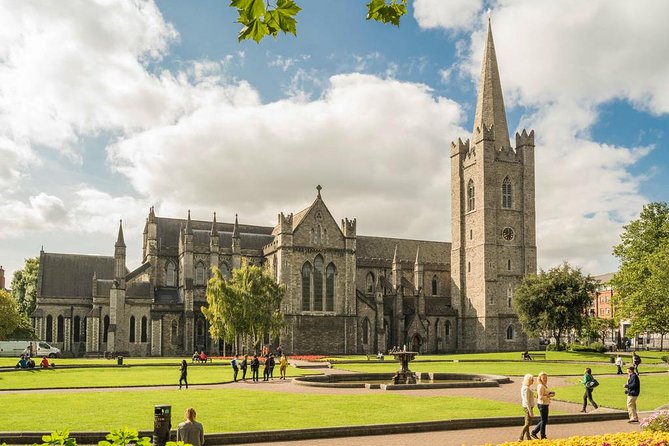
Temple Bar is often the loudest and most commercial stop on a Dublin visit. This tour does something useful by pausing at Meeting House Square and asking you to consider the district from a local point of view.
You receive suggestions about Irish music, pubs, and the famously debated search for Dublin’s best pint of Guinness. The advice is practical because Temple Bar can be easy to enter without a plan and expensive to navigate once you are there. A guide who knows the area can help you think beyond the most obvious pub frontage.
The route also points out that Temple Bar is more than nightlife. Your guide connects the quarter with earlier uses, old soap factories, Shakespeare’s Hamlet, Handel’s Messiah, and the original Viking settlement. Those links give the neighborhood more substance than its current reputation as a party district.
This is one place where traffic, crowds, and street noise may affect the experience. One person specifically found the traffic noise intrusive, and another felt a microphone could have helped. Stay close to the guide and ask for a repeat if you miss a detail.
City Hall and the buried Viking settlement

From Temple Bar, the walk continues toward City Hall and Dublin Castle. This part introduces Dubhlinn, the Viking settlement that gave Dublin its name. The guide explains how the settlement was lost, rediscovered, and then partly covered by later construction.
That story is valuable because modern Dublin does not always reveal its Viking beginnings at street level. You are walking through a city built in layers, where a medieval settlement, later factories, public buildings, and tourist streets occupy the same small area.
The references to Handel’s Messiah and Shakespeare’s Hamlet add a cultural thread. The stop is not only about military power or old stones. It shows Dublin as a place of performance, industry, religion, and commerce.
If you enjoy architecture, this section may be especially rewarding. If you prefer personal stories about Dublin’s people and neighborhoods, tell your guide. One less enthusiastic assessment found the walk too centered on buildings and dates, which is a fair warning for anyone seeking a strongly character-based city tour.
Dublin Castle explains centuries of authority
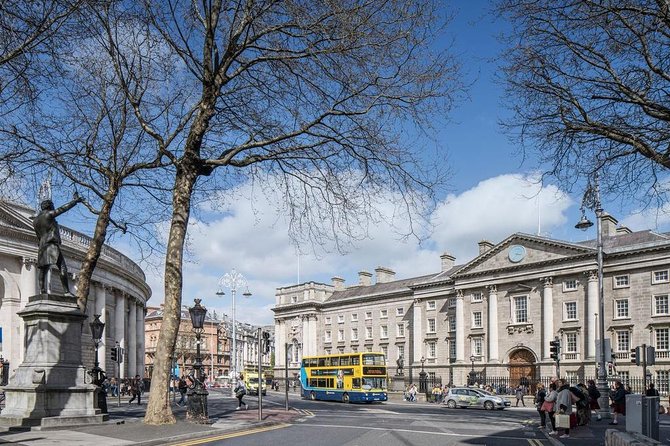
Dublin Castle was the main symbol of British administration in Ireland for centuries. Your guide sets the building in context, including its completion around 1230 under King John of England and its role as the residence of the Lord Lieutenants of Ireland until 1922.
That timeline gives you a quick framework for understanding why the castle mattered politically. It also places the building in the era of kings, officials, soldiers, rebels, and changing authority.
The architecture is varied, and the guide uses the castle to provide a short lesson in Irish building styles. You also hear about the Dubh Linn Gardens and the Chester Beatty Library, which sits within the castle complex and contains important spiritual texts.
The walk does not include admission, so you should treat this as a preview. If the library or castle interiors appeal to you, return with a separate visit. The advantage of seeing them first from outside is that you can decide how much time they deserve instead of wandering in without context.
Christ Church Cathedral provides a strong finish
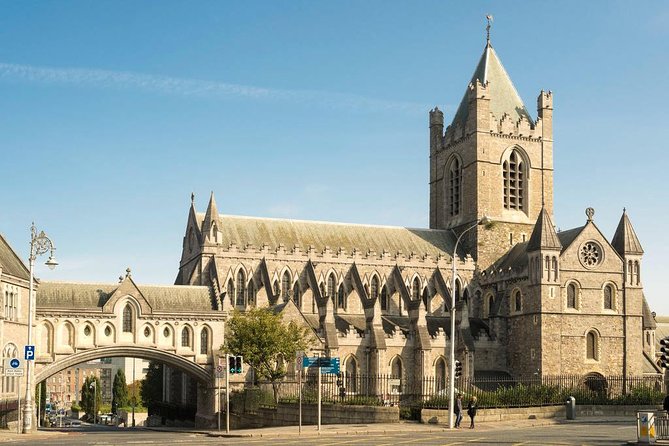
The final stop is Christ Church Cathedral, founded by the Viking king Sigtrygg Silkbeard. Its location near the River Liffey lets the guide bring the story back to Dublin’s earliest settlement and its later commercial life.
The cathedral has watched the city change from Viking longships to Guinness barges and the modern streets around Wood Quay. That long view makes it a fitting end to a route that began with Dubhlinn and moved through rebellion, government, education, and entertainment.
You finish at Christchurch Place, near the cathedral. The guide uses the last few minutes for questions and suggestions. This is the right moment to ask about places you passed too quickly, restaurants, pubs, music, or sights for the rest of your stay.
Because the tour ends near several central attractions, you can continue exploring on your own. The finish is not simply a drop-off point. It is a useful handoff from guided orientation to independent sightseeing.
Guides, group size, and the listening experience
The strongest part of this tour is the guide. Alex receives repeated praise for his Irish history, local knowledge, humor, storytelling, and ability to connect events to subjects people already understand. He has also guided small private-feeling outings with the same level of effort as larger groups.
Sam has been praised for enthusiasm, useful backstories, and taking care of the group. The operator is Finn McCools Tours, and the experience is offered in English.
The listed maximum is 25 people for the activity, although the booking information also mentions a maximum of 40 per booking. I would plan for a group that could be fairly large, while recognizing that some departures may be much smaller. A smaller group makes it easier to ask questions and hear the guide.
The rating is 4.9 from 917 ratings, with 97 percent of people recommending the experience. That strong record is consistent with the most common praise: clear historical explanations, a good walking pace, friendly guides, and useful suggestions for after the tour.
There are a few practical limitations. The guide may need to raise their voice beside traffic, and one person found the commentary too academic and the ending unclear because the walk ran long. If you prefer a tightly timed tour with a headset and fixed script, this may not be your ideal format.
Who gets the best value from $21.77
I think the price works particularly well for:
- First-time visitors: You get a quick map of central Dublin and a list of places worth revisiting.
- People arriving early in a trip: The route can help you choose how to use the next few days.
- History fans: The walk covers Viking settlement, mythology, rebellion, independence, civil war, British administration, and modern city life.
- Solo people and couples: The guide can respond directly to questions, especially if the group is small.
- Families with older children: Children must be accompanied by an adult, and the outdoor format keeps the visit moving.
- People who like local suggestions: Temple Bar advice and end-of-tour recommendations can save you from making random choices.
I would think twice if you want extensive interior visits, long photography stops, or a lighthearted walk with little political and architectural detail. The tour gives you breadth, not depth at each attraction.
Food, drinks, and lunch are not included. That keeps the price low, but plan to buy refreshments separately if you need a break.
Timing, weather, and cancellation details
Confirmation arrives at booking, and the meeting point is close to public transportation. The tour begins at 12 Aston Quay and ends at Christ Church Cathedral, so it is not a round trip to the starting point.
Children need adult supervision. You should also allow extra time if you are arriving from a cruise ship, since a late or missed arrival does not qualify for a refund.
Free cancellation is available up to 24 hours before the local start time. Changes or cancellations made inside that window are not refunded. If poor weather or an insufficient number of bookings causes the operator to cancel, you are offered another date or a full refund.
Should you book this Dublin walking tour?
Book it if you want a well-paced introduction to Dublin’s central sights, especially on your first day. The route is broad, the fee is modest, and the best guides turn complicated Irish events into stories you can follow while walking.
I would book with realistic expectations. You will not tour the interiors of every major attraction, and you may hear more dates, buildings, and political history than pub banter or personal neighborhood tales. Wear good shoes, stay near the guide in noisy areas, and treat the final stop as the beginning of your own Dublin exploring.
For $21.77, this is a sensible way to get oriented, ask questions, and find out where you want to spend the rest of your time.
FAQ
How long does the Dublin walking tour last?
The experience is described as a 90-minute walking tour, with an approximate total duration of 1 hour 45 minutes. Plan for the longer time.
How much does the tour cost?
The listed price is $21.77 per person.
What language is the tour offered in?
The tour is offered in English.
Where does the tour begin?
The meeting point is ThingsToDoDublin at 12 Aston Quay, Temple Bar, Dublin, D02 TE81, Ireland.
Where does the tour end?
The tour ends at Christ Church Cathedral, Christchurch Place, Wood Quay, Dublin, D08 TF98, Ireland.
Are attraction admission tickets included?
No attraction admission is listed as included. The tour includes a local professional guide, taxes, fees, and handling charges.
Are food and drinks included?
No. Food, drinks, and lunch are not included.
How many people can join the tour?
The activity has a maximum of 25 people. The booking information also notes a maximum of 40 people per booking.
Can children join the tour?
Yes, but children must be accompanied by an adult.
Can I cancel for a refund?
You can cancel up to 24 hours before the local start time for a full refund. Cancellations or changes made less than 24 hours before the start are not refunded.
Just added around Dublin
- A Self Guided Walking Tour of Dublin’s Docklands★ 4.5 · 3 reviews
- Waterford Crystal and Kilkenny Full-Day Rail Tour from Dublin★ 5.0 · 3 reviews
- Turtle Bunbury’s Dublin: A Self-Guided Audio Tour from a Celebrated Author★ 5.0 · 3 reviews
- Secret and unusual Dublin: guided walking tour★ 5.0 · 3 reviews
- Cliffs of Moher and The Burren Private Tour from Dublin★ 5.0 · 3 reviews
- Skip-the-line St. Patrick’s Cathedral and Dublin City Tour★ 5.0 · 3 reviews
- Dublin Full-Day Tour through Boyne Valley★ 5.0 · 3 reviews
- Rock Of Cashel And Blarney Castle Private Chauffeur Full Day Sightseeing Tour★ 4.5 · 3 reviews
Walking Tours, compared.
Dublin Highlights and Hidden Gems Guided Walking Tour
Read our review →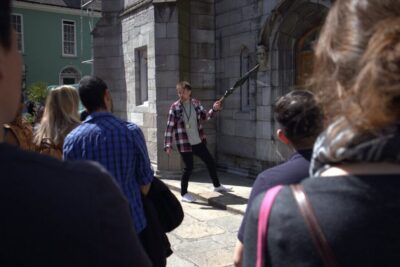



Historical 2-Hour Guided Walking Tour of Dublin
Read our review →
Dublin Traditional Irish 3 Course Meal Walking Tour with Local
Read our review →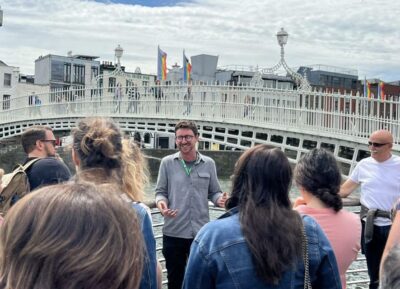
Browse the lists this tour appears in