
Reviewed · WALKING TOURS
2 Hour Walking Tour of Dublin’s City Centre
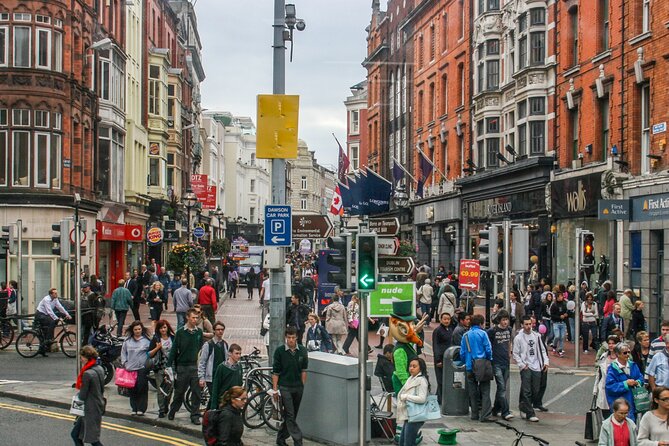
Dublin reveals its best stories on foot. This two-hour city-center walk links the Gaiety Theatre, Saint Patrick’s Cathedral, Dublin Castle, Christ Church Cathedral, Temple Bar, Trinity College, the Bank of Ireland, and St. Stephen’s Green without asking you to wrestle with a map. I like the small maximum of 10 people, and I like the guide-led storytelling, which adds old photos, questions, quizzes, and useful food and pub suggestions to the route.
The price is $28.96 per person, a fair deal for a compact introduction to central Dublin. The main trade-off is that the tour is mostly an outside orientation: entrance fees are not included, and 15 minutes at each stop is too short for a full visit to any cathedral or historic building. Plan to return to your favorites afterward.
In This Review
- Key points at a glance
- Why this two-hour Dublin walk works well
- Starting at the Gaiety Theatre
- Saint Patrick’s Cathedral and Dublin’s religious past
- Dublin Castle, from tower to seat of power
- Christ Church Cathedral and medieval Dublin
- Temple Bar beyond the pub signs
- Trinity College and the Book of Kells
- The Bank of Ireland and Ireland’s political story
- St. Stephen’s Green and a useful finish
- What the $28.96 price delivers
- Who will get the most from this tour
- My verdict on the two-hour city-center route
- FAQ
- How long is the Dublin city-center walking tour?
- How much does the tour cost?
- What language is the tour offered in?
- Where does the tour begin?
- Where does the tour end?
- Is the tour offered in the morning and afternoon?
- How many people can join the tour?
- Are entrance fees included?
- Can I cancel for a full refund?
Key points at a glance
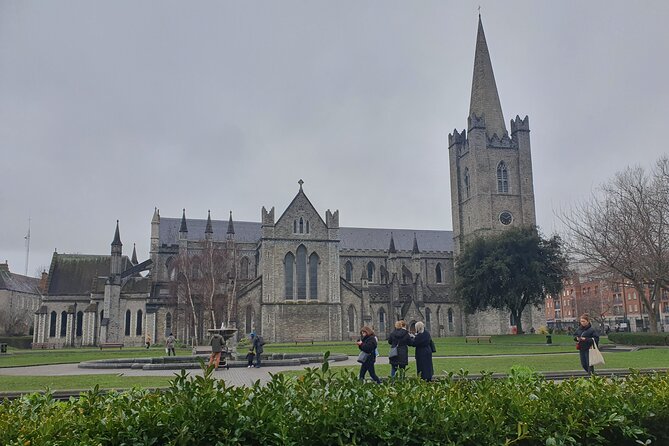
- Eight central stops in two hours: The route covers Dublin’s main historic sights, from medieval churches to Trinity College and the Georgian-era park.
- A genuinely small group: The maximum is 10 people, and some departures may feel nearly private.
- Guides who keep the pace lively: Alin, Alan, and Leonor Bethencourt are praised for clear explanations, humor, questions, games, and local suggestions.
- Useful for your first day: Morning and afternoon start times make it easy to use the tour as your city orientation.
- Mostly an outside tour: Cathedral and castle admission costs are extra, so this is best treated as a guided overview.
- Convenient finish: The walk ends at Fusiliers Arch beside the Luas stop at St. Stephen’s Green.
Why this two-hour Dublin walk works well
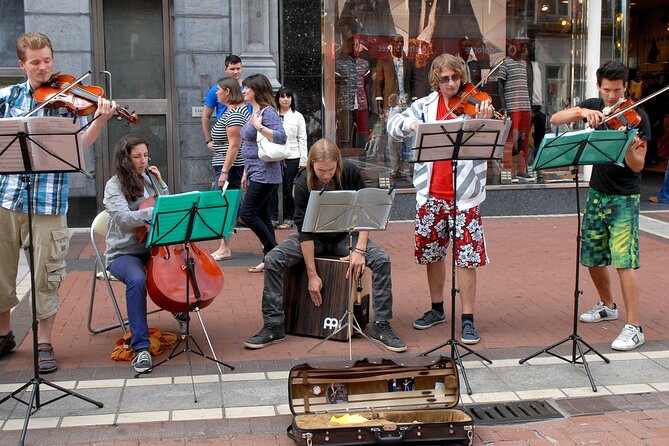
Dublin’s center is compact, but its stories are not. A short walk can take you from Viking foundations to Anglo-Norman power, British rule, Irish politics, literary culture, and modern pub life. The trick is having someone connect the pieces while you move through the streets.
That is the strongest reason to book this experience. You are not simply ticking off eight places. You are getting a framework for understanding how Dublin developed and which sights deserve more of your time later.
The route also suits a first afternoon in town. You can see the core landmarks, ask questions, and collect practical ideas for restaurants, pubs, and further sightseeing. Several people who took the walk with Alin or Alan especially valued their recommendations for places away from the main tourist streets.
The group limit matters. With no more than 10 participants, you should be able to hear the guide and ask questions without shouting across a crowd. Groups have sometimes been as small as two people or eight, creating a much more personal outing than a large coach-based city tour.
The guide style appears to be one of the tour’s biggest strengths. Alin is praised for being personable, funny, and flexible. Alan has used a binder of old photographs to help Dublin’s past come alive. Games, quizzes, and questions have also helped keep children and mixed-age families involved. That approach is useful in a city where a long list of dates can quickly turn into wallpaper.
More City Tours in Dublin
- From Dublin: Cliffs of Moher, Burren & Galway City Day Tour
★ 4.8 · 18,888 reviews - Dublin: Cliffs of Moher, Atlantic Edge & Galway City
★ 4.7 · 4,293 reviews - Dublin to Rock of Cashel, Cork City & Blarney Castle Guided Tour
★ 4.5 · 2,536 reviews
Starting at the Gaiety Theatre
The tour begins at the Gaiety Theatre on King Street South in Dublin 2. This is a practical meeting point in the central city, and starting beside a well-known theater should make the first rendezvous fairly easy.
The opening stop is brief, about 15 minutes. Expect an introduction to Dublin and its cultural setting rather than a theater performance or an interior visit. The guide uses this early point to set up the larger story of the city and explain why the surrounding center matters.
A morning departure is a good choice if you want to use the walk to plan the rest of your day. An afternoon departure works well if you arrive late, prefer a slower start, or want to see Dublin’s core after visiting another attraction.
Arrive ready to walk for the full two hours. The tour requires a moderate level of physical fitness, and the sightseeing takes place outdoors. Comfortable shoes and a rain layer are sensible choices for Dublin, though the tour information does not specify the exact route conditions or weather arrangements.
Saint Patrick’s Cathedral and Dublin’s religious past
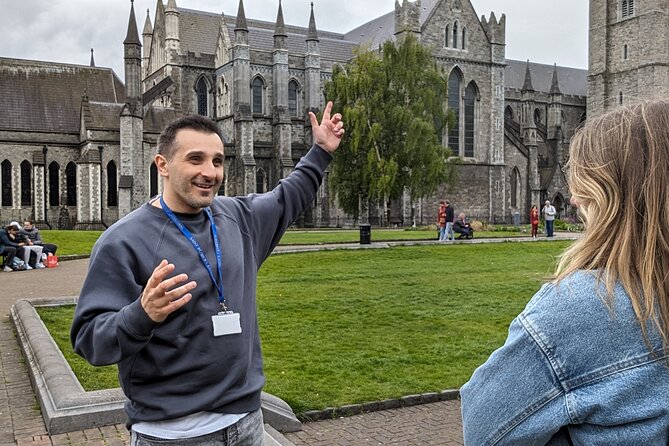
Saint Patrick’s Cathedral receives about 15 minutes. The guide explains its connection with St. Patrick and traces its path from an Anglo-Norman building to near ruin, followed by rescue linked to the Guinness family.
That short stop gives you useful context, but it is not enough time to explore the cathedral interior in detail. Admission is not included, so you need to pay separately if you decide to go inside. I would treat the guided visit here as a preview: listen for the building’s turning points, then return later if the architecture or church history catches your attention.
The cathedral is especially useful for showing how Dublin’s religious buildings changed with political power. You are not hearing one tidy story. You are seeing a place shaped by construction, decline, restoration, and private money.
The 15-minute format also keeps the tour moving. That is helpful if you want to cover a lot of ground, but it means you should not expect a slow architectural study or quiet time inside.
Dublin Castle, from tower to seat of power
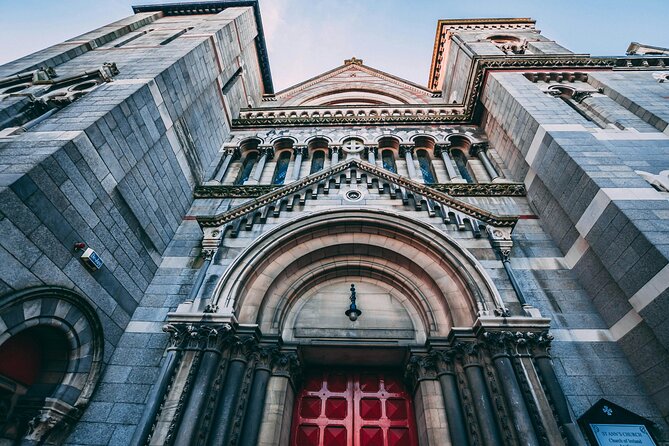
The walk continues to Dublin Castle, another 15-minute stop. Its story begins with the Anglo-Normans and a simple tower, then expands into a larger complex that served as a center of authority and a prison.
The guide also brings in a jewel heist, an unusual detail that adds a touch of crime-story drama to the political history. These small stories are valuable because they give you something memorable to hold onto after the dates and rulers begin to blur.
Admission is not included here either. You will see and discuss the castle as part of the route, but a full interior visit needs its own time and ticket. If Dublin Castle is high on your list, use the walking tour to learn what you want to investigate, then schedule a separate visit.
This stop shows the tour’s wider strength: the guide supplies connections and stories, while you decide which buildings deserve a longer look. That is a good arrangement for a first visit, as long as you understand that this is not a series of full admissions.
More Walking Tours in Dublin
- Dublin Highlights and Hidden Gems Guided Walking Tour
★ 5.0 · 6,020 reviews - Dublin: Highlights and Hidden Gems Walking Tour
★ 4.9 · 2,140 reviews - 1916 Rebellion Walking Tour
★ 5.0 · 1,605 reviews - 90 Minute Dublin Walking tour and Sightseeing tips
★ 5.0 · 916 reviews
Christ Church Cathedral and medieval Dublin
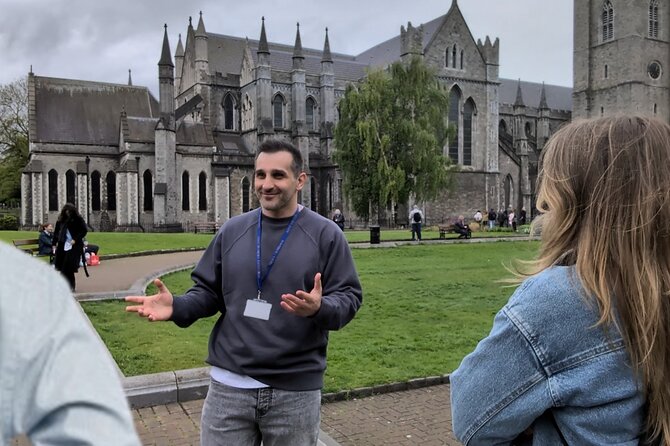
Christ Church Cathedral is the next major church on the route. Its story reaches back to a Viking foundation in 1030, followed by architectural changes under the Anglo-Normans and a 19th-century restoration funded through whiskey money.
In 15 minutes, you can grasp the broad outline and admire the setting from outside. You will not have time for a thorough interior visit, and admission is extra. Still, this is one of the most useful stops for understanding medieval Dublin because it brings together Viking beginnings, Norman building work, later changes, and Victorian restoration.
The cathedral also helps you compare Dublin’s two major historic churches. Saint Patrick’s and Christ Church are not interchangeable stops, and hearing their separate stories makes the city’s religious and political past easier to follow.
If you enjoy buildings, you may find yourself wanting more time here. That is not a flaw in the tour so much as a limit built into the two-hour plan. The route gives you a clear introduction, then leaves the deeper visit for your own schedule.
Temple Bar beyond the pub signs
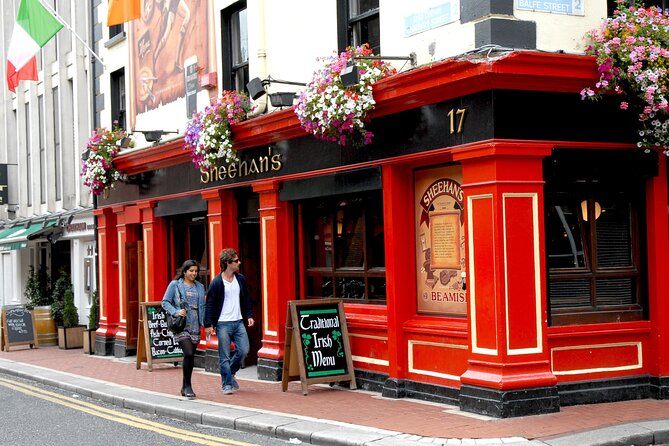
Temple Bar gets the same 15-minute treatment, but the subject shifts from medieval churches to Dublin’s modern visitor scene. The neighborhood was once a maze-like area with a poor reputation. Today it is known for pubs, galleries, nightlife, and high foot traffic.
The guide can help you see beyond the obvious pub signs. Temple Bar is easy to visit on your own, but context makes it more interesting. You learn that its present identity is not the whole story, and that the area changed sharply over time.
This is also where practical advice matters. The tour is a good place to ask about places to eat and drink, particularly if you want suggestions beyond the busiest tourist streets. Alin has been singled out for pointing people toward local eateries away from the main visitor zone.
Do not expect a long stop for a drink during the guided walk. The 15-minute schedule is designed for explanation and movement, not a pub crawl. Save Temple Bar for later if you want to explore its galleries, music, or nightlife at a slower pace.
Trinity College and the Book of Kells
The route then reaches Trinity College Dublin, one of the city’s best-known places of learning. The guide discusses its difficult past and its present reputation, along with the campus and the Book of Kells.
The stop is listed as free, but that does not mean every Trinity attraction is included. The tour gives you an outside introduction and points out why the college matters. If you want to see the Book of Kells, you should plan a separate visit and check the current admission arrangements.
Trinity is a strong stop for first-time visitors because it connects education, national identity, architecture, and Dublin’s public image. It also gives you a change of pace after the medieval churches and castle.
The guide’s photographs and visual aids can be useful here. One participant praised Alan’s binder of old images, while others appreciated guides who used pictures and questions to make the past easier to picture. Those tools matter when you are standing in a busy city street and trying to imagine an earlier Dublin.
The Bank of Ireland and Ireland’s political story
The former Parliament House, now the Bank of Ireland, offers one of the tour’s most important political stops. The building witnessed major changes, including the Act of Union, and its architecture later provided inspiration for grand public buildings elsewhere.
You spend about 15 minutes here. There is no included admission, and the value comes from the exterior setting and the explanation of what happened inside and around it.
This stop keeps the tour from becoming only a collection of churches and tourist landmarks. Dublin’s story is also about government, power, representation, and the political changes that shaped Ireland.
For you, the practical benefit is simple: the guide gives the building a role in the city’s story. Without that explanation, it can be easy to pass by and see only an impressive facade.
St. Stephen’s Green and a useful finish
The walk ends at St. Stephen’s Green, with the final stop lasting about 15 minutes. The park was once an exclusive green space for Dublin’s elite. The Guinness family helped make it public, and it is now open for everyone to enjoy.
The end point is Fusiliers Arch, the grand entrance to the park on Grafton Street. It is beside the Luas tram stop, which is handy if you want to continue sightseeing or return to your accommodation.
This is a satisfying finish because it shifts the story from private privilege to public access. It also leaves you in a useful part of central Dublin, close to shopping, restaurants, and more walking.
You should not expect a long park stroll after the formal tour ends. The stated endpoint is specific, so use the remaining time to explore the green on your own if you want benches, paths, and a slower look at the area.
What the $28.96 price delivers
At $28.96 per person, the tour offers solid value if you want orientation, stories, and local direction in one short outing. You are paying for a guide’s interpretation, not for eight attraction tickets or a full day of sightseeing.
The price makes the most sense for a first visit. In two hours, you can identify the major sights, learn which ones deserve an interior visit, and get a basic sense of how the center fits together.
It is less useful if you already know central Dublin well or want extended time inside the cathedrals and castle. Separate admissions can add to your total cost, and the tour does not replace a dedicated visit to the Book of Kells or any of the historic buildings.
The high rating of 4.9 out of 5 from 63 ratings, along with 98 percent recommending it, supports the idea that the format is working for its intended purpose. The strongest praise centers on the guides’ clear delivery, warmth, humor, and ability to adjust the experience. That is more important here than a long list of included extras.
Who will get the most from this tour
I would choose this walk for a first morning or afternoon in Dublin, especially if you want to get your bearings quickly. It also suits solo visitors and couples who like meeting a few other people without joining a large group.
Families can benefit from the interactive approach. Games and quizzes have kept children aged 11, 13, and 15 involved, and the route has also worked for groups including a 73-year-old parent. That suggests a broad age range can enjoy it, provided everyone is comfortable with two hours of walking.
The tour is also a good fit if you prefer history delivered in short stories rather than a formal lecture. Alin and Alan receive repeated praise for making the material personal and entertaining, while Leonor Bethencourt is praised for her guiding.
You may want another option if you need step-free certainty, detailed interior access, or long stops for photography. Service animals are allowed, public transportation is nearby, and a moderate fitness level is required, but the supplied details do not promise specific accessibility features beyond that.
Confirmation arrives when you book. You can cancel for a full refund up to 24 hours before the start time, while cancellations or changes inside that window are not accepted. The cut-off uses Dublin local time, so check the clock carefully if you are arranging plans across time zones.
My verdict on the two-hour city-center route
Book this tour if you want a friendly first look at Dublin’s historic center and plan to return to one or two sights afterward. The small group, lively guides, visual aids, games, and local dining tips give it more personality than a simple landmark checklist.
Skip it if your main goal is to spend serious time inside Saint Patrick’s Cathedral, Christ Church Cathedral, Dublin Castle, or the Book of Kells. For everyone else, $28.96 is a reasonable price for a brisk introduction that helps you make better choices with the rest of your Dublin stay.
FAQ
How long is the Dublin city-center walking tour?
The tour lasts approximately two hours.
How much does the tour cost?
The listed price is $28.96 per person.
What language is the tour offered in?
The tour is offered in English.
Where does the tour begin?
The meeting point is the Gaiety Theatre on King Street South, Dublin 2, Ireland.
Where does the tour end?
The tour ends at Fusiliers Arch in St. Stephen’s Green, listed as 3 St Stephen’s Green, Dublin, D02 X025.
Is the tour offered in the morning and afternoon?
Yes. You can choose a morning or afternoon start time.
How many people can join the tour?
The maximum group size is 10 people.
Are entrance fees included?
No. Admission fees and taxes are not included. The tour includes a guided introduction to Dublin’s history and culture.
Can I cancel for a full refund?
Yes. You can cancel at least 24 hours before the experience start time for a full refund. Cancellations or changes made less than 24 hours before the start time are not accepted.
More 2-Hour Experiences
- 2-Hour Historical Walking Tour from Dublin
★ 5.0 · 875 reviews - Historical 2-Hour Guided Walking Tour of Dublin
★ 4.7 · 865 reviews - Dublin: 2-Hour Premium Whiskey and Food Tasting Tour
★ 4.7 · 54 reviews - Dublin: 2 Hour City Center Guided Walking Tour
★ 4.9 · 12 reviews
Just added around Dublin
- A Self Guided Walking Tour of Dublin’s Docklands★ 4.5 · 3 reviews
- Waterford Crystal and Kilkenny Full-Day Rail Tour from Dublin★ 5.0 · 3 reviews
- Secret and unusual Dublin: guided walking tour★ 5.0 · 3 reviews
- Turtle Bunbury’s Dublin: A Self-Guided Audio Tour from a Celebrated Author★ 5.0 · 3 reviews
- Cliffs of Moher and The Burren Private Tour from Dublin★ 5.0 · 3 reviews
- Skip-the-line St. Patrick’s Cathedral and Dublin City Tour★ 5.0 · 3 reviews
- Dublin Full-Day Tour through Boyne Valley★ 5.0 · 3 reviews
- Rock Of Cashel And Blarney Castle Private Chauffeur Full Day Sightseeing Tour★ 4.5 · 3 reviews
Walking Tours, compared.

Dublin Highlights and Hidden Gems Guided Walking Tour
Read our review →

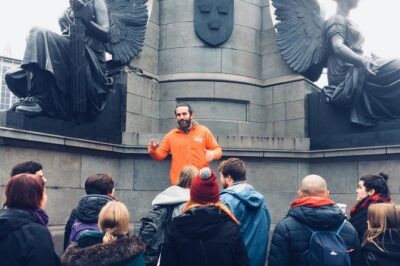
90 Minute Dublin Walking tour and Sightseeing tips
Read our review →

Historical 2-Hour Guided Walking Tour of Dublin
Read our review →
Dublin Traditional Irish 3 Course Meal Walking Tour with Local
Read our review →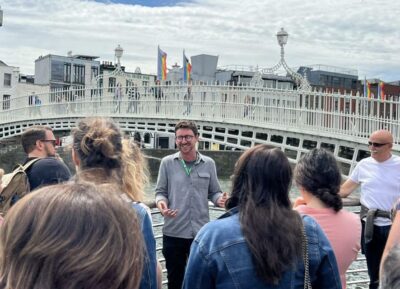
Browse the lists this tour appears in