
Reviewed · WALKING TOURS
Dublin: Highlights and Hidden Corners Walking Tour
Dublin reveals itself on foot. This 2.5-hour walk links major sights with odd little corners that are easy to miss, from the Viking and medieval quarter to Trinity College. I like the small groups of up to 16 and the guides’ easy storytelling. The route also crosses both sides of the River Liffey, giving you a useful first look at central Dublin.
I especially like the mix of famous places and curious details, such as a former Lisbon tram now used as a café and a church that is no longer a church. Guides including Joe Brennan, John O’Flynn, Jacob, Katie, and Dave have been praised for humor, local knowledge, patience, and a comfortable walking pace. The main caution is that one person found the pace a little quick, so ask your guide to slow down if needed.
In This Review
- Key points to know before you book
- Starting beside the Tree of Gold on Dame Street
- Dublin Castle grounds and the medieval quarter
- Fishamble Street and Smock Alley
- Temple Bar beyond the pub signs
- Crossing the Millennium Bridge over the Liffey
- The Italian Quarter and St Mary’s Church
- Henry Street, Moore Street, and O’Connell Street
- The General Post Office and Ireland’s independence story
- Former Parliament House and Trinity College
- What the small group adds
- Is $31 a fair price?
- Who will enjoy this Dublin walk?
- My verdict: book it for orientation and stories
- FAQ
- How long does the tour last?
- What language is the tour conducted in?
- Where does the tour begin?
- Where does the tour finish?
- Are the attractions visited inside?
- Is the tour suitable for wheelchair users?
- How large is the group?
- Is the tour price $31 per person?
- Can I cancel or pay later?
Key points to know before you book
- A full central-Dublin route: Walk from Dame Street through the old medieval quarter, Temple Bar, the Liffey, O’Connell Street, and the area around Trinity College.
- Small-group format: Numbers are limited to 16, with extra guides added when needed.
- Stories behind ordinary places: Expect tales about a former cinema, an unusual post box, a wobbly bridge, and a tram turned café.
- Outdoor sightseeing: The listed stops are viewed from outside, though you can return later for interior visits.
- Friendly, polished guiding: Joe, John, Jacob, Katie, and Dave have all been praised for clear delivery, good humor, and thoughtful pacing.
- Useful first-day tour: The walk gives you a city-centre orientation before you choose where to spend more time.
Starting beside the Tree of Gold on Dame Street
The tour begins at the Tree of Gold Statue, also called Crann an Óir, at Central Plaza on Dame Street. The meeting point is at the corner of Dame Street and Fownes Street Upper in Dublin 2, a handy spot in the centre of the city.
Dame Street makes a sensible starting place. From here, you are close to Dublin Castle, Temple Bar, Trinity College, and several major streets. You do not waste the opening minutes traveling out to a distant district. Instead, the guide can begin with the city beneath your feet.
This is a walking tour rather than a stop-and-listen procession. You wind through the former Viking and medieval quarter, pause at landmarks, then keep moving. That format suits you if you want a clear sense of how Dublin’s central areas fit together rather than a long lecture in one square.
The route is described as easy-going, but it still covers a fair amount of ground in two and a half hours. Wear comfortable shoes and arrive ready to walk. Since the tour operates outdoors, Irish weather is part of the deal. A light waterproof layer is a sensible companion.
More Walking Tours in Dublin
- Dublin Highlights and Hidden Gems Guided Walking Tour
★ 5.0 · 6,020 reviews - Dublin: Highlights and Hidden Gems Walking Tour
★ 4.9 · 2,140 reviews - 1916 Rebellion Walking Tour
★ 5.0 · 1,605 reviews
Dublin Castle grounds and the medieval quarter
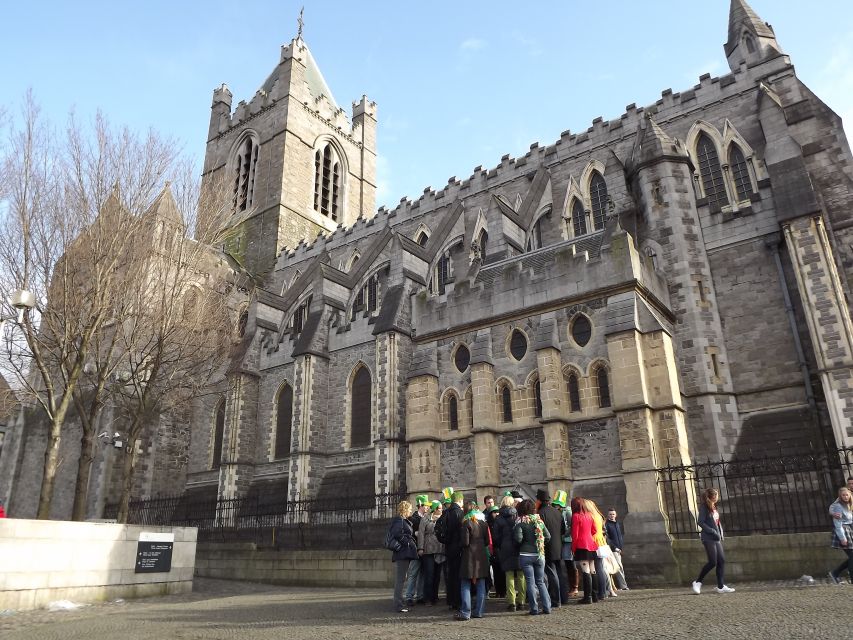
The first section moves through the old centre around Dublin Castle and Christ Church Cathedral. The castle grounds give you an early look at Dublin’s political past, while the surrounding streets point toward the city’s older Viking and medieval roots.
You will view Dublin Castle from outside rather than take a scheduled interior visit. That keeps the tour moving and helps the guide cover more ground, but it also means you should not book this walk expecting a castle tour. If the building interests you, save time later to return for a separate visit.
Christ Church Cathedral is another important exterior stop. Its presence helps explain how compact Dublin’s old centre is: civic power, religious institutions, market streets, and entertainment districts all sit close together. The guide’s role here is less about listing dates and more about connecting buildings to human stories.
That human angle is one of the tour’s strongest features. The guides are praised for making Dublin’s past feel approachable, with humor and anecdotes that give shape to the stones and façades. John O’Flynn, for example, has been praised for bringing architectural and political subjects to life in a welcoming way.
Fishamble Street and Smock Alley
From the castle area, the walk continues along Fishamble Street and toward Smock Alley. These streets form part of the old city centre, where layers of Dublin’s past sit alongside modern businesses and nightlife.
Smock Alley is a good example of how Dublin can surprise you. The area carries theatrical associations, but you are not simply being led from one grand building to another. The guide points out the smaller details and explains how ordinary streets have changed use over time.
This part of the walk helps you understand why a guided route can be more useful than a map. You might pass through these lanes on your own without knowing which doorway, plaque, or building deserves a closer look. A guide gives the surroundings a sense of order without requiring you to memorize a pile of dates.
Temple Bar beyond the pub signs
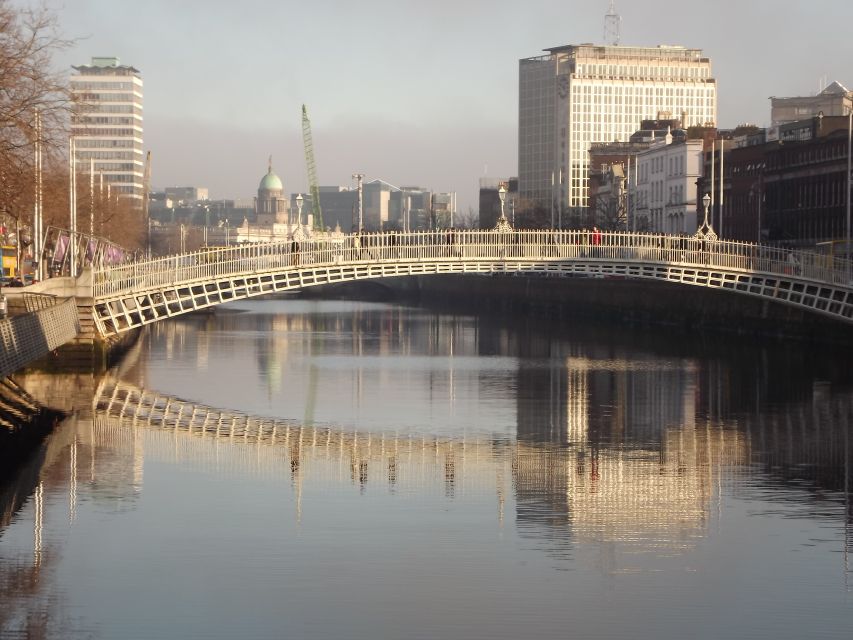
The route then turns through Meeting House Square and Temple Bar. This is one of Dublin’s best-known areas, and it can be easy to reduce it to pubs, music, and crowds. The tour offers a wider view.
Meeting House Square provides a chance to consider the district’s cultural side, while the walk through Temple Bar shows how a central neighborhood can carry both old character and modern tourist pressure. You will hear stories rather than receive a sales pitch for the area.
Temple Bar can be crowded, so this is one section where staying close to your guide matters. The small-group limit helps. A group of 16 is easier to hear and keep together than a large coach-size crowd, especially on busy streets.
The guide also points out curiosities that are not obvious at first glance. One amusing stop involves a representation of a da Vinci painting. It is the sort of detail you might walk past without a local pointing it out.
A completely different kind of day out from Dublin:
- Dublin to Cliffs of Moher, including Wild Atlantic Way and Galway
★ 5.0 · 23,331 reviews - From Dublin: Cliffs of Moher, Burren & Galway City Day Tour
★ 4.8 · 18,888 reviews - Dublin: Guinness Storehouse Entry Ticket
★ 4.6 · 16,863 reviews - Dublin to Cliffs of Moher, Burren, Wild Atlantic Way, Galway Tour
★ 5.0 · 12,924 reviews
Crossing the Millennium Bridge over the Liffey
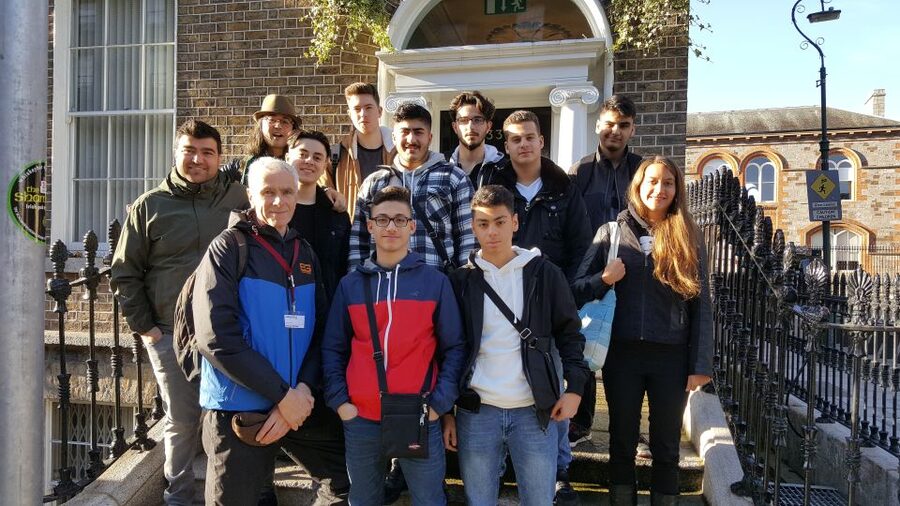
The walk continues to the Millennium Bridge and across the River Liffey. This is a useful change of scene. You leave the tight lanes of the old quarter and gain a clearer sense of Dublin as a city divided, and connected, by its river.
The bridge comes with one of the tour’s more playful moments: you may get to feel its slight bounce. It is a small experience, but it gives the route some personality. Not every stop needs to be a cathedral or government building.
Crossing the Liffey also makes the tour more useful as an orientation walk. You see both the south side and north side of central Dublin, rather than spending the entire time in the areas most familiar to first-time visitors. That broader view helps you decide where to return for shopping, food, museums, or further walks.
The Italian Quarter and St Mary’s Church
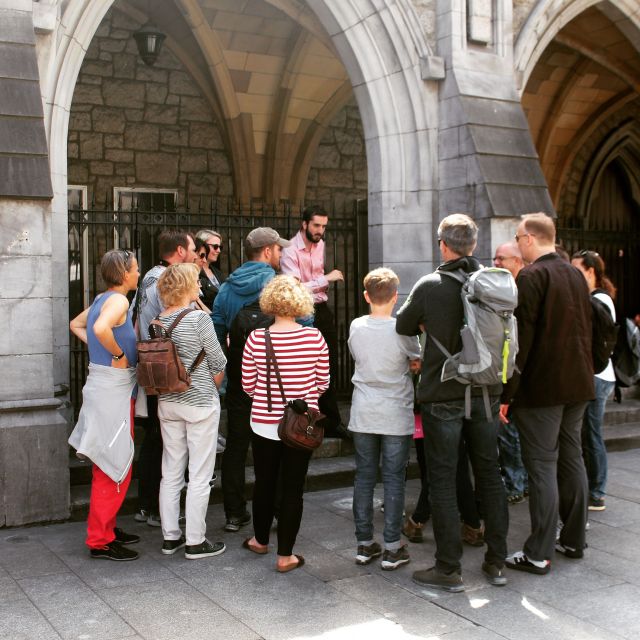
On the north side, the route passes through Dublin’s Italian Quarter and continues toward St Mary’s Church. St Mary’s is especially unusual because the former church now operates as a café and bar.
This is the kind of stop that gives the tour its character. You are not only hearing about official monuments. You are seeing how old buildings receive new lives, and how Dublin’s past remains part of the working city.
The former Lisbon tram used as a café adds another memorable detail. It is a compact example of the tour’s method: find something odd, explain why it matters, and keep the story tied to the place in front of you.
You should keep your expectations realistic. The route does not promise time inside every interesting building. The stated plan is for exterior visits, with chances to return later. If St Mary’s or another stop catches your eye, note it down and come back independently.
Henry Street, Moore Street, and O’Connell Street
The tour moves through Henry and Moore Streets before reaching O’Connell Street. This section shifts from old lanes to a broad, important city avenue.
Henry Street and Moore Street give you a different side of Dublin. The route is not limited to ceremonial architecture. It includes streets where daily commerce and local movement matter, helping you see the centre as a lived-in place rather than an open-air museum.
O’Connell Street then brings you into the north side’s main historic thoroughfare. Its scale makes more sense after the narrower medieval streets. The guide can place the street within Dublin’s political story and explain why it became such an important setting for public events.
The O’Connell Monument is another major point along the way. Like several stops on this tour, it works best when you hear the story attached to it. A monument can seem decorative when you encounter it alone. With context, its subject and setting become easier to understand.
The General Post Office and Ireland’s independence story
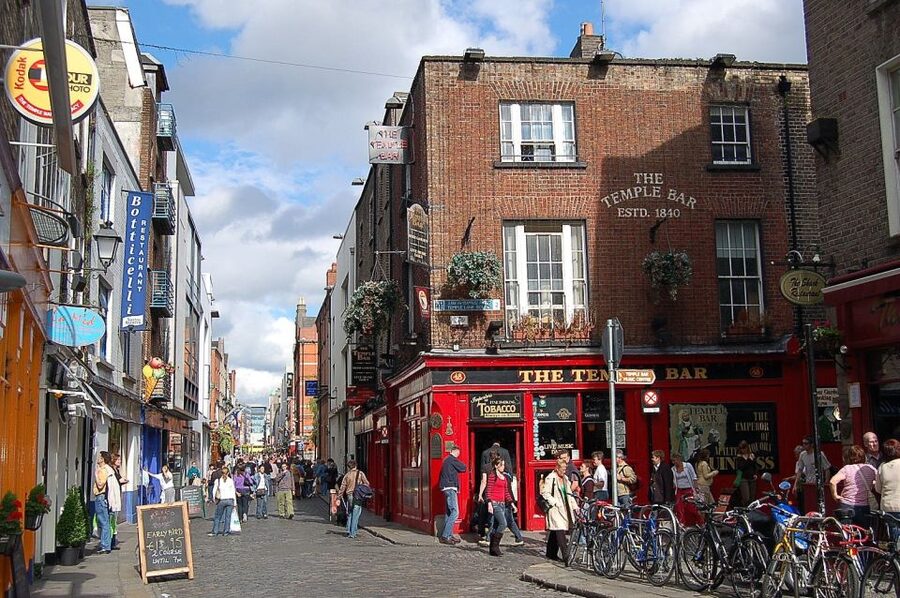
The General Post Office is among the most important stops on O’Connell Street. The building housed the headquarters of the rebels during the 1916 Rising, and the fighting caused severe damage to the building and much of the surrounding street.
The tour uses the GPO to explain a key part of Ireland’s move toward independence. This is not treated as a distant political footnote. The building, street, and nearby monuments let you connect national events with a real Dublin setting.
A particularly good small detail concerns a post box that reflects Ireland’s change from British rule to independence. It is a modest object, but it shows how political change can appear in everyday city furniture, not only in statues and official documents.
This is where a strong guide makes a real difference. Joe Brennan has been praised for a precise walking pace and a clear delivery, while Jacob has been praised for answering questions patiently and helping with directions after the walk. Those qualities matter around the GPO, where you may want to pause and ask how the events affected the city.
Former Parliament House and Trinity College
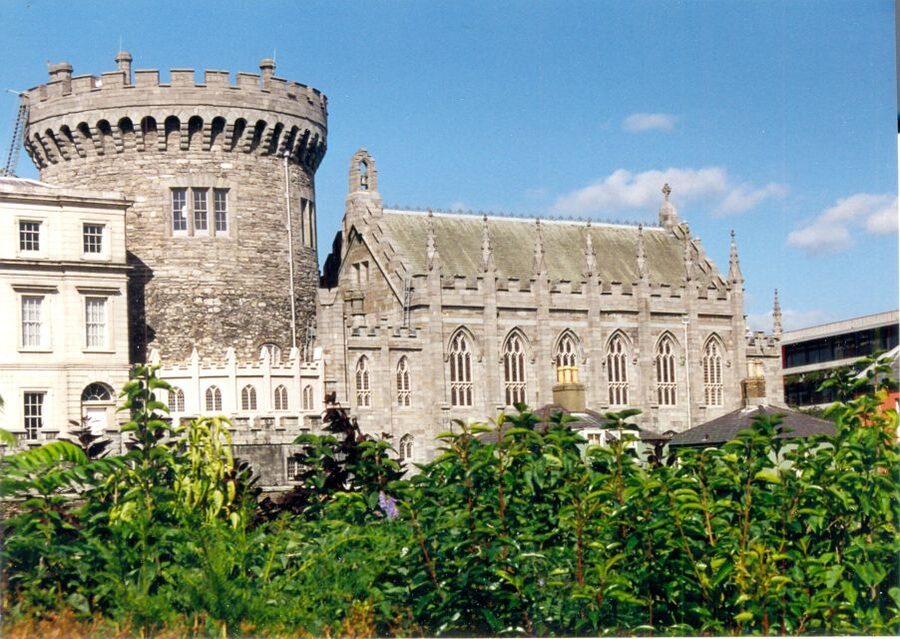
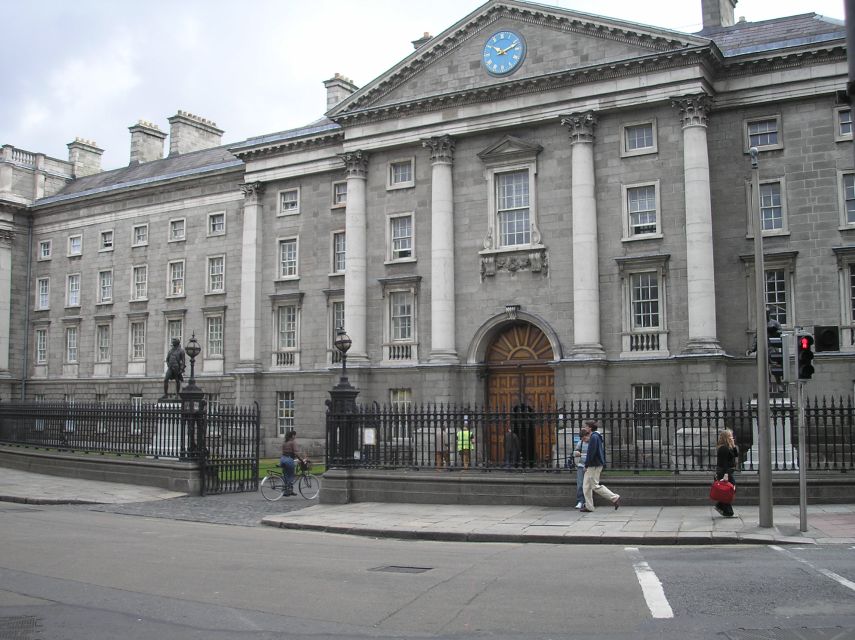
The final section takes you past the former 18th-century Houses of Parliament, now home to the Bank of Ireland, before finishing outside Trinity College. The former Parliament House is a striking place to end the political thread that began around Dublin Castle and continued at the GPO.
You then reach Trinity College, one of Dublin’s most familiar landmarks. The tour finishes outside the college with its famous Book of Kells. The Book of Kells itself is not included in the walk, and the listed visits are external, so plan a separate interior visit if you want to see it.
There is a small logistical point to check before booking. The route description says the walk finishes around Trinity College, while the meeting information says the activity ends back at the meeting point. Confirm the exact end location and current arrangements when you reserve. Either way, the final area is central and useful for continuing your day.
What the small group adds
The maximum group size is 16, and the group is often smaller. That is a meaningful advantage on a city walk.
A small group makes it easier to hear stories on busy streets. It also gives you more room to ask questions and makes it simpler for the guide to notice if someone has fallen behind. Additional guides are provided when required, so the stated limit is not just a vague hope for a quiet outing.
The guide personalities appear to be a major part of the experience. Joe is praised for his humor and delivery. John O’Flynn is praised for making architecture and politics engaging. Jacob is described as patient and open to questions, while Katie is praised for combining strong local knowledge with humor and useful recommendations. Dave is praised for being kind, funny, and attentive to the whole group.
That range matters because a walking tour can feel very different depending on who leads it. The consistent theme here is not a fixed script alone. It is a friendly, personal presentation that makes the city easier to understand.
Is $31 a fair price?
At $31 per person, the tour offers a reasonable amount for a 2.5-hour introduction to central Dublin. You cover a long route, see major landmarks on both sides of the Liffey, and get a professional English-speaking guide.
The value is strongest if this is your first or second day in Dublin. You can use the route to mark places for later visits, learn which streets connect, and gather ideas from the guide. The recommendations may also help shape the rest of your stay.
The value is lower if you want extended time inside buildings. Admission to the Book of Kells, Dublin Castle interiors, Christ Church Cathedral, or other attractions is not included. The listed visits are external, so think of this as a city orientation and storytelling walk, not an admissions package.
Gratuity is also not included. If your guide gives you a useful, engaging afternoon, plan for a tip as an extra cost.
The tour offers free cancellation up to 24 hours before departure and a reserve-now, pay-later option. Those terms make it easier to fit the walk into a changeable Dublin schedule.
Who will enjoy this Dublin walk?
I would choose this tour for a first-time visitor who wants the city explained in plain language. It is also a good fit if you like architecture, politics, local oddities, and short stories more than a long formal lecture.
Families and mixed-age groups may appreciate the two-and-a-half-hour length. The walk is substantial enough to feel worthwhile without taking the whole day. The route is listed as wheelchair accessible, though city streets and crowds can still affect comfort, so it is sensible to confirm current conditions before booking.
You will get the most from it if you are happy to keep moving and listen outdoors. If you need frequent stops or prefer a slow photographic walk, tell the guide at the start. One person specifically wanted a slower pace, while others praised the timing and distance as just right.
My verdict: book it for orientation and stories
I would book this walk if I wanted a friendly first look at Dublin that goes beyond the standard postcard stops. The strongest reasons are the small group, the broad route, and the unusual details: the former cinema, the church-café, the Lisbon tram, the bouncing bridge, the post box, and the playful artistic surprises.
I would not book it as a substitute for visiting Dublin Castle, Christ Church Cathedral, or the Book of Kells inside. Those are separate experiences. Book this for the connections between places, the political and architectural stories, and the guide’s ability to make overlooked corners memorable.
At $31, it is a solid city-centre introduction. Choose it early in your stay, wear good shoes, bring rain protection, and keep a short list of places to revisit after the walk.
FAQ
How long does the tour last?
The walking tour lasts 2.5 hours. Starting times vary, so check availability when booking.
What language is the tour conducted in?
The live tour guide speaks English, and English is the listed tour language.
Where does the tour begin?
It begins at the Tree of Gold Statue, also called Crann an Óir, at Central Plaza on Dame Street, Dublin 2. The meeting point is at the corner of Dame Street and Fownes Street Upper.
Where does the tour finish?
The route description says it finishes outside Trinity College, near the famous Book of Kells. The meeting information says the activity ends back at the meeting point, so confirm the current end location when booking.
Are the attractions visited inside?
No. The listed visits are external. Opportunities are available for you to return for interior visits after the tour.
Is the tour suitable for wheelchair users?
The activity is listed as wheelchair accessible.
How large is the group?
The maximum group size is 16 people, and groups are often smaller. Additional guides are provided when required.
Is the tour price $31 per person?
Yes, the stated price is $31 per person. Gratitude, meaning a tip for the guide, is not included.
Can I cancel or pay later?
You can cancel up to 24 hours in advance for a full refund. You can also reserve your place and pay later, with no payment required today.
Just added around Dublin
- A Self Guided Walking Tour of Dublin’s Docklands★ 4.5 · 3 reviews
- Waterford Crystal and Kilkenny Full-Day Rail Tour from Dublin★ 5.0 · 3 reviews
- Turtle Bunbury’s Dublin: A Self-Guided Audio Tour from a Celebrated Author★ 5.0 · 3 reviews
- Secret and unusual Dublin: guided walking tour★ 5.0 · 3 reviews
- Cliffs of Moher and The Burren Private Tour from Dublin★ 5.0 · 3 reviews
- Skip-the-line St. Patrick’s Cathedral and Dublin City Tour★ 5.0 · 3 reviews
- Dublin Full-Day Tour through Boyne Valley★ 5.0 · 3 reviews
- Rock Of Cashel And Blarney Castle Private Chauffeur Full Day Sightseeing Tour★ 4.5 · 3 reviews
Walking Tours, compared.
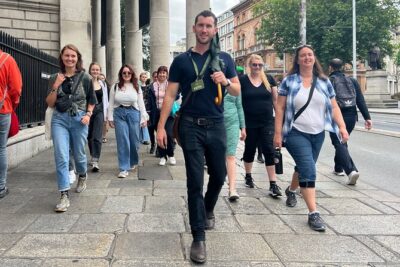
Dublin Highlights and Hidden Gems Guided Walking Tour
Read our review →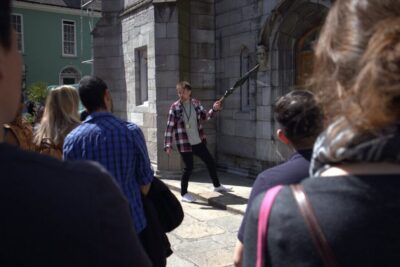

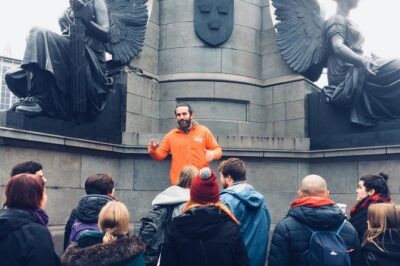
90 Minute Dublin Walking tour and Sightseeing tips
Read our review →

Historical 2-Hour Guided Walking Tour of Dublin
Read our review →
Dublin Traditional Irish 3 Course Meal Walking Tour with Local
Read our review →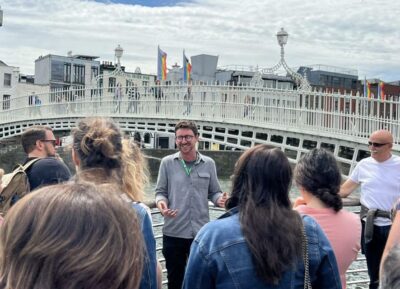
Browse the lists this tour appears in