
Reviewed · WALKING TOURS
Dublin: Highlights and Hidden Gems Walking Tour
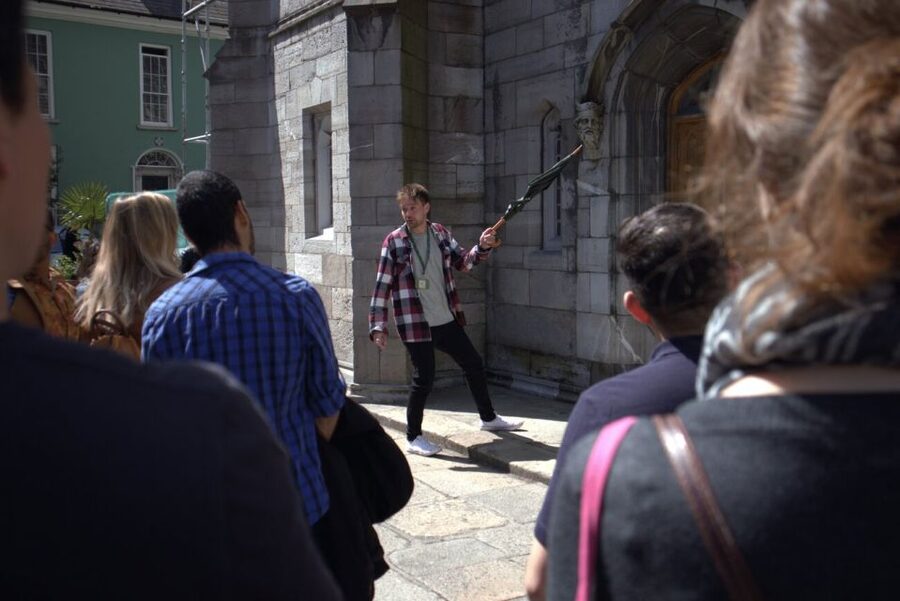
Dublin reveals itself one street at a time. This three-hour walk links music, folklore, politics, shopping, and old city crossings in a compact route through central Dublin. I like the strong mix of famous sights and local cultural markers, especially Claddagh Records and the Irish musicians honored at the Wall of Fame. I also like that you cover the city on foot, with a guide who can explain what you are seeing instead of leaving you to connect the dots alone.
The main thing to consider is the pace. Three hours gives you time for many stops, but not for long visits inside each place. You will see Trinity College and College Green, for example, but this is not a full college tour or a Book of Kells visit. The route is also centered on Dublin’s busiest core, so expect crowds around Temple Bar, Ha’penny Bridge, and Grafton Street.
In This Review
- Key Points at a Glance
- Why This Dublin Walk Works
- Starting at 23 Wellington Quay
- Claddagh Records and the Meaning of the Ring
- The Wall of Fame and Dublin’s Musical Memory
- Temple Bar Beyond the Pub Signs
- Crossing Ha’penny Bridge
- College Green and Trinity College
- Molly Malone and the Story of Cockles and Mussels
- Grafton Street and the Final City Scene
- What Three Hours Gives You
- Who Should Book This Walk?
- Final Verdict: A Useful First Walk Through Dublin
- FAQ
- Where does the Dublin walking tour start?
- How long does the tour last?
- Where does the tour finish?
- What languages are available?
- Is a private tour option available?
- Is the tour wheelchair accessible?
- What is included in the price?
Key Points at a Glance
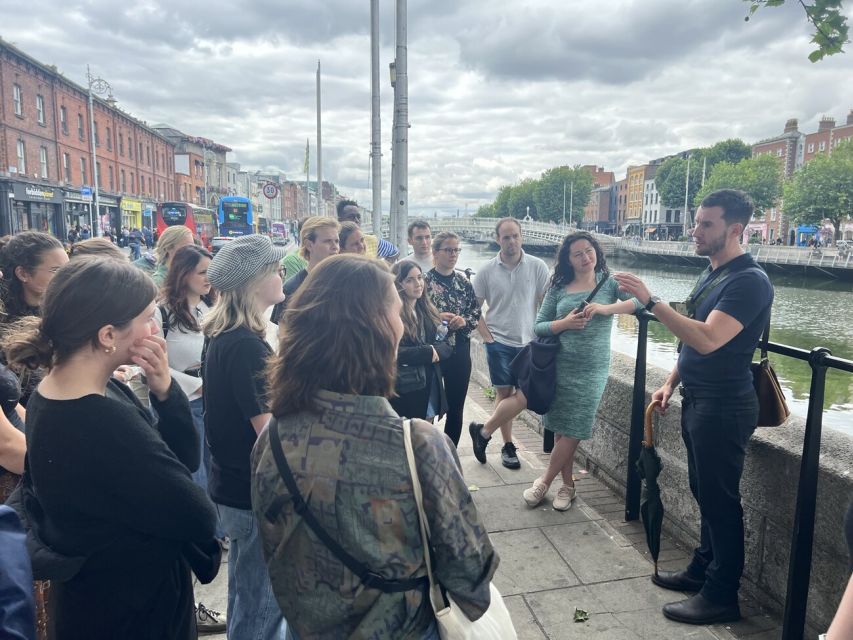
- Start at Claddagh Records: Begin with Irish music and the meaning behind the Claddagh ring at 23 Wellington Quay.
- Meet Ireland’s music legends: See the Wall of Fame tributes to artists including U2 and Sinéad O’Connor.
- Cross Ha’penny Bridge: Hear how this famous crossing reflects Dublin’s changing fortunes.
- Pass through Trinity’s College Green: Walk across a major civic space beside one of Ireland’s best-known universities.
- Finish among performers on Grafton Street: End near one of Europe’s busiest shopping streets, alive with musicians and street acts.
- Choose your language and group style: Tours are offered in English, Spanish, French, or Italian, with a private option available.
Why This Dublin Walk Works
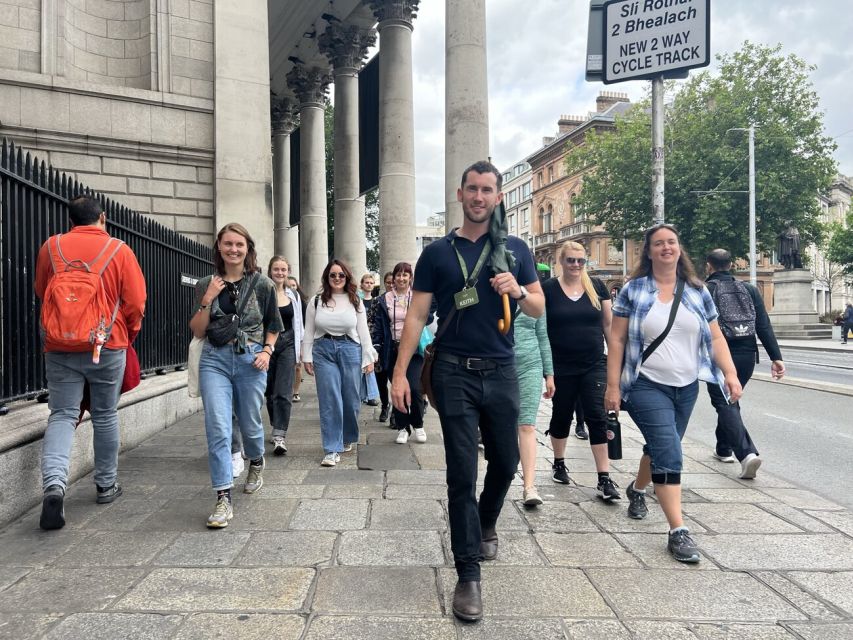
This tour is best understood as a city orientation with personality. You are not simply ticking off Dublin landmarks. You are moving through the places where music, politics, commerce, education, and folklore overlap.
That mix gives the walk a useful shape. Claddagh Records introduces Irish identity through music and craft. Temple Bar shows Dublin’s social side. Trinity College and College Green bring in education and politics. Molly Malone adds a layer of popular folklore, while Grafton Street closes the walk with modern city life.
I like that the route includes familiar sights without relying on them alone. Ha’penny Bridge and Trinity College are essential Dublin stops, but the Wall of Fame and Claddagh Records give the tour a more specific local flavor. If this is your first visit, the walk should help you understand how the central districts fit together.
The score of 4.4 from 12 ratings suggests a generally strong experience, though it is not a huge sample. One particularly warm comment praises Catherine for her competence and passion for Dublin and Irish history. If Catherine is your guide, that combination should suit this route well, since the tour depends on clear stories and lively explanations rather than long museum visits.
More Walking Tours in Dublin
- Dublin Highlights and Hidden Gems Guided Walking Tour
★ 5.0 · 6,020 reviews - Dublin: Highlights and Hidden Gems Walking Tour
★ 4.9 · 2,140 reviews - 1916 Rebellion Walking Tour
★ 5.0 · 1,605 reviews
Starting at 23 Wellington Quay
You meet your guide at 23 Wellington Quay, a practical starting point near the River Liffey and the central sights. Arrive ready to walk for three hours. Comfortable shoes matter more here than elaborate planning, since the value comes from following the route and listening as you go.
The tour is available as a private or group experience, depending on the option you choose. A private group can be useful if you want more freedom to ask questions or keep the walk focused on your own interests. A shared group may offer a livelier feel and usually makes more sense if you want a guided introduction without paying for exclusive use.
The guide speaks English, Spanish, French, or Italian. Check the selected option carefully so you book the language you want. The activity is wheelchair accessible, another practical advantage for anyone who needs a route designed with access in mind.
Claddagh Records and the Meaning of the Ring
The first stop at Claddagh Records gives the tour an appealing start. Rather than beginning with a general lecture about Dublin, you begin with music and a familiar Irish symbol.
You will hear about the Claddagh ring and its meaning. The heart, hands, and crown carry a message connected with love, friendship, and loyalty, making the ring more than a souvenir design. It is a useful way to understand how Irish identity often appears through objects, music, and family traditions.
Claddagh Records also sets the tone for the musical side of the walk. Irish music is not treated as background decoration here. It is part of the city’s public character, and the guide can help you connect the sounds associated with Ireland to the streets you are walking through.
The limitation is simple: the stop is a street-level introduction, not a scheduled concert or a long shopping visit. If you want time to browse records or buy a Claddagh ring, allow time after the tour rather than expecting the group to wait.
The Wall of Fame and Dublin’s Musical Memory
From there, the walk passes the Wall of Fame, where tributes honor Irish musicians such as U2 and Sinéad O’Connor. This is a quick but meaningful stop for anyone interested in the country’s modern music.
The Wall of Fame helps widen your picture of Ireland. Dublin is often presented through castles, churches, and literary figures, but its international musical influence is just as important to its modern identity. Seeing names and tributes in a city setting makes that story feel close at hand.
I especially like this part for music fans, but you do not need to know every artist to enjoy it. The guide’s explanation can give you a little context, and the stop works as a visual pause before the route moves into Temple Bar.
Do not expect a museum-style display with extensive biographies. The attraction is the setting and the chance to hear how Irish music connects with Dublin. If a particular musician interests you, note the name and return later for a self-guided look.
A completely different kind of day out from Dublin:
- Dublin to Cliffs of Moher, including Wild Atlantic Way and Galway
★ 5.0 · 23,331 reviews - From Dublin: Cliffs of Moher, Burren & Galway City Day Tour
★ 4.8 · 18,888 reviews - Dublin: Guinness Storehouse Entry Ticket
★ 4.6 · 16,863 reviews - Dublin to Cliffs of Moher, Burren, Wild Atlantic Way, Galway Tour
★ 5.0 · 12,924 reviews
Temple Bar Beyond the Pub Signs
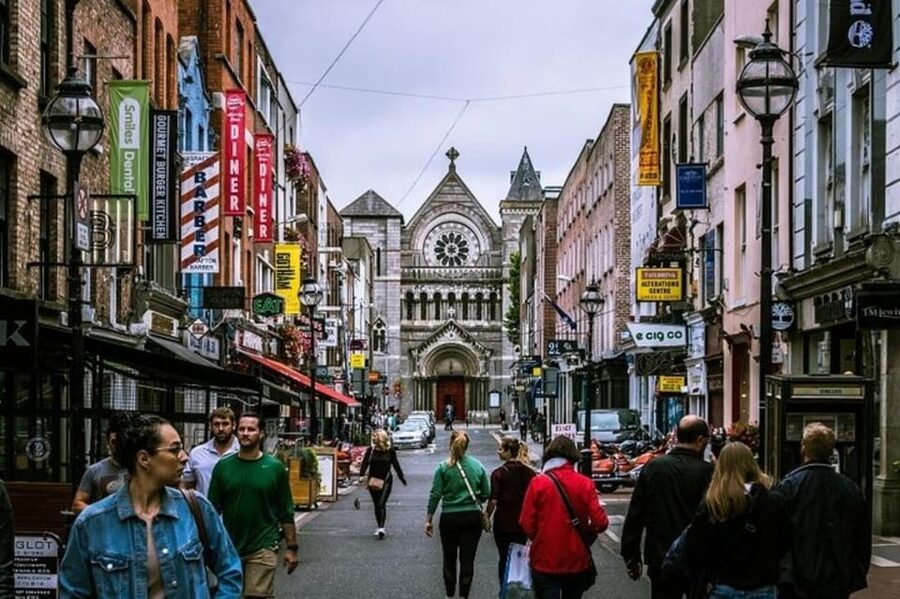
Temple Bar is one of Dublin’s most recognizable districts, and this tour takes you through its lively center. The area is associated with pubs, music, art, and nightlife, but a guided walk can help you see more than the familiar pub fronts.
The district is where tradition and creativity meet. That makes it a good place for a guide to explain Dublin’s public culture, from music and social life to the way the area has become a major stop on almost every central city route.
You should expect plenty of activity here. Temple Bar can be crowded, especially when people are moving between pubs, shops, and nearby attractions. Stay close enough to hear the guide, and do not count on taking every photograph without people in the frame.
The trade-off is that Temple Bar can feel busy and highly visited. If you are looking for a quiet, tucked-away Dublin street, this section may not satisfy you. Its value lies in understanding why the area matters and seeing it as part of the city’s character, not in pretending it is an undiscovered quarter.
Crossing Ha’penny Bridge
The walk continues to Ha’penny Bridge, one of the clearest symbols of Dublin. Crossing it gives you a short break from the surrounding streets and a direct view of the River Liffey.
The bridge also gives the guide a chance to talk about Dublin’s resilience and change. Its history is tied to the city’s daily movement across the river, and the crossing remains useful as well as photogenic.
This is a brief stop, but it is one of the route’s most memorable moments. You get a landmark, a river view, and a story in the space of a few minutes. Keep your attention on the walking surface and the people around you, since the bridge can become congested.
If photography matters to you, this is a good place to pause when the group allows it. The tour is not designed as a dedicated photo walk, so you may need to choose between listening closely and getting the perfect picture.
College Green and Trinity College
College Green brings a different mood. Once a political center, it is now closely associated with Trinity College and the university’s long academic tradition.
This part of the walk shows how Dublin’s civic life has changed over time. A space connected with politics now serves as an impressive approach to one of the city’s most respected educational institutions. That shift gives the stop more meaning than a simple photograph outside a grand building.
You will walk through the area and hear about its importance, but you should not confuse this tour with a Trinity College admission visit. The route does not promise entry to the college, a Book of Kells viewing, or an interior academic tour.
That can be a benefit if you are short on time. You get the setting and context without committing to a longer attraction visit. If Trinity College is a major priority, plan a separate visit and treat this walk as an introduction.
The contrast with Temple Bar also works well. Within a short distance, Dublin moves from nightlife and creative culture to formal academic space. A good guide can make that change feel connected rather than random.
Molly Malone and the Story of Cockles and Mussels

The stop at the Molly Malone statue brings the tour into the world of song and folklore. Your guide explains the story behind Dublin’s beloved Cockles and Mussels song and the place Molly occupies in the city’s popular imagination.
This is a small stop with a large reputation. The statue is a familiar meeting point, and the story gives you an easy cultural reference to carry through the rest of your time in Dublin.
I like this part because it shows how a city remembers itself through songs. You are not only looking at a statue. You are hearing how a character became linked with Dublin’s public identity.
As with several stops on this route, the visit is short. The tour does not promise a full discussion of every version of Molly Malone’s story. If you want a longer look at Irish folklore, you will need to explore beyond the walk.
Grafton Street and the Final City Scene
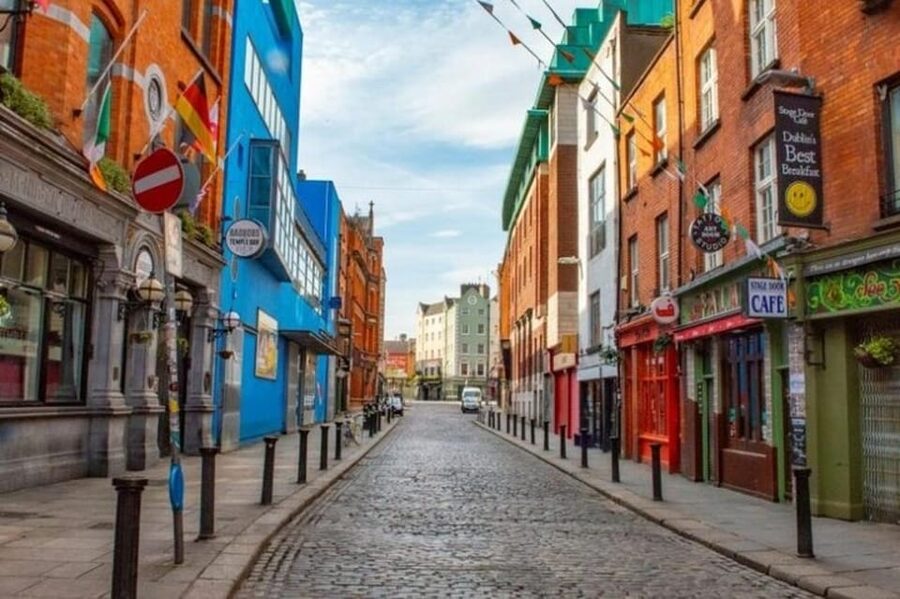
The route finishes at Grafton Street, one of Europe’s busiest shopping streets. Here, shops, pedestrians, street performers, and musicians create a very different scene from the quieter academic setting at College Green.
Grafton Street is a good ending because it leaves you in the middle of Dublin’s everyday activity. You can continue shopping, listen to performers, or use the area as a base for further sightseeing after the tour.
The street can be crowded, so keep your belongings secure and stay aware of your group. That is not a criticism of the route. It is simply part of walking through one of the city’s busiest public spaces.
There is one detail worth confirming when you book. The route description identifies Grafton Street as the final sightseeing stop, while the activity information also says the walk ends back at the meeting point. Ask your guide where the group officially finishes so you can plan your next move accurately.
What Three Hours Gives You
Three hours is a useful length for this route. It is long enough to connect several central districts, but short enough to fit into a busy first day in Dublin.
You will spend most of the time outdoors and on foot. The tour does not include transportation, meals, attraction admission, or a scheduled music performance. Its value comes from the guide’s commentary, route planning, and ability to connect the stops.
I would not book this as your only Dublin experience. It works better as an opening walk that helps you decide where to return. Afterward, you may want more time at Trinity College, another visit to the river, or an evening focused on live Irish music.
A private option gives you more control, but the exact difference in group size and price depends on the booking choice. At $62 per person, the cost is reasonable if you want a guided overview and personal attention matters to you. It is less appealing if you prefer to walk independently and are comfortable researching the landmarks yourself.
The free cancellation up to 24 hours before the start also makes the booking less rigid. You can reserve now and pay later, which helps if your Dublin schedule is still shifting.
Who Should Book This Walk?
I recommend it most strongly for a first visit to Dublin, especially if you want a clear introduction without spending half a day inside one attraction.
It should suit you if you enjoy:
- Short stops with stories rather than long museum sessions
- Irish music, folklore, and cultural symbols
- Walking between major central landmarks
- A guide who can answer questions along the way
- A choice between a shared walk and a private group
- A tour offered in English, Spanish, French, or Italian
It may not suit you if you want extensive time inside Trinity College, a dedicated music performance, or a quiet route away from busy streets. It is also not the right choice if you prefer to set your own pace and stop whenever you like.
For families, the mix of statues, bridges, music, and street life may be easier to enjoy than a long historical lecture. Still, three hours is a substantial walk, so consider your group’s comfort and mobility before booking.
Final Verdict: A Useful First Walk Through Dublin
I would book this tour if I wanted a practical introduction to central Dublin with more character than a basic landmark checklist. The strongest elements are the music focus at Claddagh Records and the Wall of Fame, along with the guide’s ability to connect Temple Bar, Trinity College, Molly Malone, and Grafton Street into one story.
The price is fair for a three-hour guided walk, particularly if you choose a private group or want commentary in one of the four available languages. Just keep your expectations realistic: you are seeing many important places from the outside, not receiving full admission tours.
Choose this experience when you want to get your bearings fast, hear about Dublin’s musical and cultural identity, and leave with several places worth revisiting. Skip it if your priority is a slow, detailed visit to one attraction. For a first day in the city, it offers a solid route, a manageable time commitment, and enough local color to make the streets feel less like a map.
FAQ
Where does the Dublin walking tour start?
The tour starts at 23 Wellington Quay in Dublin.
How long does the tour last?
The walking tour lasts three hours. Starting times vary, so check availability when choosing your date.
Where does the tour finish?
Grafton Street is identified as the final sightseeing stop. The activity information also says it ends back at the meeting point, so confirm the exact finish location with your guide.
What languages are available?
Live guiding is available in English, Spanish, French, and Italian.
Is a private tour option available?
Yes. You can select a private group option, depending on availability.
Is the tour wheelchair accessible?
Yes, the activity is listed as wheelchair accessible.
What is included in the price?
The price includes a private or group walking tour, depending on your selected option, and a live guide. No other inclusions are specified.
Just added around Dublin
- A Self Guided Walking Tour of Dublin’s Docklands★ 4.5 · 3 reviews
- Waterford Crystal and Kilkenny Full-Day Rail Tour from Dublin★ 5.0 · 3 reviews
- Turtle Bunbury’s Dublin: A Self-Guided Audio Tour from a Celebrated Author★ 5.0 · 3 reviews
- Secret and unusual Dublin: guided walking tour★ 5.0 · 3 reviews
- Cliffs of Moher and The Burren Private Tour from Dublin★ 5.0 · 3 reviews
- Skip-the-line St. Patrick’s Cathedral and Dublin City Tour★ 5.0 · 3 reviews
- Dublin Full-Day Tour through Boyne Valley★ 5.0 · 3 reviews
- Rock Of Cashel And Blarney Castle Private Chauffeur Full Day Sightseeing Tour★ 4.5 · 3 reviews
Walking Tours, compared.
Dublin Highlights and Hidden Gems Guided Walking Tour
Read our review →

90 Minute Dublin Walking tour and Sightseeing tips
Read our review →

Historical 2-Hour Guided Walking Tour of Dublin
Read our review →
Dublin Traditional Irish 3 Course Meal Walking Tour with Local
Read our review →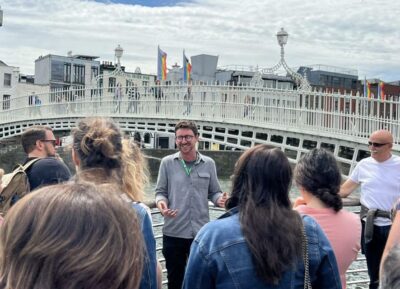
Browse the lists this tour appears in