
Reviewed · HISTORICAL TOURS
Dublin: LGBT Pride Walking Tour with Queer History
Dublin’s past has more queer stories than most visitors expect. This two-hour walk connects LGBTQ+ history with real city streets, from Liberty Hall and the General Post Office to Trinity College and The George. I like the clear route through central Dublin, and I like the mix of public figures, protest movements, and personal stories. The main drawback is simple: two hours can only sketch a long and sometimes painful story, so you may leave wanting more.
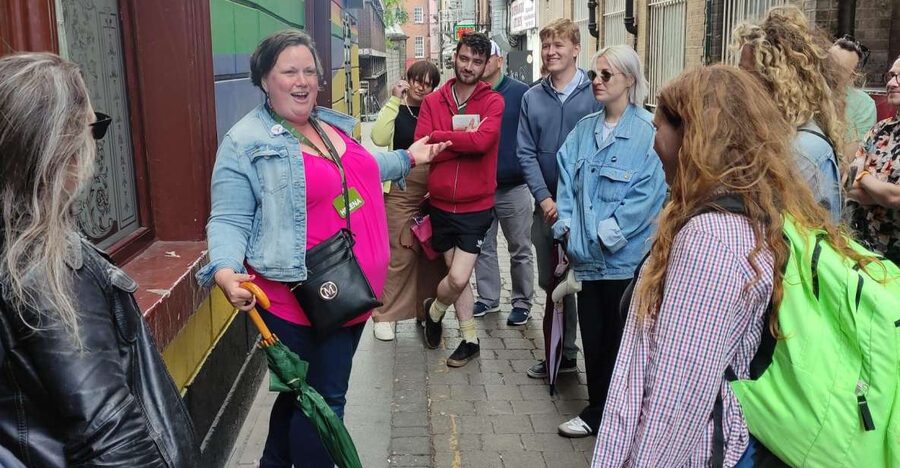
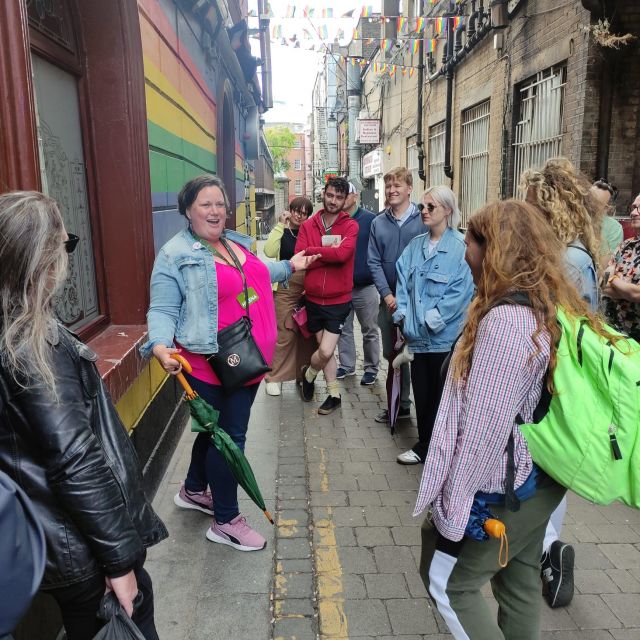
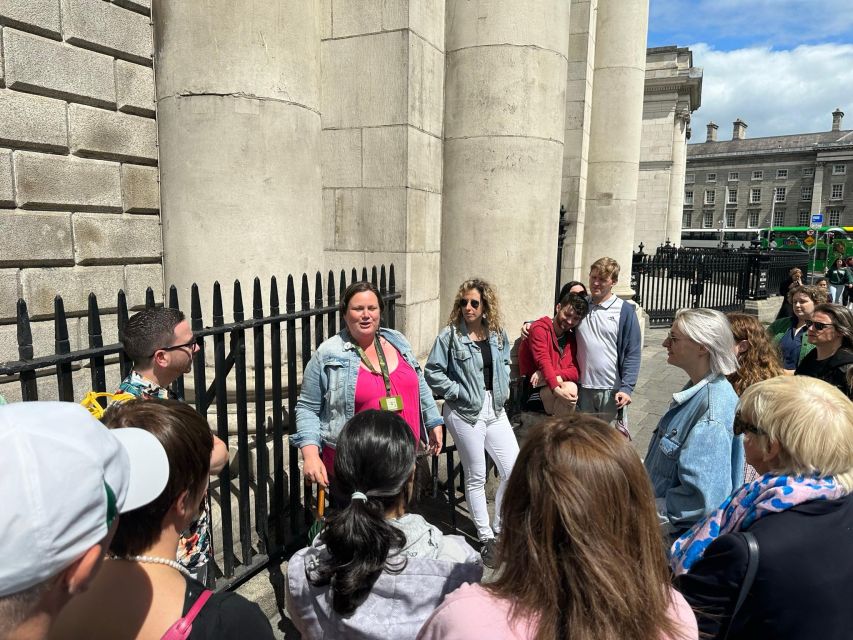
The tour is especially strong when guide Helena is leading it. Her warm manner, humor, personal anecdotes, and willingness to answer questions give the walk an easy, human feel. You should still wear comfortable shoes, since this is a proper walking tour, not a talk from one fixed spot.
In This Review
- Key points about Dublin’s queer history walk
- Why this Dublin tour is worth your time
- Meeting outside the Old Storehouse
- Liberty Hall and the first Pride protest
- The General Post Office and Panti Bliss
- Trinity College and the Sexual Liberation Movement
- Dr Lydia Foy and gender recognition
- Diceman’s Corner and the Hirschfeld Centre
- The George and Dublin’s LGBTQ+ social life
- Helena’s guiding style
- Is $27 a fair price?
- Who should book this walk?
- Final verdict: a focused and worthwhile Dublin walk
- FAQ
- How long does the Dublin LGBT Pride Walking Tour last?
- How much does the tour cost?
- What language is the tour conducted in?
- Where does the tour begin?
- How can I recognize the guide?
- Where does the tour end?
- Which Dublin locations are included?
- Is the tour wheelchair accessible?
- What should I bring?
- Can I cancel the booking for a refund?
Key points about Dublin’s queer history walk
- Liberty Hall connects the tour to Ireland’s first Pride protest, giving the political story a clear place in the city.
- The route includes Trinity College, where you hear about Ireland’s Sexual Liberation Movement.
- Stories of Dr Lydia Foy and Panti Bliss show how equality campaigns moved from private struggle to public action.
- The George and Diceman’s Corner bring the story into Dublin’s LGBTQ+ social life and nightlife.
- Helena’s warm, funny style helps balance difficult subjects with conversation and personal detail.
- The $27 price includes a two-hour English-language walk, with free cancellation up to 24 hours before departure.
Why this Dublin tour is worth your time
Dublin is easy to explore through its famous writers, revolutionaries, churches, and pubs. This walk gives you another way to read the city. Streets and buildings become clues to the long fight for LGBTQ+ recognition, from exclusion and abuse to marriage equality.
I like that the tour does not treat queer history as a separate footnote. It places LGBTQ+ people inside Ireland’s wider political and social story. You hear about revolutionaries, civil rights campaigners, Pride pioneers, and people who pushed for recognition of gender identity.
That approach matters because it shows change as a process. Ireland’s progress did not happen in one dramatic moment. It came through protests, legal campaigns, public conversations, brave individuals, and a community that kept asking to be seen and treated fairly.
The route also gives you a different reason to notice central Dublin. You may already plan to see the General Post Office or walk near Trinity College. Here, those familiar places take on another meaning. The tour asks you to connect national history with the experiences of people who were often left out of the usual telling.
More Historical Tours in Dublin
- Dublin Historical Centre Food Tour with 8 Food Tastings & Drinks
★ 5.0 · 1,718 reviews - 2-Hour Historical Walking Tour from Dublin
★ 5.0 · 875 reviews - Historical 2-Hour Guided Walking Tour of Dublin
★ 4.7 · 865 reviews
Meeting outside the Old Storehouse
The walk begins directly outside the Old Storehouse Bar & Restaurant. Look for the guide carrying a green umbrella. That detail is useful in a busy central area, where several streets and entrances can look alike.
Arrive ready to walk for two hours. The tour ends back at the same meeting point, so you do not need to plan a separate pickup or work out how to return to your accommodation. You also avoid the usual problem of ending a walking tour on the other side of the city.
The activity is wheelchair accessible. Still, if you have specific mobility needs, it is sensible to confirm the current route and meeting details when you book, since walking tours rely on city pavements and public streets.
English is the tour language, and a live guide leads the experience. The guide is the main feature here. This is not an audio route that sends you from plaque to plaque. You can listen, ask questions, and chat between stops.
Liberty Hall and the first Pride protest
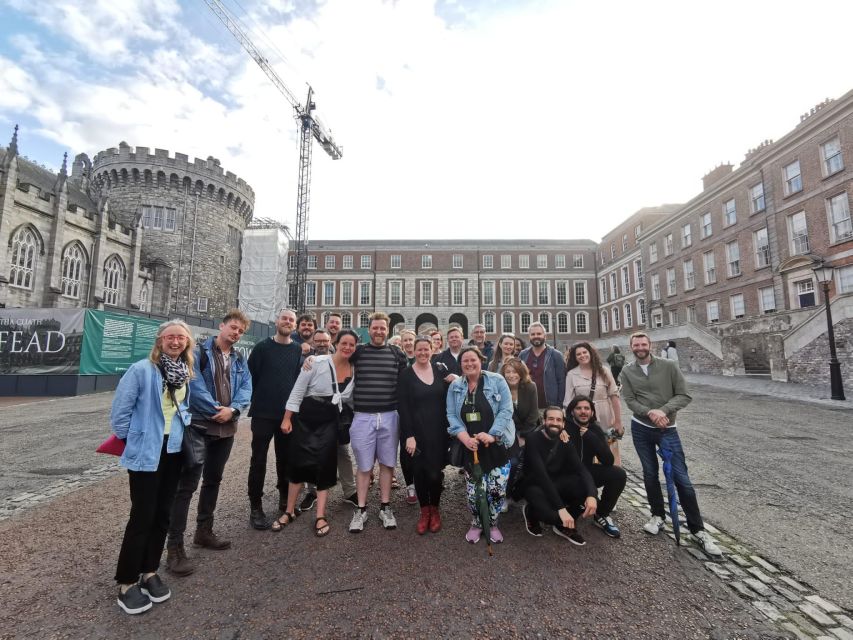
Liberty Hall gives the tour an early political anchor. You hear about the first Pride protest held there and how public action helped bring LGBTQ+ rights into view.
This stop is valuable because it moves the story beyond famous names. Pride is not only a celebration. It also began as protest, and the location helps you understand the courage involved in claiming public space and demanding recognition.
The guide places the event within Ireland’s changing social climate. The tour’s larger story runs from exclusion and abuse toward equal rights, but it does not suggest that the work ended with legal victories. Instead, you get a sense of how each advance grew from earlier organizing and pressure.
I would pay close attention here if you are interested in social movements. The stop gives the walk a useful frame: queer history is not just about nightlife or identity. It is also about civil rights, public institutions, and the right to take part in national life.
The General Post Office and Panti Bliss
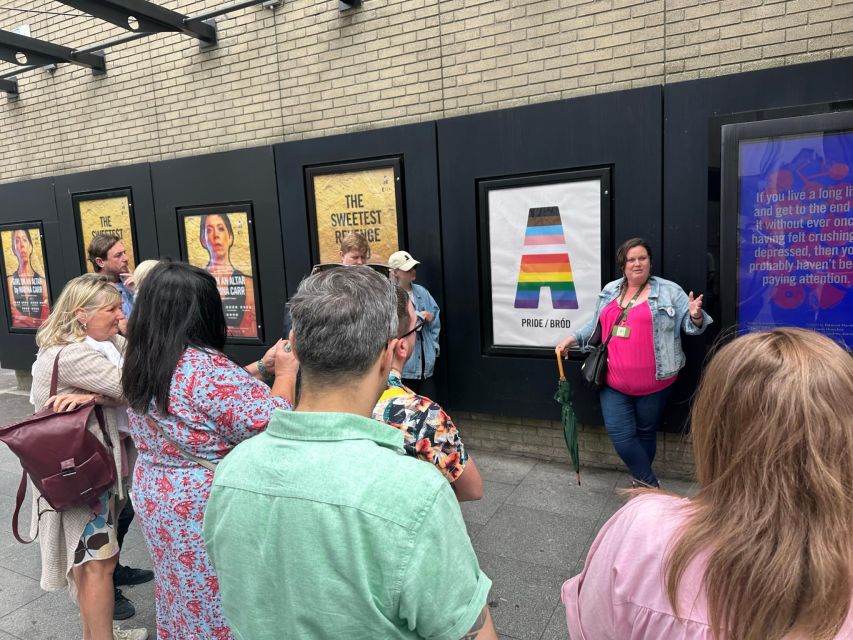
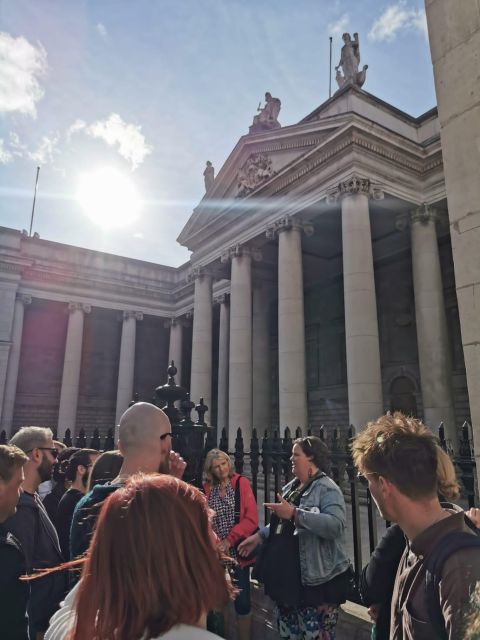
The General Post Office brings queer figures into the story of Ireland’s revolutionary past. You hear about Panti Bliss and other important personalities while standing near one of Dublin’s most familiar national landmarks.
Panti Bliss is a particularly effective figure for this tour because her public work links performance, identity, and equality campaigning. The stop helps show how a person can influence public debate through speeches, appearances, and direct engagement with political questions.
The setting also widens the meaning of Irish revolution. Visitors often learn the standard story of 1916 and the struggle for independence at the GPO. This tour asks you to consider the many kinds of social change that followed, including the fight for LGBTQ+ rights.
The guide’s delivery matters most at a stop like this. Helena has been praised for making serious material funny and approachable without losing its importance. That balance should suit you if you want a tour that teaches but does not feel like a classroom lecture.
More Walking Tours in Dublin
- Dublin Highlights and Hidden Gems Guided Walking Tour
★ 5.0 · 6,020 reviews - Dublin: Highlights and Hidden Gems Walking Tour
★ 4.9 · 2,140 reviews - 1916 Rebellion Walking Tour
★ 5.0 · 1,605 reviews - 90 Minute Dublin Walking tour and Sightseeing tips
★ 5.0 · 916 reviews
Trinity College and the Sexual Liberation Movement
At Trinity College, the discussion turns toward the Sexual Liberation Movement. This part of the walk shows how ideas about sexuality, identity, and personal freedom entered public discussion and challenged older restrictions.
The college setting makes a useful contrast with the street-level story of protest. Here, the tour connects intellectual life and social activism. You are not simply looking at a grand institution. You are considering how movements develop through debate, education, organizing, and the refusal to accept old rules.
This section may be one of the more discussion-heavy parts of the tour. The supplied details do not promise entry into Trinity College, so expect to pass by and hear the story from outside rather than take a campus tour.
That is worth knowing before you book. If you want interiors, exhibitions, or a long visit inside each landmark, this is not the right format. If you like linking places with ideas, the passing view works well and keeps the walk moving.
Dr Lydia Foy and gender recognition
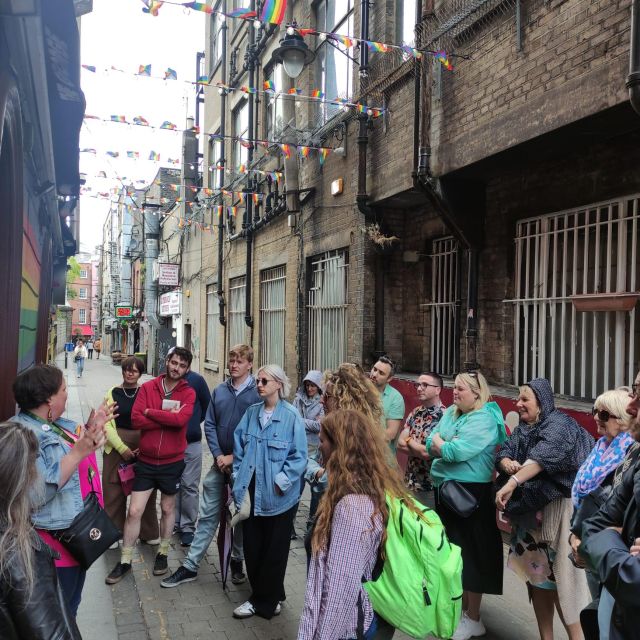
The tour also tells the story of Dr Lydia Foy and the Gender Recognition Act. This brings gender identity into the wider account of legal change in Ireland.
Dr Foy’s story gives the tour a personal focus. Legal reform can sound abstract when reduced to dates and legislation. A person’s experience shows what those laws mean in daily life, and why recognition matters.
This section also helps you see that LGBTQ+ equality is not one single campaign. Different parts of the community have faced different barriers, and legal progress has involved more than one issue. The walk uses individual stories to make that point without losing sight of the wider movement.
For me, this is one of the most useful parts of the route because it links history with the present. You leave with a clearer idea of how Ireland moved toward marriage equality and gender recognition, while also understanding that social change can be uneven and contested.
Diceman’s Corner and the Hirschfeld Centre
Diceman’s Corner appears as another important location on the route. The supplied details do not give a full description of what you will see there, so I would treat it as a stop where the guide provides the meaning and background.
That is typical of a history walk. Some places look ordinary until someone explains why they matter. Do not judge the value of a stop by whether it has a grand façade or a clear memorial. The point is often the story attached to it.
The Hirschfeld Centre adds another layer to the walk’s account of LGBTQ+ community life. Together, these locations shift attention from national politics to spaces connected with community, organization, and social connection.
You should expect the guide to do much of the work at these stops. The tour is designed around interpretation rather than a collection of large displays. If you prefer a museum with objects and written panels, you may want to pair this walk with another Dublin attraction.
The George and Dublin’s LGBTQ+ social life
The George is described as Ireland’s most iconic LGBTQ+ venue, making it a natural part of this route. Seeing it gives the tour a direct link to the social side of queer Dublin.
This stop helps balance the heavier material about discrimination, law, and protest. Community life also means meeting, celebrating, finding friends, and having a place where identity can be expressed openly.
The venue is especially useful in the context of the entire walk. Early stops focus on protest and political pressure. The George shows what public community spaces can mean after decades of campaigning. It is a reminder that equality is not only about legislation. It is also about being able to live, socialize, and belong.
The tour does not include admission or a nightlife visit. You pass important locations as part of the walk. If you want to experience Dublin’s LGBTQ+ nightlife separately, you would need to make your own evening plans.
Helena’s guiding style
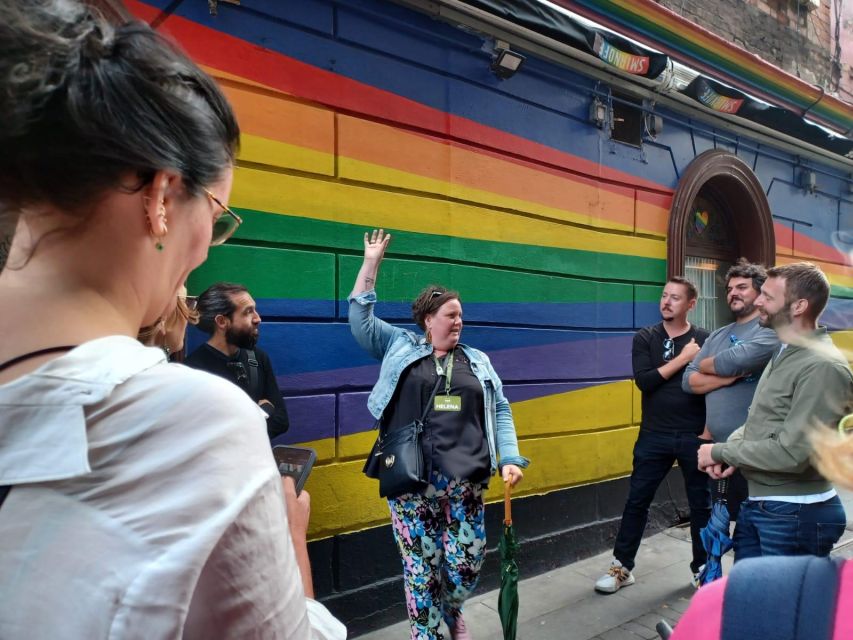
The guide can make or break a history walk, and Helena receives especially strong praise for her approach. She is described as welcoming, witty, energetic, and sincere. Her personal anecdotes add warmth, while her ability to answer questions makes the experience feel conversational.
That combination suits the subject. Queer history includes painful experiences, so a guide who can add humor without making light of the past is valuable. The walk appears to keep both sides in view: the hard-won gains and the struggles that came before them.
You may also find the time passes quickly. The route covers many figures and locations in two hours, and Helena has been praised for fitting a great deal into that period. The tradeoff is that some topics will receive only a short explanation.
If you want a slow, highly detailed academic treatment of one person or one legal case, choose a longer specialist experience. If you want a lively introduction with enough substance to change how you see Dublin, this format should work well.
Is $27 a fair price?
At $27 per person, the tour offers two hours with a live English-speaking guide and a route through several central locations. I consider that a fair price if you value interpretation and local stories more than a long list of included attractions.
You are not paying for transport, entry tickets, food, or a private group. You are paying for the guide’s research, storytelling, route planning, and ability to connect places that you might otherwise walk past.
The value is strongest for first-time visitors who want more than the standard Dublin highlights. It is also good for anyone who has already seen the GPO and Trinity College and wants a new way to understand them.
The price may feel less attractive if you have limited interest in LGBTQ+ history or if you want to spend your Dublin budget on ticketed sights. This is a focused subject tour, not a general introduction to every part of the city.
You can reserve now and pay later, which helps if your schedule is still shifting. Free cancellation is available up to 24 hours before the tour for a full refund. Check the available starting times before booking, since the exact departure time is not fixed in the information provided.
Who should book this walk?
I would recommend this tour to anyone who wants a fuller account of Ireland’s social history. It is a good fit for LGBTQ+ visitors, allies, history enthusiasts, students, and families with older children or teenagers who enjoy learning through stories.
One review specifically describes a teenage son enjoying the tour as much as his parent. That suggests the guide’s humor and direct style can work across ages, although the subject includes discrimination and abuse and may call for some family discussion.
You should also book if you like tours that connect public landmarks with less familiar personal stories. The walk gives you reasons to look twice at places you may already have on your Dublin list.
You may want to skip it if you dislike walking, want a silent self-guided route, or expect to enter every landmark. Comfortable shoes are the only stated packing advice, and you should take it seriously.
Final verdict: a focused and worthwhile Dublin walk
I would book the Dublin LGBT Pride Walking Tour if you want a compact, people-centered look at Ireland’s changing society. The route covers Liberty Hall, the General Post Office, Trinity College, Diceman’s Corner, the Hirschfeld Centre, and The George, but the places matter because of the stories attached to them.
The strongest reason to go is the guiding. Helena’s warmth, humor, personal detail, and energy help the two hours move quickly. The main caution is the same feature that keeps the tour manageable: the walk covers a lot, so no single subject receives an exhaustive treatment.
For $27, it is a sensible choice for a focused history experience in central Dublin. Bring comfortable shoes, meet the green umbrella outside the Old Storehouse, and arrive ready to listen. You will leave with a better understanding of the people and campaigns that helped move Ireland from exclusion toward equality.
FAQ
How long does the Dublin LGBT Pride Walking Tour last?
The walking tour lasts two hours.
How much does the tour cost?
The listed price is $27 per person.
What language is the tour conducted in?
The tour is conducted in English with a live guide.
Where does the tour begin?
Meet your guide directly outside the Old Storehouse Bar & Restaurant.
How can I recognize the guide?
Look for someone carrying a green umbrella.
Where does the tour end?
The activity ends back at the meeting point outside the Old Storehouse Bar & Restaurant.
Which Dublin locations are included?
The route includes Liberty Hall, the General Post Office, Trinity College, Diceman’s Corner, the Hirschfeld Centre, and The George.
Is the tour wheelchair accessible?
Yes, the activity is listed as wheelchair accessible.
What should I bring?
Bring comfortable shoes for the two-hour walking route.
Can I cancel the booking for a refund?
Yes. You can cancel up to 24 hours in advance for a full refund. You can also reserve now and pay later.
Just added around Dublin
- A Self Guided Walking Tour of Dublin’s Docklands★ 4.5 · 3 reviews
- Waterford Crystal and Kilkenny Full-Day Rail Tour from Dublin★ 5.0 · 3 reviews
- Turtle Bunbury’s Dublin: A Self-Guided Audio Tour from a Celebrated Author★ 5.0 · 3 reviews
- Secret and unusual Dublin: guided walking tour★ 5.0 · 3 reviews
- Cliffs of Moher and The Burren Private Tour from Dublin★ 5.0 · 3 reviews
- Skip-the-line St. Patrick’s Cathedral and Dublin City Tour★ 5.0 · 3 reviews
- Dublin Full-Day Tour through Boyne Valley★ 5.0 · 3 reviews
- Rock Of Cashel And Blarney Castle Private Chauffeur Full Day Sightseeing Tour★ 4.5 · 3 reviews
Historical Tours, compared.

Dublin Historical Centre Food Tour with 8 Food Tastings & Drinks
Read our review →

Historical 2-Hour Guided Walking Tour of Dublin
Read our review →
Dublin to Cork, Blarney Castle & Cóbh Heritage Centre by train
Read our review →
Jeanie Johnston Tall Ship Irish Famine History Tour
Read our review →

Deliciously Dublin: The Artisan Donut Walking & History Tour
Read our review →Browse the lists this tour appears in