
Reviewed · HISTORICAL TOURS
Dublin LGBTQ Pride Historical and Cultural Walking Tour
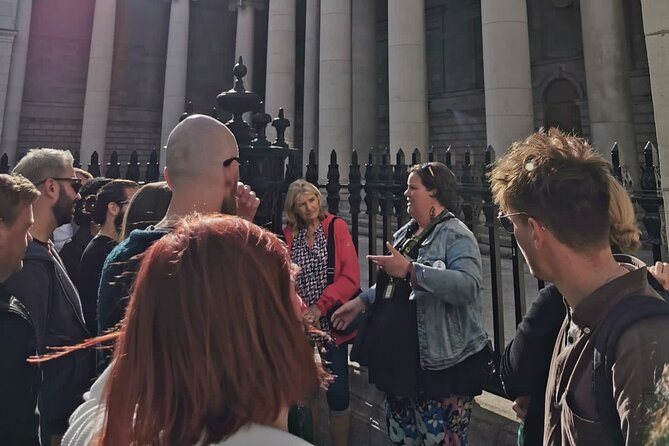
Dublin’s queer past is hiding in plain sight. This two-hour walk links familiar city sights with stories of Ireland’s LGBTQ+ community, from the 1916 Easter Rising to the first Pride parade and the campaign for transgender rights. I especially like the route’s mix of major landmarks and less obvious queer history, and I like that guides such as Helena and Deidre bring warmth, energy, and personal passion to the subject. The main consideration is the brisk city walk: you cover a fair stretch of central Dublin, and the advertised group limit can reach 100 people, even though the experience has also been described as small-group in practice.
At $29.02 per person, I see this as a fair-priced history tour rather than a sightseeing bargain. You do not pay admission to most stops, but the value comes from the stories and connections a standard Dublin city tour is unlikely to cover. Trinity College is visited from the outside, and the tour does not include an indoor visit to Dublin Castle or the GPO Museum.
In This Review
- Key points to know before you book
- Why this tour adds something new to Dublin
- Starting in Temple Bar and crossing the Liffey
- The GPO and LGBTQ+ figures of 1916
- The Abbey Theatre and public figures who shaped Ireland
- Liberty Hall and the difficult story of Ireland’s first Pride parade
- Trinity College and the names beneath the arch
- Meeting House Square and queer Dublin in the 1980s
- The George Bar and Dublin’s ongoing community life
- Finishing at Dublin Castle
- Timing, walking effort, and group size
- Is $29.02 a fair price?
- Who should book this Dublin LGBTQ+ tour?
- FAQ
- Where does the Dublin LGBTQ Pride Historical and Cultural Walking Tour start?
- Where does the tour finish?
- How long does the tour last?
- Is admission to Trinity College included?
- What language is the tour offered in?
- Can I cancel for a full refund?
- Should you book it?
Key points to know before you book
- A queer reading of classic Dublin sights: Temple Bar, the GPO, Trinity College, and Dublin Castle become part of a wider LGBTQ+ story.
- Guides with real energy: Helena and Deidre, also spelled Deidree in one account, are praised for making complex history clear, personal, and engaging.
- A route through modern Irish change: The walk covers gay rights, women’s rights, transgender activism, the first Irish Pride parade, and the people who pushed society forward.
- Mostly free outdoor stops: You see important buildings and public spaces without paying separate admission, though this is not a collection of museum visits.
- A useful central location: The tour begins at 3 Crown Alley in Temple Bar and finishes in the upper courtyard of Dublin Castle.
- A moderate physical outing: Plan for roughly two hours on foot, with city streets, bridge crossings, and several stops of about ten minutes each.
Why this tour adds something new to Dublin
Dublin is easy to tour in the usual way. You can photograph the Ha’penny Bridge, walk around Temple Bar, pass the GPO, admire Trinity College, and finish near Dublin Castle. The trouble is that the buildings can become a checklist. This tour gives those same places a more focused purpose.
You are not simply told when a building was built or who occupied it. You hear about LGBTQ+ figures, activists, writers, performers, and campaigners connected to Ireland’s political and cultural story. That matters because queer history is often treated as a separate subject, when it is actually tied to national independence, theatre, journalism, civil rights, religion, and public life.
The route also gives you a useful introduction to Dublin’s LGBTQ+ community. It is not limited to famous names or cheerful celebration. The stop at Liberty Hall addresses the painful circumstances around Ireland’s first gay Pride parade, while later stops look at the people who helped create hope during the 1980s.
I appreciate that balance. You get celebration, but also discrimination, loss, activism, and slow social change. The result should feel more honest than a tour that presents Irish LGBTQ+ history as a straight line toward progress.
More Historical Tours in Dublin
- Dublin Historical Centre Food Tour with 8 Food Tastings & Drinks
★ 5.0 · 1,718 reviews - 2-Hour Historical Walking Tour from Dublin
★ 5.0 · 875 reviews - Historical 2-Hour Guided Walking Tour of Dublin
★ 4.7 · 865 reviews
Starting in Temple Bar and crossing the Liffey
Meet your guide at 3 Crown Alley, in the centre of Temple Bar. This is a busy and familiar part of Dublin, so finding the general area should be simple, though you will want to arrive with enough time to locate the exact meeting point. The walk begins with a short orientation before moving through the district.
Temple Bar is more than a nightlife quarter here. The tour looks at its connection to Dublin’s LGBTQ+ community, including the site of Ireland’s first bona fide gay headquarters. That headquarters offered much more than a place to meet. It included a café, disco, cinema, and other community facilities, showing how much practical support can grow from a shared base.
You then cross one of Dublin’s most photographed bridges as the story moves across the River Liffey. The bridge crossing is a simple part of the walk, but it helps set the tone. Dublin’s queer story is not confined to one pub or one district. It runs through the centre of the city.
The tour also uses both sides of the Liffey and passes the Anna Livia sculpture, described here as Dublin’s old lifeblood. These moments add some visual variety to what could otherwise be a series of pavement stops. You get views, movement, and a sense of how the city’s neighbourhoods connect.
The GPO and LGBTQ+ figures of 1916
The General Post Office is one of Dublin’s most important public buildings and the centre of the 1916 Easter Rising. Many city tours explain the rebellion and the building’s role in Irish independence. This walk adds another question: which gay figures were involved in the events of that week, and how are they remembered now?
That shift in focus is one of the tour’s strongest ideas. National history is often told through a narrow set of heroes, while the sexuality and private lives of historical figures may be ignored, softened, or treated as irrelevant. Here, you look at the people connected to the Rising through a queer lens without losing the larger political setting.
The stop lasts about ten minutes and takes place outside, with admission listed as free. You should not expect an extended museum visit. Instead, the guide uses the GPO as a stage for a short, focused story that connects Irish independence with the lives of people who do not always receive space in the standard version of events.
If you have already taken a general Easter Rising tour, this section can still add something fresh. If you know little about 1916, it offers a brief introduction rather than a full military or political explanation.
The Abbey Theatre and public figures who shaped Ireland
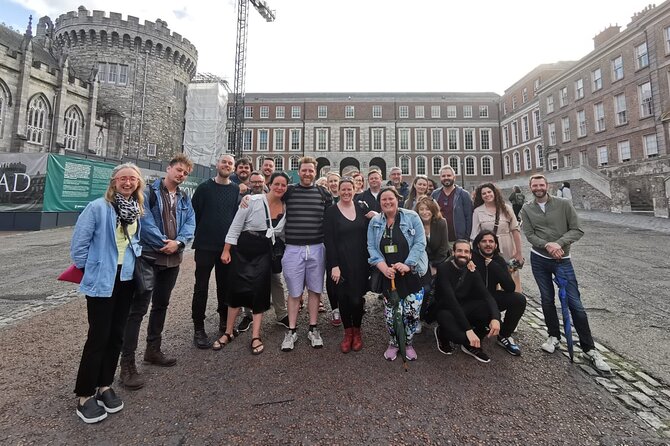
The Abbey Theatre is Ireland’s national stage, and the next stop turns toward culture and public influence. The focus is one of Dublin’s contemporary gay icons and the role that person played in shaping modern Ireland.
This is a smart addition to the route. A queer history tour should not focus only on legal battles and protest marches. Theatre, writing, media, and public performance can change how a society sees itself. The Abbey provides a natural setting for that discussion.
The stop lasts about ten minutes. Again, you should expect an outdoor explanation rather than a theatre performance or backstage visit. The payoff comes from the guide’s storytelling and from understanding how an individual cultural figure can help alter the national conversation.
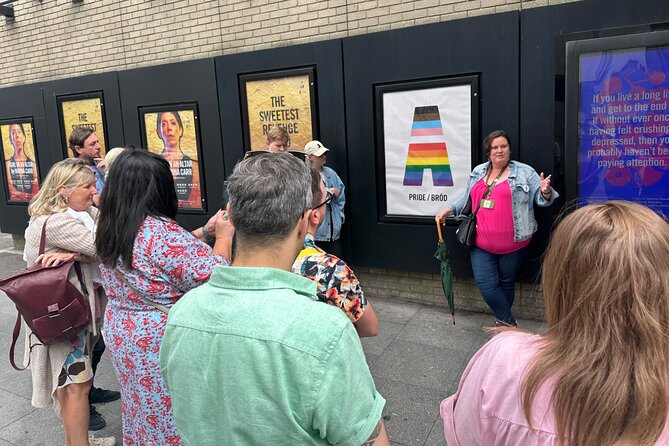
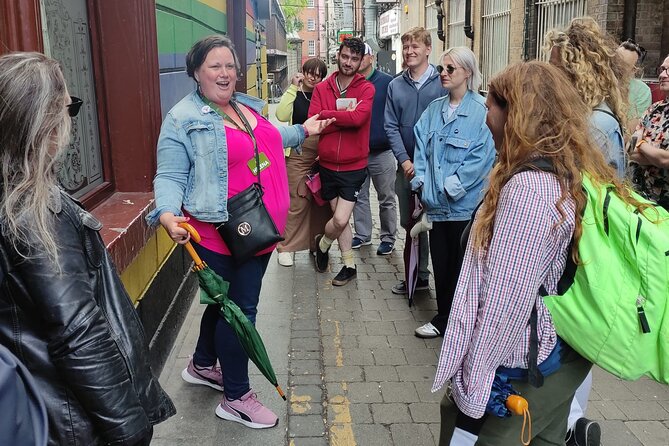
Helena has received especially strong praise for her enthusiasm and ability to bring forgotten queer figures into view. Deidre, sometimes written as Deidree, is also praised for combining LGBTQ+ history with women’s rights and broader Irish history. That wider framing is useful here, since the Abbey stop is about far more than one building.
More Walking Tours in Dublin
- Dublin Highlights and Hidden Gems Guided Walking Tour
★ 5.0 · 6,020 reviews - Dublin: Highlights and Hidden Gems Walking Tour
★ 4.9 · 2,140 reviews - 1916 Rebellion Walking Tour
★ 5.0 · 1,605 reviews - 90 Minute Dublin Walking tour and Sightseeing tips
★ 5.0 · 916 reviews
Liberty Hall and the difficult story of Ireland’s first Pride parade
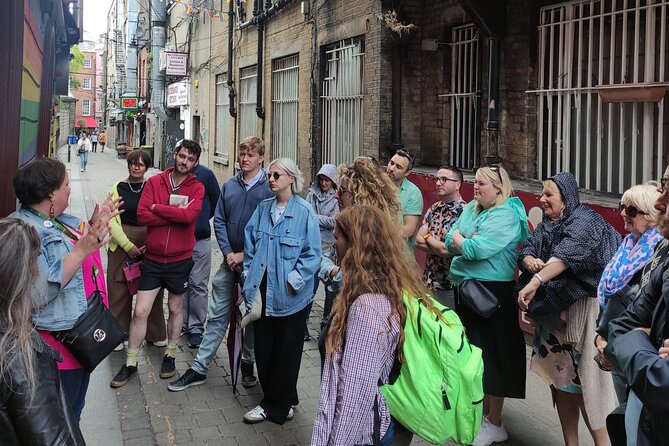
Liberty Hall brings the tour into the more recent past. Here you hear about the troubled circumstances around Ireland’s first gay Pride parade, along with the work of an important transgender activist.
This is likely to be one of the more serious stops. Pride is now a major public event in many cities, but its early history involved fear, hostility, social pressure, and the courage to appear in public anyway. A short account at Liberty Hall can help you understand that Pride was not simply created as a party. It grew from a demand for safety, dignity, and equal treatment.
The inclusion of a transgender activist broadens the tour beyond a narrow gay and lesbian history. It also reminds you that LGBTQ+ communities have never been a single, uniform group. Different people faced different risks, and the work for equality continues across several movements.
The stop takes about ten minutes and does not require an admission ticket. I would allow yourself a moment to absorb this part of the walk. The route is lively and social, but the subject occasionally turns painful, and that contrast is part of its value.
Trinity College and the names beneath the arch
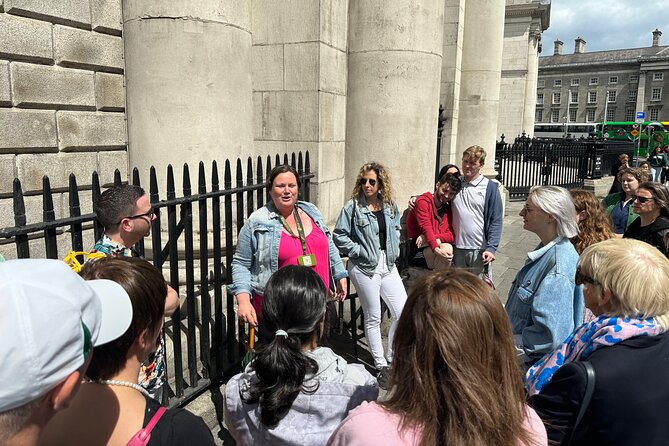
Trinity College Dublin is one of Ireland’s best-known institutions. The tour uses its famous old entrance and the surrounding College Green to discuss LGBTQ+ alumni who passed through its gates.
This section works well for anyone who likes the link between education and social change. Universities can preserve old traditions, but they also produce writers, artists, politicians, and campaigners who challenge those traditions. The guide connects the college to people whose lives form part of Ireland’s LGBTQ+ story.
Admission to Trinity College is not included. More importantly, the tour does not promise an indoor visit or access to the Book of Kells. Treat this as an exterior stop with historical commentary, not as a substitute for a Trinity sightseeing ticket.
That distinction helps you judge the price. You are paying for the route and interpretation, not a bundle of entry fees. If the Book of Kells is high on your list, you may need to plan a separate visit before or after the walk.
Meeting House Square and queer Dublin in the 1980s
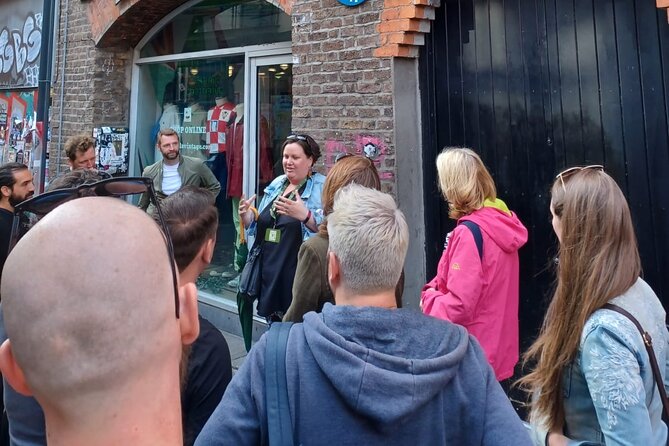
The route loops back through Temple Bar to Meeting House Square. This stop turns to Dublin in the 1980s, a period when the city’s LGBTQ+ community was building support networks and creating places where people could meet openly.
This part sounds especially valuable because it focuses on ordinary community life, not only nationally famous events. The guide discusses people who brought hope to the community, along with thinkers and change makers of the period. You get a sense of how progress is built by many people doing practical work over time.
Temple Bar is constantly changing, and that makes this section more interesting. A district that now attracts huge numbers of visitors had an earlier role in the city’s LGBTQ+ story. Looking at what has vanished, what remains, and what has changed can make the area feel less like a pub-themed attraction and more like a living part of Dublin.
The walk continues near the Anna Livia sculpture and crosses the river area again. These transitions keep the tour moving, but they also mean you should wear comfortable shoes and be ready for city traffic, uneven pavement, and short periods of standing.
The George Bar and Dublin’s ongoing community life
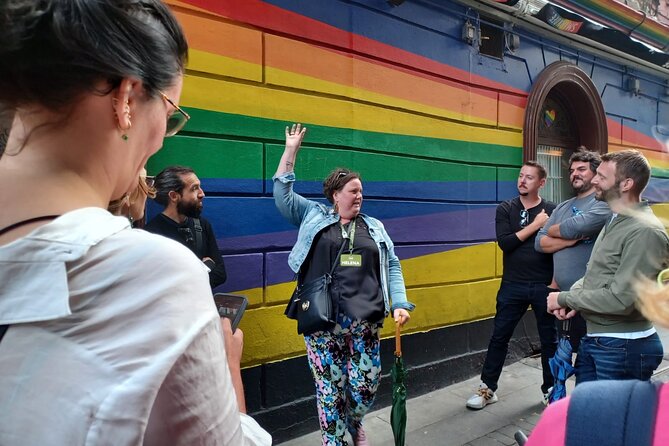
The George Bar is Dublin’s oldest operating gay bar and a cultural institution within the city’s LGBTQ+ community. It gives the tour a direct connection to the present.
Unlike a historic building that belongs only to the past, a working bar can still function as a social centre. The guide explains the place it holds in Dublin’s LGBTQ+ life, helping you see why community venues matter even after laws and public attitudes begin to change.
The tour does not list a paid entry or a drink as part of the experience. You should think of this as a stop for context, not a guaranteed bar visit or a built-in night out. If you want to return later, the guide may also help you find other queer bars in Dublin. One especially useful part of the experience is the practical orientation to the city’s current LGBTQ+ venues.
This is also a good point to remember that the tour is not only for LGBTQ+ visitors. Anyone interested in Irish social history, civil rights, theatre, or modern Dublin can gain from it. The subject is personal, but the history belongs to the whole city.
Finishing at Dublin Castle
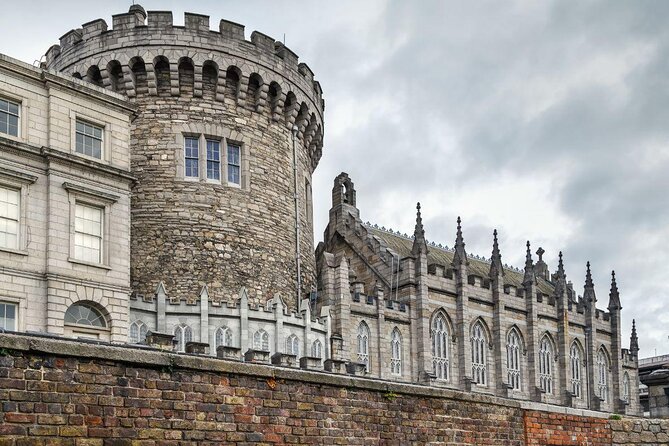
The final stop is Dublin Castle, where the walk ends in the upper courtyard. The castle represents about 1,200 years of Irish history and offers a fitting setting for a tour that links old institutions with modern struggles for equality.
You will not be given a full castle tour as part of the two-hour walk. The finish is in the courtyard, surrounded by the castle’s 18th-century splendour. That makes the ending convenient for continuing your day in central Dublin, though you should arrange a separate ticket if you want to explore the castle interiors.
Ending here also gives the tour a clear sense of scale. The route has moved from a community headquarters and a gay bar to buildings tied to national government, education, theatre, and independence. LGBTQ+ history is not a side alley in Dublin. It intersects with the city’s most important institutions.
Timing, walking effort, and group size
The experience lasts about two hours, with most listed stops taking around ten minutes. That format keeps the story moving and gives you a broad overview rather than a long talk at one location.
You need a moderate level of physical fitness. The route includes several city streets, bridge crossings, and outdoor standing. Public transport is nearby, and service animals are allowed, but the available information does not promise seating at every stop or special mobility arrangements.
The maximum group size is listed as 100 people. That is a large possible number for a walking tour, especially when listening near busy streets. At the same time, the experience has also been described as a small-group outing, so the actual feel may depend on the departure date and attendance. If a quiet, intimate walk is essential to you, ask about the expected group size before booking.
The tour is offered in English and uses a mobile ticket. It is also booked well ahead on average, around 25 days in advance, so I would not leave it until the last day of a short Dublin visit.
Is $29.02 a fair price?
At $29.02, the tour sits in a reasonable range for a guided two-hour city walk. There are no major admission costs built into the route, but that is not a weakness by itself. Most stops are public places, and the purpose is to explain what happened there.
I would compare the cost with the price of a standard Dublin walking tour, then ask what you want from your sightseeing. If you want a broad introduction to medieval Dublin, Georgian architecture, or Irish independence, another tour may suit you better. If you want LGBTQ+ stories that are usually left out, this walk offers a clear reason to pay for a guide.
The value rises if you enjoy history told through people. Helena is praised for being passionate and for drawing attention to figures who might otherwise be forgotten. Deidre is praised for linking queer history with women’s rights and Irish history as a whole. Those qualities make the tour more than a route between landmarks.
The price also works well for the first or second day of a Dublin stay. You see several central areas, learn where the LGBTQ+ community has gathered, and finish near other major sights. It can help you decide where to return later.
Who should book this Dublin LGBTQ+ tour?
I would recommend it to LGBTQ+ visitors who want more than nightlife recommendations, especially if you care about the people and campaigns behind Ireland’s social changes. It is also a strong choice for anyone interested in civil rights, Irish politics, theatre, or overlooked personal stories.
You do not need specialist background knowledge. The guide explains the subject for a general audience, and the route also covers enough wider Irish history to give the stories context.
I would be more cautious if you want indoor attractions, museum admission, or a slow photographic walk. The tour moves through central Dublin at a steady pace, and several stops are short. It is also not the best fit if you dislike discussion of persecution, discrimination, and painful chapters in LGBTQ+ history.
Free cancellation is available if you cancel at least 24 hours before the start time. Changes or cancellations made less than 24 hours ahead are not accepted for a refund.
FAQ
Where does the Dublin LGBTQ Pride Historical and Cultural Walking Tour start?
The tour starts at 3 Crown Alley, Temple Bar, Dublin, D02 CX67, Ireland.
Where does the tour finish?
The tour finishes in the upper courtyard of historic Dublin Castle.
How long does the tour last?
The walking tour lasts approximately two hours.
Is admission to Trinity College included?
No. Admission to Trinity College is not included. The tour explores the college and the wider College Green area as part of the walking route.
What language is the tour offered in?
The tour is offered in English.
Can I cancel for a full refund?
Yes. You can cancel for a full refund up to 24 hours before the experience begins. Cancellations made less than 24 hours before the start time are not refunded.
Should you book it?
Book this tour if you want Dublin’s famous sights explained through LGBTQ+ lives, activism, art, and community. The route is central, the price is fair, and the guides appear to bring the subject to life with energy and care. I especially like its effort to remember people and events that a standard city tour might skip.
Skip it if your priority is paid entry to museums, the Book of Kells, or the inside of Dublin Castle. For the right audience, though, this is a meaningful way to see familiar Dublin places with new eyes, and to understand that the city’s queer story is woven through its national story.
Just added around Dublin
- A Self Guided Walking Tour of Dublin’s Docklands★ 4.5 · 3 reviews
- Waterford Crystal and Kilkenny Full-Day Rail Tour from Dublin★ 5.0 · 3 reviews
- Turtle Bunbury’s Dublin: A Self-Guided Audio Tour from a Celebrated Author★ 5.0 · 3 reviews
- Secret and unusual Dublin: guided walking tour★ 5.0 · 3 reviews
- Cliffs of Moher and The Burren Private Tour from Dublin★ 5.0 · 3 reviews
- Skip-the-line St. Patrick’s Cathedral and Dublin City Tour★ 5.0 · 3 reviews
- Dublin Full-Day Tour through Boyne Valley★ 5.0 · 3 reviews
- Rock Of Cashel And Blarney Castle Private Chauffeur Full Day Sightseeing Tour★ 4.5 · 3 reviews
Historical Tours, compared.

Dublin Historical Centre Food Tour with 8 Food Tastings & Drinks
Read our review →

Historical 2-Hour Guided Walking Tour of Dublin
Read our review →
Dublin to Cork, Blarney Castle & Cóbh Heritage Centre by train
Read our review →
Jeanie Johnston Tall Ship Irish Famine History Tour
Read our review →

Deliciously Dublin: The Artisan Donut Walking & History Tour
Read our review →Browse the lists this tour appears in