
Reviewed · WALKING TOURS
Dublin: North Quay Guided Ghost Walk
Ghost stories reveal Dublin’s darker side. The North Quay Guided Ghost Walk pairs macabre tales with lesser-seen medieval sites, making it a lively way to explore the city beyond the usual pubs and postcard sights. I like the tour’s mix of serious history and spooky folklore, and I especially like that guides such as Kate, Darragh, Derek, and Matthew bring different humor and storytelling styles to the walk. The main drawback is that it can feel more like a history walk with ghost stories than a full horror show.
The route covers medieval Oxmantown, former Viking areas, Saint Mary’s Abbey, Hendrick Street, Croppie’s Acre, and other unsettling corners of Dublin’s north side. The stories are entertaining rather than theatrical, so this suits you if you prefer local tales, grim facts, and a good storyteller over actors jumping from doorways.
The advertised price is $28 per person, with a stated duration of 1.5 hours, though some descriptions of the walk refer to closer to two hours. You should check the exact departure time and duration when booking. Wear comfortable shoes, expect to remain on your feet, and remember that summer daylight can soften the spooky mood.
In This Review
- Key points to know before you book
- Starting outside The Church Bar on Mary Street
- Saint Mary’s Abbey and the city beneath the streets
- Oxmantown, Viking enclaves, and Scaldbrother
- Hendrick Street and six reported ghosts
- Croppie’s Acre and the 1798 rebellion
- Saint Michan’s mummies and Bram Stoker
- The Virgin Mary apparition and newer folklore
- What the guides add to the evening
- Is $28 a fair price?
- Timing, clothing, and comfort
- Who will enjoy the North Quay Ghost Walk?
- Should you book this Dublin ghost walk?
- FAQ
- Where does the Dublin North Quay Guided Ghost Walk start?
- Where does the tour finish?
- How long does the ghost walk last?
- How much does the tour cost?
- What language is the tour conducted in?
- What is included in the price?
- Do I need to pay when I book?
- Can I cancel the tour?
- Which historic areas does the tour cover?
- Is this a frightening theatrical show?
Key points to know before you book
- Saint Mary’s Abbey: See the modest remains of one of medieval Ireland’s most powerful monastic settlements, tucked beside modern city life.
- Hendrick Street ghosts: Hear why the area around numbers 7 and 8 was linked with six different ghosts.
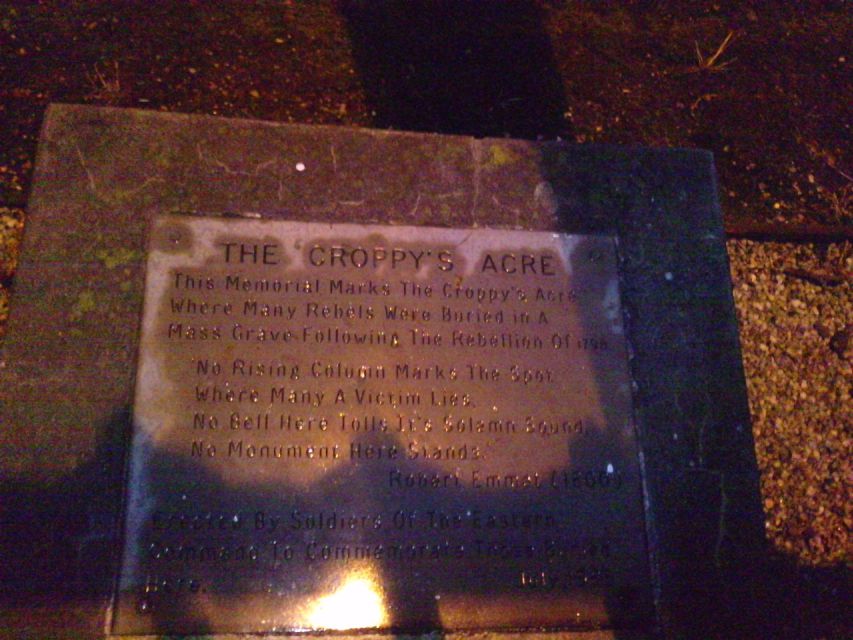
- Croppie’s Acre: Visit a former football pitch that covers a mass grave connected with the 1798 rebellion.
- Medieval Dublin: Learn about Oxmantown, former Viking enclaves, and Scaldbrother, an infamous medieval thief.
- A history-first ghost walk: Expect strong storytelling and local context, not a haunted-house performance.
- Northside orientation: The route shows you streets and sites you could easily miss while exploring central Dublin alone.
Starting outside The Church Bar on Mary Street

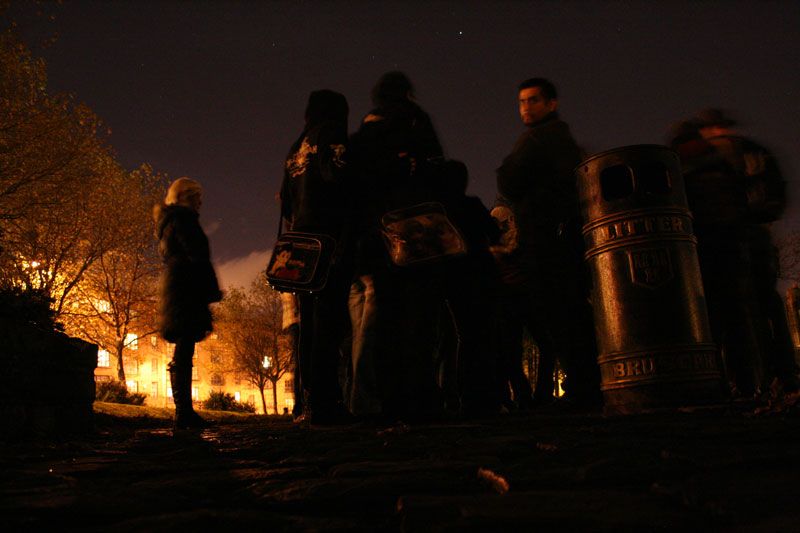
The walk begins outside The Church Bar and Restaurant on Mary Street. This is a useful starting point because you are already near central Dublin, yet the route quickly moves toward parts of the north side that many sightseeing itineraries skip.
You should arrive ready for an outdoor walk rather than a staged attraction. The experience includes a live English-speaking guide, and the route returns to the same meeting point at the end. That makes it easy to continue your evening nearby, especially if your guide suggests a pub or another Dublin stop.
The group size can vary. One small group allowed Kate to answer plenty of questions, while another account describes a larger group that could still hear the guide clearly. A larger crowd may make the atmosphere less intimate, but the tour depends mainly on the guide’s voice and storytelling, not on entering tiny rooms or relying on visual effects.
More Walking Tours in Dublin
- Dublin Highlights and Hidden Gems Guided Walking Tour
★ 5.0 · 6,020 reviews - Dublin: Highlights and Hidden Gems Walking Tour
★ 4.9 · 2,140 reviews - 1916 Rebellion Walking Tour
★ 5.0 · 1,605 reviews
Saint Mary’s Abbey and the city beneath the streets
One of the strongest early stops is Saint Mary’s Abbey. In medieval times, it was one of Ireland’s most powerful monastic settlements. Today, only a small ruin remains down an alleyway, close to thousands of people going about their daily business.
That contrast gives the site its appeal. You are not visiting a grand ruin with a dramatic entrance. You are seeing a fragment of old Dublin almost swallowed by the modern city. The guide helps you picture the religious and political importance of the abbey before it became an overlooked remnant.
I like this part of the walk because it shows how much Dublin’s past is hidden in plain sight. The ghost element adds atmosphere, but the real value is learning how the city changed around its oldest buildings. If you enjoy archaeology, old streets, and stories that connect the present to medieval Dublin, this stop may be more memorable than a simple scare.
Oxmantown, Viking enclaves, and Scaldbrother

The route continues through the area once known as medieval Oxmantown. This part of Dublin is linked with former Viking enclaves, giving the walk a broader historical frame than a standard ghost tour.
You hear about the people who lived, worked, fought, and stole here, including Scaldbrother, an infamous medieval thief. His story gives the tour a useful change of pace. Not every tale is about a ghost, and that is a strength if you want a better sense of how medieval Dublin actually functioned.
Several people who enjoyed the walk praised the guides for adding unusual facts that are not part of the standard Dublin sightseeing script. That is where the tour earns its price. You are not only moving between haunted addresses. You are building a mental map of the north side and learning why these streets mattered.
The history can also make the ghost stories more believable as local folklore. A haunting has more weight when you know what happened in the place before the modern buildings arrived.
Hendrick Street and six reported ghosts
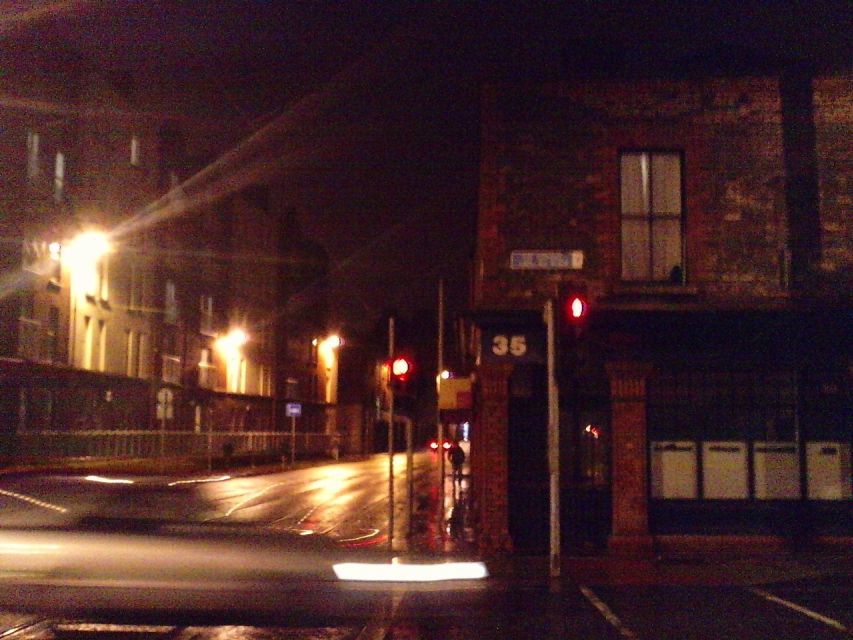
Hendrick Street provides one of the walk’s clearest supernatural set pieces. The guide points out the area between numbers 7 and 8, once associated with no fewer than six different ghosts.
You will hear the stories from the street rather than enter a haunted house. That distinction matters. The experience is about location, narration, and imagination. You stand in an ordinary urban setting and consider the disturbing history attached to it.
This stop works best after dark, when the city feels quieter and the guide can let the details build slowly. In summer, however, an evening departure may begin in daylight or take place while the sky is still bright. One account specifically noted that late sunsets can weaken the mood. If atmosphere matters to you, check the available starting times and choose the latest practical option.
Still, do not expect a terrifying experience. The walk is not built around sudden shocks. It delivers heebie-jeebies without going overboard, using stories rather than costumes and special effects.
More ghost tours:
- Dublin Ghost Bus Tour with Professional Actors
★ 4.5 · 949 reviews - Haunted Dublin Walking Tour
★ 5.0 · 550 reviews - From Dublin: Gravedigger Ghost Bus Tour
★ 4.4 · 546 reviews - Dublin’s Haunted History Walking Tour
★ 4.3 · 345 reviews
Croppie’s Acre and the 1798 rebellion
Croppie’s Acre is the tour’s most sobering stop. The site was later used as a football pitch, but beneath it lies a mass grave containing hundreds of rebels executed during the 1798 rebellion.
This is where the walk moves from ghost folklore into painful Irish history. The ground may look unremarkable, yet the guide explains what it represents. That makes the stop powerful without needing any performance or decoration.
I consider this one of the best reasons to choose the tour. Many visitors come looking for spooky stories, but the most lasting moments often come from places connected with real suffering. Croppie’s Acre asks you to think about how Dublin has reused and built over difficult sites.
The subject may be heavy, particularly for younger children or anyone expecting a light comic evening. Even so, the guide’s approach appears to balance grim facts with humor elsewhere on the route. The result is a walk that entertains without treating every dark story as a joke.
Saint Michan’s mummies and Bram Stoker
The tour also tells the story of the mummies at Saint Michan’s Church. The church is often described as one of Ireland’s most macabre attractions, and its preserved bodies are linked in popular accounts with Bram Stoker, the Dublin-born author of Dracula.
You should understand that the ghost walk discusses Saint Michan’s rather than necessarily taking you inside for a separate church visit. That makes it a useful preview if you are considering visiting the church during daylight hours.
This section connects Dublin’s local history with one of the world’s best-known Gothic writers. Stoker was born in Clontarf, and the tour uses that connection to show how Dublin’s unusual sights and old stories fed the city’s later reputation for the macabre.
The appeal here is less about proving a supernatural claim and more about seeing how places, writers, and folklore influence one another. If you enjoy Dracula, Victorian Gothic stories, or old burial customs, listen closely.
The Virgin Mary apparition and newer folklore
The route includes the site of a 21st-century apparition of the Virgin Mary. This gives the walk a useful modern counterpoint to its medieval ruins and rebellion-era graves.
The story shows that Dublin’s supernatural traditions did not end with Viking settlements or old monasteries. Apparitions and religious visions continue to become part of local memory, even in a modern city.
For me, this is an interesting reminder that a ghost walk is not only about centuries-old buildings. It is also about how people interpret strange events in their own time. The guide’s job is to present the tale and its setting, leaving you to decide how much faith or skepticism to bring.
That open approach seems to suit the tour. One particularly favorable account appreciated the absence of theatrics and preferred the guide’s straightforward handling of the material. Skeptics may grin, but the evening still works as a collection of local stories.
What the guides add to the evening
The guide makes or breaks a walking tour, and the strongest praise here focuses on storytelling. Kate was singled out for detailed research, clear answers, and helpful suggestions for things to do after the walk. Darragh was described as personable, funny, and an excellent storyteller.
Derek received praise for knowing many small details, while Matthew was noted for being informative, humorous, and full of good stories. Those names suggest that the experience can vary slightly by departure date, but the overall format remains guide-led and conversational.
I like that the guides do not simply recite ghost legends. They add small facts about Dublin, point out places you might otherwise pass, and offer ideas for continuing your evening. That extra local advice improves the value, particularly on a first visit.
The humor also matters. A ghost walk can quickly become corny if the guide pushes too hard. Here, the better approach seems to be a mix of dry wit, historical detail, and carefully timed spooky material. You may hear a joke one minute and a genuinely grim account the next.
Is $28 a fair price?
At $28 per person, the tour is not the cheapest way to spend an evening in Dublin, but it offers reasonable value if you want both orientation and entertainment. You receive a guided walk lasting a stated 1.5 hours, with some descriptions suggesting the outing may run closer to two hours.
The price covers the guided walking tour only. You are paying for the guide’s stories, local context, and route planning, not admission to a collection of indoor attractions.
I would compare the cost with a pub visit or a standard city walk. If you already plan to explore Dublin’s north side, the tour gives you a reason to notice old ruins, forgotten addresses, and difficult historic sites. If you only want jump scares, the value is weaker because the experience relies on storytelling rather than special effects.
The flexible booking terms also help. You can reserve a place and pay later, and cancellation is available up to 24 hours before the tour for a full refund. That is useful when Irish weather or a changing city schedule affects your plans.
Timing, clothing, and comfort
The tour is outdoors and mostly on foot. Comfortable sneakers are a sensible choice, particularly because the route can feel closer to two hours depending on the departure and pace.
Bring a coat suitable for Dublin’s changeable weather. The information provided does not specify indoor shelter, so you should plan as if you will spend the evening outside. A dry forecast makes the experience easier, but the stories do not depend on perfect conditions.
The timing affects the mood. A later departure should feel darker during much of the year, while summer tours may take place under a bright sky. You should also allow time after the walk if you want to follow your guide’s suggestions for food, pubs, or more sightseeing.
This is not a tour for someone who needs frequent sitting breaks or dislikes city walking. It is also worth thinking about the tone if you are bringing children. Families have enjoyed it, but the stories include executions, graves, mummies, and ghosts.
Who will enjoy the North Quay Ghost Walk?
I would recommend this experience to:
- First-time visitors who want a different introduction to Dublin
- Repeat visitors who have already done the main tourist sights
- People interested in medieval Ireland and the 1798 rebellion
- Bram Stoker and Gothic fiction fans
- Families with older children who enjoy spooky stories
- Skeptics who prefer folklore presented with humor rather than fake scares
- Anyone who likes guided walks with room for questions
You may want to skip it if you want a highly theatrical horror attraction, a short seated presentation, or a tour conducted in a language other than English. The tone is informative, funny, and occasionally unsettling. It is not designed to leave you screaming at every corner.
Should you book this Dublin ghost walk?
Book it if you want a northside history walk with a spooky edge. The best parts are the overlooked remains of Saint Mary’s Abbey, the stories linked with Hendrick Street, and the quiet seriousness of Croppie’s Acre. Guides such as Kate, Darragh, Derek, and Matthew have been praised for humor, research, and strong storytelling.
Choose the latest available departure if you want the darkest atmosphere, and wear comfortable shoes. Keep your expectations realistic: this is more local history and ghost lore than a staged fright night.
At $28, I think it is a good choice for visitors who value stories, unusual places, and a better understanding of Dublin’s north side. If you want nonstop scares, spend your money elsewhere. If you want to see what lies beneath the ordinary streets, this walk earns a place in your evening plans.
FAQ
Where does the Dublin North Quay Guided Ghost Walk start?
The walk starts outside The Church Bar and Restaurant on Mary Street in Dublin.
Where does the tour finish?
The activity ends back at the same meeting point on Mary Street.
How long does the ghost walk last?
The activity information states a duration of 1.5 hours. Some descriptions refer to a walk of about two hours, so check the exact details when choosing a departure.
How much does the tour cost?
The listed price is $28 per person.
What language is the tour conducted in?
The live tour guide conducts the walk in English.
What is included in the price?
The booking includes the guided walking tour.
Do I need to pay when I book?
You can reserve now and pay later, so you do not have to pay at the time of booking.
Can I cancel the tour?
Yes. You can cancel up to 24 hours in advance for a full refund.
Which historic areas does the tour cover?
The walk explores medieval Oxmantown, former Viking enclaves, Saint Mary’s Abbey, Hendrick Street, and Croppie’s Acre. It also covers stories connected with Saint Michan’s Church and a 21st-century Virgin Mary apparition.
Is this a frightening theatrical show?
No. The experience is a guided walk built around ghost stories, local history, and storytelling. It does not rely on theatrical effects or actors appearing to frighten you.
Just added around Dublin
- A Self Guided Walking Tour of Dublin’s Docklands★ 4.5 · 3 reviews
- Waterford Crystal and Kilkenny Full-Day Rail Tour from Dublin★ 5.0 · 3 reviews
- Secret and unusual Dublin: guided walking tour★ 5.0 · 3 reviews
- Turtle Bunbury’s Dublin: A Self-Guided Audio Tour from a Celebrated Author★ 5.0 · 3 reviews
- Cliffs of Moher and The Burren Private Tour from Dublin★ 5.0 · 3 reviews
- Skip-the-line St. Patrick’s Cathedral and Dublin City Tour★ 5.0 · 3 reviews
- Dublin Full-Day Tour through Boyne Valley★ 5.0 · 3 reviews
- Rock Of Cashel And Blarney Castle Private Chauffeur Full Day Sightseeing Tour★ 4.5 · 3 reviews
Walking Tours, compared.
Dublin Highlights and Hidden Gems Guided Walking Tour
Read our review →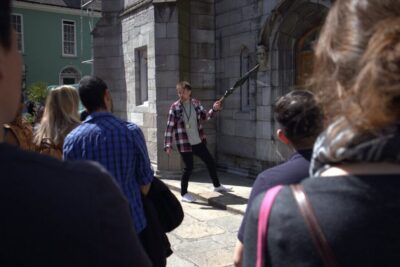

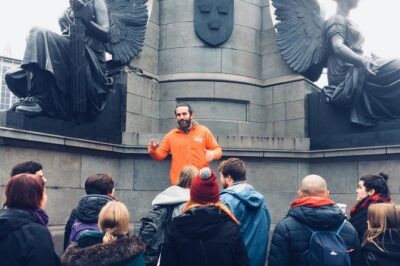
90 Minute Dublin Walking tour and Sightseeing tips
Read our review →

Historical 2-Hour Guided Walking Tour of Dublin
Read our review →
Dublin Traditional Irish 3 Course Meal Walking Tour with Local
Read our review →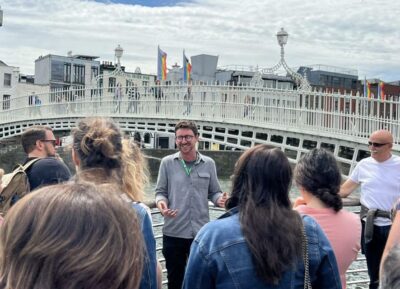
Browse the lists this tour appears in