
Reviewed · WALKING TOURS
Dublin: Sightseeing Walking Tour in German
Dublin reveals itself one street at a time. This small-group German walking tour links major sights with tucked-away corners that are easy to miss on your own, moving from Dame Street through the old Viking and medieval quarter, across the River Liffey, and up to Trinity College. I especially like the mix of famous places and odd little discoveries, including a former cinema, a church that is no longer a church, and a Lisbon tram now serving as a café. I also like the clear historical thread connecting Dublin Castle, the 1916 Rising, O’Connell Street, and Trinity College.
The main consideration is simple: all visits are external during the walk. You will see the buildings and grounds from outside, but the tour does not include entry to Dublin Castle, Christ Church Cathedral, the General Post Office, or the Book of Kells. At $34 per person for 2.5 hours, it offers good value for an orientation walk, especially if you want German commentary, though you will need separate tickets and time for interior visits.
In This Review
- Key Points About This Dublin Walk
- Starting at Dame Street and the Tree of Gold
- Dublin Castle Grounds and the Medieval Quarter
- Fishamble Street, Smock Alley, and Meeting House Square
- Crossing the Liffey on the Millennium Bridge
- The Italian Quarter and St Mary’s Church
- Henry Street and the Road to O’Connell Street
- The General Post Office and Ireland’s Independence Story
- Former Parliament House and Trinity College
- The Small Details That Make the Walk Memorable
- Is $34 a Fair Price for 2.5 Hours?
- Who Will Like This German Dublin Tour?
- Should You Book It?
- FAQ
- How long is the Dublin walking tour?
- What language is the tour conducted in?
- Where does the tour begin?
- Where does the tour finish?
- Are Dublin Castle and Christ Church Cathedral visited inside?
- Is entry to the Book of Kells included?
- Is the tour wheelchair accessible?
- How much does the tour cost?
- Can I cancel or pay later?
Key Points About This Dublin Walk
- A German-language route across both sides of the Liffey: You begin on Dame Street, cross the Millennium Bridge, and continue through Dublin’s historic Northside.
- Small-group format: The tour is designed to feel personal rather than like a large street procession.
- A strong mix of landmarks and odd details: Expect Dublin Castle, Christ Church Cathedral, Temple Bar, O’Connell Street, and several less obvious sights.
- A useful introduction to Irish independence: The General Post Office and O’Connell Street bring the events of the 1916 Rising into the city streets.
- A 2.5-hour pace: The route gives you a broad first look without taking up an entire day.
- External sightseeing only: Plan another visit if you want to go inside the cathedral, castle, or Trinity College’s Book of Kells exhibition.
Starting at Dame Street and the Tree of Gold
The meeting point is the Tree of Gold statue, also called Crann an Óir, at Central Plaza on Dame Street. It sits near the corner of Dame Street and Fownes Street Upper, placing you right in the middle of central Dublin.
That location makes sense for the route. Dame Street is close to Dublin Castle, Temple Bar, Christ Church Cathedral, and the River Liffey, so you begin in the heart of the city rather than spending the first part of the tour getting there. I would arrive early enough to find the statue without rushing. The meeting point is central, but Dublin’s streets and lanes can be confusing when you are watching traffic, signs, and pedestrians.
The guide speaks German throughout the walk. That matters more than it might seem. Dublin’s past involves Viking settlement, medieval religion, British rule, Irish independence, literary culture, and modern urban life. A live explanation in your strongest language makes it easier to follow names, dates, jokes, and connections between places.
The tour is described as easy-going, but it is still a city walk lasting two and a half hours. Wear comfortable shoes and expect normal pavement, crossings, and city traffic. The activity is listed as wheelchair accessible, though the route passes through historic streets and public areas where conditions can vary.
More Walking Tours in Dublin
- Dublin Highlights and Hidden Gems Guided Walking Tour
★ 5.0 · 6,020 reviews - Dublin: Highlights and Hidden Gems Walking Tour
★ 4.9 · 2,140 reviews - 1916 Rebellion Walking Tour
★ 5.0 · 1,605 reviews
Dublin Castle Grounds and the Medieval Quarter
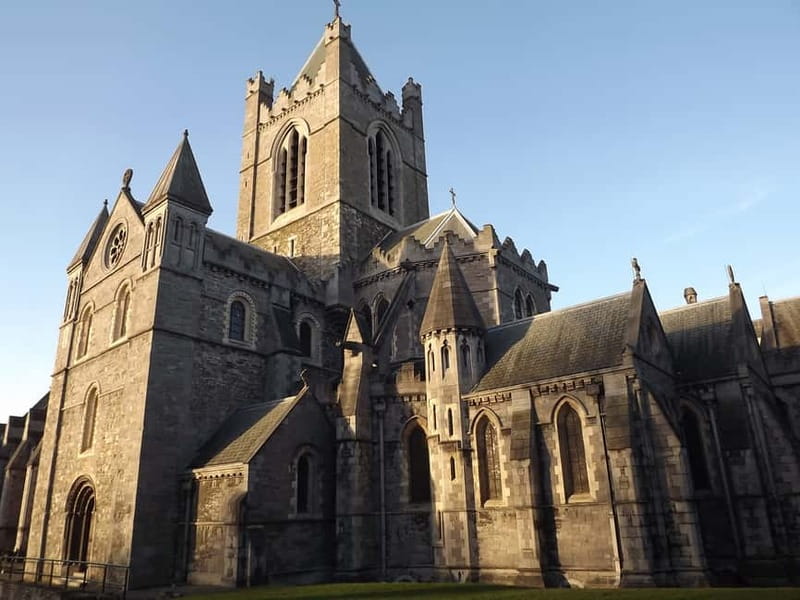
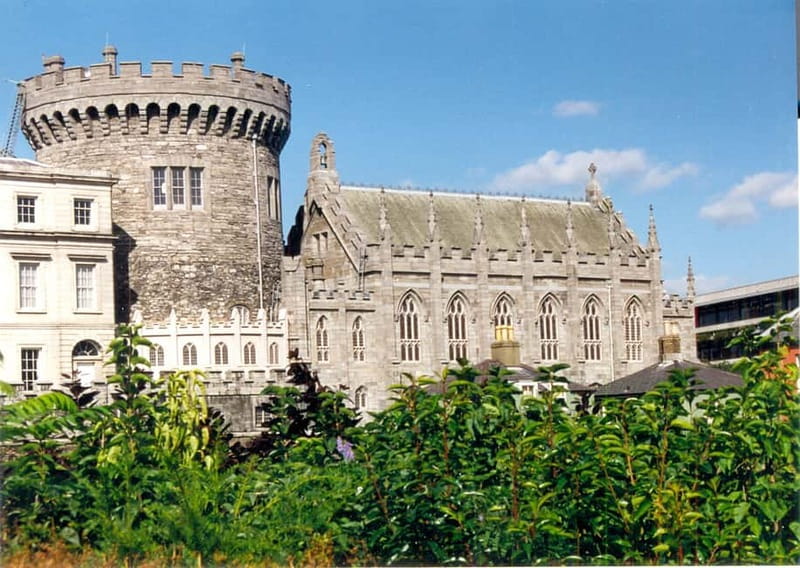
From Dame Street, the route heads into the former Viking and medieval quarter. Dublin Castle is one of the key early stops, and the tour focuses on its grounds and gardens rather than interior rooms.
That outside view still gives you useful context. Dublin Castle was a center of administration and power for centuries, and its position helps explain how the city developed around it. The tour is not just a march past a grand façade. The guide connects the site with the people and political forces that shaped Dublin.
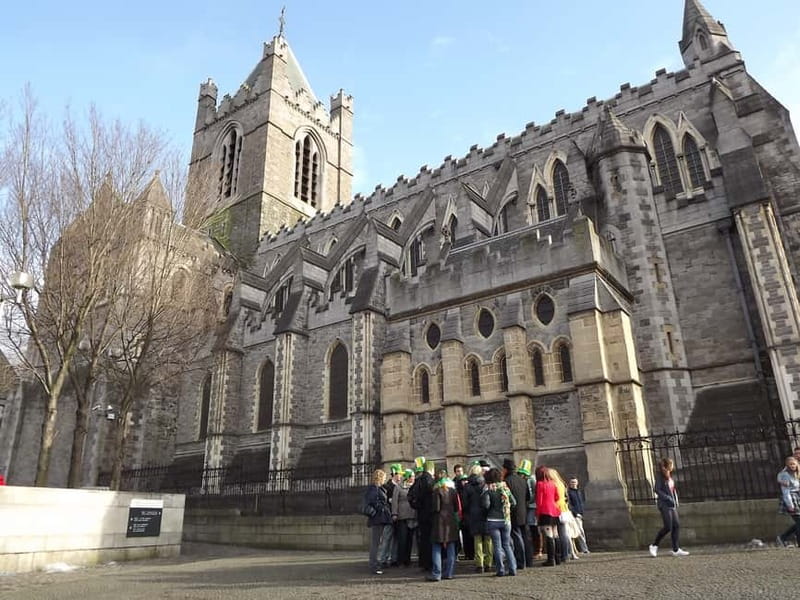
Nearby, Christ Church Cathedral adds a second major landmark from the city’s older religious quarter. Again, you see it from outside during the walk. If you want to inspect the cathedral’s interior, you will need to return separately, so consider marking it on your map as a possible follow-up stop.
The value here is the sequence. Dublin Castle and Christ Church Cathedral are close together, but they represent different parts of the city’s story. Seeing them in one stretch helps you understand why this area feels older and more layered than the broad commercial streets farther north.
Fishamble Street, Smock Alley, and Meeting House Square
The route continues through Fishamble Street and Smock Alley, then into Meeting House Square in Temple Bar. This is where the tour moves beyond the standard postcard stops.
Fishamble Street is tied to Dublin’s older urban fabric, while Smock Alley points to the city’s theatrical past. The walk does not require you to enter a venue, but the street-level setting gives the guide room to explain how entertainment, religion, trade, and daily life once overlapped in a small central district.
Meeting House Square places you in Temple Bar, Dublin’s best-known visitor quarter. Temple Bar is easy to reduce to pubs and nightlife, but a walking tour can show you more than its evening reputation. The square and nearby lanes reveal a district of cultural venues, older structures, and busy public spaces.
You should expect more people here than in some of the earlier lanes. That is part of the tradeoff. Temple Bar is central and atmospheric, but it is not a quiet corner. The guide’s job is especially useful in this section because a story gives the streets meaning when the area itself feels crowded or familiar from travel photos.
Crossing the Liffey on the Millennium Bridge
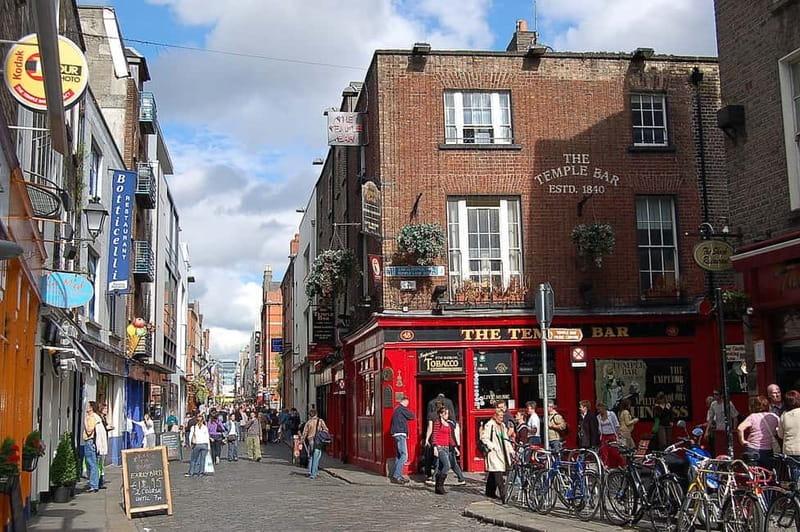
The Millennium Bridge carries the group across the River Liffey. It is a short crossing, but it creates an important change in the tour.
From the bridge, you get a clear sense of how the river divides and connects Dublin. The walk has already covered the south side, including the castle district and Temple Bar. Now you move to the Northside, where the route continues toward O’Connell Street.
The bridge also supplies one of the tour’s lighter moments. You may be invited to feel its wobble. That small physical detail makes the walk memorable, especially after several stops focused on dates and political events.
The river crossing is not a scenic cruise or a long viewpoint stop. It is part of the walking route, so keep moving with the group and listen as the guide explains how the two sides of the city relate to one another.
A completely different kind of day out from Dublin:
- Dublin to Cliffs of Moher, including Wild Atlantic Way and Galway
★ 5.0 · 23,331 reviews - From Dublin: Cliffs of Moher, Burren & Galway City Day Tour
★ 4.8 · 18,888 reviews - Dublin: Guinness Storehouse Entry Ticket
★ 4.6 · 16,863 reviews - Dublin to Cliffs of Moher, Burren, Wild Atlantic Way, Galway Tour
★ 5.0 · 12,924 reviews
The Italian Quarter and St Mary’s Church
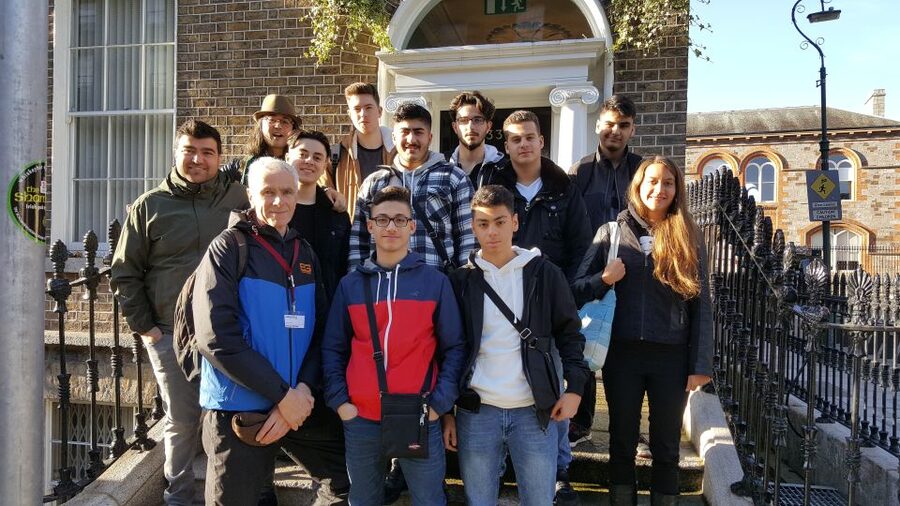
On the Northside, the tour passes through Dublin’s Italian Quarter before continuing toward Henry and Moore Streets. The Italian Quarter adds a modern social layer to a route that began among medieval buildings.
The stop at St Mary’s Church is one of the more unusual details. The former church is now a well-known café and bar. Its current use gives you a chance to think about how old Dublin buildings are reused rather than preserved only as monuments.
This is the kind of stop I value on a city walk. You might pass a converted building on your own and notice the architecture, but without an explanation you may not understand what changed. Here, the building’s present life is part of the story.
The tour also points out a former Lisbon tram that now serves as a café. It is an amusing example of Dublin’s habit of giving old objects a second life. You will not need a long stop to appreciate it, but it helps break up the formal sightseeing and keeps the route grounded in everyday city character.
Henry Street and the Road to O’Connell Street
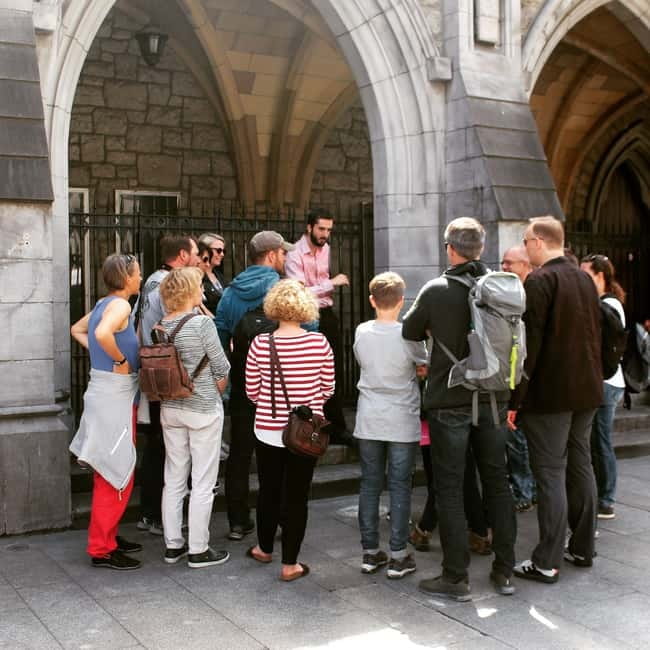
Henry and Moore Streets bring you into a busier shopping area. These streets provide a useful contrast with the older quarter south of the river. Instead of castle grounds and cathedral walls, you see the working commercial side of central Dublin.
The tour then reaches O’Connell Street, one of the city’s major historic avenues. Its width and monuments give it a different scale from the narrow streets around Dublin Castle and Temple Bar. The change is easy to feel on foot.
The street also carries the scars of the 1916 Rising and the political changes that followed. The guide explains how the conflict damaged the General Post Office and much of the surrounding street. This is a powerful part of the walk because the event is not treated as a distant chapter in a textbook. The buildings and street layout make the story physical.
O’Connell Street can be noisy and crowded, and you will be walking near traffic and public transport. That is not a flaw in the route. It is part of seeing the street as a living part of Dublin rather than a preserved historical display.
The General Post Office and Ireland’s Independence Story
The General Post Office is one of the tour’s most important outside stops. During the 1916 Rising, it served as headquarters for the rebels. The building was heavily damaged during the fighting, as was much of O’Connell Street and its surroundings.
I like this stop because it gives political history a firm address. You can stand in front of the building and connect the guide’s explanation with the street where the events unfolded. The tour also includes the O’Connell Monument, adding another layer to the avenue’s role in Irish public memory.
A small but memorable detail concerns a post-box that represents Ireland’s move toward independence. It is the sort of object that you could easily overlook while heading to a major monument. The guide uses it to explain a national change through an everyday piece of street furniture.
This section is likely to appeal most to you if you want more than architecture. The tour does not present Dublin as a collection of pretty façades. It links public buildings with rebellion, political change, and the people who lived through those events.
Former Parliament House and Trinity College
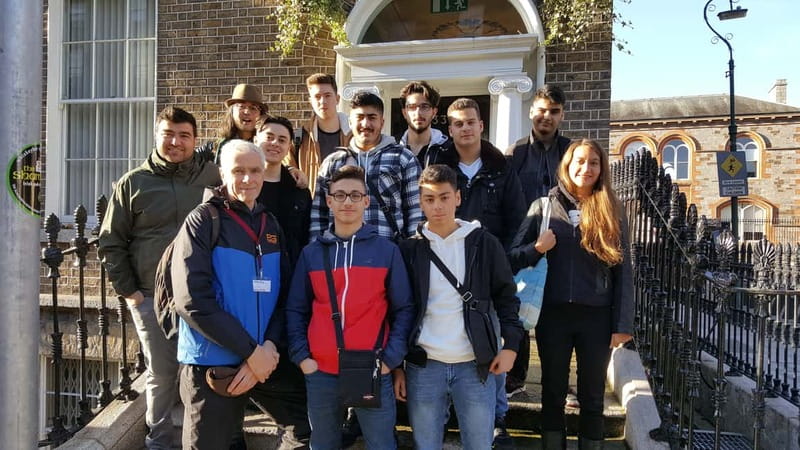
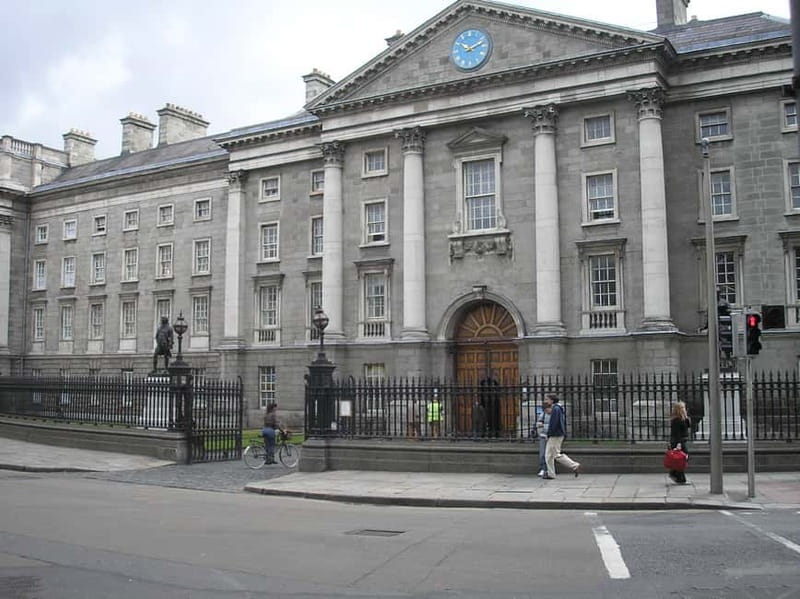
The walk finishes around Trinity College and the former 18th-century Houses of Parliament, now the Bank of Ireland. The former Parliament House is a fitting final historical stop because it brings the route back to questions of authority, representation, and Ireland’s relationship with Britain.
Trinity College then provides a strong closing point. The tour finishes outside the college, with the famed Book of Kells as the final reference. You do not enter to see the manuscript during this activity, but the location is ideal for continuing your own sightseeing.
If the Book of Kells is high on your list, plan extra time and arrange admission separately. The walking tour gives you the setting and the story, not the interior exhibition. That limitation is easy to manage as long as you know it before booking.
The supplied meeting information also says the activity ends back at the meeting point, while the route description places the finish outside Trinity College. Because those details do not fully match, I would confirm the exact end location for your chosen departure. Either way, the route covers central Dublin on both sides of the river and leaves you near several major sights.
The Small Details That Make the Walk Memorable
The unusual stops are not just filler. They give the tour its personality and help you remember the route after the formal names begin to blur.
You may encounter Dublin’s first full-time cinema, now defunct, along with the church that is no longer a church and the Lisbon tram café. There is also an amusing representation of a Leonardo da Vinci painting, a wobbly bridge, and a starkly naked representation of a famous 18th-century composer.
Those details are valuable because they show a less polished Dublin. You get grand civic buildings and national monuments, but you also get reused spaces, local humor, curious public art, and small surprises. The guide’s storytelling is central here. A review score of 4.7 from 231 ratings, along with praise for an entertaining presentation that is easy to follow, supports the idea that the delivery is one of the tour’s strengths.
No guide name is provided, so I cannot point you toward a particular guide. The experience provider is Pat Liddy’s Walking Tours of Dublin, and additional guides are supplied when needed.
Is $34 a Fair Price for 2.5 Hours?
At $34 per person, this is a reasonable price for a live, German-language introduction to central Dublin. You are paying for a structured route, a professional guide, and the convenience of fitting many important areas into one walk.
The value is strongest if you are visiting Dublin for the first time. In 2.5 hours, you cover the castle district, cathedral quarter, Temple Bar, the Liffey, the Italian Quarter, O’Connell Street, the General Post Office, the former Parliament House, and Trinity College. Reaching all those areas independently is possible, but you would have to prepare the route and research the background yourself.
The price is less attractive if you want extensive interior sightseeing. No admissions are included, and the guide cannot replace time inside Christ Church Cathedral, Dublin Castle, or the Book of Kells exhibition. Think of this as a city orientation with historical storytelling, not an all-inclusive attraction pass.
Gratuities are not included. Free cancellation is available up to 24 hours before the tour for a full refund, and you can reserve now and pay later. Those policies give you useful flexibility when your Dublin schedule is still changing.
Who Will Like This German Dublin Tour?
I would choose this tour if you want:
- A first look at central Dublin in German
- A small-group walk rather than a large bus tour
- A balance of major landmarks and unusual street details
- Clear stories about the 1916 Rising and Irish independence
- A route covering both the south and north sides of the Liffey
- A relaxed introduction before exploring museums and interiors on your own
It may not suit you if you dislike walking for two and a half hours, want every attraction entered, or prefer a tour focused on one subject such as literature, food, or Irish music.
Families may appreciate the odd objects and playful details, although the route still involves city streets and historical explanation. The wheelchair-accessible listing is helpful, but I would confirm the precise route conditions if you need detailed accessibility information.
Should You Book It?
Book this tour if you want to get your bearings in Dublin while hearing the city’s story in German. Its strongest feature is the combination of well-known landmarks with small discoveries that reward attention. The General Post Office, O’Connell Street, Dublin Castle, and Trinity College give you the major framework, while the former cinema, converted church, tram café, da Vinci reference, and wobbly bridge keep the walk human and amusing.
Skip it if you need included entry tickets or a very short stroll. Otherwise, $34 is fair for a polished 2.5-hour introduction, particularly at the start of a Dublin stay. Reserve enough time afterward for the interiors you most want to see, and confirm the exact finishing point before setting up your next appointment.
FAQ
How long is the Dublin walking tour?
The tour lasts 2.5 hours.
What language is the tour conducted in?
The live tour guide speaks German.
Where does the tour begin?
It begins at the Tree of Gold statue, also called Crann an Óir, at Central Plaza on Dame Street in Dublin 2. The statue is near the corner of Dame Street and Fownes Street Upper.
Where does the tour finish?
The route description places the finish outside Trinity College. The meeting information also states that the activity ends back at the meeting point, so confirm the precise end location when booking.
Are Dublin Castle and Christ Church Cathedral visited inside?
No. All visits during the tour are external, although you may have opportunities to visit those places separately afterward.
Is entry to the Book of Kells included?
No. The tour finishes outside Trinity College and refers to the Book of Kells, but admission is not included.
Is the tour wheelchair accessible?
Yes, the activity is listed as wheelchair accessible.
How much does the tour cost?
The price is $34 per person.
Can I cancel or pay later?
Yes. You can cancel up to 24 hours in advance for a full refund, and you can reserve your place and pay later.
Just added around Dublin
- A Self Guided Walking Tour of Dublin’s Docklands★ 4.5 · 3 reviews
- Waterford Crystal and Kilkenny Full-Day Rail Tour from Dublin★ 5.0 · 3 reviews
- Secret and unusual Dublin: guided walking tour★ 5.0 · 3 reviews
- Turtle Bunbury’s Dublin: A Self-Guided Audio Tour from a Celebrated Author★ 5.0 · 3 reviews
- Cliffs of Moher and The Burren Private Tour from Dublin★ 5.0 · 3 reviews
- Skip-the-line St. Patrick’s Cathedral and Dublin City Tour★ 5.0 · 3 reviews
- Dublin Full-Day Tour through Boyne Valley★ 5.0 · 3 reviews
- Rock Of Cashel And Blarney Castle Private Chauffeur Full Day Sightseeing Tour★ 4.5 · 3 reviews
Walking Tours, compared.
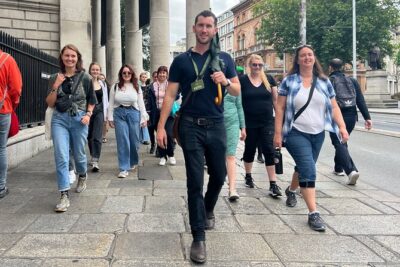
Dublin Highlights and Hidden Gems Guided Walking Tour
Read our review →

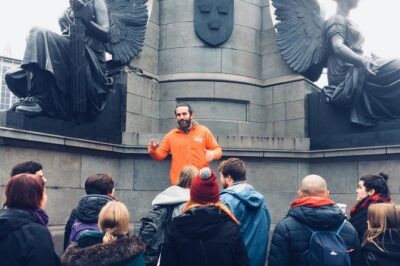
90 Minute Dublin Walking tour and Sightseeing tips
Read our review →

Historical 2-Hour Guided Walking Tour of Dublin
Read our review →
Dublin Traditional Irish 3 Course Meal Walking Tour with Local
Read our review →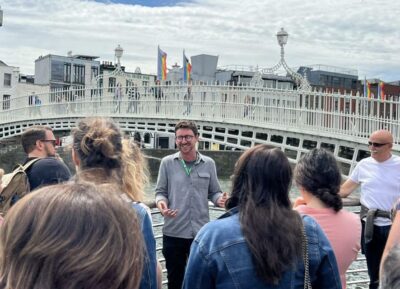
Browse the lists this tour appears in