
Reviewed · HISTORICAL TOURS
Historical Walking Tour of Dublin
Dublin’s story is best told on foot. This 1-hour-45-minute walk links the 1916 Rising, Trinity College, and Dublin Castle, while guide Donal adds humor, poetry, pub advice, and personal insight. I like the easy central route and the small maximum of 15 people. One important catch: admission tickets are not included, including access to the Book of Kells.
The tour begins by the Spire on O’Connell Street and ends beside the Ha’penny Bridge, so you can find both points without much fuss. I also like the chance to ask questions and get practical Dublin tips, though Donal’s quick speaking style may not suit everyone, especially if you prefer a slow, formal lecture.
In This Review
- Key points to know before you book
- A compact introduction to Dublin’s past
- The General Post Office and the 1916 Rising
- Trinity College and the Book of Kells question
- Dublin Castle, City Hall, and the road to independence
- Donal’s style: humor, questions, and pub advice
- What $32.44 buys you
- Timing, meeting points, and walking comfort
- Who will enjoy this Dublin walk
- Should you book the Historical Walking Tour of Dublin?
- FAQ
- Where does the Historical Walking Tour of Dublin begin?
- Where does the tour finish?
- What time does the tour start?
- How long does the walking tour last?
- Are admission tickets included?
- What is the maximum group size?
Key points to know before you book
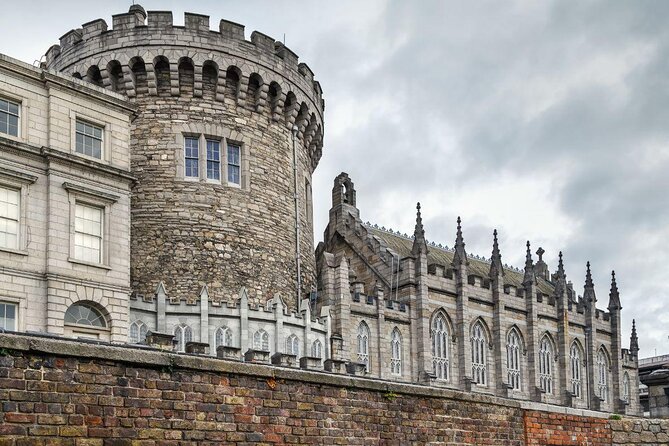
- The 1916 Rising shapes the walk: The General Post Office and Dublin Castle help explain Ireland’s route toward independence.
- Trinity College is viewed from outside: You learn about its past at College Green, but entry to the Book of Kells and Long Room costs extra.
- Donal brings local color: His humor, poetry, pub opinions, and personal stories give the walk a friendly feel.
- The group is capped at 15 people: That is small enough for questions without making the tour feel private by default.
- The route takes about 105 minutes: It is a useful first look at central Dublin without taking your whole afternoon.
- The tour costs $32.44 per person: The value is strongest if you want context, orientation, and local suggestions rather than several included attractions.
A compact introduction to Dublin’s past
Dublin can feel easy to walk through, but its story is not always easy to follow. A modern street may sit beside a building tied to rebellion, government, education, or centuries of British rule. This tour gives you a simple thread to follow through the city center.
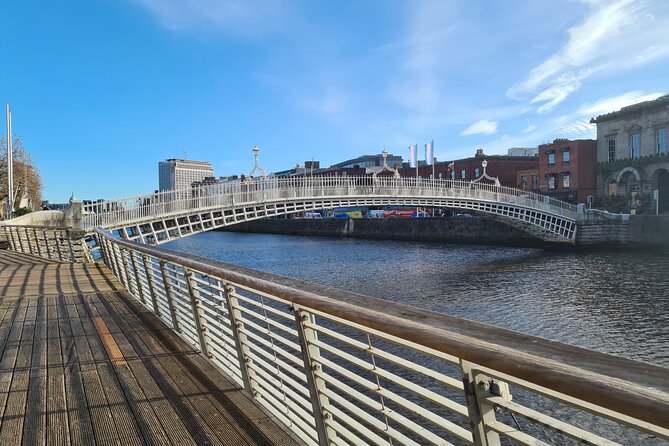
You begin at 1:00 pm at the Spire on O’Connell Street Upper. From there, the route moves toward College Green, Dublin Castle, and the Temple Bar area. The final stop is the Ha’penny Bridge Inn on Wellington Quay, right beside the famous bridge.
That layout matters. You do not need to find an obscure meeting point, and the finish leaves you close to pubs, restaurants, and central sights. If you are arriving in Dublin for the first time, the route can help you get your bearings before exploring alone.
The experience is led by Donal of My Journey Ireland. His strongest qualities are enthusiasm and warmth. He has a playful style, welcomes questions, and often adds recommendations for food, pubs, and further sightseeing.
You should know what kind of guide you are booking. Donal’s approach is conversational rather than stiff or academic. He may recite poetry, talk about modern Dublin, or share his own views on places to eat and drink. That can make the city feel more personal, but some people may prefer a slower pace and less personal storytelling.
More Historical Tours in Dublin
- Dublin Historical Centre Food Tour with 8 Food Tastings & Drinks
★ 5.0 · 1,718 reviews - 2-Hour Historical Walking Tour from Dublin
★ 5.0 · 875 reviews - Historical 2-Hour Guided Walking Tour of Dublin
★ 4.7 · 865 reviews
The General Post Office and the 1916 Rising
The first main stop is An Post General Post Office on O’Connell Street. You spend about 10 minutes here, learning why this building became the headquarters of the Easter Rising in 1916.
The rising was an attempt by Irish republicans to break from British rule and create an independent Irish Republic. Patrick Pearse and James Connolly were among its leading figures. The rebels took several important sites in Dublin, including the GPO, and proclaimed the Irish Republic from there.
The rebellion failed. It lacked broad public support at the time, and British forces had greater military strength. Yet the event changed Irish politics. The GPO became a powerful symbol, and the rising helped set Ireland on the path toward the Irish Free State and, later, the Republic of Ireland.
This is a good opening stop because it places political history in a real city setting. You are not beginning with a long list of dates. You are looking at a building that was used in a rebellion and connecting that event to the country you see today.
The listed visit lasts about 10 minutes, so do not expect a full museum experience here. Admission is not included. The value comes from the guide’s explanation and the chance to understand why this location matters before you continue along O’Connell Street.
If you want to visit the GPO museum or other paid attractions, budget separately. The tour price covers the guided walk, not every interior.
Trinity College and the Book of Kells question
The walk then reaches Trinity College Dublin at College Green. Founded in 1592, Trinity is Ireland’s oldest university. Its Georgian buildings, lawns, and central location make it one of Dublin’s most recognizable places.
The stop lasts about 10 minutes and focuses on the college’s past. You hear about its place in Irish education, its students and scholars, and its role as a cultural center. The setting itself is part of the appeal. College Green gives you a clear view of the historic campus without requiring a long detour.
The Book of Kells and the Long Room are the big draw for many visitors. The Book of Kells is a famous illuminated manuscript, while the Long Room in the Old Library is known for its impressive interior and old books. The tour information highlights these sights, but you need to read the admission note carefully: tickets are not included.
Based on the stated itinerary, this tour stops outside Trinity College rather than taking you through the Book of Kells exhibition. You can use the guide’s explanation to decide if you want to return later and pay for entry.
That separation can be useful. You get historical context first, then choose if the interior visit deserves space in your schedule and budget. It can also disappoint you if you arrive expecting the Book of Kells ticket to be part of the $32.44 price.
For a first visit, I would treat Trinity as a two-part plan. Use the walking tour for orientation and history. Then arrange a separate visit if seeing the manuscript and Long Room is a priority.
Dublin Castle, City Hall, and the road to independence
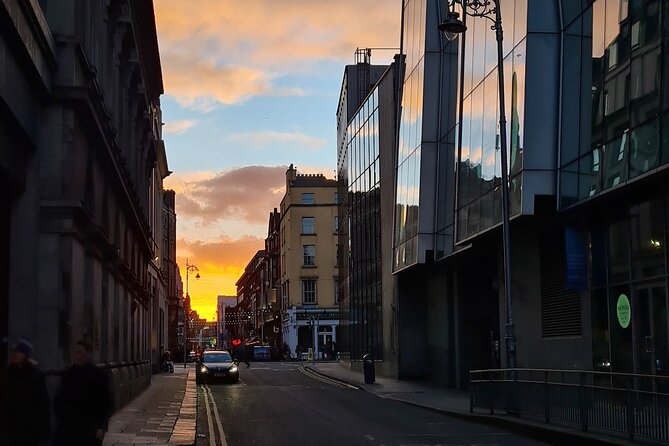
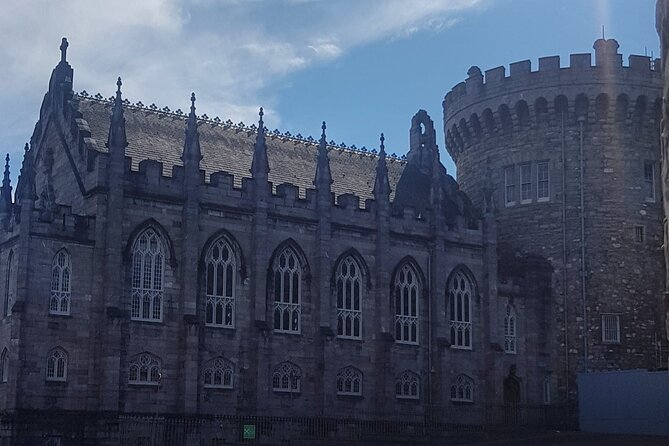
Dublin Castle is the third listed stop. The guide also discusses City Hall and the role these buildings played during the 1916 Rebellion. The stop lasts around 10 minutes.
Dublin Castle is especially useful for understanding how power worked in Ireland before independence. Its history is tied to British administration, so it provides a strong contrast with the GPO, where Irish republicans announced a new political future.
City Hall adds another layer to the story. The tour connects both places with events of 1916, helping you see the rebellion as a struggle for control of the city, not just a single event at the post office.
Again, the short stop means this is an introduction rather than a full interior tour. Admission is not included, and the information supplied does not promise entry to Dublin Castle or City Hall. If you want to explore inside, plan that separately.
I like the order of these stops. The GPO introduces the rebellion, Trinity broadens the picture of Dublin’s institutions, and Dublin Castle returns you to the question of political control. In less than two hours, the route gives you a basic framework for reading the city.
More Walking Tours in Dublin
- Dublin Highlights and Hidden Gems Guided Walking Tour
★ 5.0 · 6,020 reviews - Dublin: Highlights and Hidden Gems Walking Tour
★ 4.9 · 2,140 reviews - 1916 Rebellion Walking Tour
★ 5.0 · 1,605 reviews - 90 Minute Dublin Walking tour and Sightseeing tips
★ 5.0 · 916 reviews
Donal’s style: humor, questions, and pub advice
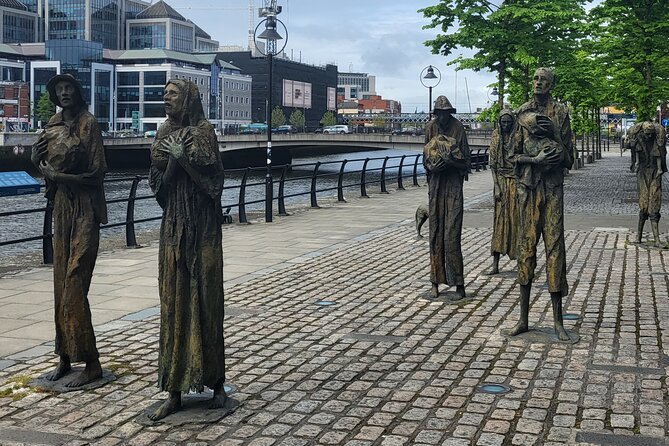
The guide can make or break a walking tour, and Donal receives very strong praise for his delivery. He is described as funny, enthusiastic, open to questions, and easy to engage with. He adds poetry, personal opinions, and stories about Dublin life rather than sticking only to dates and names.
That style works well if you want more than a standard sightseeing script. Donal’s recommendations have included O’Neill’s pub for lunch, where one family enjoyed the cottage pie, and the Jeanie Johnston ship for a later visit. His pub knowledge is also a recurring part of the experience.
Some tours may include an extra pub moment, such as learning to pour a pint of Guinness or visiting a historic pub. However, you should not assume those extras are guaranteed parts of the advertised 1-hour-45-minute route. They appear in the tour experience described by participants, but the formal highlights focus on the historical walk.
The personal approach also has a limit. One lower-rated experience found the guide spoke too quickly and spent too much time on people and years, with not enough focus on Dublin itself. That is useful feedback to keep in mind. If you have trouble following fast speech, tell Donal early and ask him to slow down or repeat a point.
The small group should make that possible. With a maximum of 15 people, you have a better chance of being heard than on a large city walk. The tour may even operate with only a few people, though you should not count on receiving a private tour.
What $32.44 buys you
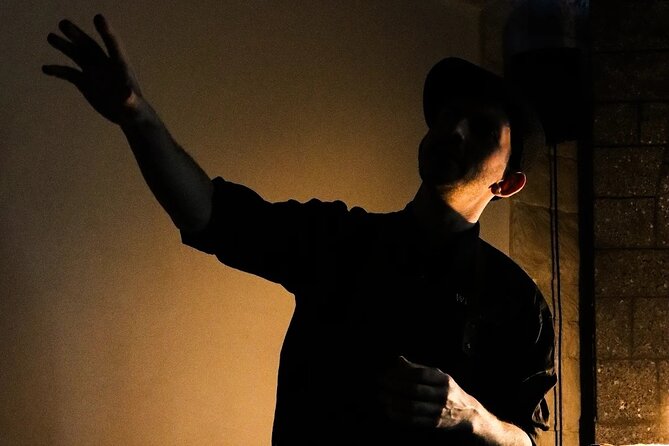
At $32.44 per person, this is not the cheapest way to walk around central Dublin. You can pass many of the same streets for free. The question is what you want your money to do.
You are paying for a guide, a planned route, historical explanation, and access to local advice. The tour also saves you the work of connecting the GPO, Trinity College, Dublin Castle, City Hall, and the Ha’penny Bridge on your own.
The price is easier to justify if you are new to Dublin or prefer learning through stories. Donal’s suggestions may also help shape the rest of your visit. A good pub recommendation or a useful tip about another attraction can add value beyond the 105 minutes on the street.
It is less attractive if you mainly want included admissions. The GPO, Trinity College, Book of Kells, Long Room, Dublin Castle, and City Hall do not come with guaranteed entry under the stated ticket information. Bring extra money if you plan to visit paid sites.
The tour is often booked about 45 days ahead. That does not mean you must reserve that early, but it suggests that afternoon spaces can disappear, especially during popular periods. If your Dublin schedule is tight, booking ahead is sensible.
Timing, meeting points, and walking comfort
The start time is 1:00 pm, which gives you the morning for breakfast, an early attraction, or travel into the city center. The afternoon timing also makes this a useful first-day or second-day activity, depending on when you arrive.
The meeting point is the Spire on O’Connell Street Upper. The finish is at the Ha’penny Bridge Inn at 42 Wellington Quay in Temple Bar. Both points are central and recognizable, which is helpful when you are navigating Dublin for the first time.
The route is a walking experience, and the listed duration is approximate. Wear shoes that are comfortable for city streets. The supplied information says most people can participate, and service animals are allowed. The tour is also near public transportation.
Weather matters. The experience requires good weather, and poor conditions can lead to a new date or a full refund. You can cancel for a full refund up to 24 hours before the start time. After that, changes and refunds are not accepted, so check the forecast before the cutoff.
Because the walk is relatively short, it is not designed as a full-day history course. You will get a focused introduction, not every major Dublin landmark. That is a strength if you want a manageable outing and a weakness if you want a long, detailed examination of Irish history.
Who will enjoy this Dublin walk
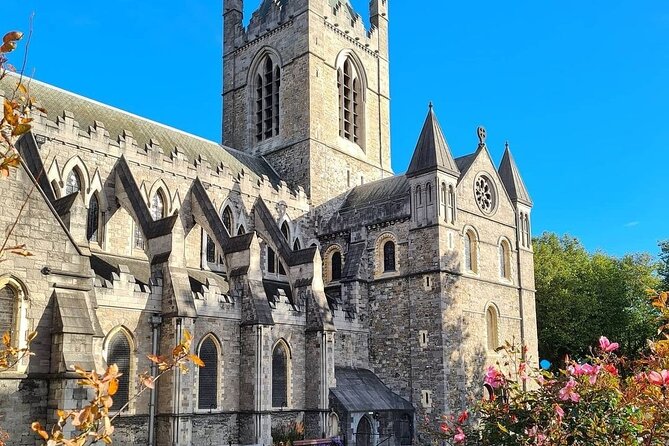
I would recommend it most strongly to first-time visitors who want a clear introduction to central Dublin. It suits people who enjoy history but also like humor, conversation, and practical recommendations.
Families may find the informal approach helpful. Donal has shown patience with a family traveling with an active five-year-old, including helping them find a restroom. Still, the walking pace and historical content may not hold every young child’s attention for the full duration.
It can also suit solo visitors and couples. The group limit of 15 creates a social setting without the crowd of a large coach tour. You may meet other people, but the format still allows questions.
You may want a different experience if your main goal is interior access to Trinity College, the Book of Kells, Dublin Castle, or the GPO museum. In that case, book the relevant admissions separately and use this walk as a companion introduction, or choose a tour that includes entry.
Likewise, consider your listening needs. Donal’s warm, fast-moving style has won strong praise, but one person found the pace too quick and the focus less centered on Dublin than expected. The best approach is to ask questions and say what you want to hear more about.
Should you book the Historical Walking Tour of Dublin?
Book it if you want a small-group introduction to Dublin’s political history with a guide who mixes facts, jokes, local opinions, and pub advice. The GPO, Trinity College, and Dublin Castle form a sensible route, and the central start and finish points are easy to use.
Do not book it expecting a Book of Kells admission or a series of interior visits. The $32.44 price pays for the guided walk, while attraction tickets cost extra.
For the best fit, reserve ahead, bring comfortable shoes, allow extra cash for admissions, and tell Donal if you prefer a slower speaking pace. If those conditions suit you, this is a friendly and useful way to begin making sense of Dublin.
FAQ
Where does the Historical Walking Tour of Dublin begin?
The tour begins at The Spire on O’Connell Street Upper in North City, Dublin.
Where does the tour finish?
The tour ends at the Ha’penny Bridge Inn at 42 Wellington Quay in Temple Bar, next to the Ha’penny Bridge.
What time does the tour start?
The tour starts at 1:00 pm.
How long does the walking tour last?
The tour lasts approximately 1 hour and 45 minutes.
Are admission tickets included?
No. Admission tickets are not included. This applies to the listed stops and to attractions such as the Book of Kells and the Long Room.
What is the maximum group size?
The tour has a maximum of 15 travelers.
Just added around Dublin
- A Self Guided Walking Tour of Dublin’s Docklands★ 4.5 · 3 reviews
- Waterford Crystal and Kilkenny Full-Day Rail Tour from Dublin★ 5.0 · 3 reviews
- Secret and unusual Dublin: guided walking tour★ 5.0 · 3 reviews
- Turtle Bunbury’s Dublin: A Self-Guided Audio Tour from a Celebrated Author★ 5.0 · 3 reviews
- Cliffs of Moher and The Burren Private Tour from Dublin★ 5.0 · 3 reviews
- Skip-the-line St. Patrick’s Cathedral and Dublin City Tour★ 5.0 · 3 reviews
- Dublin Full-Day Tour through Boyne Valley★ 5.0 · 3 reviews
- Rock Of Cashel And Blarney Castle Private Chauffeur Full Day Sightseeing Tour★ 4.5 · 3 reviews
Historical Tours, compared.

Dublin Historical Centre Food Tour with 8 Food Tastings & Drinks
Read our review →

Historical 2-Hour Guided Walking Tour of Dublin
Read our review →
Dublin to Cork, Blarney Castle & Cóbh Heritage Centre by train
Read our review →
Jeanie Johnston Tall Ship Irish Famine History Tour
Read our review →

Deliciously Dublin: The Artisan Donut Walking & History Tour
Read our review →Browse the lists this tour appears in