
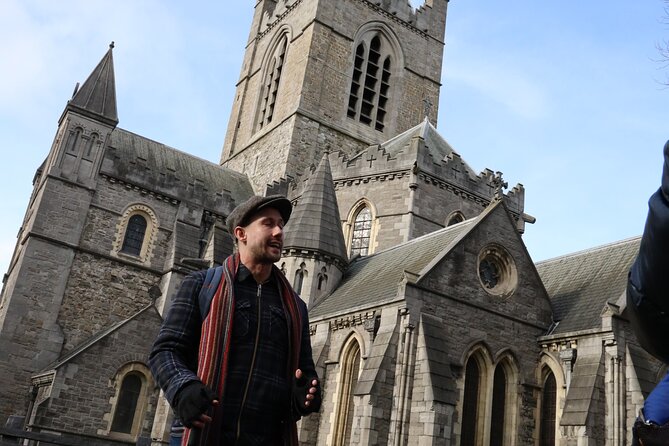
Reviewed · WALKING TOURS
Macabre, Ghostly & Bloody Walking Tour
Dublin has a dark side worth meeting after sunset. This two-hour walk links grim tales with real streets, old churches, and major landmarks, making the city’s past feel close at hand. I like the route’s unusual subjects, especially the mummified corpses at St. Michan’s and the story of the man-eating rats. I also like the guides’ wider knowledge of Dublin, as Peter and Rob add general history and useful local tips. The main drawback is that the tour focuses on spoken storytelling rather than entry into the sites, so you should not expect a haunted-house show or lots of indoor sightseeing.
At $20.43, this is a fair price for a two-hour guided walk, particularly if you enjoy history with a gruesome edge. The 6 p.m. start gives the tour an appropriate evening mood, but you should be comfortable walking through central Dublin and hearing stories of death, disease, crime, and bodily decay.
In This Review
- Key points before you book
- Why Dublin’s dark past works so well on foot
- Starting under the Spire at 6 p.m.
- The General Post Office and Cuchulainn’s final stand
- Wolfe Tone Park, grave robbers, and Arthur Guinness
- Oxmantown and the city’s Viking past
- Father Matthew Bridge and the rat story
- St. Audoen’s Church and the Black Death
- Fishamble Street and a death by fire
- St. Michan’s Church, mummies, and the legless killer
- How the guides shape the experience
- Is $20.43 a good value?
- Who should book this Dublin walk?
- Cancellation and planning details
- Should you book the Macabre, Ghostly & Bloody Walking Tour?
- FAQ
- Where does the tour start?
- What time does the tour begin?
- How long does the tour last?
- Where does the tour finish?
- What language is the tour offered in?
- How much does the tour cost?
- What is included in the price?
- How many people can join the tour?
- Is the tour suitable for most people?
- Can I cancel for a refund?
Key points before you book

- The route covers eight distinctive Dublin stops, from the Spire and General Post Office to Fishamble Street and St. Michan’s Church.
- The stories reach beyond standard sightseeing, with Viking rituals, Victorian grave robbing, plague quarantine, a notorious brothel keeper, and a legless serial killer.
- Guides Peter and Rob received especially warm praise for being enthusiastic, funny, professional, and well informed about Dublin beyond the macabre tales.
- The group can include up to 25 people, large enough for lively energy but still small enough to hear a guide on city streets.
- The tour ends near Christchurch Cathedral and Temple Bar, a useful location for dinner, drinks, or more evening sightseeing.
- Free cancellation is available until 24 hours before departure, giving you some flexibility with your Dublin plans.
Why Dublin’s dark past works so well on foot
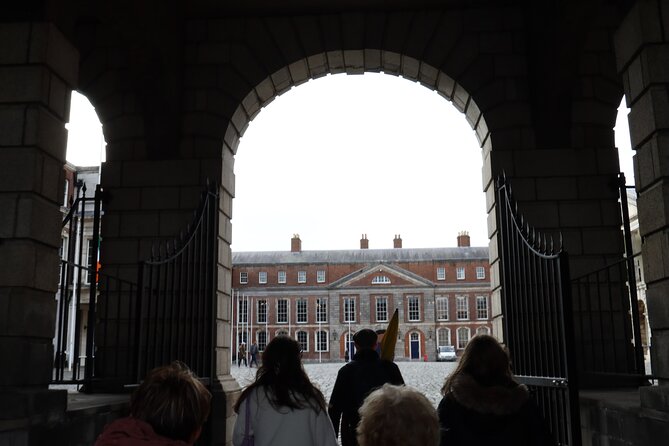
Dublin is a good city for a macabre walking tour because old stories sit beside ordinary modern streets. You are not being taken to a remote attraction built solely for scares. Instead, the guide points out places in the city center and explains what happened there, or what older buildings and monuments meant to people in the past.
That setting gives the stories some weight. A tale about plague victims, grave robbers, or a public execution feels different when you are standing near the old city walls or an ancient church. The walk also gives you a side of Dublin that a standard highlights tour may skip.
The tone appears to be more historical than theatrical. Peter was described as professional and willing to offer general information about the area, while Rob was praised for enthusiasm, humor, and captivating delivery. That mix matters. Dark stories can become repetitive if every stop uses the same gloomy tone. A guide who can explain ordinary Dublin history as well keeps the walk from feeling like a string of shock stories.
Still, you should know your own limits. The material includes death by fire, corpses, disease, violent crime, and gruesome Viking ritual. If you prefer light sightseeing, this is not the best choice. If you enjoy old crimes and unsettling folklore, the subject matter is the main reason to book.
More Walking Tours in Dublin
- Dublin Highlights and Hidden Gems Guided Walking Tour
★ 5.0 · 6,020 reviews - Dublin: Highlights and Hidden Gems Walking Tour
★ 4.9 · 2,140 reviews - 1916 Rebellion Walking Tour
★ 5.0 · 1,605 reviews
Starting under the Spire at 6 p.m.
The meeting point is beside the Spire on O’Connell Street Upper. The 120-meter sculpture is easy to identify, and beginning here gives you a central point that is simple to reach by public transportation.
The first stop lasts about 15 minutes and is free to enter. That does not mean the Spire itself is the focus. It serves as your starting marker and a place to gather before the guide sets the mood. Arrive with enough time to find the sculpture and locate the group, since O’Connell Street can be busy.
The 6 p.m. departure is well chosen for this theme. You get an evening walk rather than a midday history lesson, though the exact amount of darkness will depend on the season. Dublin’s weather can change quickly, so a waterproof layer and comfortable shoes are sensible. The tour is outdoors, and the supplied information does not promise indoor access at every stop.
The General Post Office and Cuchulainn’s final stand
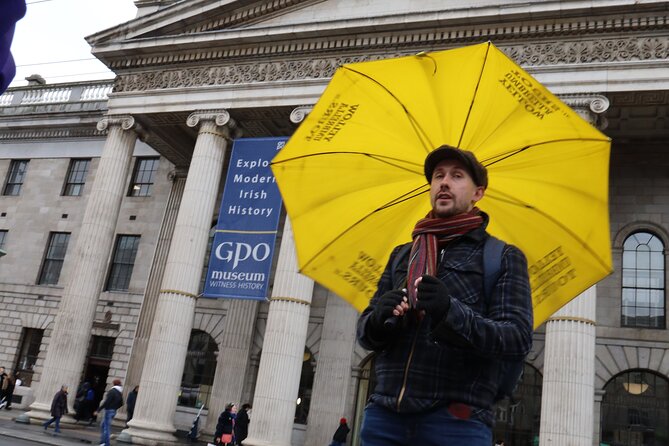
From the Spire, the walk continues to An Post General Post Office. This famous building is one of Dublin’s major landmarks, but the story here moves away from modern political history and toward Cuchulainn, a legendary warrior from Irish mythology.
The group views a statue and hears the story of Cuchulainn’s death. This is a strong early stop because it introduces the tour to Ireland’s older heroic tradition. You are not simply hearing about a building. You are connecting a central Dublin landmark with a story of courage, violence, and a famous death.
The stop lasts around 15 minutes. Since the tour is designed around short stops, the guide needs to explain the tale clearly and keep the pace moving. The format should suit you if you prefer several compact stories rather than one long lecture. It may feel brief if you want detailed mythology or extended time to study the building.
Wolfe Tone Park, grave robbers, and Arthur Guinness
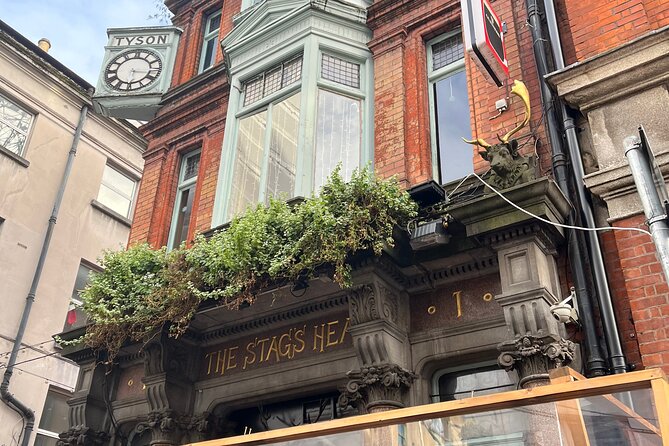
At Wolfe Tone Park, the subject shifts to Victorian-era grave robbers. This is one of the more unsettling parts of the walk because it deals with the treatment of the dead and the demand for bodies during the era of medical study.
The stop also brings in Arthur Guinness, specifically the story of his wedding venue. That contrast is useful. Dublin’s past was not divided neatly into separate chapters of horror and ordinary life. A place associated with a well-known brewing family can also connect to stranger and more disturbing episodes.
You will spend about 15 minutes here. The value depends heavily on the guide’s ability to add context. Rob and Peter were both praised for knowing more than just the headline tale, and that wider knowledge should help place the stories in Dublin’s social history.
A completely different kind of day out from Dublin:
- Dublin to Cliffs of Moher, including Wild Atlantic Way and Galway
★ 5.0 · 23,331 reviews - From Dublin: Cliffs of Moher, Burren & Galway City Day Tour
★ 4.8 · 18,888 reviews - Dublin: Guinness Storehouse Entry Ticket
★ 4.6 · 16,863 reviews - Dublin to Cliffs of Moher, Burren, Wild Atlantic Way, Galway Tour
★ 5.0 · 12,924 reviews
Oxmantown and the city’s Viking past
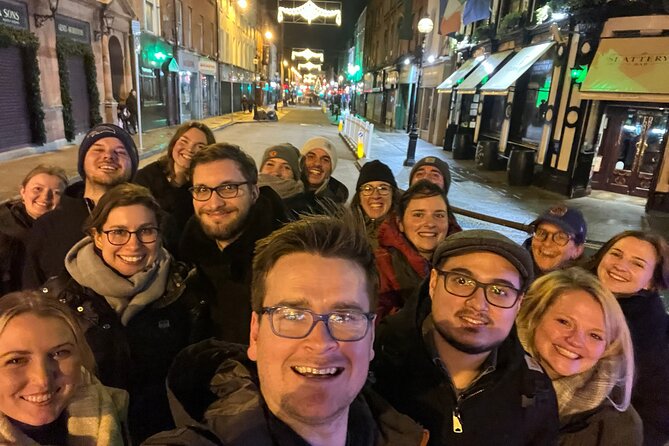
Outside the old fruit and vegetable market in Oxmantown, the walk turns to the Vikings. The guide explains the history of the area and describes some of the more violent aspects of Viking ritual.
This stop broadens the tour beyond ghosts and notorious criminals. You get a look at how early Dublin developed and how the city’s Viking past shaped the area. The ritual material is likely to be among the more graphic sections, so it suits a listener who wants the unvarnished version of old customs.
The market setting also gives the story a useful sense of place. You are hearing about an area connected with trade and daily life, then learning how earlier residents lived and died. As with the other stops, the visit lasts about 15 minutes and does not include an admission charge.
Father Matthew Bridge and the rat story
At Father Matthew Bridge, the guide describes the fate of a soldier devoured by man-eating rats. It is the kind of story that can sound almost absurd until a skilled guide gives it enough historical setting.
This is likely to be one of the tour’s most memorable moments because it is so specific. Many city walks rely on broad tales of haunted buildings. Here, the story centers on a particular death and a disturbing threat associated with the city.
The bridge stop also gives the group a change of scenery as the route moves through different parts of central Dublin. You should keep your attention on the guide rather than expecting a major monument at every point. The experience is built around what you hear and the places that frame each story.
St. Audoen’s Church and the Black Death
St. Audoen’s Church provides one of the tour’s strongest links to medieval Dublin. Here you see the quarantine cages at the old city walls, connected with the Black Death.
The cages are a powerful detail because they show how authorities tried to control disease before modern medicine. Rather than treating the plague as a distant fact, the guide uses a surviving feature of the old city to explain the fear and harsh measures of the period.
This stop should appeal to you if you like history that explains how ordinary people faced crisis. It is also a reminder that macabre history is not limited to murder. Disease, isolation, and public health can be just as frightening as a criminal tale.
The group spends about 15 minutes here. The church and old walls provide atmosphere, but you should not assume the tour includes a full church visit or interior access. The description specifically says you see the quarantine cages, so the focus remains on the outdoor story.
Fishamble Street and a death by fire
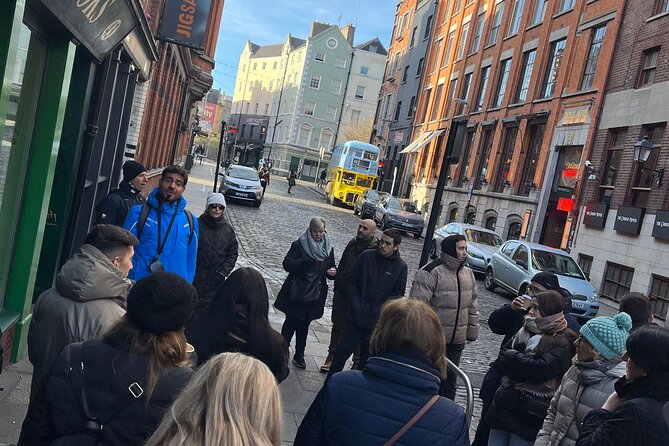
Fishamble Street brings one of the tour’s most notorious crime stories. The guide tells the tale of an infamous brothel keeper and her death by fire at the stake.
This is the sort of stop that shows why local history can be more gripping than a general ghost story. The subject combines sex work, crime, punishment, and public spectacle. It also raises questions about how Dublin treated people accused of serious wrongdoing and how such deaths became part of the city’s memory.
The story is likely to be graphic and troubling. I would not recommend this tour to young children simply because the themes involve execution and violence, though the supplied information does not set a formal age limit. Parents should use their judgment.
Fishamble Street is also important for the tour’s practical finish. The stated ending point is on Fishamble Street, close to Christchurch Cathedral and the Temple Bar district. That puts you in a useful part of central Dublin after the walk, with plenty of options for continuing your evening.
St. Michan’s Church, mummies, and the legless killer
The final listed stop is St. Michan’s Church, where the guide tells the story of mummified corpses in the cellar and a legless serial killer. These are the most recognizably macabre subjects on the route, and they give the tour a fitting climax.
The mummies are especially unusual because they connect a real physical feature of an old church with stories about the dead. The legless serial killer adds a crime element that is stranger than the usual haunted-house material. Together, the two tales cover both historic burial practices and violent criminal legend.
You should note the practical wording carefully. The route includes St. Michan’s Church, while the stated end point is Fishamble Street near Christchurch Cathedral and Temple Bar. That suggests the walk may finish back toward the central district after the St. Michan’s story, but you should allow a little extra time to orient yourself at the end.
This stop may be the strongest reason to choose the tour over a standard city walk. Dublin has plenty of famous attractions, but mummified corpses and a legless killer are not usually part of the basic sightseeing route.
How the guides shape the experience
A walking tour like this depends more on the guide than on admission tickets or special equipment. The guide needs to make each 15-minute stop clear, keep the group together, and balance humor with material that can be genuinely unpleasant.
Peter was praised for knowing the macabre stories as well as the broader history of Dublin and Ireland. He also offered area suggestions and local tips, which can make the walk useful beyond its spooky theme. Rob was described as enthusiastic, funny, and captivating. Those qualities matter when the group is outdoors and surrounded by city noise.
The company assigns a professional guide, and the tour is offered in English. With a maximum of 25 people, the group is not private, but it is limited enough to support a personal storytelling style. One unusual point from the feedback is that Peter handled a booking with just one participant professionally. That suggests the tour can still operate with a very small group, though you should not assume a private tour unless specifically confirmed.
The experience currently has a 4.9 rating from 15 reviews, with 100 percent recommending it. That is a strong early signal, but the sample is small. I would place more weight on the repeated praise for enthusiasm, humor, professionalism, and general Dublin knowledge than on the number alone.
Is $20.43 a good value?
At $20.43 per person, the tour costs less than many experiences that include major admission fees. Here, the value comes from the guide, the route, and the stories rather than from paid entry into attractions.
You receive roughly two hours of guided sightseeing across eight stops. That works out as a compact introduction to Dublin’s darker side, with no separate ticket charges listed for the stops. If you enjoy walking and storytelling, the price is reasonable.
The value is weaker if you expect entry to every church, cellar, or historic building. The tour description emphasizes viewing places and hearing stories, not extended interior visits. You are paying for interpretation and access to a carefully arranged route, not for a series of museum admissions.
The tour is also a good first-evening activity because it ends near Christchurch Cathedral and Temple Bar. You can use it to get oriented in the city center, then choose your own dinner or evening plans. Do not treat it as a complete introduction to Dublin, though. Its subject is deliberately narrow, even if the guides add general historical context.
Who should book this Dublin walk?
I would choose this tour if you enjoy:
- Local crime stories and unusual historical details
- Irish mythology and Viking-era subjects
- Medieval disease and old burial customs
- Guided walks with humor and personality
- Seeing central Dublin through stories rather than formal attractions
- An evening activity that ends near Temple Bar
It suits couples, solo visitors, and small groups of friends who want something different from a standard pub crawl or landmark tour. The feedback also suggests that a small booking can still receive professional attention.
I would think twice if you dislike graphic descriptions of death, disease, executions, or corpses. The route is not designed as a gentle family history walk. It is also less suitable if you have limited mobility, since the experience is a two-hour urban walk and no specific accessibility details are provided beyond service animals being allowed and most people being able to participate.
The tour is near public transportation, which makes the start at the Spire fairly practical. Bring a charged phone because the ticket is mobile, and plan for changing weather even though the supplied details do not list a weather policy.
Cancellation and planning details
You receive confirmation at booking, and free cancellation is available up to 24 hours before the 6 p.m. start. Cancellations or changes made inside that 24-hour window are not accepted for a refund, with cut-off times based on Dublin local time.
The tour is offered in English and has a maximum group size of 25. Service animals are allowed. The experience is operated by Yellow Umbrella Tours Ltd.
Should you book the Macabre, Ghostly & Bloody Walking Tour?
Book it if you want Dublin’s odd, grim, and lesser-known stories delivered by an energetic guide. The combination of Cuchulainn, Viking ritual, grave robbers, plague cages, a notorious brothel keeper, mummies, and a legless serial killer gives the walk plenty of variety.
I especially like that it uses real central streets and historic sites rather than relying only on staged scares. At $20.43, it is a sensible buy for an evening of guided storytelling, provided you understand that the main attraction is the narration, not paid entry into multiple buildings.
Skip it if you want a relaxed overview of Dublin, a museum-heavy tour, or a family outing with mild subject matter. For the right audience, though, this is a memorable way to see the city after dark and hear the stories that ordinary sightseeing often leaves out.
FAQ
Where does the tour start?
It starts beside the Spire on O’Connell Street Upper in North City, Dublin, Ireland.
What time does the tour begin?
The start time is 6:00 p.m.
How long does the tour last?
The tour lasts approximately two hours.
Where does the tour finish?
The stated end point is Fishamble Street in Wood Quay, Dublin. The tour finishes beside Christchurch Cathedral and the Temple Bar district.
What language is the tour offered in?
The tour is offered in English.
How much does the tour cost?
The listed price is $20.43 per person.
What is included in the price?
A professional guide is included.
How many people can join the tour?
The maximum group size is 25 people.
Is the tour suitable for most people?
Most people can participate, and service animals are allowed. The experience is a two-hour walking tour, but no further accessibility details are provided.
Can I cancel for a refund?
Yes. You can cancel for a full refund up to 24 hours before the experience starts. Cancellations or changes made less than 24 hours before the start time are not accepted for a refund.
Just added around Dublin
- A Self Guided Walking Tour of Dublin’s Docklands★ 4.5 · 3 reviews
- Waterford Crystal and Kilkenny Full-Day Rail Tour from Dublin★ 5.0 · 3 reviews
- Secret and unusual Dublin: guided walking tour★ 5.0 · 3 reviews
- Turtle Bunbury’s Dublin: A Self-Guided Audio Tour from a Celebrated Author★ 5.0 · 3 reviews
- Cliffs of Moher and The Burren Private Tour from Dublin★ 5.0 · 3 reviews
- Skip-the-line St. Patrick’s Cathedral and Dublin City Tour★ 5.0 · 3 reviews
- Dublin Full-Day Tour through Boyne Valley★ 5.0 · 3 reviews
- Rock Of Cashel And Blarney Castle Private Chauffeur Full Day Sightseeing Tour★ 4.5 · 3 reviews
Walking Tours, compared.
Dublin Highlights and Hidden Gems Guided Walking Tour
Read our review →

90 Minute Dublin Walking tour and Sightseeing tips
Read our review →

Historical 2-Hour Guided Walking Tour of Dublin
Read our review →
Dublin Traditional Irish 3 Course Meal Walking Tour with Local
Read our review →
Browse the lists this tour appears in