
Reviewed · WALKING TOURS
Small Group Bucket List Sights Walking Tour with a Local Guide
Dublin reveals itself one street at a time. This two-hour walking tour links the city center’s main sights with stories about Viking Dublin, British rule, Irish independence, religion, literature, and modern city life. At $20.52 per person, it is priced as an affordable orientation walk rather than a full sightseeing program.
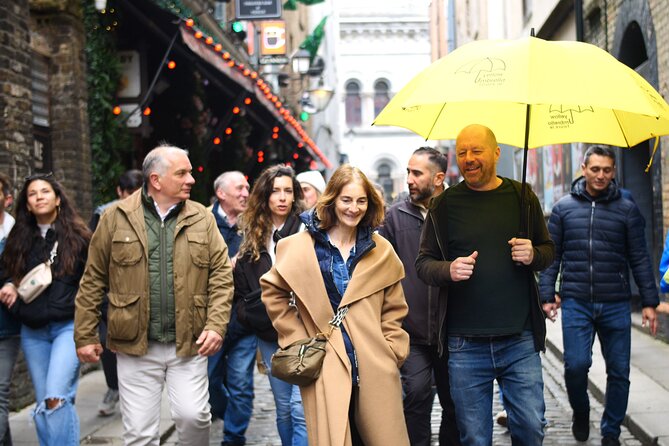
I like the route because it covers a lot without sending you far from central Dublin, and I like that a local guide such as Peter, Patrick, Martin, or Rob can adjust the conversation around your questions. The main drawback is simple: you do not enter the major buildings, and the ten-minute timing at each stop gives you only a brief look from outside.
The tour is especially useful at the beginning of a short Dublin visit. You finish near Trinity College with a better sense of where things are, plus suggestions for museums, walks, and other places to explore on your own. The group can reach 25 people, though some departures may be much smaller.
In This Review
- Five useful things to know before you book
- Why this route works for a first Dublin morning
- Christ Church and St. Patrick’s: Dublin’s two great cathedrals
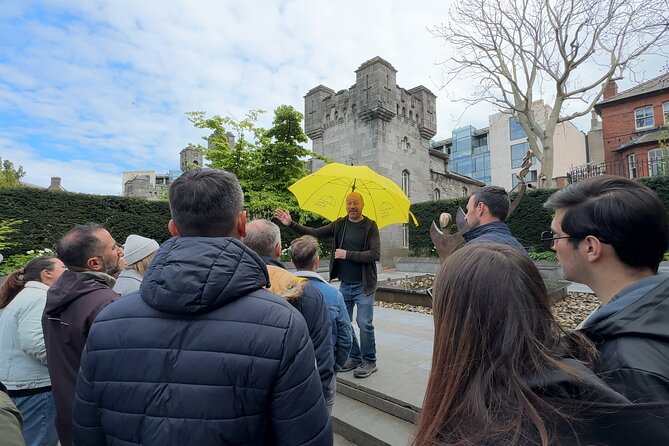
- Dubh Linn Gardens and Dublin Castle
- City Hall and the meaning behind Ireland’s flag
- Temple Bar, the Millennium Bridge, and the River Liffey
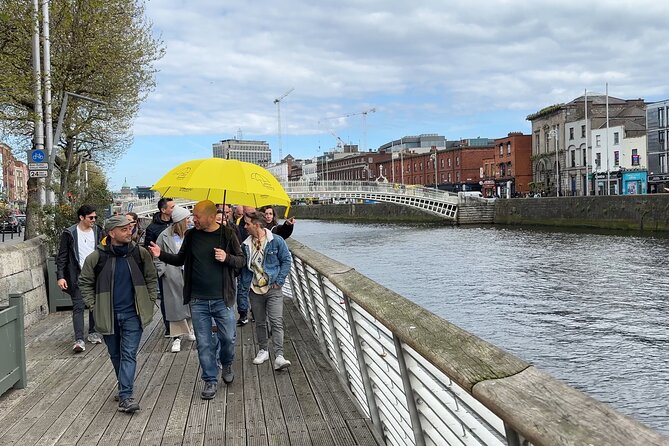
- Ha’penny Bridge and Merchant’s Arch
- College Green, Molly Malone, and Trinity College
- What the guides add to the experience
- Price, pace, and practical value
- Who should book this Dublin walk?
- Should you book the Bucket List Sights Walking Tour?
- FAQ
- How long is the walking tour?
- What time does the tour begin?
- Where does the tour begin?
- Where does the tour end?
- Are admission tickets included?
- How many people can join the tour?
- Is the tour offered in English?
- Can I cancel for a refund?
Five useful things to know before you book
- The route connects 12 major sights: You walk from Christ Church Cathedral through Dublin Castle, Temple Bar, the River Liffey, College Green, and Trinity College.
- It is an orientation tour, not an interior visit: Admission fees are not included, and the planned stops are short. You see the exteriors and hear the stories, then return later if a building catches your interest.
- The local guides are the main attraction: Peter receives especially warm praise for his friendly presentation, historical explanations, practical suggestions, and willingness to answer questions. Patrick, Martin, and Rob have also led well-received departures.
- The walking is central and manageable: The tour begins at Wood Quay at 10:00 a.m. and ends outside Trinity College, making it easy to continue sightseeing afterward.
- The price is strong for a first look: At $20.52, you are paying for a guided city introduction that helps you use the rest of your Dublin time more wisely.
Why this route works for a first Dublin morning
The route has a useful shape. It begins south of the River Liffey among Dublin’s oldest religious and governmental landmarks, crosses to the north side, then returns south and finishes at Trinity College. You are not simply ticking off disconnected photo stops. The walk shows how Dublin grew around water, religion, government, trade, and education.
The guide’s job is to connect those places. The best parts of the experience come from the links between the sights: Viking beginnings and Norman building, the long period of British administration, religious conflict, the changing role of the river, and the city’s shift toward modern business districts.
You should expect a steady but not hurried pace. Each listed stop lasts about ten minutes, though the actual walking time between places is part of the two-hour schedule. Previous departures have been described as well paced, with enough time for questions without dragging the group through long lectures.
That balance matters in Dublin, where a short distance can hold a surprising amount of history. A guide can point out why one square matters, explain a political reference, and then get you moving before the story becomes a classroom exercise.
More Walking Tours in Dublin
- Dublin Highlights and Hidden Gems Guided Walking Tour
★ 5.0 · 6,020 reviews - Dublin: Highlights and Hidden Gems Walking Tour
★ 4.9 · 2,140 reviews - 1916 Rebellion Walking Tour
★ 5.0 · 1,605 reviews
Christ Church and St. Patrick’s: Dublin’s two great cathedrals
Christ Church Cathedral is the first major sight. Its story reaches back to a wooden church associated with Dublin’s Viking period, followed by a stone rebuilding under the Normans. The building was later renovated with money from the whiskey trade in the nineteenth century.
That combination gives you a quick lesson in how Dublin changed hands and fortunes. Viking foundations, Norman power, and Victorian wealth are all tied to one church. You will have about ten minutes here, so think of the stop as an exterior introduction rather than a cathedral visit.
Admission is not included. If Christ Church appeals to you, you will need to plan a separate visit and pay its entry fee. The tour does not pretend otherwise, which is useful when you are working out your sightseeing budget.
St. Patrick’s Cathedral follows. It is named for Ireland’s patron saint and was extensively renovated in the 1860s by the Guinness family, particularly Sir Benjamin Lee Guinness. The guide uses the cathedral to explain both religious identity and the role wealthy Dublin families played in preserving important buildings.
Again, you see the cathedral as part of the walking route, not as an interior tour. Ten minutes is enough to hear the key points and decide if you want to return. If you already know you want to visit both cathedrals inside, this tour helps you place them geographically, but it does not replace those visits.
Dubh Linn Gardens and Dublin Castle
Dubh Linn Gardens offers a quieter pause. The gardens are associated with the site where Viking longboats were moored when Dublin was developing in the ninth century, and they are also home to the Chester Beatty Library.
This is one of the more useful stops for anyone who likes a little breathing room between major monuments. The garden admission is free, and the guide can explain how the name Dublin connects to the dark pool that gave the city its name. The setting also offers a change from cathedral stone and busy streets.
Dublin Castle comes next. It served as the center of British government in Ireland for 700 years and now presents a mix of medieval, Georgian, Gothic, and modern architecture. That mix is more interesting than a single grand style because it shows how the complex changed as political needs changed.
The castle is an important stop, but the schedule is tight. You will not tour its state rooms or courtyards as part of this experience. Admission is not included, so return later if you want to explore inside.
I like the sequence here. The garden gives you a small, calm place to consider early Dublin, while the castle shifts the story toward administration and imperial power. The guide can make that transition easier to understand than a plaque can.
City Hall and the meaning behind Ireland’s flag
Near City Hall, outside the front gate of Dublin Castle, the guide explains the significance of Ireland’s national flag. The focus is its colors as a symbol of peace between Catholic and Protestant communities, and between north and south.
This is a short stop, but it gives the walk a political center. Dublin’s monuments are not only old stones. They also relate to identity, division, independence, and the difficult work of building a modern state.
The location is practical, too. City Hall and the castle sit close together, so you do not lose time getting from one landmark to the next. You hear the explanation outdoors, with no admission charge.
This is the sort of information that can help you read the city differently afterward. Instead of seeing a flag as decoration, you have a framework for understanding why national symbols carry so much weight in Ireland.
A completely different kind of day out from Dublin:
- Dublin to Cliffs of Moher, including Wild Atlantic Way and Galway
★ 5.0 · 23,331 reviews - From Dublin: Cliffs of Moher, Burren & Galway City Day Tour
★ 4.8 · 18,888 reviews - Dublin: Guinness Storehouse Entry Ticket
★ 4.6 · 16,863 reviews - Dublin to Cliffs of Moher, Burren, Wild Atlantic Way, Galway Tour
★ 5.0 · 12,924 reviews
Temple Bar, the Millennium Bridge, and the River Liffey
Temple Bar is one of Dublin’s oldest districts and is now best known for pubs and nightlife. The guide explains how the area was laid out during the Tudor conquest of Ireland, adding political context to a place many people first encounter as a social district.
You should keep your expectations realistic. The tour does not offer a pub stop or a night out. It gives you a brief look at the streets and explains how the area developed. The daytime visit is useful for orientation, especially if you plan to return later for food or music.
From there, the route reaches the Millennium Bridge and crosses the Liffey from south to north. The river view lets the guide connect the city’s older Celtic settlement in the east with the newer Silicon Docks area to the west, including the influence of American business and technology.
The bridge itself is a good transition point. You get a change of direction, a broader view, and a sense of how compact central Dublin can feel on foot. The stop is listed as having no included admission, but there is no ticketed attraction involved in the normal sense.
The river crossing also breaks up the older historical material. After cathedrals, castles, and political symbols, you get a look at Dublin as a living city that keeps changing.
Ha’penny Bridge and Merchant’s Arch
The tour returns south across the Ha’penny Bridge, one of Dublin’s most recognizable structures. Its earlier name was connected with the Duke of Wellington, and the guide also explains why the bridge no longer shakes as people cross it, linking that improvement to Harland & Wolff.
This is a quick, visual stop. You get a classic Dublin view and a small piece of engineering and transport history. Bridges often make good tour landmarks because they help you understand the city from both sides of the river.
Merchant’s Arch introduces a different kind of Dublin contrast. The area around Crown Alley places an older commercial setting beside Sam Stephenson’s brutalist Stephenson Tower. The point is not to admire only the prettiest buildings. It is to notice how old and new Dublin sit beside each other, sometimes gracefully and sometimes awkwardly.
You should expect city streets rather than a formal monument visit here. The guide supplies the meaning, and you supply the time later if you want photographs or a closer look.
College Green, Molly Malone, and Trinity College
College Green is one of the finest urban spaces on the route. Its buildings include former banks and parliament, reflecting a period when Dublin saw itself as the second city of the empire and a major center of government and finance.
The guide can use the square to explain how power and money shaped the city. It is also a good place to slow down briefly and look upward. Dublin’s architectural story is not confined to churches and castles.
The Molly Malone statue provides a lighter moment. No first visit to Dublin feels quite complete without greeting this famous figure, linked to the city’s popular song and identity. The stop is brief and informal, but it gives the walk a bit of local character after the heavier political material.
The final stop is Trinity College Dublin. The tour concludes outside the college gate on College Green, close to the Book of Kells exhibition. This is a smart ending because Trinity can easily become your next stop.
Admission to the Book of Kells exhibition is not included. If you plan to go inside, check your schedule and budget separately. The walking tour gives you the setting and background, but you need another ticket for the exhibition itself.
Ending here also makes the tour useful beyond its final minute. You can continue around Trinity, follow the guide’s suggestions for other sights, or use the college as a reference point for the rest of your day.
What the guides add to the experience
The strongest part of this tour is the human explanation. Peter is repeatedly praised for being friendly, clear, and willing to answer questions. His style appears to mix Irish and Dublin history with present-day suggestions, rather than delivering a fixed list of dates.
That matters because the route moves quickly. You need a guide who can make a short explanation memorable. Peter has also suggested museums and walks that helped people plan the rest of their visit, which is exactly the sort of practical help you want from an introductory walk.
Patrick has been praised for giving a concise history of Dublin and Ireland while answering questions in context. Martin has been described as energetic and enthusiastic, while Rob has handled very small departures with the same care as larger groups.
The guide may vary, so you should not book expecting one particular person. Still, the consistent theme is a conversational style. The guide does not simply recite facts and send you on. You are encouraged to ask questions and discuss what you are seeing.
The group limit is 25 people. That is small enough for a guide to hear questions, though a full group will feel less personal than a private walk. Some departures may be much smaller, including occasions with only one or two participants. The tour has continued in those cases rather than being canceled, which can make for a more personal experience.
Price, pace, and practical value
At $20.52 per person, this is good value if you want a city overview. You get two hours of guiding, a route through many central landmarks, and help deciding which places deserve a return visit.
The value drops if you expect admission to Christ Church, St. Patrick’s Cathedral, Dublin Castle, or the Book of Kells exhibition. None of those interior tickets is included. Think of the cost as payment for orientation and interpretation, not a package covering Dublin’s main entry fees.
The 10:00 a.m. start is helpful. You can use the tour as your first activity and still have much of the day left. The finish outside Trinity College also makes it easy to continue sightseeing without returning to the starting point.
The tour begins at 121 R137, Wood Quay, Dublin. It ends at Fox House, 37 College Green, Dublin 2, outside the front gate of Trinity College. The route is near public transportation, and most people can take part. Service animals are allowed.
Wear shoes suited to city walking and allow enough time to arrive at the starting point. The duration is approximately two hours, but stop times and questions can affect the exact finish. If you have a strict appointment afterward, tell the guide at the beginning.
Confirmation is provided when you book. Free cancellation is available up to 24 hours before the local start time. Cancellations or changes made inside that window are not accepted for a refund.
Who should book this Dublin walk?
I would choose this tour for a first visit, a short break, or a morning when you want the city to make sense before tackling museums and paid attractions. It suits solo visitors, couples, families, and anyone who likes history explained in plain language.
It is also a good fit if you want suggestions for the rest of your stay. The guides have offered advice about museums and walks, and the finish at Trinity College puts you near several worthwhile next stops.
I would be more cautious if you want long interior visits, extensive time for photographs, or a slow architectural study. The walk covers many places in roughly two hours, so each stop is a sample. You will need to return independently for the cathedral interiors, castle rooms, and Book of Kells exhibition.
The route is also less suitable for anyone who dislikes city walking or needs a highly customized private itinerary. The group may include up to 25 people, and the published plan follows a set path through central Dublin.
Should you book the Bucket List Sights Walking Tour?
Book it if you want a friendly, affordable introduction to Dublin’s center. The route covers the essential landmarks, the guides bring the history to life, and the practical suggestions can improve the rest of your visit.
Do not book it as a substitute for entering the attractions. Instead, use it to get your bearings, learn which places interest you, and then spend your admission money where it matters most. At $20.52, that is a sensible trade for two focused hours and a much clearer understanding of central Dublin.
FAQ
How long is the walking tour?
The tour lasts approximately two hours.
What time does the tour begin?
It starts at 10:00 a.m.
Where does the tour begin?
The meeting point is 121 R137, Wood Quay, Dublin, Ireland.
Where does the tour end?
It ends at Fox House, 37 College Green, Dublin 2, outside the front gate of Trinity College.
Are admission tickets included?
No. Admission tickets for places such as Christ Church Cathedral, St. Patrick’s Cathedral, Dublin Castle, and the Book of Kells exhibition are not included. Dubh Linn Gardens, City Hall, Temple Bar, and College Green are listed as free stops.
How many people can join the tour?
The maximum group size is 25 people.
Is the tour offered in English?
Yes. The experience is offered in English and includes a mobile ticket.
Can I cancel for a refund?
Yes. You can cancel up to 24 hours before the experience start time for a full refund. Cancellations and changes made less than 24 hours before the start time are not accepted.
Just added around Dublin
- A Self Guided Walking Tour of Dublin’s Docklands★ 4.5 · 3 reviews
- Waterford Crystal and Kilkenny Full-Day Rail Tour from Dublin★ 5.0 · 3 reviews
- Secret and unusual Dublin: guided walking tour★ 5.0 · 3 reviews
- Turtle Bunbury’s Dublin: A Self-Guided Audio Tour from a Celebrated Author★ 5.0 · 3 reviews
- Cliffs of Moher and The Burren Private Tour from Dublin★ 5.0 · 3 reviews
- Skip-the-line St. Patrick’s Cathedral and Dublin City Tour★ 5.0 · 3 reviews
- Dublin Full-Day Tour through Boyne Valley★ 5.0 · 3 reviews
- Rock Of Cashel And Blarney Castle Private Chauffeur Full Day Sightseeing Tour★ 4.5 · 3 reviews
Walking Tours, compared.
Dublin Highlights and Hidden Gems Guided Walking Tour
Read our review →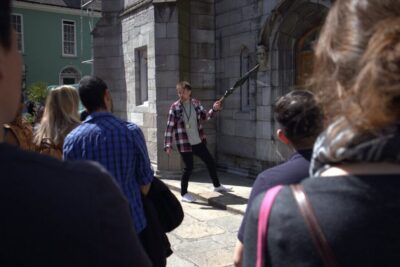

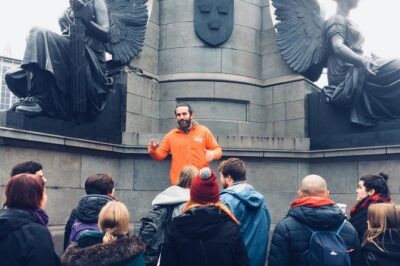
90 Minute Dublin Walking tour and Sightseeing tips
Read our review →

Historical 2-Hour Guided Walking Tour of Dublin
Read our review →
Dublin Traditional Irish 3 Course Meal Walking Tour with Local
Read our review →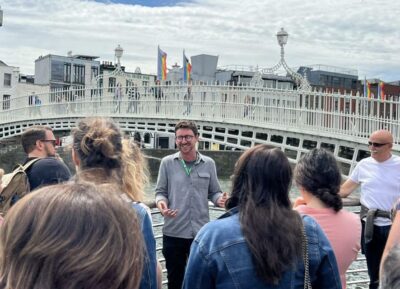
Browse the lists this tour appears in