
Reviewed · WALKING TOURS
Small Group-Dublin Walking Tours
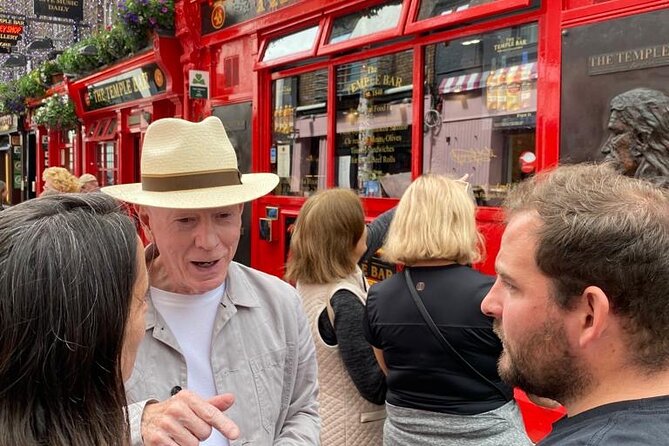
Dublin’s story unfolds on foot. This two-hour walk links Viking beginnings, Georgian streets, literary connections, and the 1916 Easter Rising in a compact city-center route. I especially like the capped group of eight, which gives Damian McGrath room to answer questions and adjust the experience to the people in front of him.
I also like the mix of famous sights and smaller stories, from Bram Stoker’s wedding church to the link between Leinster House and Washington’s White House. Music, short skits, and a guide who clearly enjoys telling Dublin’s stories add personality. The main consideration is pace: you cover a lot of ground in two hours, often over cobblestones, so comfortable shoes and reasonable walking ability matter.
The start at the Chester Beatty Library, behind Dublin Castle, is easy to find. The finish at Powerscourt Townhouse puts you near South William Street and Grafton Street, a useful spot for lunch, shopping, or continuing your own walk.
In This Review
- Key points to know before you book
- Why this two-hour walk works well on your first day
- Starting behind Dublin Castle at Chester Beatty
- Christ Church and the city’s Viking beginnings
- Temple Bar, Ha’penny Bridge, and the River Liffey
- O’Connell Bridge and the memory of 1916
- Trinity College and Parliament House
- Bram Stoker, Dawson Street, and Grafton Street
- Leinster House and the National Museum
- St Stephen’s Green and the city’s polished side
- Powerscourt Townhouse, the final stop
- Pace, music, and the guide’s style
- Is the $60.47 price good value?
- Who should book this Dublin walk?
- Final verdict: book it for the stories, not the tickets
- FAQ
- How long is the Dublin walking tour?
- Where does the tour begin?
- Where does the tour end?
- How large is the tour group?
- What language is the tour offered in?
- Are admission tickets included?
- Are service animals allowed?
- Can I cancel for a full refund?
Key points to know before you book
- Eight-person maximum: The small group keeps the walk personal and makes questions easier.
- A useful first-day tour: The route gives you a quick map of central Dublin and helps you choose where to return.
- Music is part of the storytelling: Damian uses musical interludes and occasional skits to keep the history lively.
- Ten central stops in about two hours: You see a broad slice of Dublin, but most stops are brief exterior visits.
- No standard admission fees are included because none are needed: The tour focuses on streets, grounds, views, and explanations rather than indoor entry.
- Free cancellation up to 24 hours ahead: Changes made inside that window are not accepted for a refund.
Why this two-hour walk works well on your first day
This is an orientation tour rather than a full museum visit. You move from Dublin Castle to Christ Church, across the Liffey, through Temple Bar, and back toward Trinity and St Stephen’s Green. That route gives you the basic shape of central Dublin without asking you to spend half a day on one attraction.
I would schedule it near the beginning of your stay. Once you know where the river, castle, college, shopping streets, and main historic quarters fit together, the rest of your time becomes easier. You can return to Christ Church, explore Trinity in more detail, or spend an evening in Temple Bar without first studying a map.
The small group is important here. With a maximum of eight people, the guide can respond to questions and notice when the group needs a slower pace. One review describes Damian taking care with a participant who had a hip problem, while another praises the tour for fitting a family with children aged 11 and 13. That suggests a considerate style, though the route is still a walking tour and not a seated sightseeing experience.
More Walking Tours in Dublin
- Dublin Highlights and Hidden Gems Guided Walking Tour
★ 5.0 · 6,020 reviews - Dublin: Highlights and Hidden Gems Walking Tour
★ 4.9 · 2,140 reviews - 1916 Rebellion Walking Tour
★ 5.0 · 1,605 reviews
Starting behind Dublin Castle at Chester Beatty
Meet Damian at the Chester Beatty Library in Dubh Linn Garden, behind Dublin Castle. It is a sensible starting point because the garden gives you a calm opening before the streets get busier, and the meeting point is described as easy to find.
The first explanation concerns the name Dublin itself and the area’s earliest setting. You hear about the origins of the city before moving into the castle grounds, which gives the opening a clear sense of place rather than beginning with a list of dates.
The Chester Beatty stop lasts about 10 minutes, followed by another 10 minutes around Dublin Castle. These are short visits, so you should not expect a full tour of the library or castle interiors. The value is in seeing how the historic center fits together and hearing why this spot mattered to the city’s beginnings.
Dublin Castle’s gardens are especially useful for orientation. You can pause among the grounds, listen to the introduction, and get your bearings before the route heads into the older religious quarter.
Christ Church and the city’s Viking beginnings
The walk continues past Christ Church Cathedral. Damian connects the cathedral with the story of the Catholic Church in Ireland and points out the venue where Handel’s Messiah was first performed.
This is one of the tour’s better examples of its range. In a few minutes, you move from religious history to music and then back to the city’s earliest days, including the Viking invasions from the north and their lasting mark on Dublin.
Again, the stop is mainly an exterior look and historical explanation. If you want to see the cathedral’s interior, allow separate time and check entry arrangements on your own. The tour gives you context, not a complete cathedral visit.
That distinction matters when you judge the price. You are paying for a guided walk and a connected story, not a bundle of admission tickets. If you prefer long visits inside major sights, this may feel too quick. If you want a lively introduction before choosing your own indoor stops, it works better.
Temple Bar, Ha’penny Bridge, and the River Liffey
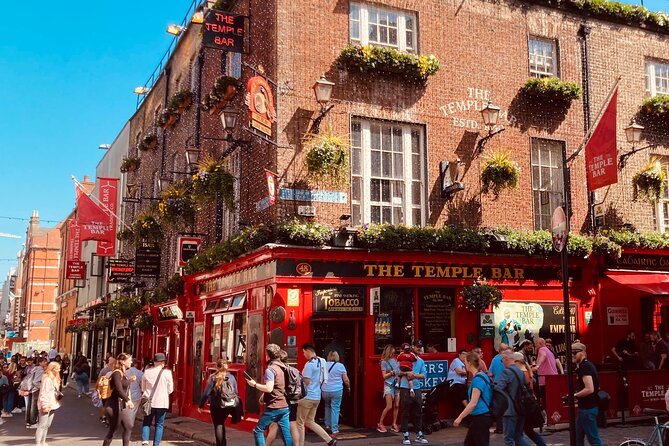
Temple Bar is the most familiar tourist quarter on the route. It is known for nightlife, pubs, live music, and crowds gathering for a pint and conversation. Damian includes it without letting the entire tour become a pub-focused stroll.
The stop also includes a crossing of the Ha’penny Bridge. Here the story turns toward trade, travel, and the way Dublin developed around the river. The bridge is picturesque, but the short walk across it can be busy, so stay close to the group and watch your footing.
This section lasts about 15 minutes, one of the longer stops. That gives you enough time to take in the atmosphere and understand why Temple Bar is so popular, while also keeping the focus on the city’s development.
I appreciate the balance. Temple Bar is easy to find on your own, but a guide can help you place it in Dublin’s larger story. You also get a quick look at the difference between a historic quarter and a modern nightlife district. If you want a quiet, empty street, this is not the moment. If you want to see one of Dublin’s most talked-about areas and then move on, the timing is sensible.
A completely different kind of day out from Dublin:
- Dublin to Cliffs of Moher, including Wild Atlantic Way and Galway
★ 5.0 · 23,331 reviews - From Dublin: Cliffs of Moher, Burren & Galway City Day Tour
★ 4.8 · 18,888 reviews - Dublin: Guinness Storehouse Entry Ticket
★ 4.6 · 16,863 reviews - Dublin to Cliffs of Moher, Burren, Wild Atlantic Way, Galway Tour
★ 5.0 · 12,924 reviews
O’Connell Bridge and the memory of 1916
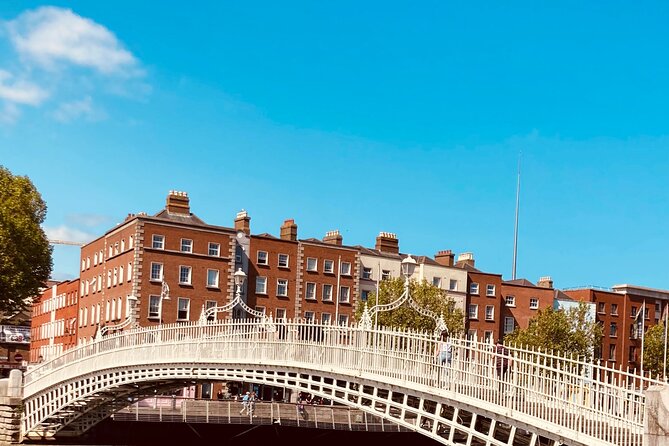
After crossing the Liffey, the tour approaches the center of the 1916 Easter Rising. At O’Connell Bridge, Damian discusses the river, the famous Liffey Swim, and Daniel O’Connell, whose statue gives the bridge its name.
This stop helps shift the tour from medieval and religious Dublin toward the political story of modern Ireland. The 1916 Rising is a major subject, but the walk only introduces it. You will not get a long military or political lecture in this 10-minute segment.
That brevity can be a strength. A first visit to Dublin can become overloaded with dates, names, and battles. Here, you get a clear marker for the city’s political center and can decide if you want a more detailed history visit later.
Trinity College and Parliament House
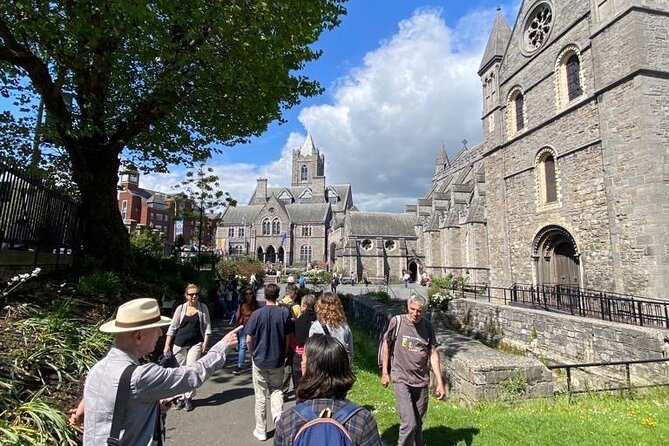
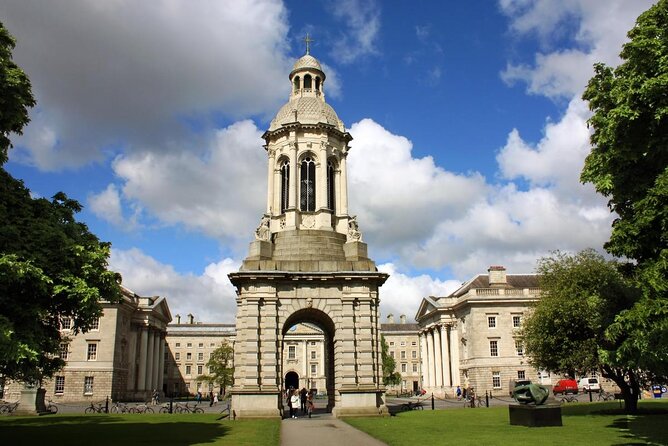
At Trinity College Dublin, you enter the courtyard for a brief view of the original architecture. Damian explains the university’s importance and mentions well-known historical figures who studied there.
This is another place where expectations matter. The tour does not promise entry to the Book of Kells or a full campus visit. You see the courtyard and hear the story, then continue. If the library and Book of Kells are high on your list, plan a separate visit.
The route also gives you a view of Parliament House, known as the House of Lords, along Dame Street. The pairing is useful because it places education and government within the same central city walk.
A small detail from one family’s experience adds a fun challenge: Damian asked them to guess the oldest and newest building in Trinity. That kind of question turns passive sightseeing into a conversation. It also reflects his habit of tailoring the presentation rather than delivering the same speech without pause.
Bram Stoker, Dawson Street, and Grafton Street
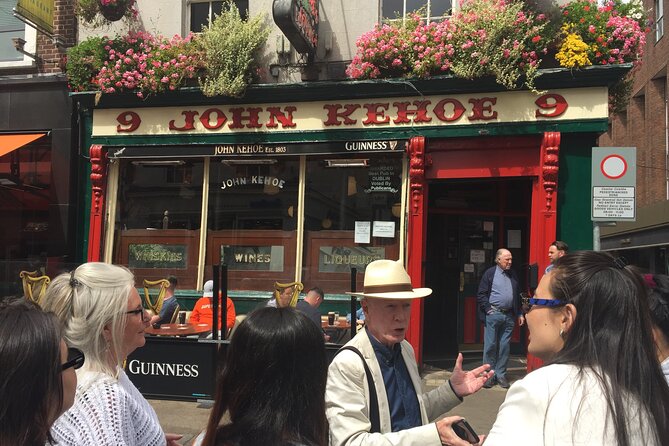
Outside St Anne’s Church on Dawson Street, the subject turns to Bram Stoker, author of Dracula, who married there. The route then moves toward Bewley’s Café on Grafton Street.
Literary connections are one of the pleasures of Dublin, and this stop avoids treating the city only as a place of castles and rebellions. The Bram Stoker story is brief, but it gives you a reason to notice a church you might otherwise pass.
Grafton Street brings a different side of Dublin. It is the main high-end shopping district, and the walk lets you see how the historic center functions as a modern city as well as a heritage site. Bewley’s ornate café is a useful visual landmark, though the tour does not include a meal or café stop.
If you want time for shopping or coffee, save it for after the tour. The schedule is too tight for lingering, browsing, and keeping up with the group at the same time.
Leinster House and the National Museum

The walk along Kildare Street adds another literary address, Bram Stoker’s original home, before reaching Leinster House, Ireland’s houses of parliament. Damian explains its history and its relationship to the White House in Washington, DC.
This is a strong stop for people who like buildings with political connections. You see how a former residence became linked with national government, while also passing the National Museum of Archaeology.
The stop lasts about 10 minutes, so the explanation is an overview. You should not expect entry to Leinster House or the museum as part of the walk. Still, knowing what you are looking at makes a later independent visit more rewarding.
St Stephen’s Green and the city’s polished side
The route then takes in Grafton Street, the Royal College of Surgeons, Georgian-era architecture, and St Stephen’s Green. This 15-minute section shows Dublin’s more elegant side, with formal city planning, grand institutional buildings, and a compact public park.
St Stephen’s Green is a welcome change after several streets and bridges. You get a quick look at the park rather than a long pause, but it helps break up the route and gives you a sense of how Dublin’s central districts mix commerce, education, politics, and open space.
The Royal College of Surgeons adds another layer to the city’s institutional story. You may find this portion especially useful if you enjoy architecture and city design more than pub culture.
Powerscourt Townhouse, the final stop
The tour ends at Powerscourt Townhouse Centre on South William Street, between South William Street and Clarendon Street. The building is an architectural highlight, now filled with boutique shops and a café or restaurant in its atrium.
Ending here is practical. You are close to Grafton Street and several central streets, so you can continue shopping, stop for food, or walk back toward other sights. The finish also gives the tour a pleasant change of tone, moving from public history into Dublin’s present-day city life.
Like several earlier stops, Powerscourt is primarily a look and explanation rather than an included shopping or dining experience. You pay for the walk, not for purchases or food.
Pace, music, and the guide’s style
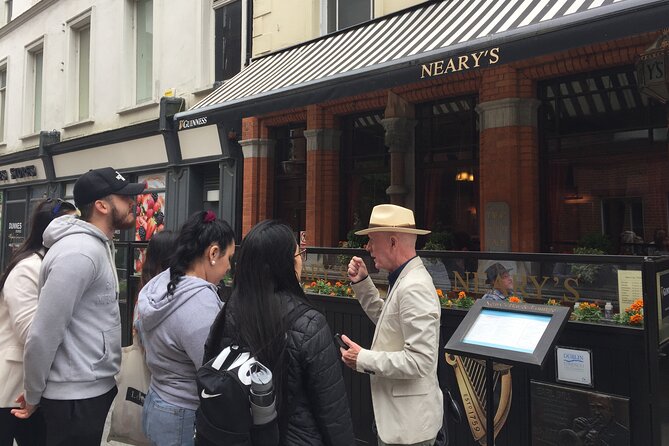
The most praised part of this experience is Damian McGrath’s presentation. His approach combines history with music, and some tours include short skits. The music may be matched to the sights and adjusted to suit the group, which gives the walk a personal feel without turning it into a concert.
Several comments point to the same strengths: a friendly manner, clear storytelling, a comfortable pace, and room for questions. One family appreciated that the music worked for both adults and children. Another group valued the ability to customize the route around its timing and interests.
The wording fast paced appears alongside praise for the tour, so I would read that as energetic rather than exhausting. You cover ten stops in roughly two hours. There is not much time to stand around taking photographs at every location.
Wear comfortable shoes. Cobblestones and ordinary city pavement are part of the route, and the compact schedule means you should be ready to keep moving. Most people can participate, and service animals are allowed, but anyone with limited mobility should consider the walking surface and tell the guide about any concerns.
Is the $60.47 price good value?
At $60.47 per person, this is not the cheapest way to see Dublin’s center. You can walk through many of these areas independently for free. The price makes more sense if you value a local guide who connects the stops and responds to questions.
The group limit of eight is the key value point. A large city tour can give you facts, but it rarely offers much conversation or adjustment. Here, a small group gives Damian room to personalize the music, answer questions, and help with orientation.
You also avoid spending time planning a route between ten separate places. In two hours, you cover the castle, cathedral quarter, river, Temple Bar, Trinity, Georgian Dublin, St Stephen’s Green, and Powerscourt. That is a lot of central Dublin for a single morning or afternoon.
I would book it if you are visiting for the first time, have limited time, or enjoy history presented with humor and music. I would skip it if your main goal is extended indoor access to Dublin Castle, Christ Church, Trinity, or the National Museum. Those attractions require your own time and possibly separate admission.
Who should book this Dublin walk?
This tour suits first-time visitors who want a clear introduction without committing to a full-day activity. It is also a good match for families, couples, solo visitors, and anyone who likes asking questions as they go.
It may work well during a short Dublin stopover. One family arranged it after an unexpected layover and appreciated the flexible, personal approach. The compact route lets you see the center, then choose how to use the rest of your limited time.
Book it early if your dates are fixed. It is often reserved well in advance, with an average booking lead time of about 66 days. Confirmation arrives at booking, and free cancellation is available up to 24 hours before the start time. Inside that period, refunds and changes are not accepted.
Final verdict: book it for the stories, not the tickets
I recommend Small Group-Dublin Walking Tours for a first look at central Dublin, especially if you want more than a list of landmarks. Damian McGrath’s music, humor, questions, and personal attention give the walk its character.
Book it near the start of your stay, wear good shoes, and treat the stops as introductions rather than full visits. At $60.47, the tour earns its price through the small group and connected storytelling. It is best for getting your bearings and finding the places you want to explore more deeply on your own.
FAQ
How long is the Dublin walking tour?
The tour lasts approximately two hours.
Where does the tour begin?
It begins at the Chester Beatty Library in Dubh Linn Garden behind Dublin Castle, at Castle Street, Dublin 2.
Where does the tour end?
It ends at Powerscourt Townhouse Centre at 59 William Street South, Dublin 2, between South William Street and Clarendon Street.
How large is the tour group?
The group is capped at a maximum of eight travelers.
What language is the tour offered in?
The tour is offered in English.
Are admission tickets included?
The listed stops have no admission ticket charge as part of the walk. The experience focuses on viewing the grounds, buildings, streets, and public areas, rather than included indoor admissions.
Are service animals allowed?
Yes, service animals are allowed.
Can I cancel for a full refund?
Yes. You can cancel at least 24 hours before the experience start time for a full refund. Cancellations or changes made less than 24 hours before the start time are not accepted for a refund.
Just added around Dublin
- A Self Guided Walking Tour of Dublin’s Docklands★ 4.5 · 3 reviews
- Waterford Crystal and Kilkenny Full-Day Rail Tour from Dublin★ 5.0 · 3 reviews
- Secret and unusual Dublin: guided walking tour★ 5.0 · 3 reviews
- Turtle Bunbury’s Dublin: A Self-Guided Audio Tour from a Celebrated Author★ 5.0 · 3 reviews
- Cliffs of Moher and The Burren Private Tour from Dublin★ 5.0 · 3 reviews
- Skip-the-line St. Patrick’s Cathedral and Dublin City Tour★ 5.0 · 3 reviews
- Dublin Full-Day Tour through Boyne Valley★ 5.0 · 3 reviews
- Rock Of Cashel And Blarney Castle Private Chauffeur Full Day Sightseeing Tour★ 4.5 · 3 reviews
Walking Tours, compared.
Dublin Highlights and Hidden Gems Guided Walking Tour
Read our review →

90 Minute Dublin Walking tour and Sightseeing tips
Read our review →

Historical 2-Hour Guided Walking Tour of Dublin
Read our review →
Dublin Traditional Irish 3 Course Meal Walking Tour with Local
Read our review →
Browse the lists this tour appears in