
Reviewed · WALKING TOURS
Street Art Walking Tour
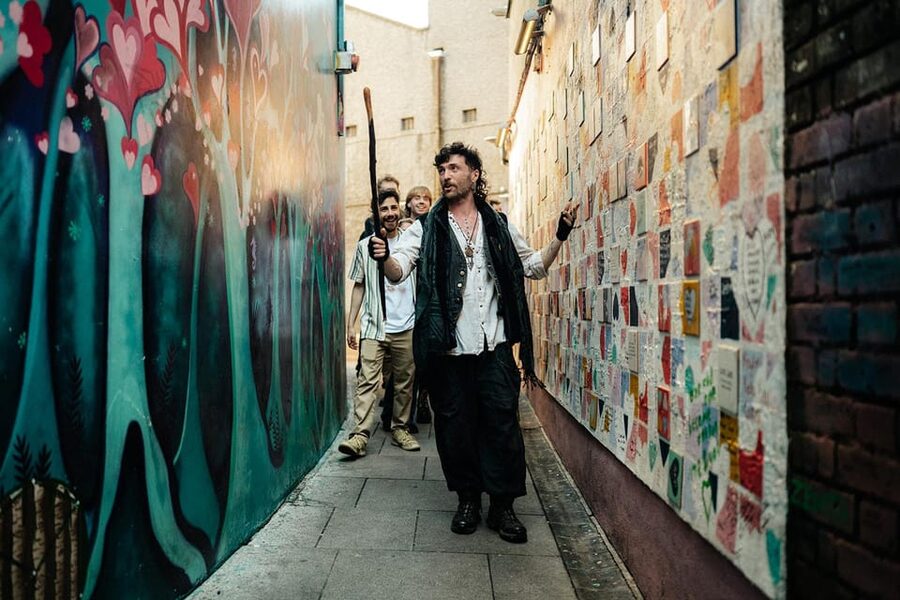
Dublin has art hiding in plain sight. This $17 walking tour takes you beyond the usual postcard views to find murals, graffiti, stickers, paste-ups, and other public works scattered around the city centre. I like the mix of well-known areas and easy-to-miss corners, plus the chance to hear how Dublin’s street-art scene works from guides who may also make art themselves.
I also like the small-business feel: after the tour, you receive links to the artists featured and visit a gallery where you can buy prints or paintings. The main drawback is practical rather than artistic: some sections are not wheelchair accessible, and the tour runs in the rain, so good footwear and a waterproof jacket matter.
In This Review
- Six things to know before you go
- Why Dublin street art is worth two hours
- Starting beside Ha’penny Bridge
- Yamamori Tengu, an early lesson in looking up
- Abbey Court Hostel and the changing city wall
- The Icon Factory and The Icon Walk
- Temple Bar beyond the pub signs
- Blooms Hotel and Project Arts Centre
- Crampton Court, where the walk wraps up
- What the guide adds to the artwork
- Is $17 good value?
- Who will enjoy this walk most?
- Booking advice and cancellation details
- FAQ
- Where does the Street Art Walking Tour start?
- How long does the tour last?
- What language is the tour conducted in?
- Does the tour operate in rainy weather?
- Is the tour wheelchair accessible?
- Can I cancel for a full refund?
- Should you book the Dublin Street Art Walking Tour?
Six things to know before you go
- The tour begins beside Ha’penny Bridge: Meet your guide outside The Grand Social on Liffey Street, in the public area with the trees.
- You see more than 30 works: The route covers murals, graffiti, stickers, paste-ups, and other forms of street art.
- The route favors lesser-known corners: You will visit places you could easily miss while walking between Dublin’s main sights.
- Guide Liam has made a strong impression: One recent rating praised his backstory about the murals and his friendly manner.
- The tour ends at Crampton Court: It is a compact two-hour walk through the central city rather than a full-day outing.
- Mobility needs careful planning: The experience is not suitable for wheelchair users or people with mobility impairments.
Why Dublin street art is worth two hours
Dublin is easy to read as a city of Georgian doors, literary landmarks, pubs, and stone churches. Street art adds another layer. It shows what artists, communities, and independent businesses are saying now, often in places that guidebooks barely mention.
I like this tour because it treats street art as more than colorful decoration. You learn about different formats and subcultures, including graffiti, murals, stickers, and paste-ups. That distinction matters. A large wall painting takes a different amount of planning, permission, and time from a sticker placed overnight. Once you know what to look for, ordinary walks around Dublin become more interesting.
The route also gives you a useful introduction to the city’s current art scene. The guides are connected to the subject, and some create street art or graffiti in their spare time. That can give the commentary a more personal angle than a standard sightseeing walk. It also means the exact works you see may change as the city changes.
This is not a museum tour with climate control and neat labels. You are outdoors, stopping on city streets, taking photographs, and looking carefully at walls, lanes, shopfronts, and public spaces. The appeal comes from discovery. The trade-off is that street art can be temporary, weathered, painted over, or partly blocked by parked vehicles and passing crowds.
More Walking Tours in Dublin
- Dublin Highlights and Hidden Gems Guided Walking Tour
★ 5.0 · 6,020 reviews - Dublin: Highlights and Hidden Gems Walking Tour
★ 4.9 · 2,140 reviews - 1916 Rebellion Walking Tour
★ 5.0 · 1,605 reviews
Starting beside Ha’penny Bridge
Your meeting point is outside The Grand Social on Liffey Street, near the trees beside Ha’penny Bridge. This is a sensible place to begin because it is central, easy to recognize, and already puts you close to Dublin’s riverfront and pedestrian streets.
Arrive ready to walk. The tour lasts up to two hours, and the format involves frequent stops rather than one long talk. You will want comfortable shoes, a phone or camera, and clothing that can handle Irish weather. Since the tour continues when it rains, bring an umbrella or rain jacket.
The starting location also helps you place the art within the city. You are not being taken to an isolated art district. Instead, the route shows how creative work appears alongside everyday Dublin, tourist areas, commercial streets, and cultural venues.
Yamamori Tengu, an early lesson in looking up
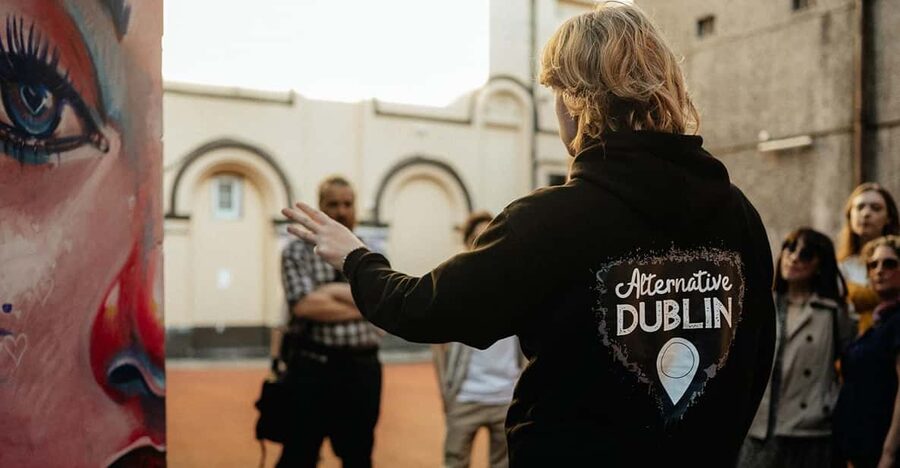
The first listed stop is Yamamori Tengu, where you spend about 15 minutes on a guided visit and photo stop. This early pause sets the rhythm for the tour: arrive, study the work, hear the context, and take a photograph if you wish.
The useful part here is not simply the image itself. Your guide can point out details you might otherwise walk past, explain the style or subject, and place the work within Dublin’s wider street-art culture. I find that this kind of explanation is especially helpful if you do not normally know the difference between graffiti lettering, a commissioned mural, and a paste-up.
Because this is an outdoor stop, the viewing conditions may depend on the street. Give yourself time to look beyond the main design. Small tags, stickers, and layered pieces often tell you how a wall has changed over time.
Abbey Court Hostel and the changing city wall
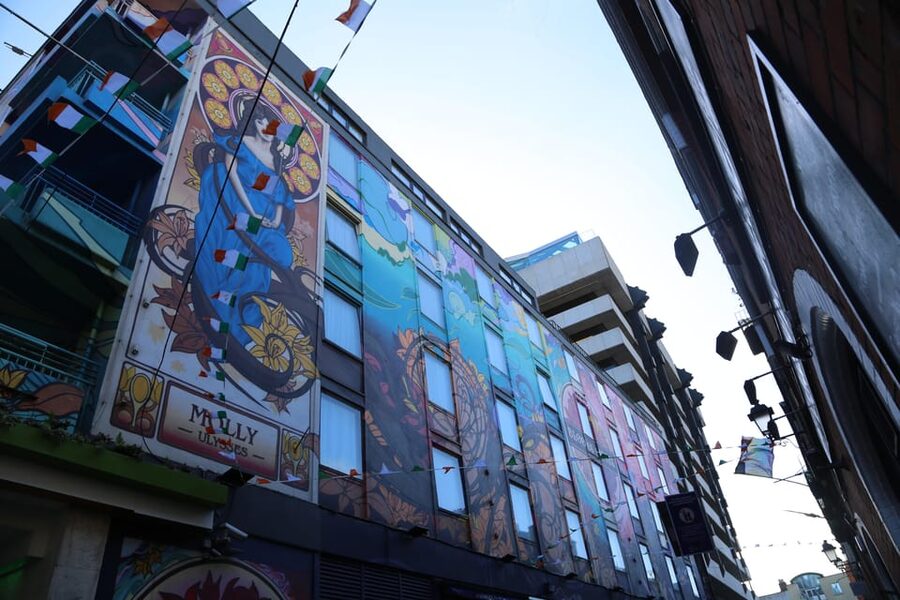
The route continues to Abbey Court Hostel for roughly 20 minutes. This is one of the longer stops, which suggests that there is plenty to discuss and photograph here.
Hostels are natural meeting points for people from many places, and a public artwork near one can become part of a visitor’s first impression of Dublin. Your guide can help separate the work made for public viewing from the smaller, quicker pieces that appear around it.
I like this stop as a reminder that street art does not belong only to formal art venues. It can share space with accommodation, restaurants, shops, and ordinary city traffic. That makes the experience useful for anyone who wants to see how Dublin functions today, not just how it looked in the past.
If you are photographing the work, be considerate of people entering and leaving the hostel. The tour takes place in public areas, but public does not mean private businesses and residents disappear.
A few more trips worth weighing up
- Dublin Street Art Walking Tour
★ 5.0 · 68 reviews - Dublin : Street Art Walking Tour
★ 5.0 · 3 reviews
The Icon Factory and The Icon Walk
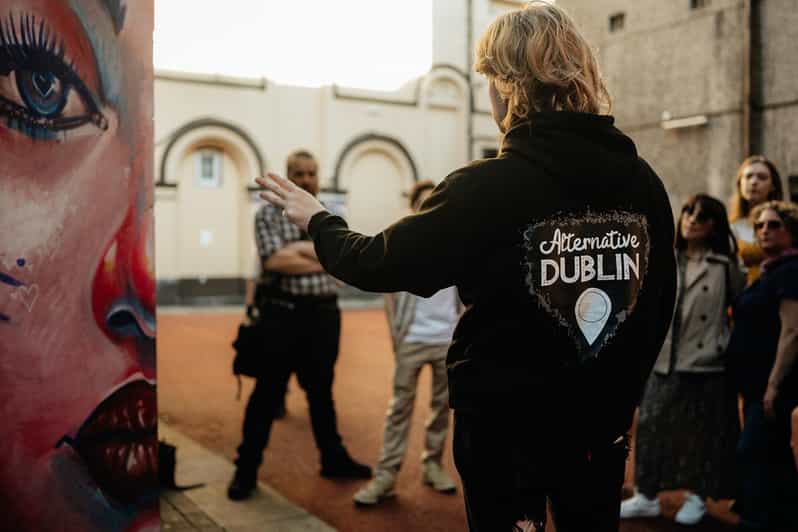
The Icon Factory and The Icon Walk receive about 25 minutes, making this one of the route’s substantial stops. The name itself points to a more organized art setting than a quick sticker or informal tag.
This area is valuable because it connects street-level creativity with a place where artists can present and sell work. You get a chance to see how public art and independent art spaces relate to each other. The guide can explain the artists featured, and you can later follow links to their work.
The Icon Walk also rewards a slower pace. Look at the arrangement of individual pieces, not only the largest image. Street-art routes often work best when you notice scale, placement, and the way one artist’s work sits beside another’s.
This stop may appeal most to people who want more than photographs. If you are interested in buying a print, commissioning an artist, or finding Dublin-made work for your home, the tour’s connection with local artists gives you a useful starting point.
Temple Bar beyond the pub signs
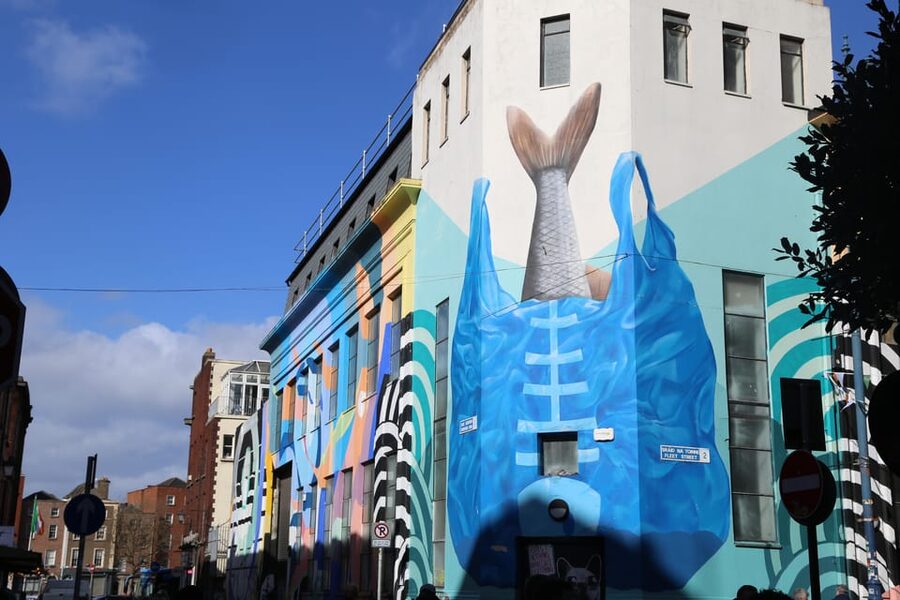
Temple Bar gets around 25 minutes. Most visitors already know this part of Dublin for its pubs, restaurants, crowds, and cobbled streets. The tour asks you to look at it differently.
Here, street art shares space with one of the city’s most visited districts. Your guide can show you work that may be easy to miss while you are searching for a pub or following the usual sightseeing route. The contrast is part of the fun: Temple Bar is not only a nightlife zone but also a place where artists make use of walls, corners, and public-facing spaces.
This stop may be busier than the quieter parts of the walk. Keep your belongings secure, stay close enough to hear the guide, and allow extra patience when other people block a piece you want to photograph. The reward is a better sense of how street art operates in a heavily visited area.
Blooms Hotel and Project Arts Centre
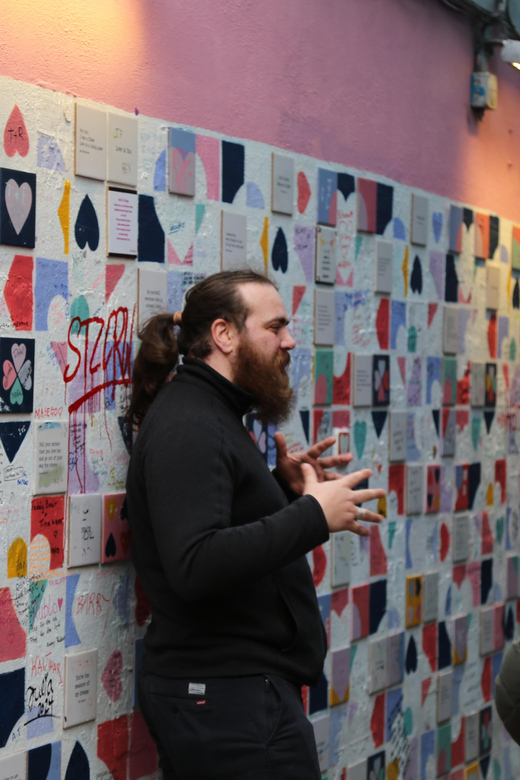
The next two stops bring different settings into the same discussion. Blooms Hotel receives about 15 minutes, while Project Arts Centre receives around 10 minutes.
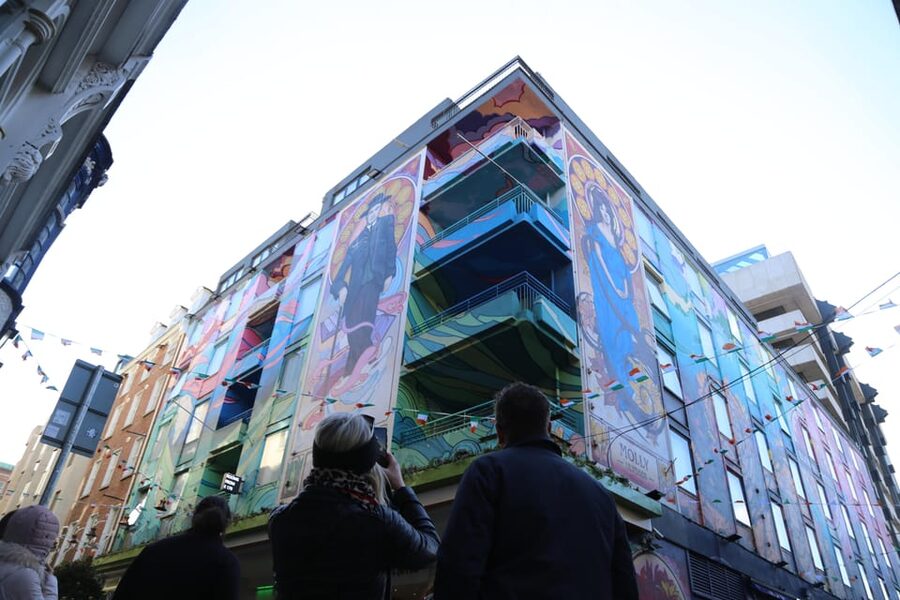
At Blooms Hotel, the guide can show you how artwork becomes part of a commercial building’s public face. Hotel surroundings also make a useful contrast with informal graffiti. Some pieces may be planned and supported by a business, while others reflect the independent and sometimes temporary nature of street work.
Project Arts Centre shifts the focus toward a recognized cultural venue. Its inclusion helps connect the street-art scene with Dublin’s broader arts community. You may find that the guide explains how artists move between public walls, galleries, workshops, and performance or exhibition spaces.
These stops are relatively short, so expect focused commentary rather than long visits. That keeps the walk moving, but it also means you should pay attention when the guide begins speaking. If you prefer to study each work for a long time, you may want to return later on your own.
Crampton Court, where the walk wraps up
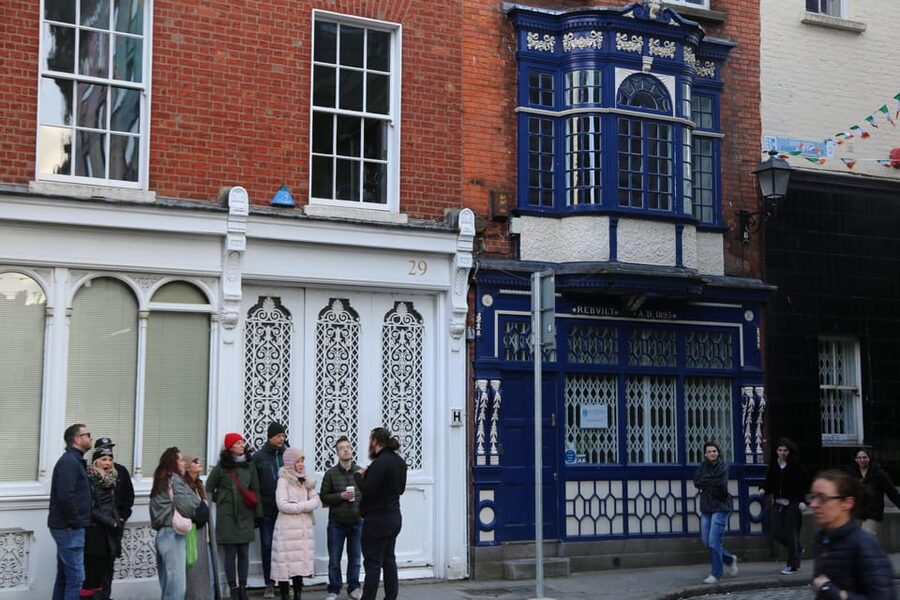
The final stop is Crampton Court, with about 10 minutes for a guided visit and photographs. The tour ends here, so this is both a final artwork stop and your chance to ask for practical suggestions about the rest of your Dublin stay.
Crampton Court fits the tour’s main idea: look into side streets and smaller spaces rather than racing between headline attractions. I like ending in a place that feels like part of the city’s everyday fabric instead of returning to a major monument.
The activity information also describes the finish as back at the meeting point, while the stop details place the end at Crampton Court. Since both locations are in the same central area, this should not create a major planning problem, but confirm the exact finishing point with your guide if you have a timed reservation afterward.
What the guide adds to the artwork
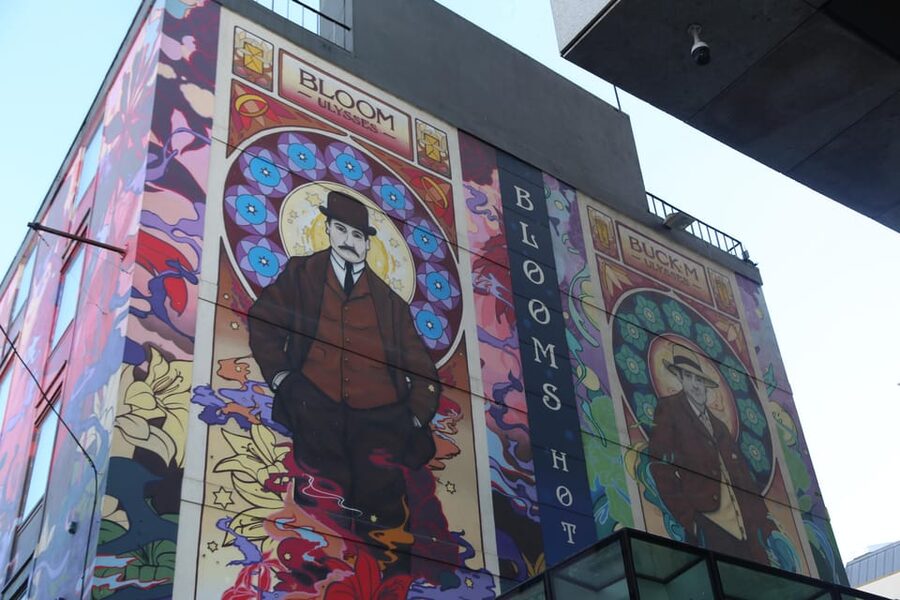
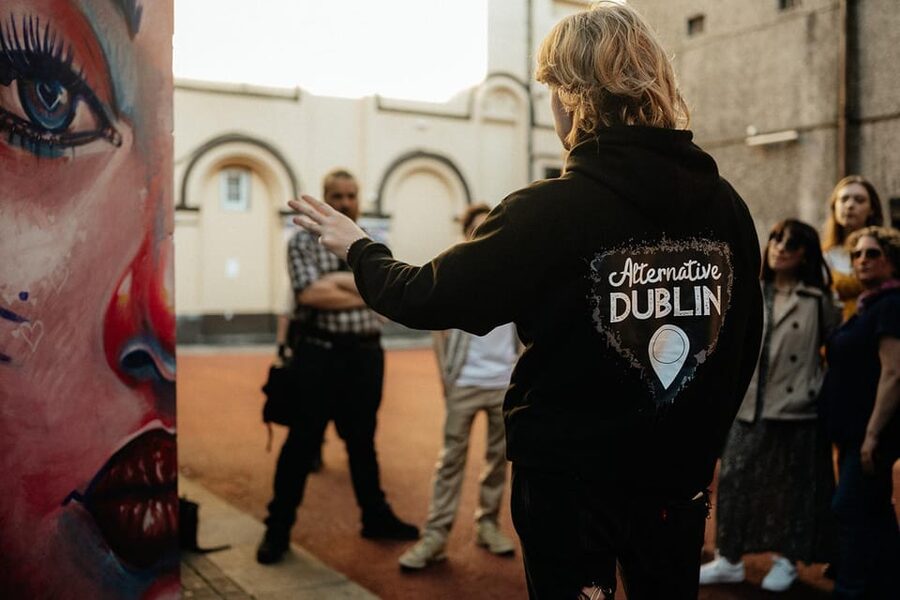
The best reason to take this tour is the commentary. Without context, you may see a large painting, a clever sticker, or a piece of lettering and simply move on. A guide can explain who made it, what form it takes, and how it relates to Dublin’s underground art culture.
One recent rating gave special praise to Liam, noting his friendly personality and the backstory he shared about certain murals. That detail is useful because it suggests the tour is not limited to dry descriptions. The experience may include personal stories, artist information, and the kind of local explanation that helps a piece make sense.
The operator also presents the guides as people connected to street art and graffiti themselves. That is a real advantage, though the exact guide can vary. You should expect the style of the commentary to depend partly on who leads your group.
There is a small but amusing practical lesson from one rating: one person joked about eating chicken tenders before the tour. The point is simple. This is a walking activity with regular stops, so eat sensibly beforehand and do not arrive intoxicated. The rules specifically prohibit alcohol, drugs, weapons, sharp objects, fire, explosives, nudity, and alcoholic drinks in a vehicle.
Is $17 good value?
At $17 per person, I consider this a reasonable price for a two-hour guided walk in central Dublin. You are paying for a live English-speaking guide, access to more than 30 pieces of public artwork, and a route that would be difficult to plan from a normal sightseeing map.
The value is strongest if you are curious about art, photography, independent culture, or modern Dublin. You get a concentrated introduction without spending half a day in a museum. The guide’s recommendations for other places to visit also add value, especially if you are early in your stay and want ideas beyond the standard attractions.
The price is less compelling if you only want landmark sightseeing or dislike outdoor walking in uncertain weather. Street art changes, and no tour can promise that every piece will look exactly as expected. Think of the ticket as payment for local direction and interpretation, not a guarantee of a fixed exhibition.
The operator also supports artists after the walk by sharing links to the people featured and taking the group to a gallery where you can buy artwork or discuss a commission. You do not have to purchase anything, but this gives the tour a practical connection to the local creative economy.
Who will enjoy this walk most?
I would recommend it to:
- People who have already seen Dublin’s main sights and want a different angle.
- First-time visitors who want an unusual introduction to the city centre.
- Photographers looking for murals, paste-ups, stickers, and small public works.
- Art students and creative people interested in how an urban art scene functions.
- Visitors who enjoy guided walks with discussion rather than a simple photo route.
- Groups looking for a private art walk, including friends, work groups, schools, or community organizations.
It may be a poor match if you need a fully accessible route. The tour is not suitable for wheelchair users or people with mobility impairments, and the supplied information does not describe an alternative accessible path.
It is also not ideal for anyone who wants a weather-proof activity. Every tour proceeds in the rain, so your comfort depends on your clothing. Check the starting time and allow yourself the full two hours.
Booking advice and cancellation details
The activity allows you to reserve now and pay later, which helps if your Dublin plans are still shifting. The stated cancellation terms allow a full refund when you cancel up to 24 hours ahead.
There is one point worth checking before payment. The provider’s practical information also says that five days’ notice is needed for refunds or ticket changes, and that tickets cannot normally be swapped unless that notice is given. You can transfer your ticket to another person in your place, according to the stated guidance. Because the 24-hour and five-day terms differ, confirm the current policy directly when booking.
If you cannot attend, contact the provider as early as possible. This is a small independent operation, and the guide’s income depends on the tour running with a workable number of people.
FAQ
Where does the Street Art Walking Tour start?
Meet outside The Grand Social on Liffey Street. The guide waits in the public space with the trees beside Ha’penny Bridge.
How long does the tour last?
The guided walk lasts up to two hours. Starting times vary, so check availability when you book.
What language is the tour conducted in?
The live tour guide speaks English.
Does the tour operate in rainy weather?
Yes. Tours proceed when it rains, so bring an umbrella or rain jacket.
Is the tour wheelchair accessible?
No. The activity is not suitable for wheelchair users or people with mobility impairments because parts of the route are not accessible.
Can I cancel for a full refund?
The booking information states that you can cancel up to 24 hours in advance for a full refund. Separate provider guidance asks for five days’ notice for refunds or ticket changes, so confirm the current rule before booking.
Should you book the Dublin Street Art Walking Tour?
Book it if you want to see Dublin through its walls, lanes, stickers, murals, and independent art spaces. For $17, you get a focused two-hour introduction, more than 30 works, and a guide who can explain the people and stories behind them. The strongest reason to go is the chance to visit corners you might never find by walking alone.
Skip it if you need step-free access, want a guaranteed dry activity, or care more about medieval and Georgian Dublin than its present-day creative culture. For everyone else, this is a smart, modestly priced way to add a fresh layer to a Dublin visit. Take a rain jacket, wear comfortable shoes, and leave room in your schedule to look around again after the guide points out what you missed.
Just added around Dublin
- A Self Guided Walking Tour of Dublin’s Docklands★ 4.5 · 3 reviews
- Waterford Crystal and Kilkenny Full-Day Rail Tour from Dublin★ 5.0 · 3 reviews
- Secret and unusual Dublin: guided walking tour★ 5.0 · 3 reviews
- Turtle Bunbury’s Dublin: A Self-Guided Audio Tour from a Celebrated Author★ 5.0 · 3 reviews
- Cliffs of Moher and The Burren Private Tour from Dublin★ 5.0 · 3 reviews
- Skip-the-line St. Patrick’s Cathedral and Dublin City Tour★ 5.0 · 3 reviews
- Dublin Full-Day Tour through Boyne Valley★ 5.0 · 3 reviews
- Rock Of Cashel And Blarney Castle Private Chauffeur Full Day Sightseeing Tour★ 4.5 · 3 reviews
Walking Tours, compared.
Dublin Highlights and Hidden Gems Guided Walking Tour
Read our review →

90 Minute Dublin Walking tour and Sightseeing tips
Read our review →

Historical 2-Hour Guided Walking Tour of Dublin
Read our review →
Dublin Traditional Irish 3 Course Meal Walking Tour with Local
Read our review →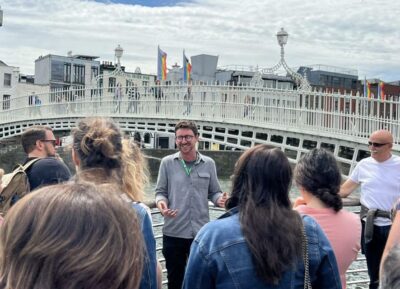
Browse the lists this tour appears in