

Reviewed · WALKING TOURS
Vikings In Dublin (Walking Tour)
Dublin’s Viking past is closer than you think. This 1.5-hour walking tour connects the city’s best-known medieval sights with the Norse settlers who arrived by longship, built markets along the Liffey, and helped shape the place called Dubh Linn. I like the clear route through central Dublin, and I especially like the guide’s effort to present Viking society with nuance rather than reducing it to raids and battles.
The tour also earns praise for its French-speaking guide, who explains complicated events in a clear way and welcomes questions. One guide even adjusted the pace for a participant with a minor health problem. The main consideration is language: French is the only listed tour language, so this is best suited to you if you are comfortable following a history talk in French.
In This Review
- Key points at a glance
- Why Dublin’s Viking story works best on foot
- Starting at the Viking longboat sculpture
- The secret stop and Dublin’s early foundations
- Christ Church Cathedral and the medieval city
- Saint Audoen’s and the older edge of Dublin
- Fishamble Street and the people behind the raids
- Dublin Castle and centuries of change
- The final stop and finish near Trinity College
- The French guide is the heart of the experience
- Is $45 good value for 90 minutes?
- Who should book this Dublin Viking walk?
- Should you book Vikings in Dublin?
- FAQ
- Where does the Vikings in Dublin walking tour start?
- Where does the tour finish?
- How long does the walking tour last?
- What language is the tour offered in?
- What places are included on the route?
- Is admission to Christ Church Cathedral included?
- Is the tour wheelchair accessible?
- Can I cancel the booking for a refund?
Key points at a glance
- Starts beside a Viking longboat sculpture: The meeting point, Báite by Betty Newman Maguire, gives the walk an appropriate opening image.
- Christ Church Cathedral anchors the route: You see one of Dublin’s major medieval landmarks while learning about the city’s Norse foundations.
- Fishamble Street links history to daily life: The route moves beyond famous buildings to consider markets, trade, and settlement.
- A thoughtful view of Viking culture: The guide covers customs, motivations, and social life, not just warfare.
- French-language guiding only: This matters more than the modest tour length if you are choosing between several Dublin walks.
- $45 for 90 minutes: The price is reasonable if you value a focused guide and central route, but less so if you want long interior visits.
Why Dublin’s Viking story works best on foot
Dublin’s Viking period is not contained in one museum or one surviving fortress. It is scattered through street names, cathedral grounds, archaeological traces, and the shape of the old city. That makes walking a good way to approach it.
This tour follows the broad story of Norse arrival and settlement around the River Liffey. You hear how longships reached Dublin, how markets developed, and how the community they formed left a lasting mark on Ireland’s capital. The guide also explains the meaning behind Dubh Linn, the name associated with the dark pool that helped give Dublin its identity.
I like this approach because it gives you a useful frame for later sightseeing. Christ Church Cathedral, Saint Audoen’s, Fishamble Street, and Dublin Castle can otherwise feel like separate stops on a standard city walk. Here, they become pieces of one story.
The walk lasts 90 minutes, so it does not try to cover every corner of Viking Dublin. That is a strength for a short visit, though you should not expect a full archaeological survey. The value comes from making connections quickly and clearly.
More Walking Tours in Dublin
- Dublin Highlights and Hidden Gems Guided Walking Tour
★ 5.0 · 6,020 reviews - Dublin: Highlights and Hidden Gems Walking Tour
★ 4.9 · 2,140 reviews - 1916 Rebellion Walking Tour
★ 5.0 · 1,605 reviews
Starting at the Viking longboat sculpture
The tour begins at Báite, the Viking longboat sculpture created in 1988 by Betty Newman Maguire. Starting beside a longboat is more than a photo opportunity. It gives the guide an easy way to introduce the practical world of Norse travel and explain why Dublin grew as a river port.
The sculpture is also a simple meeting point in central Dublin. You are not beginning in a hotel lobby or beside an anonymous street corner. You start with a visible symbol tied directly to the subject of the walk.
From here, the guide sets up the larger story: Norse warriors and settlers navigated the Liffey, established a base, and developed a town connected to wider routes. The tour’s focus is not only on famous leaders or violent raids. The guide also discusses traditions, culture, daily life, and the reasons people settled and traded.
That balance is one of the strongest parts of the experience. You get a more useful picture of Vikings as a society with customs and ambitions, rather than a cartoon version of helmeted raiders. The guide’s clear explanations and lively anecdotes help keep the opening history from becoming a string of dates.
The secret stop and Dublin’s early foundations

The second stop is described as a secret stop, with the exact location not given in advance. That preserves a small sense of discovery, but it also means you cannot plan around a specific building or archaeological feature.
What you can expect is a guided look at the foundations of early Dublin and the traces that connect the modern city with its Norse past. The tour refers to less obvious remains and places where Viking-era influence can still be understood beneath or around present-day streets.
This part matters because much of Dublin’s early story is not visible at first glance. You might walk past a modern building without realizing that the ground beneath it relates to the city’s first settlement. A guide can point out those connections in a way a printed map cannot.
The exact content may depend on the route and the guide’s presentation. If you want a walk focused on clearly identified monuments, this flexible stop may feel less concrete. If you enjoy finding historical clues in ordinary city spaces, it should add variety.
Christ Church Cathedral and the medieval city

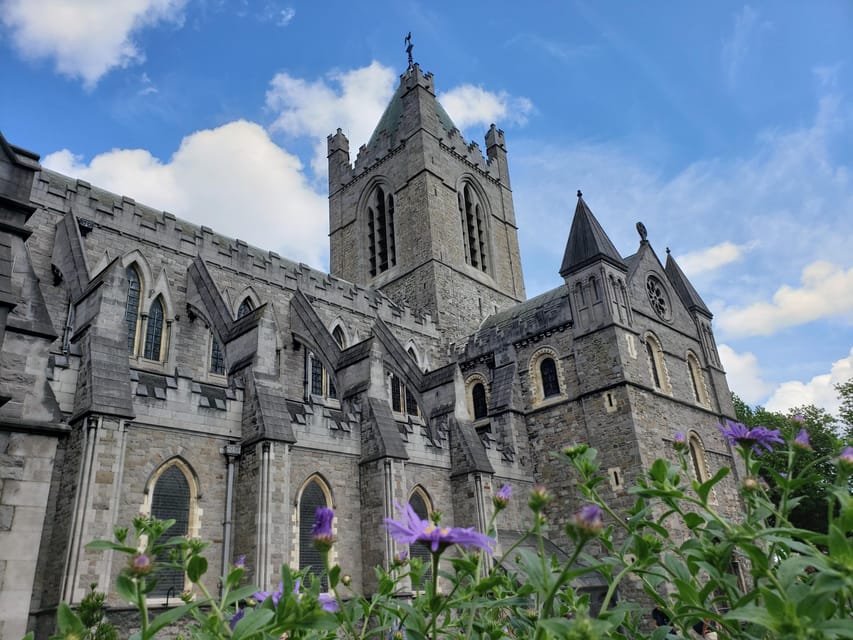
Christ Church Cathedral is the major landmark on the route. The tour includes a guided stop here, placing Dublin’s Viking beginnings beside one of its most important medieval religious buildings.
The cathedral is valuable in this context because it helps show how Dublin changed over time. The Norse settlement did not exist in isolation. Political power, religion, trade, and building traditions shifted across the centuries, and Christ Church gives the guide a strong place to explain that transition.
You should clarify what is included inside the cathedral before booking if interior access is important to you. The information confirms a guided stop at Christ Church Cathedral, but it does not state that admission to the interior is included. The walk may focus on the cathedral and its role in the city rather than provide a full cathedral visit.
That distinction affects the $45 price. If you are paying mainly for entry tickets, this tour may not be the best fit. If you are paying for a French-language explanation that links the cathedral to Dublin’s earlier settlement, the stop makes more sense.
A completely different kind of day out from Dublin:
- Dublin to Cliffs of Moher, including Wild Atlantic Way and Galway
★ 5.0 · 23,331 reviews - From Dublin: Cliffs of Moher, Burren & Galway City Day Tour
★ 4.8 · 18,888 reviews - Dublin: Guinness Storehouse Entry Ticket
★ 4.6 · 16,863 reviews - Dublin to Cliffs of Moher, Burren, Wild Atlantic Way, Galway Tour
★ 5.0 · 12,924 reviews
Saint Audoen’s and the older edge of Dublin
Saint Audoen’s is another important medieval stop. Its inclusion keeps the route from staying only on Dublin’s most familiar tourist streets and brings you toward an older part of the city.
The guide uses the church to explain how Dublin developed around religious institutions and urban settlement. This helps connect the Viking era with the later medieval city, showing that the same area continued to matter after the first Norse period.
I appreciate this kind of stop because it gives historical scale. The Vikings were not simply a short episode before Dublin became recognizably Irish or English. Their presence formed part of a long chain of change, and Saint Audoen’s helps place that period within the wider story.
Again, the available details do not confirm interior entry. Treat it as a guided historical stop, not automatically as a full church tour.
Fishamble Street and the people behind the raids
Fishamble Street is one of the route’s most useful stops for understanding everyday life. The street helps shift the focus from rulers and warriors to commerce, food, movement, and urban routines.
The guide discusses markets and the places where people gathered and traded. That is important because a town survives through more than military strength. Ships may bring settlers, but markets, crafts, customs, and regular contact with other communities turn a settlement into a city.
This is also where the tour’s more balanced view of Viking culture becomes especially helpful. You hear about traditions and social life along with conflict. The guide explains historical events without presenting the Vikings as mere barbarians, and questions receive relevant answers rather than being brushed aside.
The anecdotes are a useful bonus. They make the period easier to picture and keep the talk from feeling like a lecture delivered while you hurry from one monument to another.
Dublin Castle and centuries of change
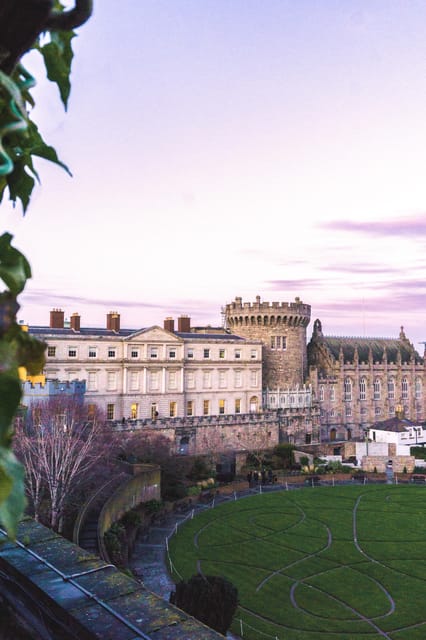
Dublin Castle adds a later layer to the route. It is not simply a Viking monument, but it helps explain how authority in Dublin shifted after the Norse period and how the city developed into a major seat of power.
The stop allows the guide to connect the early settlement with later political history. You see how one area can hold evidence of several different versions of Dublin, each built on what came before.
As with Christ Church and Saint Audoen’s, the supplied details confirm a guided stop but do not promise admission to the castle buildings. If you are hoping to tour the castle interiors, plan that separately or ask before booking.
For a short walking experience, the castle is a sensible inclusion. It gives you a recognizable landmark and a chance to understand the Viking era as part of a longer urban story, not a sealed-off chapter.
The final stop and finish near Trinity College
The route includes another less-publicized stop before finishing at Trinity College. The exact site is not identified, so its value depends on what the guide chooses to show and explain on the day.
Trinity College provides a clear central endpoint and puts you close to other major Dublin sights. It is a practical place to continue your day, though the meeting information also says the activity ends back at the meeting point. Since those details do not perfectly match, confirm the final drop-off point when you book.
That small logistical question matters if you have a timed reservation after the walk. The tour lasts only 90 minutes, but central Dublin streets can still make a short walk run longer if you need to find your next stop.
The French guide is the heart of the experience
The strongest praise centers on the guide’s historical skill and manner. The guide explains complex events in a clear, concise way, answers questions directly, and uses anecdotes to keep the tour lively. The guide’s name is not provided, so you cannot request a particular person in advance.
The language is French only. That makes this a valuable choice for French-speaking visitors who want more than a basic sightseeing circuit. It also means you should not book it expecting an English translation or a bilingual presentation.
The guide has also shown flexibility when a participant had a minor health problem. That does not guarantee a customized pace for every group, but it suggests a considerate approach. The activity is listed as wheelchair accessible, which is useful information for anyone checking route suitability.
Still, accessibility on a historic city walk can depend on street conditions and the exact path used that day. Ask the provider if you need specific details about surfaces, slopes, or access into buildings.
Is $45 good value for 90 minutes?
At $45 per person, this is not Dublin’s cheapest way to see the outside of a few landmarks. The price makes the most sense if you want a focused historical explanation in French and prefer a small subject-led walk over a general city tour.
You are paying for the guide’s interpretation. The route brings together the Viking longboat sculpture, early foundations, Christ Church Cathedral, Saint Audoen’s, Fishamble Street, Dublin Castle, and Trinity College. That is a lot of historical ground in a short time, even if some stops are brief.
The value is weaker if you mainly want interior access. No entrance tickets are specifically listed, and the details do not promise extended visits inside the cathedral or castle. In that case, you may prefer to book separate admissions and use this walk for context.
The flexible booking terms help. You can reserve now and pay later, and cancellation is free up to 24 hours before the tour for a full refund. Those policies reduce the risk of committing too early to a short activity.
Who should book this Dublin Viking walk?
I would point this tour toward French-speaking history fans, first-time visitors who want a clear introduction to medieval Dublin, and anyone who likes connecting ordinary streets with older stories.
It also suits you if you prefer a short activity that leaves room for other plans. Ninety minutes is long enough to establish the main story without taking over a full day.
Families and mixed-interest groups may find the compact length helpful, though the amount of historical explanation means it is not designed as a purely playful Viking attraction. The tour is also a good choice if you have already seen Dublin’s headline sights and want a new way to read them.
I would hesitate if you need an English-language tour, want a long cathedral or castle visit, or expect a highly detailed archaeological tour. The route is broad and interpretive rather than a deep examination of one site.
Should you book Vikings in Dublin?
Book it if the French-language guiding fits your needs and you want Dublin’s Viking period explained through real city places. The guide’s clear history, thoughtful treatment of Norse culture, and ability to answer questions are the main reasons to choose it.
At $45, it is fair value for a concentrated 90-minute walk, especially when you consider how many central landmarks it links. Just confirm the final meeting point and ask about interior access if those details affect your plans.
FAQ
Where does the Vikings in Dublin walking tour start?
The tour starts at Báite, the Viking longboat sculpture by Betty Newman Maguire.
Where does the tour finish?
The itinerary lists Trinity College as the finish. The meeting information also says the activity ends back at the meeting point, so confirm the final location when booking.
How long does the walking tour last?
The tour lasts 1.5 hours, or 90 minutes. Starting times depend on availability.
What language is the tour offered in?
The listed live tour language is French. French is also the only language specified for the activity.
What places are included on the route?
The route includes the Viking longboat sculpture, a secret stop, Christ Church Cathedral, Saint Audoen’s, Fishamble Street, Dublin Castle, another undisclosed stop, and Trinity College.
Is admission to Christ Church Cathedral included?
The activity includes a guided stop at Christ Church Cathedral, but the information does not confirm that interior admission is included.
Is the tour wheelchair accessible?
Yes. The activity is listed as wheelchair accessible.
Can I cancel the booking for a refund?
Yes. You can cancel up to 24 hours in advance for a full refund. You can also reserve now and pay later.
Just added around Dublin
- A Self Guided Walking Tour of Dublin’s Docklands★ 4.5 · 3 reviews
- Waterford Crystal and Kilkenny Full-Day Rail Tour from Dublin★ 5.0 · 3 reviews
- Secret and unusual Dublin: guided walking tour★ 5.0 · 3 reviews
- Turtle Bunbury’s Dublin: A Self-Guided Audio Tour from a Celebrated Author★ 5.0 · 3 reviews
- Cliffs of Moher and The Burren Private Tour from Dublin★ 5.0 · 3 reviews
- Skip-the-line St. Patrick’s Cathedral and Dublin City Tour★ 5.0 · 3 reviews
- Dublin Full-Day Tour through Boyne Valley★ 5.0 · 3 reviews
- Rock Of Cashel And Blarney Castle Private Chauffeur Full Day Sightseeing Tour★ 4.5 · 3 reviews
Walking Tours, compared.
Dublin Highlights and Hidden Gems Guided Walking Tour
Read our review →

90 Minute Dublin Walking tour and Sightseeing tips
Read our review →

Historical 2-Hour Guided Walking Tour of Dublin
Read our review →
Dublin Traditional Irish 3 Course Meal Walking Tour with Local
Read our review →
Browse the lists this tour appears in