

Reviewed · HISTORICAL TOURS
2 Hours Senior’s Historical Private Walking Tour of Dublin
Seven landmarks, one compact Dublin walk. This private tour links the city’s major historic sights in two hours, with a guide who brings warmth, diligence, and solid subject knowledge to the route. I like the private format, which lets your group set the pace, and I like the direct route from Trinity College to St Patrick’s Cathedral.
The main thing to consider is the price: at $447.44 per person, this is a premium choice, especially for a small group. Several stops are outside visits, and the short schedule gives you a useful introduction rather than a detailed look inside Dublin’s grandest buildings.
In This Review
- Key points to know before booking
- A short route through Dublin’s historic center
- Trinity College begins the story
- Molly Malone and Dublin folklore
- Crossing the River Liffey on Ha’penny Bridge
- Temple Bar, with a practical warning
- Dublin Castle from the outside
- Christ Church Cathedral and medieval Dublin
- Ending at St Patrick’s Cathedral
- What the private format is really worth
- Timing, walking, and practical planning
- Who should book this Dublin walk?
- Final decision: a polished introduction, not a full site tour
- FAQ
- How long does the Dublin walking tour last?
- Is this a private tour?
- What language is the tour offered in?
- Where does the tour begin?
- Where does the tour end?
- Are admission tickets included?
- Can I cancel for a full refund?
Key points to know before booking

- Seven central sights in two hours: The route covers Trinity College, Molly Malone, Ha’penny Bridge, Temple Bar, Dublin Castle, Christ Church Cathedral, and St Patrick’s Cathedral.
- A genuinely private experience: Only your group takes part, so the guide can respond to your interests and walking speed.
- Outside visits shape the tour: Trinity College, Dublin Castle, and both cathedrals are viewed from outside, with no admission included.
- A strong first-day orientation: Starting at Trinity College and ending at St Patrick’s Cathedral gives you a useful walk through central Dublin.
- The guide’s manner earns praise: The tour has been singled out for a warm, diligent guide who worked hard to show the group what mattered to them.
- Weather and cancellation matter: You can cancel for a full refund up to 24 hours before the start, but poor weather may cause a change of date or full refund.
A short route through Dublin’s historic center
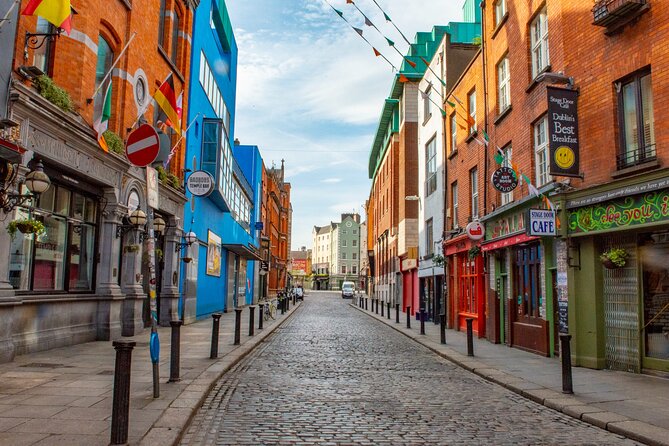
I see this experience as a private orientation walk with a historical focus. In 120 minutes, you move through the heart of Dublin, passing from the university quarter to the River Liffey, then through Temple Bar and on toward the city’s castle and cathedrals.
That route works well because the sights are connected by a natural city walk. You are not spending much of the two hours getting from one district to another. Instead, the tour gives you a quick framework for understanding central Dublin.
The pace should suit anyone who wants a manageable outing rather than a long walking day. Seniors may particularly appreciate the private arrangement, since your group is not tied to the pace of a large crowd. Still, seven stops in two hours means most visits are brief. You should book this for explanation, orientation, and atmosphere, not for extended interior visits.
The strongest personal touch comes from the guide. The one available experience account praises the guide’s warmth, diligence, solid subject knowledge, and eagerness to make sure the group saw what it wanted. That is important on a short private tour. A good guide can adjust the emphasis, while a poor one simply recites dates and moves on.
More Historical Tours in Dublin
- Dublin Historical Centre Food Tour with 8 Food Tastings & Drinks
★ 5.0 · 1,718 reviews - 2-Hour Historical Walking Tour from Dublin
★ 5.0 · 875 reviews - Historical 2-Hour Guided Walking Tour of Dublin
★ 4.7 · 865 reviews
Trinity College begins the story
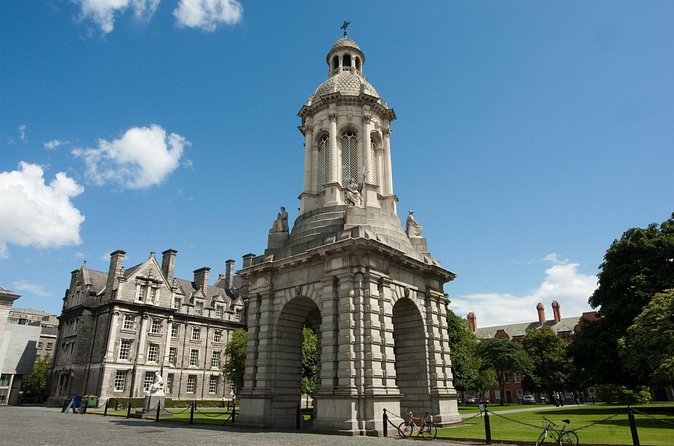
The walk starts at Trinity College Dublin on College Green. Founded in 1592, it is Ireland’s oldest university and one of Dublin’s defining institutions.
You will view the college from outside, so this stop is about the setting, architecture, and role of the university in Irish life rather than an indoor visit. The Campanile is the visual centerpiece, and the campus brings a scholarly feel to the busy center of town.
I like beginning here. Trinity gives the tour a clear starting point and places you in one of Dublin’s most recognizable settings right away. Twenty minutes is enough for your guide to explain the college and point out its main features without using up too much of the available time.
The limitation is simple: admission is listed as free, but this particular tour specifies an outside visit. If you want to see interior spaces, you will need to arrange that separately. Do not assume that a stop at Trinity means an extended campus tour.
Molly Malone and Dublin folklore
From Trinity College, the route continues to the Molly Malone statue. The figure is tied to the famous song and has become one of Dublin’s best-known symbols.
This is a short stop, listed at 15 minutes, and it adds a lighter note after the formal setting of Trinity. Your guide can place Molly Malone in the context of local folklore and Dublin’s popular identity.
I think this works best as a cultural pause rather than a major historical visit. The statue itself does not require much time, but it gives your guide a chance to explain how songs, stories, and public symbols shape a city’s image.
Because the stop is brief, it should not disappoint you unless you expect a full museum-style presentation. The value is in the story around the statue and in seeing a familiar Dublin emblem while moving between larger sights.
Crossing the River Liffey on Ha’penny Bridge
The Ha’penny Bridge provides one of the route’s most photogenic moments. This pedestrian bridge crosses the River Liffey and offers a compact view of the river and the central city.
You have about 20 minutes here. That gives you time to cross, look along the river, and take in the bridge’s shape without feeling hurried. It also breaks up the architecture-heavy part of the walk.
I like this stop because it shows Dublin as a lived-in city, not only as a collection of official monuments. The river is part of the city’s daily rhythm, and the bridge connects the two sides of central Dublin in a very direct way.
Your guide may spend more or less time here depending on your interests. Since the tour is private, you can ask for a moment to enjoy the view or move along if you prefer the historical explanation at the next stop. The bridge is a public location, and no admission ticket is required.
More Walking Tours in Dublin
- Dublin Highlights and Hidden Gems Guided Walking Tour
★ 5.0 · 6,020 reviews - Dublin: Highlights and Hidden Gems Walking Tour
★ 4.9 · 2,140 reviews - 1916 Rebellion Walking Tour
★ 5.0 · 1,605 reviews - 90 Minute Dublin Walking tour and Sightseeing tips
★ 5.0 · 916 reviews
Temple Bar, with a practical warning

Temple Bar is the route’s most atmospheric section. Its cobbled streets, pubs, and cultural identity make it one of the places most associated with Dublin.
The scheduled 20 minutes lets you see the quarter without turning the tour into a pub crawl. You can take in the streets and historic pub fronts, and you may choose to return later for a leisurely pint.
This is a good place to ask your guide how the area fits into Dublin’s wider story. Temple Bar is often treated as a simple entertainment district, but its value on this walk is the contrast it provides with Trinity College and the city’s religious buildings.
I would keep your expectations sensible. A short guided visit gives you a taste of Temple Bar, not a complete evening there. If you want food or a drink, plan extra time after the tour rather than trying to fit it into the scheduled walk.
The quarter can also be more about atmosphere than quiet reflection. If you prefer calm streets and long historical explanations, the nearby cathedral stops may suit you better. If you like seeing how a city mixes old buildings with present-day social life, Temple Bar earns its place.
Dublin Castle from the outside

The next stop is Dublin Castle, where you have about 15 minutes. The castle is one of the city’s key political and historical sites, with formal architecture and gardens connected to centuries of events.
The outside visit keeps the schedule moving. You can see the building’s character and hear why it matters without committing to a longer interior admission. That is useful for a first look, especially if you are still deciding which Dublin sites deserve a return visit.
I find this stop valuable because it adds government and civic power to the route. Trinity represents education, Temple Bar represents social life, and Dublin Castle brings in the official side of the city.
The drawback is the same as at Trinity: the tour does not include an interior exploration. Fifteen minutes is enough to orient you, but not enough for a detailed examination of the castle buildings and gardens. If Dublin Castle is high on your list, allow separate time for it.
Christ Church Cathedral and medieval Dublin
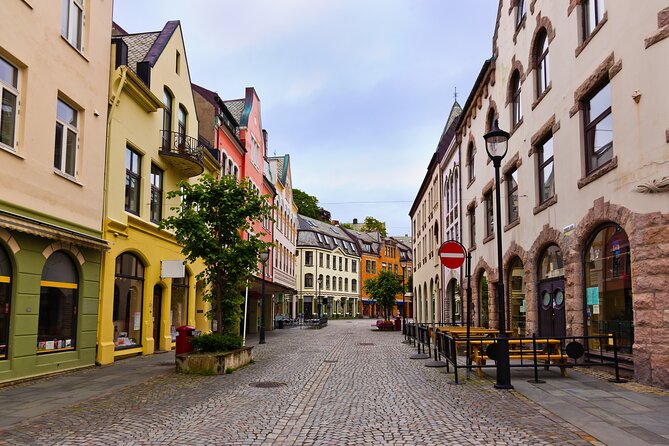
Christ Church Cathedral follows Dublin Castle, with about 15 minutes allocated to the stop. It is one of the city’s oldest medieval cathedrals and is known for its architecture, historic crypt, and stained glass.
The planned visit is outside only. That means you can appreciate the exterior and hear about the cathedral, but the crypt and interior details are not part of this experience.
This is still an important stop. Christ Church helps explain the age and religious importance of central Dublin, and its medieval character gives the walk a different feel from the university and river sections.
If you want to see stained glass or the crypt, you should treat this tour as an introduction and return independently. The short stop can help you decide if a full visit belongs in your schedule.
I also like the order here. Dublin Castle and Christ Church are close enough to feel connected, so the route shifts naturally from state power to religious history. You are not simply ticking off unrelated sights.
Ending at St Patrick’s Cathedral

The walk ends at St Patrick’s Cathedral on St Patrick’s Close. At roughly 15 minutes, this is the final major stop and the largest cathedral in Ireland.
The cathedral offers another look at Dublin’s religious architecture, along with green spaces around the building. Ending here gives the route a clear finish instead of returning you to the starting point.
As with Christ Church, the supplied details describe an outside visit. You should not expect admission or a full interior tour as part of the two-hour experience. The stop is best understood as a final introduction to one of Dublin’s most important buildings.
The ending location is practical. If you want to continue exploring, you finish in a part of central Dublin with further historical sights nearby. If you are ready for a rest, the tour is over after this visit, so you are not required to walk back to Trinity College.
What the private format is really worth
A private tour changes the experience more than the mobile ticket or free admission details. Your group is the only group taking part, which gives the guide room to respond to your questions and adjust the emphasis.
That matters most for seniors, families, and small groups with different interests. You might want more time at Trinity, while someone else cares more about the cathedrals or Dublin folklore. A private guide can make those choices easier than a fixed large-group tour.
The praise for the guide’s warmth and diligence is especially useful here. On a private walk, personality matters. You want someone who listens, explains clearly, and notices what your group actually wants to see. The available rating is 5 out of 5 from three reviews, so the sample is small, but the positive detail is specific rather than vague.
There is also a tradeoff. Private touring usually costs more because the guide’s attention is reserved for your group. At $447.44 per person, the price is hard to justify for one or two people unless personal attention is your main priority. Group discounts are available, so the value may improve when more people share the arrangement, but the exact discount is not provided.
I would compare the price with what you value. If you want a polished introduction, a flexible pace, and direct access to a guide, the cost may make sense. If you mainly want to see the buildings and take photographs, a self-guided walk will cost far less.
Timing, walking, and practical planning
The tour lasts approximately two hours. That is long enough to cover seven central stops, but the schedule is tight. Several stops receive only 15 minutes, so you should arrive ready to keep moving.
The start is at Trinity College Dublin, College Green, Dublin 2. The end is at St Patrick’s Cathedral, St Patrick’s Close, Dublin, D08 H6X3. Since the tour ends at a different place, you should plan your next activity from St Patrick’s Cathedral rather than assuming you will finish where you began.
The route is near public transportation, which makes both the meeting point and the end point reasonably practical to reach. Exact transport details are not supplied, so you should check your preferred route before the start.
The tour is offered in English. Confirmation arrives at booking, and most people can participate. The provided details do not give a specific accessibility description, so if you have mobility needs, contact the provider before booking and ask about the walking route and surfaces.
Weather is worth considering in Dublin. The experience requires good weather. If poor weather causes cancellation, you are offered another date or a full refund. You can also cancel up to 24 hours before the start for a full refund. Inside that 24-hour window, refunds are not available and changes are not accepted.
Who should book this Dublin walk?
I would recommend it to a small group that wants a high-touch introduction to central Dublin. It suits you if you prefer explanation over rushing through interiors, want to set your own pace, and value having a guide focused only on your group.
It is also a sensible first activity in Dublin if you want to learn the city’s basic layout. Trinity College, the River Liffey, Temple Bar, Dublin Castle, and the cathedrals create a useful mental map for later exploration.
I would be more cautious if you want detailed cathedral visits, a tour inside Dublin Castle, or a long stop at Trinity College. The outside visits are clearly stated, and the time at each location is short.
The high price also makes this a selective purchase. Group discounts may help, but you should confirm the final cost before booking. For a private group that values comfort and personal attention, it can be worthwhile. For a budget-conscious solo visitor, it is difficult to call it good value.
Final decision: a polished introduction, not a full site tour
Book this tour if you want a friendly private guide, a manageable two-hour route, and a broad introduction to Dublin’s central landmarks. The guide’s warmth, diligence, and effort to match the group’s interests are the strongest reasons to choose it.
Skip it if your main goal is entering Trinity College, Dublin Castle, Christ Church Cathedral, or St Patrick’s Cathedral. You will see those places, but the listed visits are outside only.
For the right group, this is a convenient way to connect Dublin’s university life, folklore, riverfront, pub quarter, government buildings, and cathedrals in one short walk. Just pay for the private attention, not for extensive admission-based sightseeing.
FAQ
How long does the Dublin walking tour last?
The tour lasts approximately two hours.
Is this a private tour?
Yes. Only your group participates in the private tour or activity.
What language is the tour offered in?
The tour is offered in English.
Where does the tour begin?
The meeting point is Trinity College Dublin, College Green, Dublin 2, Ireland.
Where does the tour end?
The tour ends after visiting St Patrick’s Cathedral at St Patrick’s Close, Dublin, D08 H6X3.
Are admission tickets included?
The listed stops have no admission ticket charge, and the tour describes Trinity College, Dublin Castle, Christ Church Cathedral, and St Patrick’s Cathedral as outside visits. No interior admission is included in the supplied details.
Can I cancel for a full refund?
Yes. You can cancel at least 24 hours before the experience start time for a full refund. Cancellations and changes made less than 24 hours before the start are not accepted, and no refund is provided. If poor weather cancels the experience, you are offered another date or a full refund.
More 2-Hour Experiences
- 2 Hour Walking Tour of Dublin’s City Centre
★ 5.0 · 63 reviews - Dublin: 2-Hour Premium Whiskey and Food Tasting Tour
★ 4.7 · 54 reviews - Dublin: 2 Hour City Center Guided Walking Tour
★ 4.9 · 12 reviews - 2-Hour Deluxe Whiskey & Food Tasting
★ 4.6 · 9 reviews
Just added around Dublin
- A Self Guided Walking Tour of Dublin’s Docklands★ 4.5 · 3 reviews
- Waterford Crystal and Kilkenny Full-Day Rail Tour from Dublin★ 5.0 · 3 reviews
- Turtle Bunbury’s Dublin: A Self-Guided Audio Tour from a Celebrated Author★ 5.0 · 3 reviews
- Secret and unusual Dublin: guided walking tour★ 5.0 · 3 reviews
- Cliffs of Moher and The Burren Private Tour from Dublin★ 5.0 · 3 reviews
- Skip-the-line St. Patrick’s Cathedral and Dublin City Tour★ 5.0 · 3 reviews
- Dublin Full-Day Tour through Boyne Valley★ 5.0 · 3 reviews
- Rock Of Cashel And Blarney Castle Private Chauffeur Full Day Sightseeing Tour★ 4.5 · 3 reviews
Historical Tours, compared.

Dublin Historical Centre Food Tour with 8 Food Tastings & Drinks
Read our review →

Historical 2-Hour Guided Walking Tour of Dublin
Read our review →
Dublin to Cork, Blarney Castle & Cóbh Heritage Centre by train
Read our review →
Jeanie Johnston Tall Ship Irish Famine History Tour
Read our review →

Deliciously Dublin: The Artisan Donut Walking & History Tour
Read our review →Browse the lists this tour appears in